
These Japanese soufflé pancakes are like biting into a sweet cloud—airy, wobbly, and impossibly soft. The texture is somewhere between a pancake and a pillowy dessert, with a delicate sweetness that makes them perfect for a special weekend breakfast. Japanese soufflé pancakes have a signature jiggle and tower-tall height that might look tricky, but with the right technique, they’re completely doable in your own kitchen.
Prep: 15 minutes | Cook: 15 minutes | Total: 30 minutes | Serves: 4 pancakes | Difficulty: Medium
Why You’ll Love This Recipe
- ✅ Incredibly Light Texture: The whipped egg white meringue creates an almost cotton-like fluffiness that regular pancakes can’t match.
- ✅ Impressive Without Being Fussy: Yes, they take a bit more attention than standard pancakes, but the steps are straightforward once you understand the technique.
- ✅ Perfect for Special Mornings: These turn a regular breakfast into something memorable, whether it’s a birthday, holiday, or just because.
Ingredient Notes
- 2 large eggs (separated): Room temperature eggs whip better and create more volume in the meringue. This is key to getting that signature height.
- 2 tablespoons whole milk: Whole milk adds richness to the batter. The small amount keeps the batter from becoming too thin.
- ¼ cup cake flour: Cake flour has less protein than all-purpose, which keeps these pancakes tender. You can make your own by replacing 2 teaspoons of all-purpose flour with cornstarch per ¼ cup.
- ¼ teaspoon baking powder: Helps give a bit of extra lift to the batter.
- 2 tablespoons granulated sugar: Sweetens the meringue and stabilizes the egg whites so they hold their shape during cooking.
- ½ teaspoon vanilla extract: Adds warmth and a gentle sweetness to the flavor.
- ½ teaspoon lemon juice or white vinegar: Stabilizes the egg whites and helps them hold stiff peaks longer.
- Neutral oil for cooking: A light coating keeps the pancakes from sticking without adding flavor.
- 1-2 tablespoons water (for steaming): This creates steam in the pan, which helps cook the pancakes through without burning the bottoms.
Step-by-Step Instructions
Step 1: Prepare the Egg Yolk Mixture
Separate your eggs carefully, making sure no yolk gets into the whites. In a medium bowl, whisk together the egg yolks, milk, and vanilla extract until smooth and slightly pale. Sift in the cake flour and baking powder, then fold gently with a rubber spatula until you have a smooth, thick batter with no visible flour streaks.
Step 2: Whip the Meringue
In a clean, dry bowl, add the egg whites and lemon juice. Using a hand mixer or stand mixer, beat on medium speed until foamy. Gradually add the sugar one tablespoon at a time while continuing to beat. Increase to medium-high speed and whip until stiff peaks form—the meringue should stand straight up when you lift the beaters and have a glossy, smooth texture. This usually takes 3-4 minutes.
💡 Pro Tip: Don’t overbeat the meringue or it will become grainy and lose volume. Stop as soon as you reach stiff, glossy peaks.
Step 3: Fold the Meringue Into the Batter
Add about one-third of the meringue to the egg yolk mixture and fold gently with a spatula, using a cutting and folding motion to preserve the air bubbles. Once partially combined, add the remaining meringue in two additions, folding carefully until just combined. The batter should be thick, fluffy, and hold its shape when scooped.
Step 4: Cook the First Side
Heat a large nonstick skillet over low heat and lightly coat with oil. Using a large spoon or piping bag, scoop about half the batter onto the pan, stacking it high to make 3-4 tall mounds. Add about 1 tablespoon of water to the empty part of the pan (not on the pancakes), then immediately cover with a lid. Cook for 5-6 minutes without lifting the lid. The steam helps cook the insides while the low heat prevents burning.
Step 5: Add More Batter and Flip
Carefully remove the lid. The bottoms should be golden brown and the sides slightly set. Add the remaining batter on top of each pancake, stacking it high again. Add another tablespoon of water to the pan, cover, and cook for another 4-5 minutes. Using two spatulas or an offset spatula, very gently flip each pancake with a rolling motion. Add a splash more water, cover, and cook for 4-5 minutes until golden brown on the second side.
💡 Pro Tip: The flip is the trickiest part. Move slowly and use two tools if needed—these pancakes are delicate and can deflate if handled roughly.
Step 6: Serve Immediately
Transfer the pancakes to plates right away. They’re best enjoyed warm, when they’re at their fluffiest. Dust with powdered sugar and serve with maple syrup, fresh whipped cream, or berries. The texture will start to settle as they cool, so don’t wait too long to dig in.
Common Mistakes (And How to Fix Them)
- Deflated Pancakes: This usually happens when the meringue is overbeaten or the batter is overmixed. Fold gently and stop as soon as everything is just combined. Also make sure your heat is low enough—too high and the outsides cook faster than the insides, causing collapse.
- Undercooked Centers: If the pancakes look done on the outside but are still raw inside, your heat is too high. Lower the temperature and use the lid to trap steam, which cooks them more evenly. Patience is key—these need gentle, slow cooking.
Storage & Reheating
- Fridge: These are really best fresh, but you can store leftovers in an airtight container for up to 1 day. They’ll lose some of their fluffiness.
- Freezer: Not recommended. The delicate texture doesn’t freeze well and they’ll become dense and soggy when thawed.
- Reheating: Warm gently in a low oven (around 275°F) for 5 minutes, or microwave on low power for 20-30 seconds. They won’t be quite as fluffy as when fresh, but they’ll still taste good.
Serving Suggestions
- Top with a pat of butter, maple syrup, and fresh berries for a classic presentation.
- Serve with whipped cream and a dusting of matcha powder for an extra Japanese touch.
- Try them with sweetened condensed milk drizzled on top, or a dollop of lemon curd for brightness.
💡 For more recipes, follow me on Pinterest.
FAQ
Can I use all-purpose flour instead of cake flour?
Yes, but the texture will be slightly denser. To make a substitute, measure ¼ cup all-purpose flour, remove 2 teaspoons, and replace with 2 teaspoons cornstarch. Sift it together a few times to combine.
Why do I need to add water to the pan?
The water creates steam when it hits the hot pan, which helps cook the inside of the pancakes through without burning the bottom. It’s a key technique for getting these thick pancakes cooked evenly.
Can I make the batter ahead of time?
Unfortunately, no. The meringue starts to deflate once it’s mixed, so you need to cook the pancakes right away after preparing the batter. These are definitely a make-and-eat-immediately kind of recipe.
Conclusion
Japanese soufflé pancakes take a bit more care than your average pancake, but the results are absolutely worth it. With patience, gentle folding, and low, slow cooking, you’ll get those tall, jiggly, cloud-like pancakes that look as impressive as they taste.
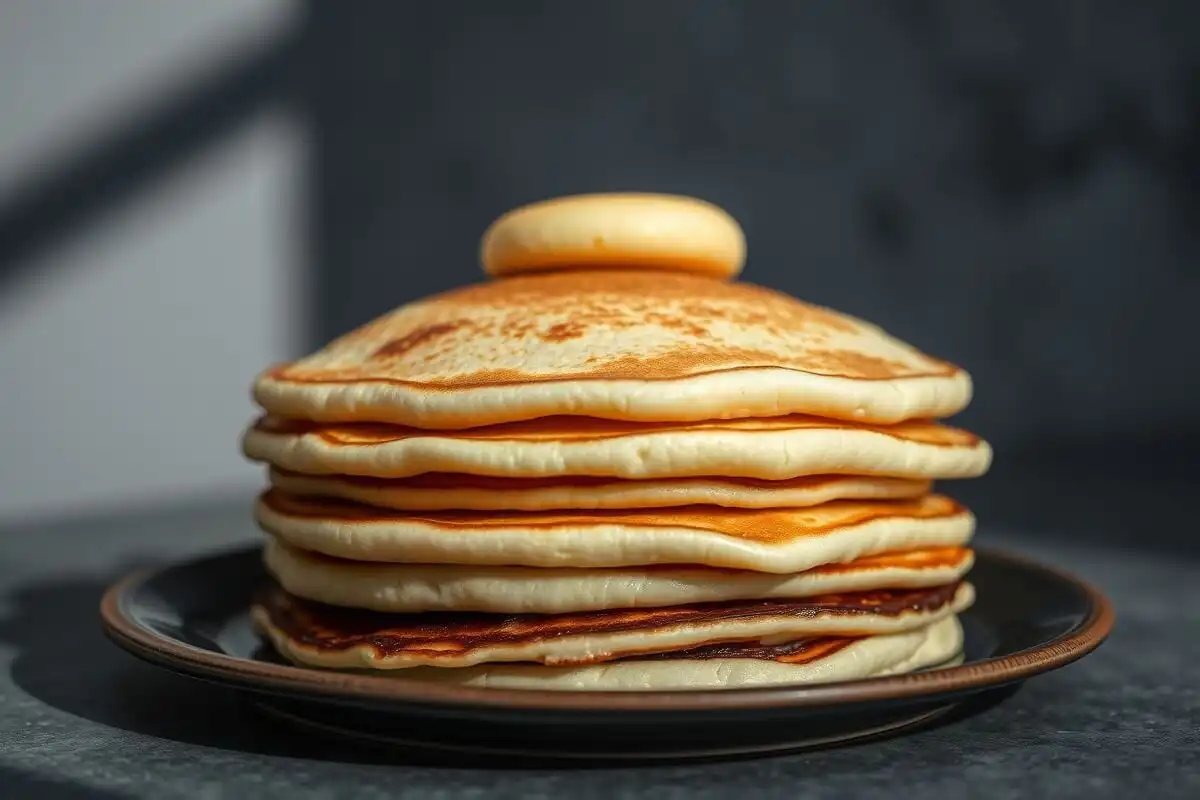

Fluffy Japanese Soufflé Pancakes That Actually Work
Ingredients
Equipment
Method
- Separate your eggs carefully, making sure no yolk gets into the whites. In a medium bowl, whisk together the egg yolks, milk, and vanilla extract until smooth and slightly pale. Sift in the cake flour and baking powder, then fold gently with a rubber spatula until you have a smooth, thick batter with no visible flour streaks.
- In a clean, dry bowl, add the egg whites and lemon juice. Using a hand mixer or stand mixer, beat on medium speed until foamy. Gradually add the sugar one tablespoon at a time while continuing to beat. Increase to medium-high speed and whip until stiff peaks form—the meringue should stand straight up when you lift the beaters and have a glossy, smooth texture. This usually takes 3-4 minutes.
- Add about one-third of the meringue to the egg yolk mixture and fold gently with a spatula, using a cutting and folding motion to preserve the air bubbles. Once partially combined, add the remaining meringue in two additions, folding carefully until just combined. The batter should be thick, fluffy, and hold its shape when scooped.
- Heat a large nonstick skillet over low heat and lightly coat with oil. Using a large spoon or piping bag, scoop about half the batter onto the pan, stacking it high to make 3-4 tall mounds. Add about 1 tablespoon of water to the empty part of the pan (not on the pancakes), then immediately cover with a lid. Cook for 5-6 minutes without lifting the lid. The steam helps cook the insides while the low heat prevents burning.
- Carefully remove the lid. The bottoms should be golden brown and the sides slightly set. Add the remaining batter on top of each pancake, stacking it high again. Add another tablespoon of water to the pan, cover, and cook for another 4-5 minutes. Using two spatulas or an offset spatula, very gently flip each pancake with a rolling motion. Add a splash more water, cover, and cook for 4-5 minutes until golden brown on the second side.
- Transfer the pancakes to plates right away. They’re best enjoyed warm, when they’re at their fluffiest. Dust with powdered sugar and serve with maple syrup, fresh whipped cream, or berries. The texture will start to settle as they cool, so don’t wait too long to dig in.
Notes
