
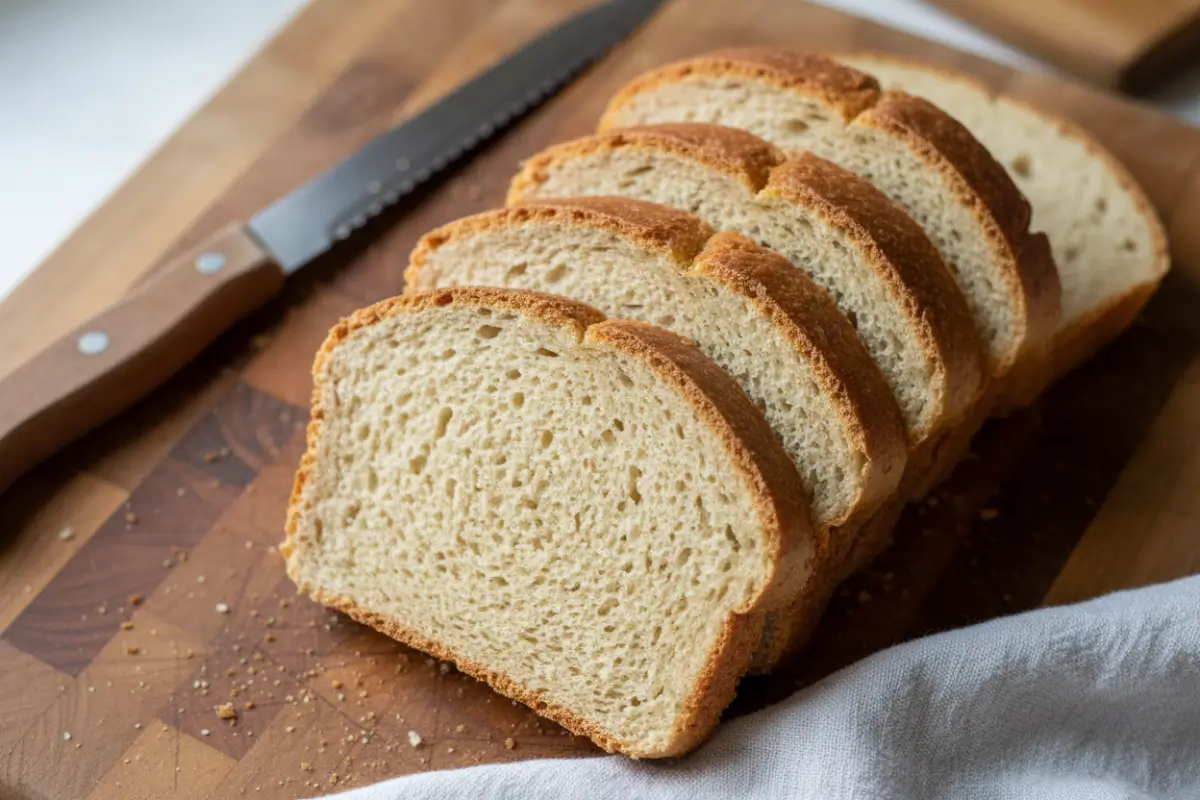
The smell hits first—warm, yeasty almost, though there’s no yeast here. Just almond flour doing its quiet magic in a hot oven. This No Knead Sandwich Bread (Low Carb Trick) changed how I think about low-carb eating. No kneading. No rising. No waiting three hours for something that tastes like cardboard.
Five minutes of blender work gives you actual sandwich bread. The kind that holds together for turkey clubs without crumbling into sad dust. I tested this twelve times in my Asheville kitchen before the texture finally clicked—fluffy inside, sturdy enough for peanut butter, with a golden crust that doesn’t taste like almonds pretending to be wheat.
Room temperature eggs matter here. Cold eggs won’t blend right, and you’ll get dense spots. The blender does everything—no stand mixer, no arm workout. Just buzz, pour, bake.
Why You’ll Love This Recipe
- Five-minute prep means sandwich bread on a Tuesday night
- Holds together for actual sandwiches, not just toast
- Neutral flavor that works sweet or savory
- Freezer-friendly so you’re never without bread
Key Ingredients
Blanched almond flour (2 cups plus 2 tablespoons) forms the base. Not almond meal—you need the finely ground, skin-free version or the texture goes gritty. I use Kirkland brand. It’s consistent and doesn’t cost eighteen dollars a bag.
Coconut flour (1/2 cup) absorbs moisture like nothing else. This is why the bread holds together instead of falling apart mid-bite. Don’t substitute more almond flour. The ratios break.
Baking soda (1 teaspoon) reacts with the vinegar for lift. This bread doesn’t rise like yeast bread, but it needs some height or you’re making a hockey puck.
Fine sea salt (1/2 teaspoon) balances the slight sweetness from coconut flour. Regular table salt works, but reduce to 1/4 teaspoon—it’s saltier by volume.
Five large eggs at room temperature blend smoother. Cold eggs don’t emulsify properly with oil. Set them on the counter thirty minutes before starting. The separated whites get whipped slightly in the blender, creating air pockets that make this bread light instead of dense.
Avocado oil (1/4 cup) stays neutral. Olive oil makes it taste like focaccia, which isn’t bad but isn’t sandwich bread. Melted coconut oil works if you like a hint of coconut.
Water (3/4 cup) thins the batter just enough to pour. Too thick and it won’t bake through. Too thin and it collapses.
Apple cider vinegar (1 teaspoon) activates the baking soda. You won’t taste it. White vinegar works too.
Instructions
Preheat your oven to 350°F. Grease an 8.5-inch loaf pan thoroughly—bottom, sides, corners. I use butter. Coconut oil works. Don’t skip this or you’ll chisel bread out later.
Whisk the dry ingredients. Dump almond flour, coconut flour, baking soda, and salt into a large bowl. Break up any coconut flour clumps with your fingers. Whisk until one color throughout. Set aside.
Separate the eggs. Crack them one at a time. Yolks go in the blender. Whites go in a small bowl nearby. If you break a yolk into the whites, fish it out—you need those whites to whip up later.
Blend the yolk mixture. Add oil, water, and vinegar to the blender with the yolks. Pulse on medium for five seconds. The mixture turns pale yellow and slightly thick. Stop.
Let it rest. Turn off the blender. Wait one full minute. This lets the liquids hydrate slightly, which sounds like nonsense but makes the final texture better. I tested it. It matters.
Add the whites and blend. Pour in the egg whites. Blend on medium for 10-15 seconds until frothy—you’ll see bubbles and the mixture nearly doubles in volume. This is your leavening. Don’t overdo it or the bubbles collapse.
Add dry ingredients immediately. Dump all the flour mixture into the blender at once. Pulse on high for 5-10 seconds maximum. The batter goes from lumpy to smooth fast. Stop as soon as you don’t see flour streaks. Over-blending makes it dense.
Pour into the pan. The batter’s thick but pourable, like pancake batter. Scrape it into your greased loaf pan. Use a spatula to smooth the top into an even layer—this helps it bake uniformly. Tap the pan once on the counter to release air bubbles.
Bake for 50-70 minutes. Start checking at 50 minutes with a toothpick or cake tester. Insert it into the center. It should come out clean or with one or two crumbs. Wet batter means it needs more time. The top turns deep golden brown, almost caramel-colored. The edges pull away from the pan slightly.
Cool in the pan for ten minutes. This bread is fragile when hot. Let it set up before moving it. After ten minutes, run a knife around the edges and turn it out onto a wire rack. Cool completely before slicing—at least an hour. Warm bread crumbles.
Tips & Variations
Room temperature eggs blend smoother. Cold eggs don’t emulsify right and you get dense spots. Thirty minutes on the counter is enough.
Don’t over-blend after adding flour. Five seconds is often enough. The batter should be smooth but not overworked. Over-blending develops too much structure and makes it gummy.
Slice with a serrated knife. This bread has a tender crumb. A regular knife smashes it. Use a gentle sawing motion.
Make it seeded: Press sunflower or pumpkin seeds into the top before baking for crunch and visual appeal.
Make it herbed: Add 2 teaspoons Italian seasoning to the dry ingredients for sandwich bread that tastes like focaccia.
Storage & Pairings
Store at room temperature for two days wrapped in a clean kitchen towel. Refrigerate up to a week in an airtight container—it firms up but toasts beautifully. Freeze slices with parchment between them for up to three months. Toast from frozen.
Perfect for turkey clubs, grilled cheese, avocado toast, or French toast. The neutral flavor works with everything.
Frequently Asked Questions
Can I make this without a high-speed blender?
You can use a regular blender or even a hand mixer, but the texture won’t be quite as light. The high-speed blender whips more air into the egg whites. If using a hand mixer, beat the whites to soft peaks separately before folding into the yolk mixture, then fold in dry ingredients by hand.
Why is my bread dense in the middle?
Usually means the eggs were too cold or the batter was over-mixed after adding flour. Room temperature eggs blend better and create more air pockets. Also check your oven temperature with a thermometer—if it runs cool, the bread won’t set properly.
💡 Loved this recipe? Follow Us on Pinterest for more!
Conclusion
This No Knead Sandwich Bread (Low Carb Trick) makes low-carb eating less annoying. Five minutes of work, one hour of baking, and you’ve got real sandwich bread that doesn’t fall apart or taste like a science experiment. Make it Sunday. Eat sandwiches all week.
Easy No Knead Sandwich Bread
Ingredients
Equipment
Method
- Preheat your oven to 350°F. Grease an 8.5-inch loaf pan thoroughly.
- Whisk the dry ingredients until combined.
- Separate the eggs, placing the yolks in a blender and the whites in a separate bowl.
- Blend the yolks with oil, water, and vinegar until thick and pale yellow.
- Let the mixture rest for one minute to hydrate.
- Add the whites to the blender and blend until frothy.
- Add dry ingredients to the blender and pulse until no flour streaks remain.
- Pour the thick batter into the greased loaf pan, smoothing the top.
- Bake for 50-70 minutes, checking at 50 minutes with a toothpick.
- Cool the bread in the pan for 10 minutes before transferring to a wire rack.
