
The smell hits first—that tangy, yeasty warmth that makes you lean into the oven door. Then comes the golden crust, crackling as it cools. This gluten free sourdough sandwich bread doesn’t apologize for what it isn’t. It’s tender. It slices clean. It makes a damn good BLT. Learning how to make sourdough sandwich bread that’s gluten free takes patience, but the payoff is a loaf that actually holds together between your fingers. No crumbling. No weird aftertaste. Just bread that tastes like bread.
I’ve been tweaking this recipe in my Asheville kitchen for months, adjusting hydration and proofing times until I got that perfect springy crumb. The secret? Psyllium husks and a long, slow rise. Your gluten free starter does the heavy lifting while you sleep.
Why You’ll Love This Recipe
- Actually slices cleanly for sandwiches without falling apart in your hands
- Tender crumb that doesn’t taste “gluten free” or gritty
- Flexible timing works around your schedule with overnight proofing options
- Real sourdough tang from active starter, not vinegar tricks
Key Ingredients
Whole milk creates richness and helps the crumb stay soft for days. The fat content matters here. Skim milk won’t give you the same tender texture. Dairy-free alternatives work, but choose full-fat versions—oat or cashew milk are solid picks.
Psyllium husks are non-negotiable. They create the stretchy structure gluten would normally provide. Whole husks give you better texture than powder, though powder works in a pinch. You’ll see the dough transform into something that actually looks like bread dough once the psyllium hydrates. Magic.
Active gluten free sourdough starter is your leavening agent. It should be bubbly and doubled within 4-6 hours of feeding. If your starter’s sluggish, this bread won’t rise properly. Feed it the night before you plan to bake. Room temperature starter works best.
Kim’s gluten free bread flour blend provides the base structure. It’s a mix of rice flours, starches, and xanthan gum. You can substitute other gluten free bread flour blends, but results vary wildly. Stick with blends specifically designed for yeast breads, not all-purpose gluten free flour.
Butter appears twice—melted into the dough for richness, then brushed on after baking for that bakery-style soft crust. The fat keeps the bread from drying out. Dairy-free butter works fine, though the flavor won’t be quite as deep.
Baking powder seems odd in sourdough, but it gives extra lift insurance. Gluten free doughs are heavy. The baking powder activates during baking, creating additional air pockets when the sourdough culture might not be enough on its own.
Kosher salt balances the sweetness and strengthens the dough structure. Don’t skip it or reduce it. Undersalted gluten free bread tastes flat and weird.
Instructions
Mix the dough. Add milk, melted butter, psyllium husks, sugar, active starter, flour blend, salt, and baking powder to your stand mixer bowl in that exact order. Attach the dough hook. Mix on medium for five full minutes. The dough will look shaggy at first, then suddenly come together into a thick, sticky mass. Scrape down the sides. The psyllium needs time to fully hydrate, so don’t rush this step.
First proof. Cover the bowl with plastic wrap or a damp towel. Set it somewhere draft-free. Now wait. This takes 6-8 hours at room temperature, sometimes longer if your kitchen’s cold. The dough should double in size and look puffy with visible air bubbles on the surface. In Asheville’s mountain mornings, I often let mine proof overnight on the counter. Patience here makes or breaks the texture.
Chill the dough. Transfer the bowl to the refrigerator for at least 5-6 hours, preferably overnight. Cold dough is manageable dough. Gluten free dough is naturally sticky as hell. Chilling firms up the fats and makes shaping possible without adding excessive flour that would dry out your finished loaf.
Prep your pan. Grease an 8.5 by 4-inch Pullman loaf pan thoroughly. Line it with parchment paper, leaving overhang on the long sides for easy removal. This dough sticks aggressively to bare metal.
Shape the loaf. Pull the cold dough onto a well-floured surface. Flour your hands too. Knead gently for 2-3 minutes, folding the dough over itself. You’re knocking out large air pockets for a tighter sandwich crumb. Shape it into a rough rectangle about the length of your pan. Tuck the ends under and place it seam-side down in the prepared pan.
Second proof. Cover with plastic wrap. Let it rise until the dough reaches the top edge of the pan, at least. This takes 3-6 hours depending on room temperature. Don’t peek constantly—you’ll let out warmth. The dough should look puffy and hold a gentle fingerprint when poked. Underproofed bread will be dense. Overproofed will collapse in the oven.
Preheat and prep. Set your oven to 450°F. Move the rack to the lowest position. Remove the plastic wrap from your loaf. Use a bread lame or sharp serrated knife to score a single slash down the center, about half an inch deep. Brush the top gently with melted butter—don’t press hard or you’ll deflate the dough.
Bake covered. Place another loaf pan of equal size upside down over your bread, creating a makeshift Pullman lid. This traps steam and creates an even rise with a flat top perfect for sandwiches. Bake for 15 minutes at 450°F.
Finish baking. Remove the top pan carefully—it’ll be hot. Reduce oven temperature to 375°F. Continue baking for 45-60 minutes. The loaf should feel surprisingly light when you lift the pan. An instant-read thermometer inserted into the center should read at least 210°F. If the top browns too fast, tent it loosely with foil.
Cool completely. Tip the bread out immediately onto a wire rack. Brush all sides with remaining melted butter while it’s hot. The butter soaks in and keeps the crust tender. Now comes the hardest part: waiting. Let it cool completely, at least two hours. Really. Slicing warm gluten free bread gives you gummy, compressed slices that stick to the knife.
Tips & Variations
Check your starter’s strength. If your gluten free starter hasn’t doubled within 6 hours of feeding, it’s not ready to leaven bread. Feed it daily for a week before attempting this recipe. Weak starter equals dense bread.
Adjust proofing time seasonally. My kitchen drops to 62°F in winter. Proofing can take 10+ hours. In summer, 4-5 hours is plenty. Watch the dough, not the clock.
Try different milks. Coconut milk adds subtle sweetness. Almond milk works but creates a slightly drier crumb. Whatever you choose, use full-fat versions.
Make it dairy-free. Swap regular butter for plant-based versions. Earth Balance baking sticks work well. The texture stays nearly identical.
Add seeds or herbs. Fold in 2 tablespoons of seeds (sunflower, pumpkin) or dried herbs (rosemary, thyme) after the first mix for variety.
Storage & Pairings
Store completely cooled bread in an airtight bag at room temperature for 3 days. Refrigeration makes it stale faster. Freeze slices separated by parchment paper for up to 3 months. Toast straight from frozen. This bread makes excellent grilled cheese, French toast, or simple butter and jam toast. The mild sourdough tang pairs well with sharp cheddar, avocado, or deli meats.
FAQ
Can I use sourdough discard instead of active starter?
No. Discard lacks the leavening power needed for this bread to rise properly. You need freshly fed, bubbly starter at its peak. How to make sourdough sandwich bread that’s gluten free requires active cultures. Discard will give you a dense, flat loaf.
Why is my bread gummy inside?
You sliced it too early. Gluten free breads need complete cooling for the crumb to set properly. The internal structure continues firming up as it cools. Wait at least two hours after baking, preferably three. An undercooked loaf will also be gummy—always check that internal temperature hits 210°F.
💡 Loved this recipe? Follow Us on Pinterest for more!
Conclusion
Learning how to make sourdough sandwich bread that’s gluten free changes your kitchen game. You’ll have real sandwiches again. Toast that doesn’t crumble. The long proofing times teach patience, but that first slice makes it worth every minute of waiting. Now go make a sandwich.
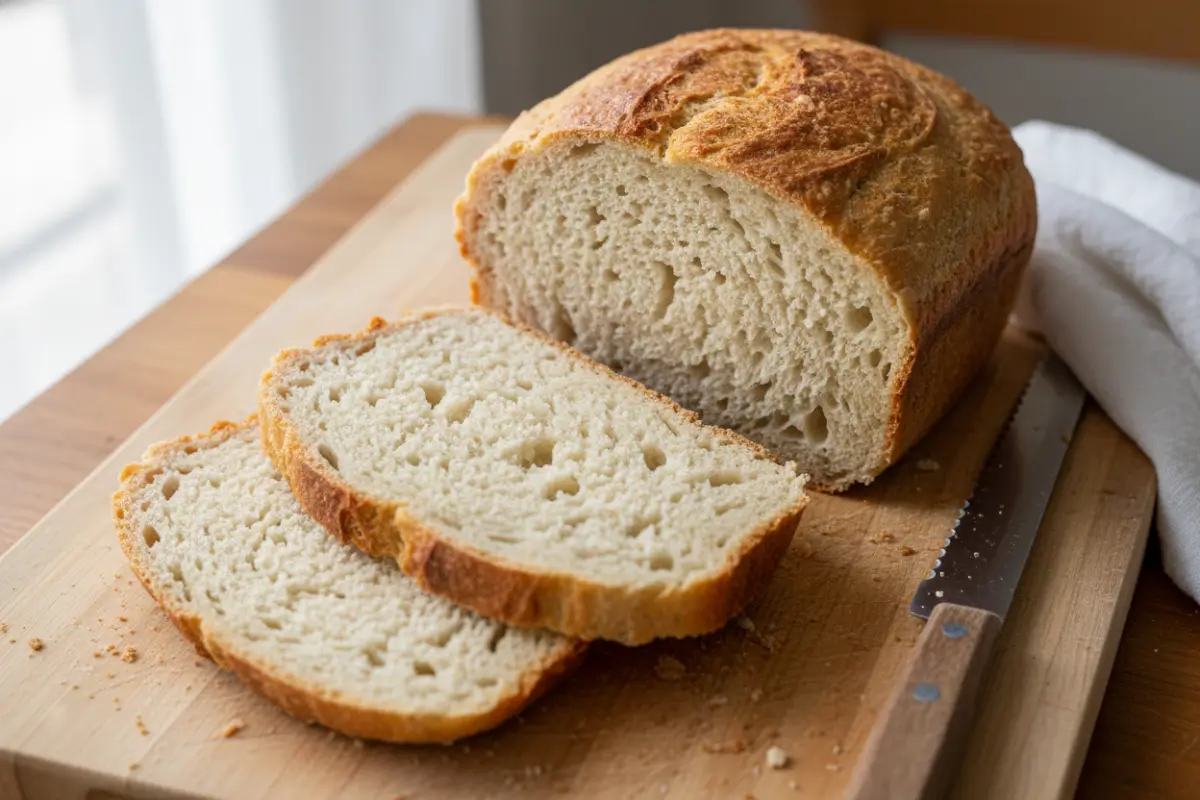
Perfect Gluten Free Sourdough Sandwich Bread
Ingredients
Equipment
Method
- Mix the dough by adding whole milk, melted butter, psyllium husks, sugar, active starter, and flour blend to the mixer in order. Mix on medium for five minutes until a thick mass forms.
- Cover the bowl with plastic wrap or a damp towel and let it proof at room temperature for 6-8 hours until doubled.
- Transfer the dough to the refrigerator for at least 5-6 hours, preferably overnight.
- Grease and line an 8.5 by 4-inch Pullman loaf pan with parchment paper.
- Shape the cold dough into a rectangle, tucking the ends under, and place it seam-side down in the prepared pan.
- Cover with plastic wrap and let it rise until it reaches the top of the pan, which takes 3-6 hours.
- Preheat the oven to 450°F, score the top gently and brush with melted butter.
- Cover the bread with another upside-down loaf pan to trap steam and bake for 15 minutes.
- Remove the top pan, reduce temperature to 375°F, and continue baking for an additional 45-60 minutes until a thermometer reads 210°F.
- Cool the bread completely on a wire rack and brush with remaining melted butter while hot.
