
There’s this moment when you slice into a loaf you baked yourself—the crust gives that gentle crack, the crumb pulls apart in soft layers, and your kitchen smells like an actual bakery instead of whatever’s in that grocery store bag. This gourmet homemade sandwich bread isn’t fussy or temperamental. It’s the kind of recipe that works on a Tuesday, uses seven ingredients you probably have, and makes sandwiches taste like you care.
I’ve made this bread in my Asheville kitchen more times than I’ve counted, and it’s never let me down. The crust stays tender enough for kids but has enough structure to hold up to whatever you pile on. The crumb? Soft but not squishy. It toasts beautifully. It makes French toast that doesn’t fall apart. It’s just good bread.
Why You’ll Love This Recipe
- Simple ingredient list – Seven items, nothing weird or hard to find
- Flexible schedule – Works around your day, not the other way around
- Forgiving dough – Handles beginner mistakes without turning into a brick
- Actual flavor – Butter and milk give it richness store bread can’t touch
Key Ingredients That Make the Difference
King Arthur Unbleached All-Purpose Flour (360g) forms the backbone here. Bread flour works too, but all-purpose gives you that tender crumb perfect for sandwiches. The protein content is just right—enough structure to rise beautifully, not so much that you end up with chewy doorstops.
Milk (113g) adds richness and keeps the bread soft for days. Whole milk gives the best flavor, but I’ve used skim when that’s what I had. The fat content affects tenderness slightly, but honestly? They all work. Room temperature is ideal, but don’t stress it.
Hot water (113g to 152g) is your texture control. Start with less, add more if needed. You want dough that’s tacky but not sticky, soft but not sloppy. The range exists because flour absorbs differently depending on humidity, age, even how you measured it.
Melted butter (57g) beats oil for flavor, though vegetable oil makes slightly softer bread that stays fresh longer. I use butter. Life’s short. Let it cool slightly before mixing so it doesn’t kill your yeast.
Granulated sugar (25g) feeds the yeast and adds a subtle sweetness that makes this gourmet homemade sandwich bread taste balanced, not bland. Don’t skip it.
Table salt (8g) controls fermentation and builds flavor. Without it, bread tastes flat no matter what else you do.
Yeast – Either active dry (dissolved first) or instant (mixed right in) works. Instant is easier. I keep it in my freezer where it stays potent for months.
How to Make Perfect Sandwich Bread
Measure the flour properly. Weigh it if you have a scale—360g is foolproof. No scale? Spoon flour into your measuring cup and sweep off the excess with a knife. Don’t scoop directly from the bag. That packs in extra flour and makes dry, dense bread.
Combine everything in a large bowl. If you’re using active dry yeast, dissolve it in a tablespoon of warm water first and let it sit for five minutes until foamy. Instant yeast goes straight in with the flour. Add milk, start with 113g of hot water, then the melted butter, sugar, and salt. Stir it together until it forms a shaggy mass.
Knead until smooth. Stand mixer with the dough hook takes 5 to 7 minutes on medium-low. The dough should clean the bowl sides but might stick slightly at the bottom—that’s perfect. By hand, knead for 6 to 8 minutes on a lightly floured surface. You’ll feel it transform from rough and sticky to smooth and elastic. Add more water by the tablespoon if it’s too stiff, more flour if it’s too wet. You want soft and supple, like a baby’s arm. Really.
First rise in a greased bowl. Cover it with a damp towel or plastic wrap. Let it rise somewhere warmish until puffy—1 to 2 hours depending on your kitchen temperature. It doesn’t need to double perfectly. Puffy and soft means ready.
Shape into a log. Turn the dough onto a lightly oiled counter. Pat it into a rough rectangle about 8 inches wide. Fold the top third down, then the bottom third up like a letter. Pinch the seam, then roll it gently under your palms to form a smooth 8-inch log. Tension on the surface helps it rise evenly.
Second rise in the pan. Place the log seam-side down in a greased 8½” x 4½” loaf pan. Cover loosely with greased plastic wrap. Let it rise for about 60 minutes. You’re looking for the dough to dome about an inch above the pan rim. Press a finger gently into the side—if the indent springs back slowly, it’s ready. If it springs back immediately, give it more time. If it doesn’t spring back at all, you’ve gone too far (still bake it, just know for next time).
Bake at 350°F for 30 to 35 minutes. The top should be light golden brown, not dark. Turn the loaf out and thump the bottom—it should sound hollow. Or use an instant-read thermometer; 190°F at the center means done.
Cool completely on a rack. I know it’s tempting. Don’t slice it hot. The crumb is still setting. Give it at least 30 minutes, preferably an hour.
Tips & Variations
Water temperature matters for active dry yeast. Too hot kills it, too cold slows it down. Aim for 105-110°F—feels warm but not uncomfortable on your wrist. Instant yeast doesn’t care.
Use the windowpane test to check if you’ve kneaded enough. Pinch off a small piece of dough and stretch it gently between your fingers. If it stretches thin enough to see light through without tearing, you’re done. If it tears immediately, keep kneading.
Don’t peek during the second rise. Seriously. Every time you lift that plastic wrap, you let out warmth and humidity. Trust the timing and the finger-poke test.
For whole wheat sandwich bread, replace up to half the all-purpose flour with whole wheat. Add an extra tablespoon or two of water since whole wheat absorbs more liquid. The texture will be heartier, the flavor nuttier.
For a softer crust, brush the hot loaf with melted butter right when it comes out of the oven. It also adds shine and flavor.
Storage & Pairings
Store completely cooled bread in a plastic bag at room temperature for 3 to 4 days. It makes exceptional toast on day three. Freeze sliced loaves for up to three months—pull out slices as needed and toast straight from frozen. This gourmet homemade sandwich bread pairs beautifully with everything from basic PB&J to loaded deli sandwiches, makes killer grilled cheese, and turns into the best French toast you’ll eat this year.
Frequently Asked Questions
Can I make this dough ahead?
Yes. After the first rise, punch it down, shape it, and refrigerate the pan covered tightly for up to 24 hours. Let it sit at room temperature for 30 minutes before baking. Cold dough takes longer to rise but develops better flavor.
Why didn’t my bread rise?
Check your yeast expiration date first. If it’s old or was stored improperly, it’s dead. Also, water that’s too hot (over 120°F) kills yeast instantly. Your kitchen might be too cold—try rising the dough in a turned-off oven with the light on for gentle warmth.
The Loaf You’ll Keep Making
This is the bread that turns you into someone who bakes bread. Not because it’s fancy or impressive, but because it’s reliable and makes your regular meals better. Once you’ve tasted a sandwich on bread you made yourself, the grocery store stuff feels like eating flavored air. Mix it up on Sunday, have fresh toast all week, and know exactly what went into every slice.
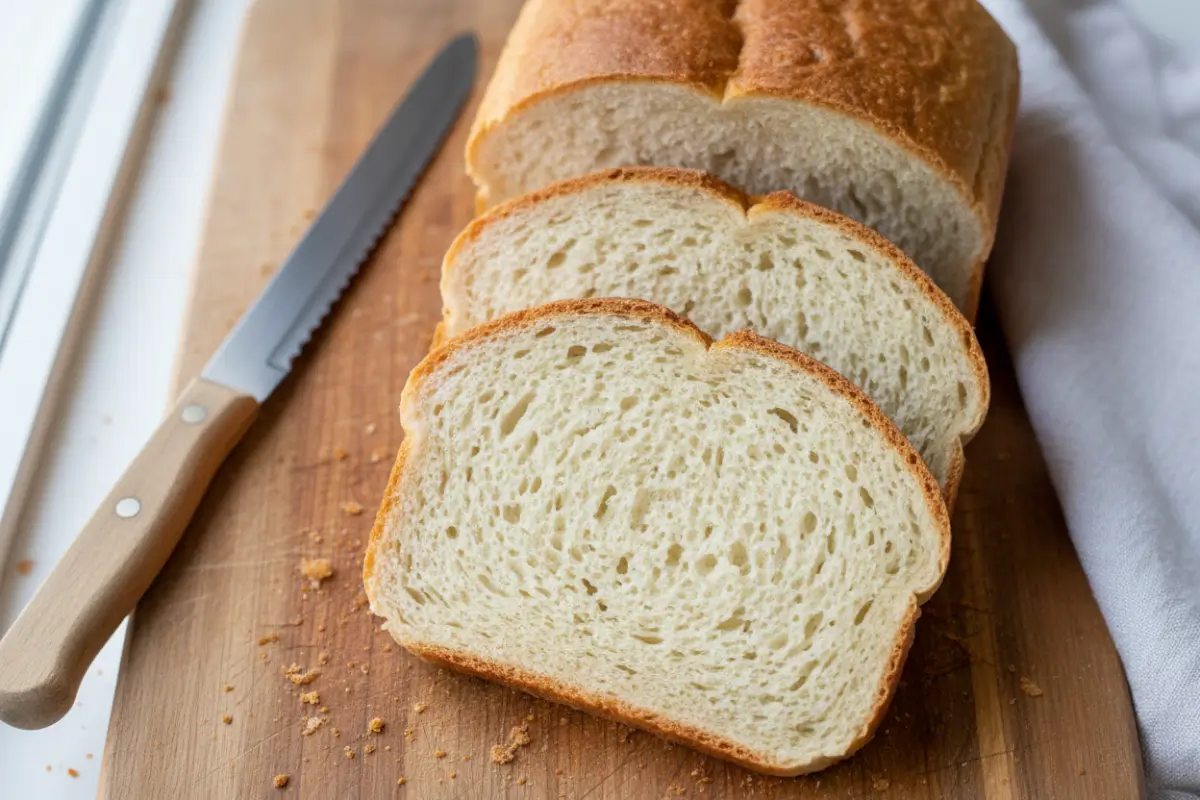
Easy Gourmet Homemade Sandwich Bread Recipe
Ingredients
Equipment
Method
- Measure the flour properly; weigh it if possible.
- Combine all ingredients in a large bowl and stir until it forms a shaggy mass.
- Knead dough until smooth, either by hand or with a stand mixer.
- Let the dough rise in a greased bowl until puffy, about 1 to 2 hours.
- Shape into a log and place in a greased loaf pan.
- Let it rise again in the pan for about 60 minutes until it domes above the rim.
- Bake at 350°F for 30 to 35 minutes.
- Cool completely on a rack before slicing.
