
There’s something about pulling a golden loaf from the oven on a cold January evening that makes the whole house feel right. This milk bread isn’t fussy or complicated—just cream, milk, and flour coming together into something impossibly soft and slightly sweet. The kind of bread you tear into while it’s still warm, steam rising from those pillowy layers. I’ve made this every winter weekend for three years now, and it never gets old.
Why You’ll Love This Recipe
- Ridiculously soft texture that stays tender for days
- Uses pantry staples you probably have right now
- Eight perfect pull-apart portions bake together in one loaf
- That cream-enriched dough creates the most delicate crumb
Key Ingredients
Heavy whipping cream and whole milk create the signature tenderness here. The fat content matters—it’s what makes this bread so different from standard white loaves. You’ll heat these together with sugar until they’re just simmering, then cool them down to wake up the yeast without killing it. That 110°F mark is real. Too hot and you’re starting over.
Active dry yeast needs those 10-15 minutes to bloom properly. You’ll see it puff and foam on the surface of your cooled milk mixture. That’s how you know it’s alive and ready to work. Instant yeast moves faster if that’s what you’ve got, but either works beautifully.
All-purpose flour is perfect here—no need for bread flour. Two cups measured correctly (spoon it in, level it off) gives you just enough structure without making the bread tough. You’ll add a bit more for rolling and shaping, but don’t go overboard. Too much flour during shaping makes the final loaf dry.
Granulated sugar does double duty. It feeds the yeast and adds a gentle sweetness that makes this homemade milk bread for cozy winter nights perfect for both breakfast toast and dinner rolls. Quarter cup in the dough, then another teaspoon for that optional glaze at the end.
Kosher salt balances everything. Three-quarters teaspoon seems small, but it’s enough to make the sweetness pop without tasting salty.
One egg mixed with milk becomes your wash. It’s what gives that bakery-style shine and deep golden color on top. The proteins in the egg brown beautifully in the oven.
Instructions
Make the milk mixture. Pour your cream, milk, and quarter cup sugar into a small saucepan. Set it over medium heat and stir occasionally as it warms. You want it just simmering—tiny bubbles around the edges. Kill the heat immediately and let it cool. This takes about 15 minutes. Test with your finger or an instant-read thermometer. Below 110°F means go time.
Bloom the yeast. Sprinkle that teaspoon of active dry yeast right over the surface of your cooled milk mixture. Don’t stir yet. Just let it sit for 10-15 minutes. It’ll puff up and get foamy, proof that your yeast is alive and ready. If nothing happens, your liquid was too hot or your yeast is dead. Start over.
Mix and knead the dough. Dump flour and salt into your stand mixer bowl. Give it a quick stir with a spoon to distribute the salt. Pour in your puffy yeast mixture. Attach the dough hook and run it on speed 2. This takes about 10 minutes. The dough will look shaggy at first, then gradually come together into a smooth, elastic ball that pulls away from the bowl sides. It should feel slightly tacky but not sticky.
First rise. Scrape that dough onto a floured countertop. Use floured hands to shape it into a smooth ball, tucking the edges underneath. Drop it into an oiled bowl, turn it once to coat, and cover with a damp towel or plastic wrap. Find a warm spot—I set mine near the oven vent. Let it rise 1-2 hours until doubled. Really doubled. Poke it with your finger. If the indent stays, you’re ready.
Divide and shape. Turn the risen dough onto a lightly floured counter. Use a bench scraper or knife to divide it into 8 equal pieces. Here’s where a scale helps—each portion should weigh about 60 grams. Roll each piece into a smooth ball by cupping your hand over it and moving in circles. The tension on the surface matters for even rising.
Prep your pan. Grease a standard loaf pan thoroughly. Cut a piece of parchment to fit the bottom with excess hanging over the long sides—these become handles later. Grease the parchment too. Arrange your 8 dough balls in two rows of four. They’ll touch slightly, which is perfect.
Second rise. Cover the pan and return it to that warm spot. Another 1-2 hours until the dough is very puffy and nearly doubled again. The balls will merge together, creating those signature pull-apart sections. Don’t rush this. Underproofed bread bakes dense.
Prepare for baking. Heat your oven to 350°F. Beat one egg with a tablespoon of milk in a small bowl. This is your wash. If you’re out of eggs, straight cream or milk works too—you just won’t get quite the same shine.
Apply the wash. Use a soft pastry brush to gently paint egg wash over the entire top surface. Light touch here. You don’t want to deflate all that beautiful rise you just waited for. Get into the crevices between balls.
Bake. Slide the pan into your preheated oven. Set a timer for 24 minutes. The top should turn deep golden brown, and the internal temperature should hit 190°F if you want to check. Your kitchen will smell incredible.
Optional glaze. Mix one teaspoon sugar with one teaspoon just-boiled water. Stir until dissolved. The second that bread comes out of the oven, brush this simple syrup over the top. It adds extra shine and a hint more sweetness. Not necessary, but nice.
Let it cool in the pan for 10 minutes, then use those parchment handles to lift the whole loaf out. Cool on a rack if you can wait. I usually can’t.
Tips & Variations
Temperature matters most. That 110°F threshold for the milk mixture isn’t negotiable. Too hot kills yeast. Too cool and it won’t activate properly. An instant-read thermometer eliminates guesswork.
The windowpane test works. After kneading, pinch off a small piece of dough and stretch it thin between your fingers. If it forms a translucent membrane without tearing, your gluten is developed. If it rips immediately, knead another minute or two.
Try tangzhong method. Cook 2 tablespoons flour with 5 tablespoons water until it forms a paste, cool it, then add to your dough. This Asian technique makes the bread even softer and extends shelf life. My Asheville kitchen stays humid, so I skip it, but it’s brilliant in dry climates.
Make it savory. Drop the sugar to 1 tablespoon and add herbs—rosemary, thyme, or garlic powder mixed into the flour. Brush with melted butter instead of egg wash.
Go mini. Divide the dough into 12 portions instead of 8. Bake in a muffin tin for individual rolls. Reduce baking time to 18-20 minutes.
Storage & Pairings
Keep this homemade milk bread for cozy winter nights wrapped in plastic at room temperature for 3 days. It stays remarkably soft. Freeze individual portions wrapped tightly for up to 3 months. Toast straight from frozen.
Serve with salted butter and jam for breakfast. Use for French toast—the texture is perfect. Makes incredible grilled cheese or turkey sandwiches. Pair with soup, stew, or any meal that needs something to soak up sauce.
FAQ
Can I make this without a stand mixer?
Yes. Mix ingredients in a large bowl, then knead by hand on a floured surface for 12-15 minutes. Your arm will get tired, but the dough will come together. You’re looking for smooth, elastic texture that bounces back when poked.
Why didn’t my bread rise?
Three common issues: dead yeast (check expiration dates), liquid too hot (killed the yeast), or too-cold rising environment. Yeast needs warmth to work. Try the oven with just the light on, or near a sunny window.
💡 Loved this recipe? Follow Us on Pinterest for more!
Wrap Up
This bread makes winter weekends better. Simple ingredients, straightforward process, incredible results. Make it once and you’ll understand why homemade milk bread for cozy winter nights beats anything from the store. The house smells amazing, the texture is unbeatable, and those eight pull-apart sections disappear fast. Really fast.
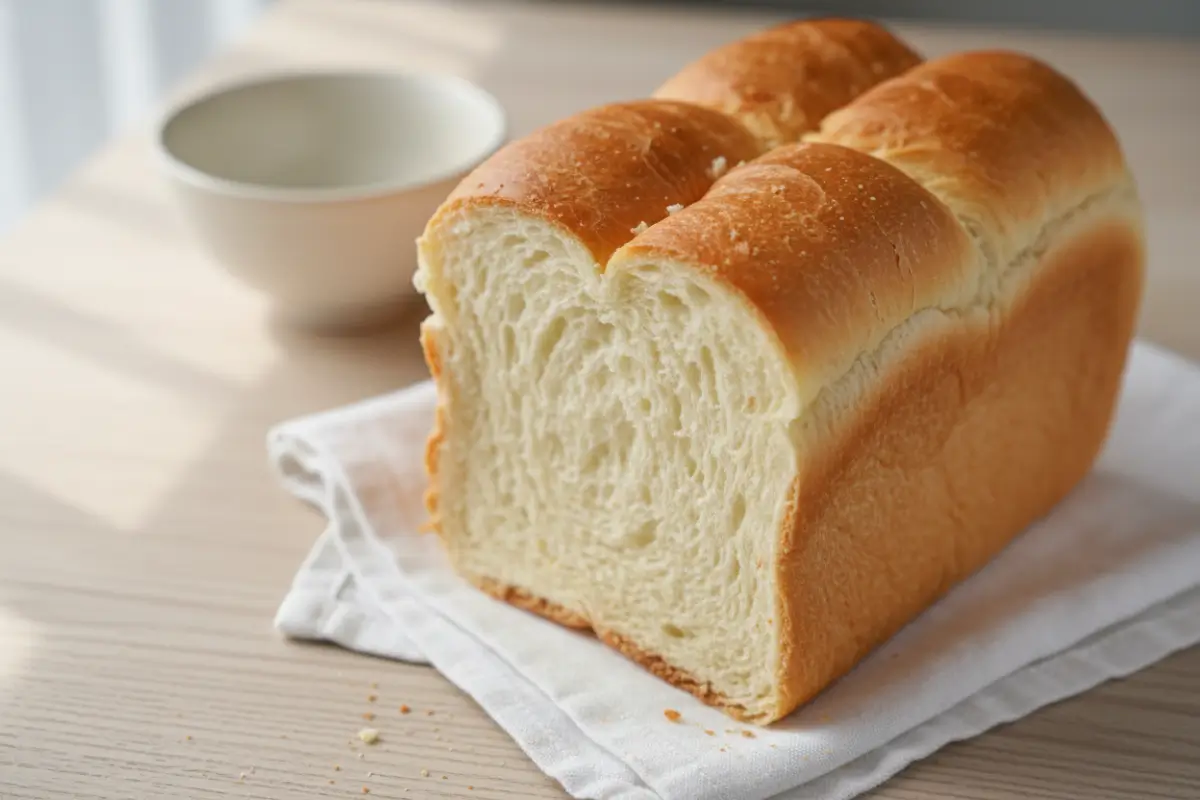
Perfect Homemade Milk Bread for Cozy Winter Nights
Ingredients
Equipment
Method
- Pour cream, milk, and sugar into a saucepan. Heat until just simmering, then let cool.
- Sprinkle yeast over cooled milk mixture and let it sit for 10-15 minutes until foamy.
- Mix flour and salt in a stand mixer bowl. Add yeast mixture and knead until smooth.
- Shape the dough into a ball and place in a greased bowl. Cover and let rise for 1-2 hours until doubled.
- Divide the risen dough into 8 pieces and shape each into a ball.
- Prepare a loaf pan by greasing it and lining it with parchment. Place balls in the pan.
- Cover and allow the dough to rise again for 1-2 hours until puffy.
- Preheat oven to 350°F. Mix egg with milk for wash and apply to the dough.
- Bake for 24 minutes until golden brown. Brush with syrup for extra shine if desired.
- Let the bread cool for 10 minutes in the pan, then remove to cool on a rack.
