
There’s nothing quite like pulling a golden loaf from your oven, tapping the bottom to hear that perfect hollow thump. This farmhouse white sandwich bread delivers that moment every time—crusty exterior, pillowy crumb, and the kind of buttery aroma that makes everyone wander into the kitchen. It’s the load of bread your family will love, whether you’re making Monday morning toast or Saturday afternoon grilled cheese.
I’ve been baking this recipe in my Asheville kitchen for years, tweaking ratios until I found the perfect balance. The secret? Very strong bread flour and a steam trick that creates bakery-quality crust at home.
Why You’ll Love This Recipe
- Beginner-friendly: Straightforward steps with clear visual cues
- Versatile timing: Make it by hand or use your stand mixer
- Perfect texture: Soft enough for sandwiches, sturdy enough for French toast
- Freezer hero: Bakes two smaller loaves you can stash for later
Key Ingredients
Very Strong White Bread Flour (600g): This isn’t all-purpose territory. Strong bread flour has higher protein content—around 12-14%—which develops the gluten structure you need for that springy, chewy texture. Look for labels that specifically say “bread flour” or “very strong.” In Asheville, I grab King Arthur Bread Flour, but any quality brand works. The extra protein creates those beautiful air pockets and gives your loaf structure that won’t collapse under peanut butter.
Instant Yeast (1½ tsp): Instant yeast (also called rapid-rise) mixes directly into flour without proofing. It’s more forgiving than active dry and works faster. I use Dove’s Farm, but Red Star and SAF are excellent. Store it in your freezer—it stays potent for months. Fresh yeast makes the difference between a loaf that rises confidently and one that limps along.
Softened Butter (50g): Four tablespoons of butter enriches the dough, creating tender crumb and golden color. “Softened” means room temperature—it should dent easily when pressed but not be greasy or melted. Cold butter won’t incorporate; melted butter changes the dough’s hydration. Let it sit on your counter for 30 minutes before starting.
Tepid Water (350ml): Temperature matters here. Tepid means around 95-100°F—warm to the touch but not hot. Too hot kills yeast; too cold slows it down. I fill my kettle, let it boil, then add cold water until it feels like bathwater. This activates the yeast quickly without shocking it.
Fine Sea Salt (2 tsp): Salt controls yeast activity and strengthens gluten. It also makes bread taste like bread instead of bland foam. Don’t skip it or reduce it—this ratio is calibrated. Kosher salt works too, but use the same weight measurement since crystal sizes vary.
Caster Sugar (1 tsp): Just a touch feeds the yeast and encourages browning. Caster sugar (superfine) dissolves faster than granulated, but regular white sugar works in a pinch. You won’t taste sweetness—it’s purely functional.
How To Make Farmhouse White Sandwich Bread
Mixing By Hand: Combine flour, softened butter chunks, salt, sugar, and yeast in your largest bowl. Use your fingers to rub the butter into the flour until it looks like coarse sand. Create a well in the center—think of it as a flour volcano. Pour in about a third of the water. Stir with a wooden spoon, gradually adding more water and pulling flour from the edges. The dough will look shaggy at first, then start clumping. Add water slowly; you might not need all 350ml depending on humidity. When it forms a rough ball that clears the bowl sides, stop adding water.
Kneading: Dump the dough onto a floured counter. Knead by pushing the dough away with your palm heel, folding it back, rotating a quarter turn, and repeating. It’s rhythmic—push, fold, turn. For 10-12 minutes, the dough transforms from sticky and rough to smooth and elastic. Add flour sparingly if it sticks, but resist overdoing it. The dough should feel slightly tacky but not glue-like.
Windowpane Test: Tear off a golf ball-sized piece. Gently stretch it between your fingers, creating a thin membrane. If you can stretch it thin enough to see light through without tearing, the gluten is developed. If it tears immediately, knead another 2-3 minutes.
Stand Mixer Method: Add flour, butter pieces, salt, sugar, and yeast to the bowl fitted with a dough hook. Make a well and pour in water. Mix on speed 1 (the slowest setting) for 1-2 minutes until ingredients combine into a shaggy mass. Increase to speed 2 and let it work for 8-10 minutes. The dough will slap against the bowl sides, then gradually pull away and climb the hook. It’s mesmerizing. Check with the windowpane test.
First Rise: Grease a large bowl with butter or oil. Place your dough ball inside, turning once to coat all sides. This prevents a dry skin from forming. Cover with a damp tea towel or plastic wrap. Set it somewhere warm—I use my oven with just the light on, or near (not on) a sunny windowsill. Wait 90 minutes or until doubled. Poke it gently; if the indent stays, it’s ready.
Shaping: Oil your work surface lightly—this prevents sticking without adding excess flour that would create dry spots. Turn out the dough. Press it gently into a rectangle roughly the width of your loaf pan and about 8 inches tall. Don’t punch it down aggressively; you want to keep some air. Starting from the short end, roll the dough toward you like a sleeping bag, keeping tension even. Pinch the seam closed with your fingers. Turn it seam-side down.
Pan Prep: Grease your 9×5-inch loaf tin thoroughly. Place the shaped loaf seam-side down in the pan. It should fill about two-thirds of the tin. Cover loosely and let it rise 45 minutes in that same warm spot. The dough should crown about an inch above the pan rim. This is the load of bread your family will love taking shape.
Oven Setup: Preheat to 230°C (450°F). Place an empty shallow baking pan on the oven’s bottom rack. This is crucial for the steam trick that creates crusty, bakery-style crust.
Scoring: Grease a sharp knife or lame with butter. Make three diagonal slashes across the loaf top at 45-degree angles, about half an inch deep. This controls where the bread expands and looks professional. Dust lightly with flour using a small sieve.
Baking: Slide your loaf onto the middle rack. Quickly pour one cup of hot tap water into that preheated pan on the bottom rack. Close the door gently—you want steam, not a temperature drop. Bake 10 minutes at 230°C. The initial blast creates oven spring—that dramatic rise. Reduce heat to 200°C (180°C fan/350°F) and bake 30-35 minutes more until deep golden brown.
Doneness Check: Turn the loaf out onto a cooling rack immediately—leaving it in the pan creates a soggy bottom. Tap the base firmly. It should sound hollow, like knocking on a door. For precision, use an instant-read thermometer inserted into the center: 90-95°C (194-203°F) means it’s done. Let it cool at least 30 minutes before slicing. I know. It’s torture.
Tips & Variations
Pro tip one: Make two smaller loaves instead of one large. Use 8×4-inch pans, divide the dough in half after the first rise, and bake for just 15-20 minutes at the lower temperature. Freeze one for later.
Pro tip two: If your kitchen is cold, create a proofing box. Boil water in a measuring cup, place it in your turned-off oven, and put your covered dough bowl next to it. Close the oven door. Instant warm environment.
Pro tip three: Brush the hot loaf with melted butter right when it comes out. This creates an incredibly soft, glossy crust—perfect for sandwich bread.
Whole wheat variation: Replace 200g of white flour with whole wheat flour. Add an extra 2-3 tablespoons of water since whole wheat absorbs more liquid.
Herb variation: Knead in 2 tablespoons of chopped fresh rosemary and a tablespoon of dried oregano after the first rise. Incredible with soup.
Storage & Pairings
Store completely cooled bread in a plastic bag at room temperature for 3-4 days. Freeze slices with parchment between them for up to 3 months—toast straight from frozen. This bread makes exceptional French toast, croutons, and breadcrumbs. Pair with homemade jam, use for club sandwiches, or serve alongside chili.
Frequently Asked Questions
Can I use all-purpose flour instead of bread flour?
You can, but the texture won’t be quite as chewy and structured. All-purpose flour has less protein, so your loaf will be slightly denser and may not rise as dramatically. If that’s all you have, it’ll still taste good—just different from the intended result.
Why didn’t my bread rise properly?
Check your yeast’s expiration date first. Old yeast is the most common culprit. Second, verify your water temperature—too hot kills yeast, too cold stalls it. Finally, make sure your rising spot is actually warm, around 75-80°F. Cold kitchens need that oven-with-light-on trick.
Final Thoughts
This farmhouse white sandwich bread proves you don’t need a bakery when you’ve got flour, yeast, and 15 minutes of active work. The smell alone is worth it, but that first slice—still slightly warm, with butter melting into the crumb—is pure
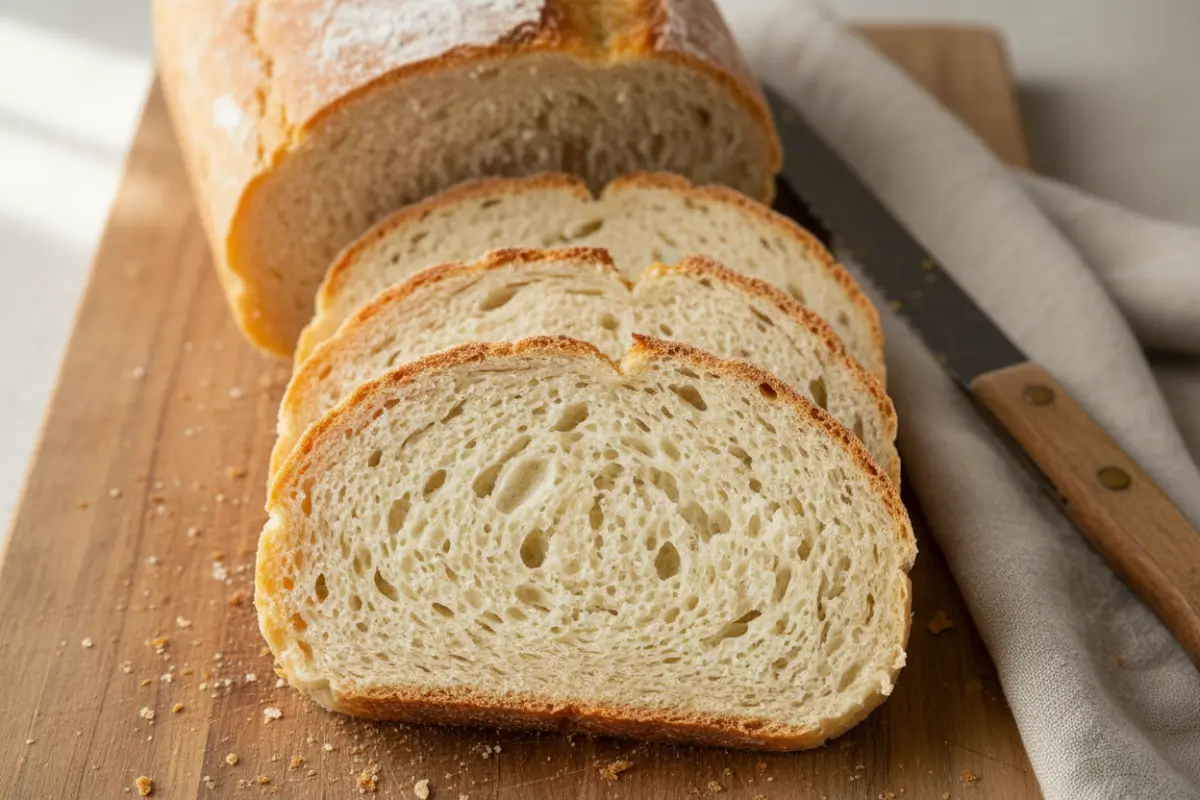
Perfect Load Of Bread Your Family Will Love
Ingredients
Equipment
Method
- Combine flour, softened butter, salt, sugar, and yeast in a large bowl.
- Mix in water gradually until a shaggy dough forms.
- Knead by hand or using a stand mixer until smooth and elastic.
- Place the dough in a greased bowl and let rise until doubled.
- Shape the dough and place it in the greased loaf tin.
- Let it rise again until crowned above the pan rim.
- Preheat the oven and set up for steam.
- Score the top of the loaf and bake until golden brown.
- Cool before slicing to prevent a soggy bottom.
