
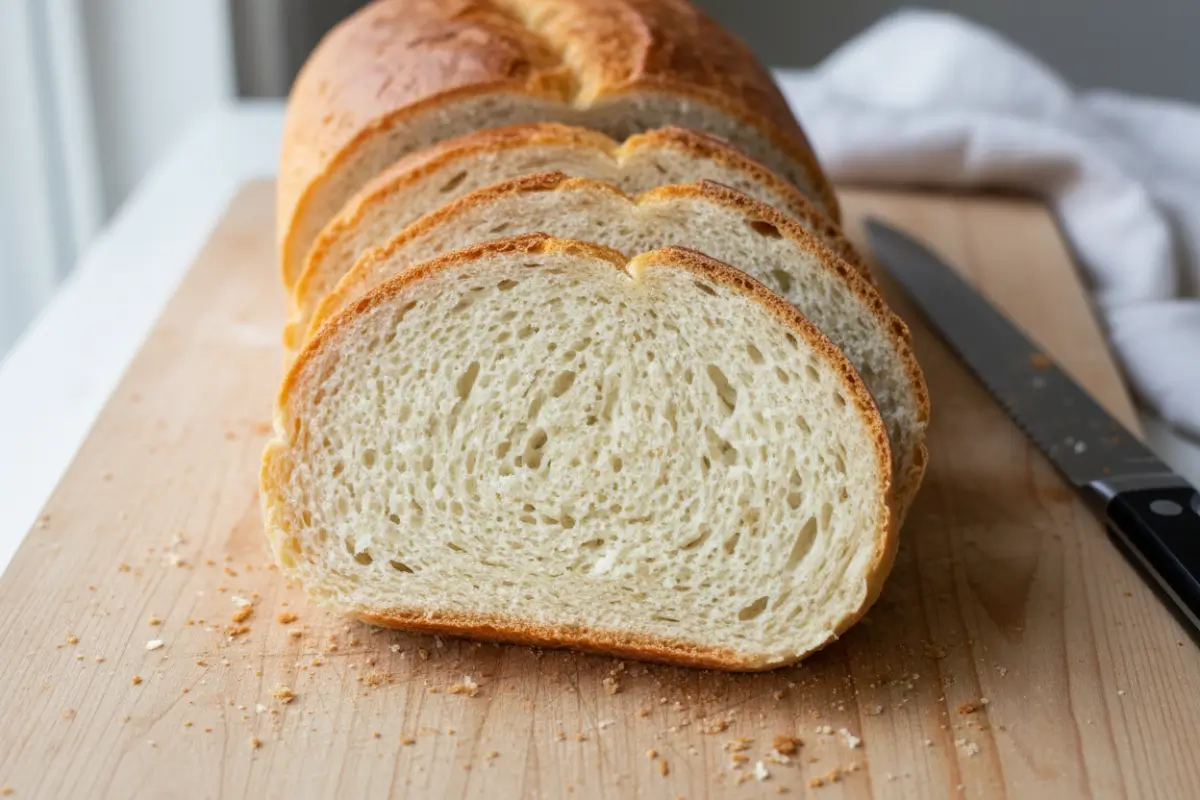
There’s nothing quite like slicing into a loaf of homemade white bread while it’s still warm, watching steam rise as the knife glides through that pillowy crumb. This recipe delivers two perfect loaves with golden-brown tops and an interior so soft it practically melts on your tongue. The secret? Patience with the rise, gentle handling of the dough, and just enough butter brushed on top to create that glossy finish. This homemade white bread is fluffy enough for sandwich duty but sturdy enough to hold up to thick spreads without falling apart. My Asheville kitchen stays cool year-round, so I proof my dough near the oven with just the light on—creates the perfect warm spot.
Why You’ll Love This Recipe
- Makes two full loaves from one batch of dough
- Soft crumb that stays fresh for days without preservatives
- Simple ingredients you already have in your pantry
- Foolproof method that works even if you’ve never made bread before
Key Ingredients
Warm water is your foundation here. Not hot, not cold—just warm to the touch, around 100-110°F. Too hot kills the yeast. Too cold and it won’t activate properly. Think baby bottle temperature.
Active dry yeast needs those five minutes in warm water to wake up and start bubbling. You’ll see foam forming on the surface—that’s how you know it’s alive and ready to work. Skip this step and your bread won’t rise.
Unsalted butter gets divided throughout the recipe. Three tablespoons go into the dough for richness and tenderness. The remaining two get melted and brushed on before baking and again after, creating that bakery-style sheen and adding flavor to the crust.
Sugar feeds the yeast and helps with browning. Quarter cup sounds like a lot, but it’s distributed across two large loaves. You won’t taste sweetness—just a balanced, slightly rich flavor.
Salt controls yeast activity and builds flavor. Without it, your bread tastes flat and rises too quickly. One tablespoon for seven cups of flour is the right ratio.
All-purpose flour creates the structure. You might not need all seven cups. Stop adding when the dough cleans the bowl sides and feels tacky but not sticky. Humidity affects flour absorption, so trust your hands more than the measuring cup.
Instructions
Start by adding both yeast packets to your mixing bowl with half a cup of that warm water. Stir it together and walk away for five minutes. This activation step is non-negotiable. When you come back, the mixture should look foamy and smell slightly yeasty. Now add the remaining two and a half cups of warm water, three tablespoons of room-temperature butter (cut it into chunks so it incorporates easier), sugar, and salt. Stir until the butter mostly melts and everything combines.
Pour in the first four cups of flour. If you’re mixing by hand, use a sturdy wooden spoon. If you’ve got a stand mixer, attach the dough hook and set it to low speed. Either way, you’re about to spend ten minutes mixing while gradually adding the next three cups of flour. This slow addition lets the flour hydrate properly and develop gluten without overworking the dough.
Watch the dough as it transforms. It’ll go from shaggy and rough to smooth and elastic. The dough should pull away from the bowl sides, leaving them mostly clean. Touch it—feels tacky, right? Like a Post-it note that sticks but doesn’t leave residue. That’s perfect. If it’s wet and clings to your fingers, add more flour one tablespoon at a time from that seventh cup. I rarely use the whole last cup.
Turn the dough out onto a floured surface. Don’t knead it. Just shape it into a ball with floured hands. If it’s still a bit sticky, dust it with a pinch more flour.
Coat a large bowl with vegetable oil—really coat it, not just a light swipe. Drop the dough ball in and roll it around until it’s covered in oil. This prevents a dry skin from forming during the rise. Cover the bowl tightly with plastic wrap.
Find your warm spot. Top of the fridge, inside the oven with just the light on, near a sunny window. The dough needs 50 minutes to an hour to double in size. You’ll know it’s ready when you poke it with a finger and the indent stays.
Dump the risen dough back onto your floured surface and divide it into two equal pieces. Work with one ball at a time. Press it down with your palms to flatten it and push out big air bubbles. Don’t knead—just press and flatten into a rough rectangle about as wide as your loaf pan.
Roll that rectangle up tightly from the short end, like you’re making a sleeping bag. Pinch the seam closed, tuck the ends underneath, and place it seam-side down into a greased 9×5-inch loaf pan. Repeat with the second ball.
Melt those remaining two tablespoons of butter and brush it over both loaves. Use a pastry brush or the back of a spoon. This butter layer helps create that golden top crust.
Slide both pans into a preheated 400°F oven. Bake for 30 minutes, rotating the pans halfway through so they brown evenly. Your kitchen will smell incredible.
When the timer goes off and the tops are deep golden brown, pull them out and immediately brush with any remaining melted butter. Let the loaves sit in their pans for 15 minutes. This cooling time lets the structure set so they don’t collapse when you remove them.
Turn the loaves out onto a wire rack. Really. Wait until they’re completely cool before slicing, even though it’s torture. Cutting into hot bread compresses that fluffy crumb you worked so hard to create.
Tips & Variations
Check your yeast expiration date. Old yeast won’t foam properly and your bread won’t rise. Keep opened yeast in the fridge.
The dough should feel alive. When it’s properly mixed, it springs back when you poke it. If it feels dense and heavy, you’ve added too much flour.
Rotate your pans halfway through baking. Most ovens have hot spots. Rotating ensures even browning on both loaves.
Make honey wheat bread by substituting two cups of whole wheat flour for two cups of all-purpose, and swap the sugar for honey.
Try herb bread by adding two tablespoons of dried Italian herbs and a teaspoon of garlic powder to the dough during mixing.
Storage & Pairings
Store cooled loaves in plastic bags at room temperature for up to four days. Freeze whole or sliced for up to three months. This homemade white bread is fluffy enough for French toast, perfect for grilled cheese, and makes exceptional sandwich bread that doesn’t get soggy. Serve warm slices with salted butter and jam for breakfast.
FAQ
Can I make this dough the night before?
Yes. After the first rise, punch down the dough, cover it tightly, and refrigerate overnight. Let it come to room temperature for 30 minutes before shaping into loaves. The cold fermentation actually improves flavor.
Why didn’t my bread rise?
Three common culprits: water too hot (killed the yeast), yeast too old (check expiration), or not enough time in a warm spot. The dough needs consistent warmth to rise properly.
💡 Loved this recipe? Follow Us on Pinterest for more!
Conclusion
This homemade white bread is fluffy, reliable, and endlessly adaptable. Once you’ve made it a few times, the rhythm becomes second nature—mix, rise, shape, bake. Two beautiful loaves that cost pennies to make and taste better than anything from the store. Your kitchen, your bread, your way.
Perfect Homemade White Bread
Ingredients
Equipment
Method
- Activate yeast by mixing with half a cup of warm water and waiting for five minutes.
- Add remaining warm water, butter, sugar, and salt, mixing until combined.
- Add flour gradually, mixing until dough is smooth and elastic.
- Shape dough into a ball and coat it in oil, then cover and let it rise until doubled.
- Divide risen dough, shape into loaves, and place in greased pans.
- Brush loaves with melted butter and bake in preheated oven until golden brown.
- Cool loaves before slicing to maintain fluffy texture.
