
Look, I get it. Sourdough sounds intimidating. All that talk about starters and fermentation and Dutch ovens makes it seem like you need a culinary degree just to get started. But here’s the truth: this perfect easy beginner sourdough bread recipe is mostly just waiting. Not kneading for twenty minutes. Not babysitting dough. Just a few quick stretches, then the fridge does the heavy lifting overnight while you sleep or work.
I developed this method in my Asheville kitchen specifically for people who thought sourdough was out of reach. The active hands-on time? Maybe 15 minutes total. The rest happens while you’re doing literally anything else. You’ll get that crackling crust, those beautiful air pockets, and the tangy flavor that makes store-bought bread taste like cardboard. And you only need four ingredients you probably already have.
This perfect easy beginner sourdough bread recipe strips away all the fussy techniques and gives you a foolproof path to your first gorgeous loaf. No special equipment beyond a pot with a lid. No complicated schedules. Just simple steps that actually work.
Why You’ll Love This
Fits your actual life – Most of the time is hands-off fermentation while you sleep or work
Minimal cleanup – One bowl, your hands, done
Forgiving timing – Flexible windows mean you won’t ruin it if you’re 30 minutes late
Bakery results – That crispy crust and chewy interior happen even on your first try
Key Ingredients
All-purpose flour (475 grams) – Yes, all-purpose. You don’t need fancy bread flour for this perfect easy beginner sourdough bread recipe. The protein content in regular AP flour creates plenty of structure. I measure by weight because it’s actually easier and more consistent than scooping cups, but if you only have measuring cups, that’s fine too. The dough will tell you if it needs adjustment.
Active sourdough starter (100 grams) – This should be bubbly and doubled within 4-12 hours of feeding. If it floats in water, you’re golden. If your starter is new or sluggish, give it an extra feeding the day before. Room temperature starter works best here. The bubbles mean the wild yeast is awake and ready to make your bread rise.
Water (325 grams) – Slightly warm, like bathwater. Too hot kills the yeast. Too cold slows everything down. I fill a measuring cup and let it sit on the counter for a bit. Chlorinated tap water is fine despite what the internet says. I’ve used Asheville city water for years with zero issues.
Salt (10 grams) – Controls fermentation and builds flavor. Don’t skip it. Any salt works, though I keep kosher salt around because the coarse grains are easier to pinch. Salt also strengthens the gluten structure, which is why we add it right at the beginning instead of holding it back like some recipes suggest.
Instructions
Feed your starter 4-12 hours before you want to mix dough. You want it active, bubbly, and doubled. This is your only real deadline.
Mix the dough by dumping warm water, active starter, salt, and flour into a large bowl. Use a wooden spoon or just your hands. Stir until no dry flour remains. It’ll look shaggy and rough. That’s right. Cover with plastic wrap or a lid.
Rest 30 minutes. The flour hydrates during this time, making the next steps easier. This is called autolyse if you want to sound fancy, but really it just means “leave it alone.”
First stretch and fold: Wet your hand. Grab the edge of the dough and pull straight up, stretching it until you feel resistance. Fold it into the center. Rotate the bowl a quarter turn. Repeat three more times. The dough might fight you at first. That’s normal. Be gentle but firm.
Wait 30 minutes. Do literally anything else.
Second stretch and fold round. The dough should feel smoother now, less shaggy. Same process: grab, stretch, fold, turn. Four times around. Cover again.
Wait another 30 minutes.
Third and final stretch and fold. Notice how the dough feels stronger, holds its shape better? That’s gluten developing without any kneading. Cover it up.
Bulk fermentation time. This is the long wait, anywhere from 6-12 hours depending on your kitchen temperature. In my 68-degree kitchen, it takes about 10 hours. Warmer speeds it up. You want the dough roughly doubled with a slightly domed top. Don’t let it go too far or it’ll collapse. Poke it. If the indent springs back slowly, you’re ready.
Turn out onto a lightly floured counter. The dough should feel soft and alive. Fold it onto itself a few times, then gently spin it toward you to create a ball shape. Your counter provides just enough friction to build surface tension.
Rest 15-20 minutes uncovered (optional but helpful). This dries the surface slightly so it won’t stick to your towel later.
Final shaping: Flip the dough over. Fold two opposite sides to meet in the middle, pinch the seam. Rotate 90 degrees. Fold the other two sides in, pinch again. This creates tension on the surface, which gives you better oven spring.
Transfer seam-side up into a banneton basket or a bowl lined with a well-floured tea towel. Rice flour is traditional because it doesn’t absorb moisture, but all-purpose works fine if that’s what you have.
Cover with plastic or slip the whole thing into a plastic bag. Refrigerate 12-15 hours. I usually shape around 8 PM and bake the next morning. You can also do a 3-4 hour room temperature rise, but the cold rise makes scoring easier and develops better flavor.
Preheat your Dutch oven to 500°F for a full hour. This is crucial. A properly heated pot creates the steam environment that gives you that crackling crust.
Remove dough from the fridge right before baking. Flip it onto parchment paper. The cold dough is easier to score.
Dust with flour and score. Use a razor blade, lame, or very sharp knife. One deep slash at a 45-degree angle lets the bread expand. Add decorative cuts if you want. Don’t overthink it.
Transfer the parchment and dough into the screaming-hot Dutch oven. Use the parchment as a sling. Watch your fingers.
Lid on, bake 20 minutes. Don’t peek. The trapped steam is working magic.
Remove lid, reduce heat to 475°F. Bake another 15-25 minutes until deep golden brown. The darker you go (without burning), the better the flavor.
Tips & Variations
Temperature matters more than time. A 75°F kitchen ferments way faster than a 65°F one. Watch the dough, not the clock.
The float test works. Drop a spoonful of starter in water before mixing. If it floats, you’re good to go.
Parchment prevents disasters. Trying to flip dough directly into a hot pot is how people get burned. Use the paper.
Whole wheat version: Replace 100 grams of all-purpose with whole wheat flour. Add 15-20 grams more water since whole grains absorb more liquid.
Herb and garlic: After the final stretch and fold, dimple the dough and press in minced garlic and chopped rosemary. So good.
Storage & Pairings
Cool completely before slicing (at least an hour) or the interior stays gummy. Store cut-side down on a cutting board for same-day eating. After that, a bread bag or plastic bag works for 3-4 days. Freeze slices for longer storage.
Serve with salted butter and flaky salt. Use for sandwiches, toast, or alongside soup. Day-old bread makes incredible grilled cheese or French toast.
FAQ
Can I use bread flour instead of all-purpose?
Yes. Bread flour has more protein, so you might get slightly chewier texture and bigger holes. Reduce water by about 10 grams since bread flour absorbs differently. The recipe is flexible.
What if my dough didn’t rise much?
Your starter might not have been active enough, or your kitchen was too cold. Next time, give your starter an extra feeding and find a warmer spot (inside the oven with the light on works great).
💡 Loved this recipe? Follow Us on Pinterest for more!
Conclusion
You just made sourdough. Real, crusty, tangy sourdough that would cost $8 at a bakery. The first loaf teaches you what the dough should feel like. The second one will be even better. This is the kind of bread that makes your kitchen smell like a dream and tastes like you actually know what you’re doing.
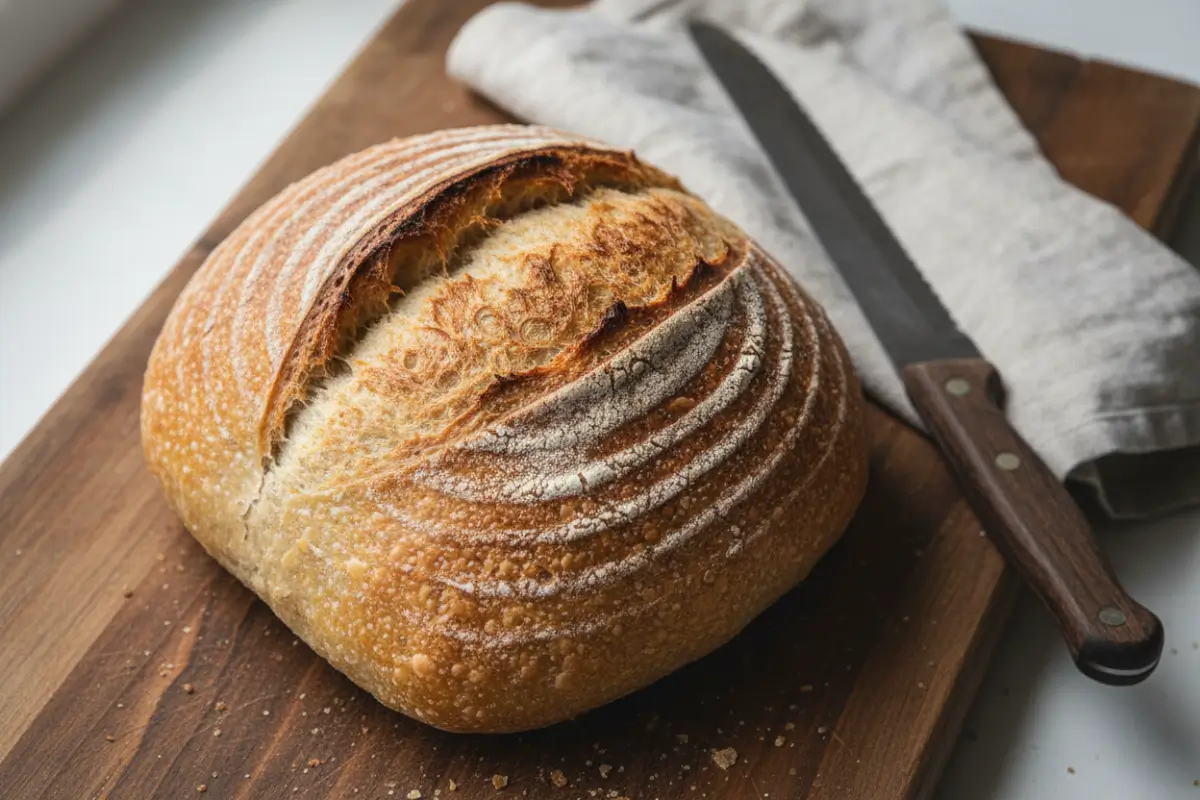
Perfect Easy Beginner Sourdough Bread Recipe
Ingredients
Equipment
Method
- Feed your starter 4-12 hours before mixing dough.
- Mix the dough with warm water, starter, salt, and flour until no dry flour remains.
- Cover and let rest for 30 minutes.
- Perform stretch and fold for dough a total of 3 times, waiting 30 minutes between each stretch.
- Allow dough to bulk ferment for 6-12 hours until doubled.
- Turn out onto a floured counter and shape dough into a ball.
- Transfer to a banneton and refrigerate for 12-15 hours.
- Preheat your Dutch oven to 500°F for a full hour.
- Remove dough from fridge, score, and transfer to Dutch oven.
- Bake with the lid on for 20 minutes, then reduce heat to 475°F and bake for another 15-25 minutes.
