
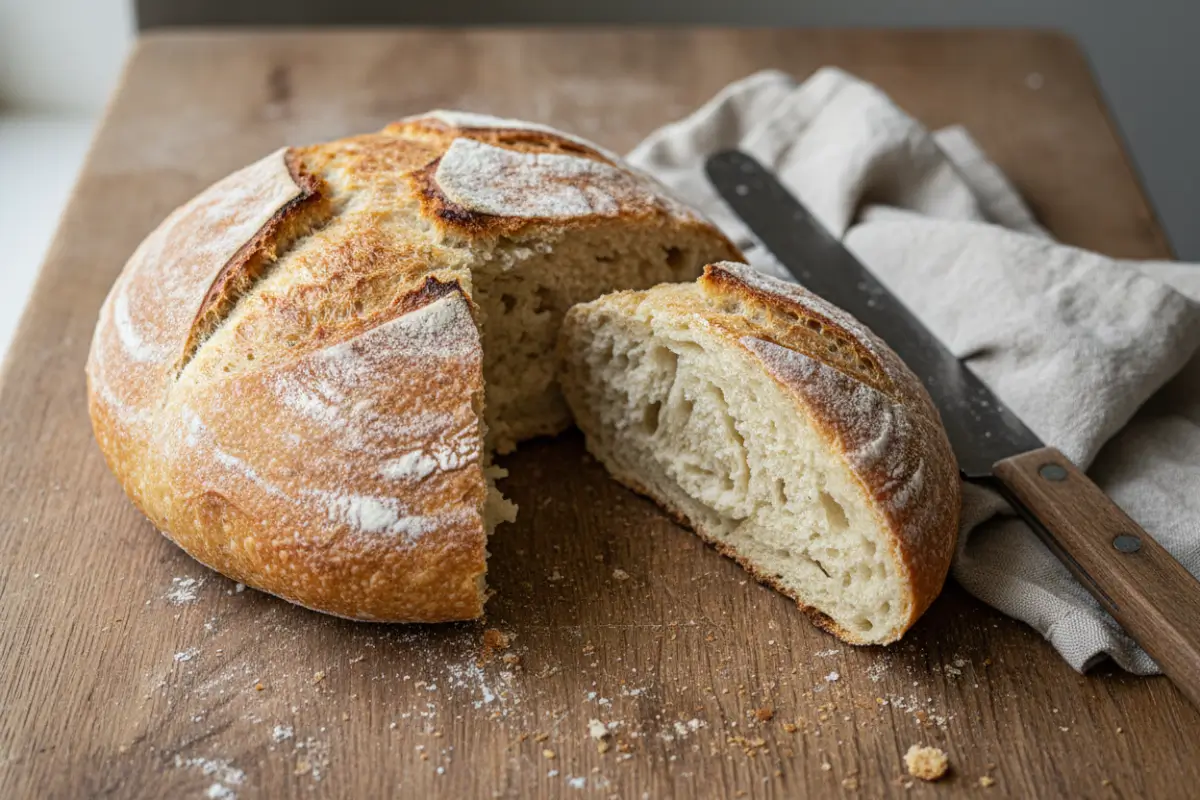
You’re about to make bakery-quality bread with five minutes of actual work. No kneading. No stand mixer. No special skills. This Foolproof No Knead Artisan Bread uses time instead of effort—mix four ingredients tonight, bake tomorrow, and pull a crackling golden loaf from your oven that looks like you trained in Paris. The secret? A long, slow rise does all the gluten development while you sleep. I’ve taught this method to dozens of nervous first-time bakers in my Asheville kitchen, and every single one has texted me a photo of their gorgeous loaf. If you can stir, you can make this bread.
Prep: 5 mins | Cook: 45 mins | Total: 12 hrs 50 mins | Yields: 1 loaf (8-10 slices)
Why You’ll Love This
Truly hands-off. Five minutes of stirring, then time does the work. No kneading means no sore arms or flour everywhere.
Beginner-proof. The wet dough is forgiving. Overworking? Impossible. Under-mixing? Won’t happen.
Bakery crust at home. That crackling, golden exterior comes from the covered Dutch oven creating steam—professional results without professional equipment.
Four ingredients you own. Flour, yeast, salt, water. That’s it.
Key Ingredients
Flour (bread or all-purpose): Either works beautifully. Bread flour gives slightly chewier texture with bigger air pockets, but all-purpose delivers excellent results too. Don’t stress the choice—I’ve made this Foolproof No Knead Artisan Bread with whatever’s in my pantry. The long fermentation develops flavor regardless of flour type.
Instant or active dry yeast: Just half a teaspoon. Seems tiny, right? That’s the magic. The small amount works slowly over 12-18 hours, building complex flavor you’d never get from a quick rise. Both yeast types work identically here—no need to proof active dry first. The long timeline gives it plenty of hydration time.
Salt: Flavor and gluten structure. Don’t skip it. Two teaspoons might seem like a lot, but it’s perfectly balanced for a full loaf. I use regular table salt or fine sea salt.
Room temperature water: Not warm, not cold. Straight from the tap is perfect. The slow rise means temperature isn’t critical like it is in traditional bread recipes. This is why beginners love this method—no thermometer needed.
Instructions
Mix the shaggy dough. Dump flour, yeast, and salt into a large bowl. Pour in the water. Stir with a wooden spoon or spatula until everything comes together in a sticky, rough mass. It’ll look messy and wet—that’s correct. Thirty seconds of stirring is enough. You’re not developing gluten yet; you’re just hydrating flour.
The long rest. Cover the bowl tightly with plastic wrap or a damp kitchen towel. Leave it on your counter—not the fridge—for 12 to 18 hours. I usually mix mine after dinner and bake the next evening. When it’s ready, the surface will be bubbly and the dough will have doubled. It’ll smell slightly tangy and yeasty. Beautiful.
Preheat everything. Turn your oven to 450°F. Put your Dutch oven with its lid inside and let it heat for a full 30 minutes. This step is critical—the screaming-hot pot creates the steam that gives you that crackling crust. Don’t rush this preheat.
Shape (loosely). Lay parchment paper on your counter and dust it with flour. Scrape the dough out of the bowl onto the paper. It’ll be loose, sticky, and full of air bubbles—don’t deflate them. Sprinkle a little flour on top. With floured fingers, gently pull the edges up and over to form a rough ball. Cup your hands around the sides and nudge it into shape. Takes 30 seconds. It won’t be perfect. The cracks and folds become the rustic character of your finished loaf.
Rest while the pot heats. Cover the shaped dough with plastic or a towel while your Dutch oven finishes preheating. Five to ten minutes is fine.
Into the pot. Pull out your screaming-hot Dutch oven. Remove the lid. Grab the parchment paper corners and lift the entire dough into the pot. Careful—it’s dangerously hot. If the parchment bunches up against the dough, use a wooden spoon to press it flat against the pot sides. Put the lid back on.
Covered bake. Slide the covered pot into the middle oven rack. Bake 30 minutes. Don’t peek. The lid traps steam, which keeps the crust soft while the inside expands. This creates those gorgeous open air pockets.
Uncovered finish. After 30 minutes, remove the lid. The loaf will be pale and puffy. Bake uncovered another 10-15 minutes until the crust turns deep golden brown. Watch it—ovens vary. You want rich color, not burnt.
Cool before slicing. Lift the loaf out using the parchment corners. Set it on a cooling rack. Wait at least 10 minutes. I know it’s torture, but cutting too soon releases steam and makes the interior gummy. The crust crackles as it cools—best sound in the kitchen.
Tips & Variations
Timing flexibility. The 12-18 hour window is wide. I’ve gone 20 hours when plans changed—still perfect. Under 12 hours, the flavor won’t fully develop.
No Dutch oven? Use any heavy oven-safe pot with a lid—enameled cast iron, ceramic, even a metal stockpot. Size matters: 5.5-6 quarts gives the dough room to expand.
Whole wheat version. Replace up to one cup of all-purpose flour with whole wheat. Adds nutty flavor and denser texture. Go beyond one cup and you’ll need extra water.
Herb and garlic bread. After the long rise, fold in two tablespoons of chopped fresh rosemary and four minced garlic cloves before shaping. Incredible with pasta.
Seeded crust. Before baking, brush the shaped loaf with water and sprinkle with sesame seeds, poppy seeds, or everything bagel seasoning.
Storage & Pairings
Store cooled bread in a paper bag at room temperature for two days—the crust stays crispier than in plastic. For longer storage, slice and freeze in a zip-top bag up to three months. Toast slices straight from frozen.
Serve with butter and jam for breakfast, alongside soup for dinner, or as the base for the best grilled cheese you’ll ever make. This Foolproof No Knead Artisan Bread makes everything better.
FAQ
Can I use rapid-rise yeast?
Yes, but don’t adjust the amount. Rapid-rise will work on the same timeline as instant yeast here. The long fermentation time is what matters, not yeast speed.
Why is my dough too sticky to shape?
That’s normal. This is a high-hydration dough—it should be sticky. Use more flour on your hands and work quickly. The stickiness creates those beautiful air pockets inside.
💡 Loved this recipe? Follow Us on Pinterest for more!
Conclusion
You just learned the easiest path to homemade bread. Mix tonight, bake tomorrow, and enjoy a crackling-crusted loaf that’ll make your kitchen smell like a French bakery. No kneading, no stress, no fail. Really.
Easy Foolproof No Knead Artisan Bread
Ingredients
Equipment
Method
- Mix the flour, yeast, and salt in a bowl. Pour in the water and stir until combined.
- Cover the bowl and let the dough rest for 12 to 18 hours.
- Preheat the oven to 450°F with the Dutch oven inside.
- Shape the dough on a floured surface and let it rest while the pot heats.
- Transfer the dough to the hot Dutch oven and cover with a lid.
- Bake for 30 minutes covered, then remove the lid and bake for an additional 10-15 minutes until golden.
- Cool before slicing.
