
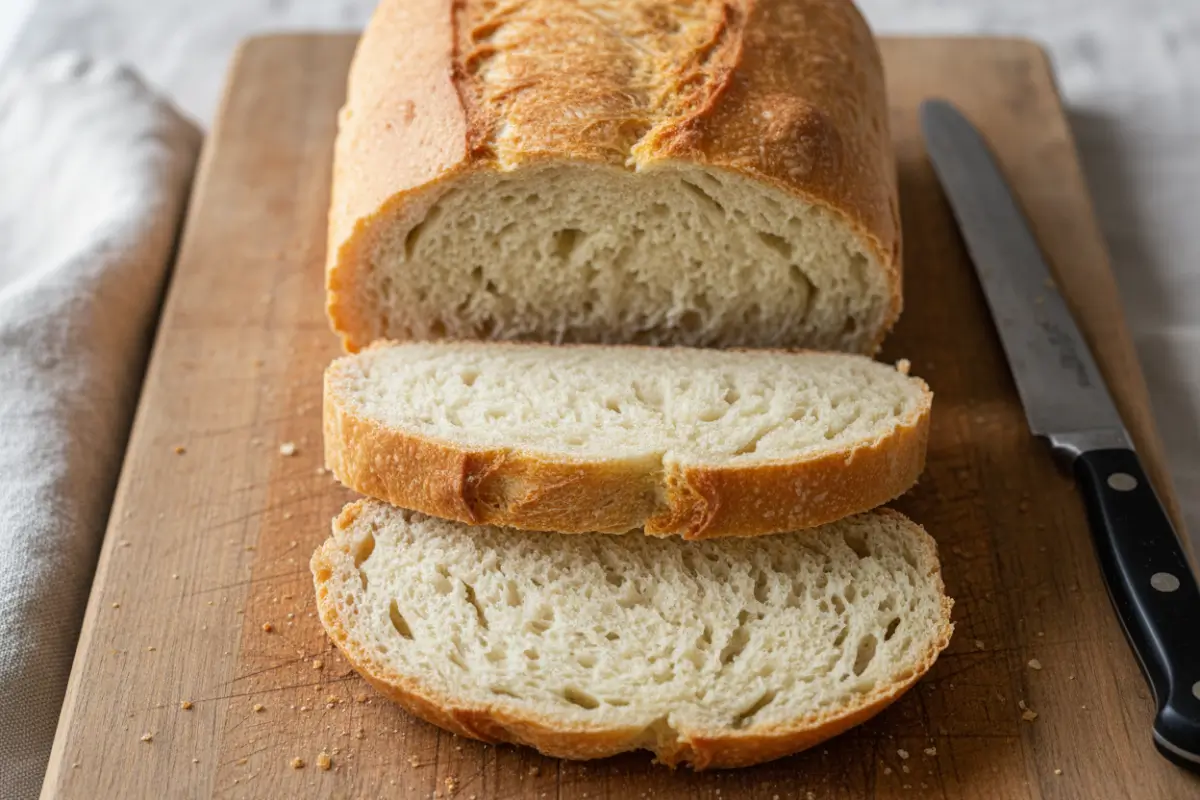
You don’t need a mixer. You don’t need kneading skills. You don’t even need to think too hard. This quick no knead sandwich bread recipe asks for five minutes of actual work—the rest happens while you sleep. Mix flour and water before bed, wake up to dough that’s ready to bake. The active time? Fifteen minutes, tops. The result? A golden loaf with a crackly crust and soft, pull-apart crumb that makes store-bought bread taste like cardboard. If you’ve been intimidated by bread baking, this is your entry point. No stand mixer. No complicated shaping. Just a bowl, a spoon, and patience you don’t even need to be awake for.
Prep: 15 mins | Cook: 30 mins | Total: 45 mins (plus overnight rise) | Yields: 1 loaf
Why You’ll Love This Quick No Knead Sandwich Bread Recipe
Beginner-proof. If you can stir, you can make this. No special equipment or technique required.
Hands-off magic. Time does the work. You fold dough three times total—each fold takes thirty seconds.
Real bread flavor. The long, slow rise develops complex taste without sourdough fussiness.
Breakfast hero. Toast it thick, slather it with butter, watch it disappear by noon.
Key Ingredients
Cool tap water (360g) is your base. Not warm, not cold—straight from the tap works. Temperature matters less here than in traditional recipes because the long rise compensates. The water hydrates the flour slowly, giving gluten time to develop without kneading.
Active dry yeast (¼ teaspoon) seems impossibly small, but it’s intentional. Tiny amounts of yeast + long fermentation = better flavor and texture. You’re not rushing this dough. The yeast multiplies overnight, creating air pockets and that slightly tangy bread smell.
Bread flour (430g) provides structure. Higher protein content means stronger gluten networks, which trap air better during the rise. All-purpose flour works in a pinch, but your crumb won’t be quite as chewy. Measure by weight if possible—volume measurements for flour vary wildly depending on how you scoop.
Fine sea salt (1½ teaspoons) does double duty. It seasons the dough and tightens gluten structure. Don’t skip it or reduce it. Undersalted bread tastes flat no matter how perfect your crust looks.
Maple syrup (1 tablespoon, optional) adds subtle sweetness and helps browning. It’s not enough to make the bread sweet—just enough to balance the slight tang from fermentation. Honey works too. Skip it entirely if you want a purely savory loaf.
Olive oil and butter prep your pan. Butter alone sticks. Oil alone doesn’t add flavor. Together, they create a non-stick barrier that also gives your crust a golden, slightly crispy bottom edge. Here in Asheville, I use local butter from the farmers market—it makes the kitchen smell incredible while the bread bakes.
Instructions
Mix the foundation. Pour 360g cool water into a large bowl. Sprinkle ¼ teaspoon yeast over the surface. Stir gently with a spoon—just enough to dissolve the yeast. No need to wait for it to foam. Add 430g bread flour and 1½ teaspoons salt directly to the bowl. Stir with a wooden spoon or your hand until everything comes together in a shaggy, sticky mass. It won’t look smooth. That’s correct. Cover the bowl tightly with plastic wrap and walk away for 45-60 minutes.
First fold sequence. Wet your fingers—this prevents sticking. Grab one edge of the dough and stretch it up, then fold it over the center. Rotate the bowl 45 degrees. Grab another edge, stretch, fold. Keep going around the bowl until the dough resists stretching and forms a tighter ball. Takes about eight folds total. You’ll feel the dough tighten under your hands. Cover again with plastic wrap.
Second fold, one hour later. Repeat the folding process. Wet fingers, lift, fold, rotate. The dough will feel smoother and more elastic now. It’s developing gluten structure without traditional kneading. If you have time, do a third fold after another hour. If not, two folds work fine. Cover the bowl and leave it on your counter for 8 hours or overnight. Don’t refrigerate.
Morning transformation. When you uncover the bowl, the dough will have doubled or tripled in size. The surface will be bubbly and alive. It’ll smell yeasty and slightly sweet. Generously butter a 9×5 inch loaf pan, then rub olive oil over the butter. Use more than you think you need—this dough is sticky.
Shape into the pan. Wet your hands again. Fold the risen dough over itself several times, just like before. It’ll deflate—that’s supposed to happen. You’re redistributing the yeast and creating tension. After 6-8 folds, tuck the edges under to form a rough rectangle. Place the dough seam-side down in your prepared pan. Rub the top with olive oil. Cover with plastic wrap.
Final rise. Let the dough sit until it rises at least half an inch above the pan rim. This takes 1-2 hours depending on your kitchen temperature. Warmer rooms speed this up. Don’t rush it. The dough should look puffy and jiggly when you gently shake the pan.
Create steam. Preheat your oven to 425°F. Fill a cake pan with ice cubes and place it on the bottom rack. Let the ice sit in the hot oven for 5-10 minutes before baking. This creates steam, which keeps the crust from setting too fast and allows maximum oven spring. The bread will rise dramatically in the first ten minutes of baking.
Bake until deep golden. Slide your loaf pan onto the center rack. Bake for 30-35 minutes. You’re looking for deep brown color all over the top—not pale tan. The sides should pull away slightly from the pan. Internal temperature should hit 200°F if you want to check with a thermometer.
Cool completely. Turn the bread out onto a cooling rack immediately. This stops carryover cooking on the bottom. Wait at least an hour before slicing. Really. The crumb is still setting. Cut too early and you’ll get gummy texture. I know it’s hard to wait when your kitchen smells like a bakery.
Tips & Variations
Temperature matters less than you think. Room temperature anywhere from 65-75°F works. Cooler kitchens mean longer rises. Warmer means faster. Adjust timing, not ingredients.
The ice pan trick is crucial. Steam keeps the crust flexible during the first minutes of baking, allowing maximum rise. Skip it and your bread will be denser.
Make it whole grain. Replace up to 100g of bread flour with whole wheat flour. Add an extra tablespoon of water to compensate for the extra absorption. The texture will be heartier but still soft.
Herb variation. After the overnight rise, fold in 2 tablespoons chopped fresh rosemary and 1 teaspoon garlic powder. Makes incredible sandwich bread for turkey and provolone.
Seeded crust. Before the final rise, brush the top with water and sprinkle with sesame seeds, poppy seeds, or everything bagel seasoning.
Storage & Pairings
Store at room temperature in a plastic bag for 3-4 days. The crust will soften, which actually makes better sandwiches. Freeze slices in a freezer bag for up to 3 months—toast straight from frozen.
Perfect for: thick-cut French toast, grilled cheese that doesn’t fall apart, tuna melts, or just butter and jam. The crumb is sturdy enough for wet fillings but tender enough to bite through cleanly.
FAQ
Can I speed up the overnight rise?
Not really. The long fermentation is what makes this quick no knead sandwich bread recipe work without kneading. You can do a 4-hour rise in a very warm spot (like an oven with just the light on), but flavor won’t be as developed.
Why is my bread dense?
Two common causes: not enough rise time before baking, or cutting into it too soon. Make sure the dough rises well above the pan rim, and wait the full hour after baking before slicing.
💡 Loved this recipe? Follow Us on Pinterest for more!
Conclusion
This bread proves that homemade doesn’t mean complicated. Mix before bed, bake in the morning, eat warm slices by lunch. The quick no knead sandwich bread recipe delivers bakery results with almost zero active work. Your kitchen will smell incredible. Your sandwiches will never be the same.
Easy Quick No Knead Sandwich Bread Recipe
Ingredients
Equipment
Method
- Pour 360g cool water into a large bowl. Sprinkle ¼ teaspoon yeast over the surface and stir to dissolve. Add 430g flour and 1½ teaspoons salt. Stir until a shaggy mass forms and cover tightly.
- After 45-60 minutes, stretch and fold the dough multiple times until it forms a tighter ball. Cover and let it rest again for an hour.
- Let the dough rise for 8 hours or overnight. It should double in size and be bubbly.
- Butter a 9×5 inch loaf pan and rub olive oil over it. Fold risen dough and shape it to fit the pan. Cover and let it rise until puffy.
- Preheat the oven to 425°F. Fill a cake pan with ice cubes and place it in the oven for steam. Bake the loaf for 30-35 minutes until golden brown.
- Let the baked bread cool on a rack for at least an hour before slicing.
