
You don’t need skills. Or a stand mixer. Or even kneading experience. This Restaurant-Style Rustic No Knead Rosemary Garlic Bread comes together in one bowl with five minutes of actual hands-on work. Stir, walk away, bake. That’s it. The secret? Time does the heavy lifting while you sleep or binge your favorite show. When you pull that Dutch oven lid off after 45 minutes, the smell hits first—roasted garlic, woodsy rosemary, that crackling golden crust. It’s the bread you’d pay $8 for at a bistro, except you made it in your kitchen wearing pajamas. I started making this on Sunday nights in my Asheville kitchen when I realized fancy bread shouldn’t require fancy effort. The dough is sticky and shaggy and looks wrong until it doesn’t. Trust it.
Why You’ll Love This
- Beginner-proof: No kneading, no mixer, no technique required
- Hands-off magic: 5 minutes of stirring, then time does everything else
- Restaurant crust: Crispy, crackly outside with a chewy, airy inside
- Flexible timing: 8-18 hour rise fits any schedule
Key Ingredients
All-purpose flour forms the foundation. You don’t need bread flour or fancy imports. Regular AP flour creates enough gluten structure during the long rest to give you those beautiful air pockets and chewy texture. Three cups is the sweet spot for a single loaf that feeds a crowd.
Fine sea salt seasons throughout and tightens the gluten network. Don’t skip it or reduce it—bread needs more salt than you think. Two teaspoons sounds like a lot but disappears into the dough, enhancing every bite without tasting salty.
Active dry yeast is the quiet worker here. Just one teaspoon ferments slowly over 8-18 hours, developing complex flavor you can’t rush. No need for instant yeast or proofing in a separate bowl. It activates right in the mix.
Fresh rosemary brings that restaurant-bakery smell. Roughly chopped releases oils without turning bitter. Three tablespoons seems generous but mellows beautifully during the long rise. Dried rosemary won’t give you the same punch—fresh is worth the splurge here.
Fresh garlic roasts into sweet, mellow flavor as the bread bakes. Three cloves minced distribute throughout without overpowering. Don’t use jarred or powdered. Fresh garlic softens and caramelizes during baking, adding depth instead of sharpness.
Warm water at 110-115°F activates yeast without killing it. Too hot and you’ll murder the yeast. Too cold and nothing happens. It should feel like a comfortable bath on your wrist. One and a half cups creates that signature wet, sticky dough that bakes into an open crumb.
Instructions
Mix the dough. Grab your largest bowl and whisk together flour, salt, and yeast until combined. Pour in the warm water, then add your chopped rosemary and minced garlic. Use a wooden spoon to stir everything together. You’re not looking for smooth—just keep stirring until you see a shaggy, sticky mass with no dry flour pockets. Make sure the garlic and rosemary bits are scattered throughout, not clumped in one spot. The dough will look wet and rough. That’s correct. Your spoon should drag through it with some resistance. Total mixing time: two minutes.
Let it rise overnight. Cover the bowl tightly with plastic wrap. Set it somewhere warmish—your counter is fine unless your house is freezing. Now walk away for 8-18 hours. I usually mix this after dinner and bake the next morning, or mix before bed and bake the following evening. The dough will bubble, rise, then flatten slightly on top. You’ll see it’s alive when you peek—all those tiny bubbles mean flavor is developing.
Preheat everything. When you’re ready to bake, heat your oven to 450°F. Once it hits temperature, place your 6-quart Dutch oven with its lid inside. Let it heat for a full 30 minutes. This step is critical. That screaming-hot pot creates the steam environment that gives you bakery crust. Don’t rush this preheat.
Shape the dough. Dust the top of your risen dough with flour. The dough will be sticky and loose—that’s normal. Flour your hands generously. Working quickly, fold two opposite sides of the dough toward the center, then flip the whole thing over so the seam is on the bottom. Flour your hands again. Now gently rotate the dough ball with both hands, tucking the edges under to create tension on the surface. Don’t overthink it. Thirty seconds of shaping is plenty.
Rest on parchment. Flour your hands one more time and scoop up the dough. Place it on a sheet of parchment paper. Sprinkle the top lightly with flour. Lay plastic wrap over it and let it rest 30 minutes while your Dutch oven continues heating. This short rest relaxes the gluten. Trim your parchment so it’s just slightly larger than your Dutch oven’s base—you want it to fit without bunching up the sides.
Transfer and bake covered. Carefully remove your blazing-hot Dutch oven from the oven. Remove the plastic wrap from your dough. Lift the parchment paper with the dough on it and lower the whole thing into the Dutch oven. The parchment stays under the bread. Put the lid on. Slide it back into the oven. Bake for 45 minutes covered. Don’t peek. The lid traps steam that keeps the crust from setting too fast, letting the bread expand fully.
Finish uncovered. After 45 minutes, remove the lid. The bread will be pale and puffy. Bake another 10-15 minutes uncovered until the top turns deep golden brown and sounds hollow when tapped. The crust will crackle as it cools. Let it cool at least 20 minutes before slicing or the interior will be gummy. I know it’s hard to wait.
Tips & Variations
Timing flexibility: The 8-18 hour window is real. Eight hours gives you good bread. Eighteen hours gives you incredible bread with deeper flavor. I’ve pushed it to 20 hours in a cool kitchen with great results.
No Dutch oven? Use any heavy oven-safe pot with a lid—enameled cast iron, ceramic, even a heavy stainless pot. The lid is what matters for trapping steam.
Check your water temp: Too-hot water kills yeast. Use an instant-read thermometer or the wrist test. It should feel warm but not hot.
Herb swap: Try thyme and black pepper, or sage and cracked fennel seed. Keep the proportions the same—three tablespoons fresh herbs, three cloves garlic.
Cheese version: Fold in a half cup of grated Parmesan during the initial mix for a savory, salty twist.
Storage & Pairings
Store cooled bread in a paper bag at room temperature up to three days. The crust softens slightly but toasting revives it. Freeze slices in a freezer bag up to three months. This bread shines alongside soups, stews, or a simple pasta. Slice thick for olive oil dipping or toast for bruschetta bases.
FAQ
Can I use instant yeast instead of active dry?
Yes. Use the same amount—one teaspoon. Instant yeast works identically in no-knead recipes since you’re not proofing it separately. The long rise time makes the yeast type almost irrelevant.
Why is my dough so sticky?
It’s supposed to be. This Restaurant-Style Rustic No Knead Rosemary Garlic Bread relies on high hydration for those big air pockets. Resist adding extra flour. Just keep your hands well-floured when shaping.
💡 Loved this recipe? Follow Us on Pinterest for more!
Conclusion
This Restaurant-Style Rustic No Knead Rosemary Garlic Bread proves that impressive doesn’t mean complicated. Mix it tonight, bake it tomorrow, and watch everyone assume you spent hours. You’ll know better. The crackling crust and herb-scented crumb speak for themselves.
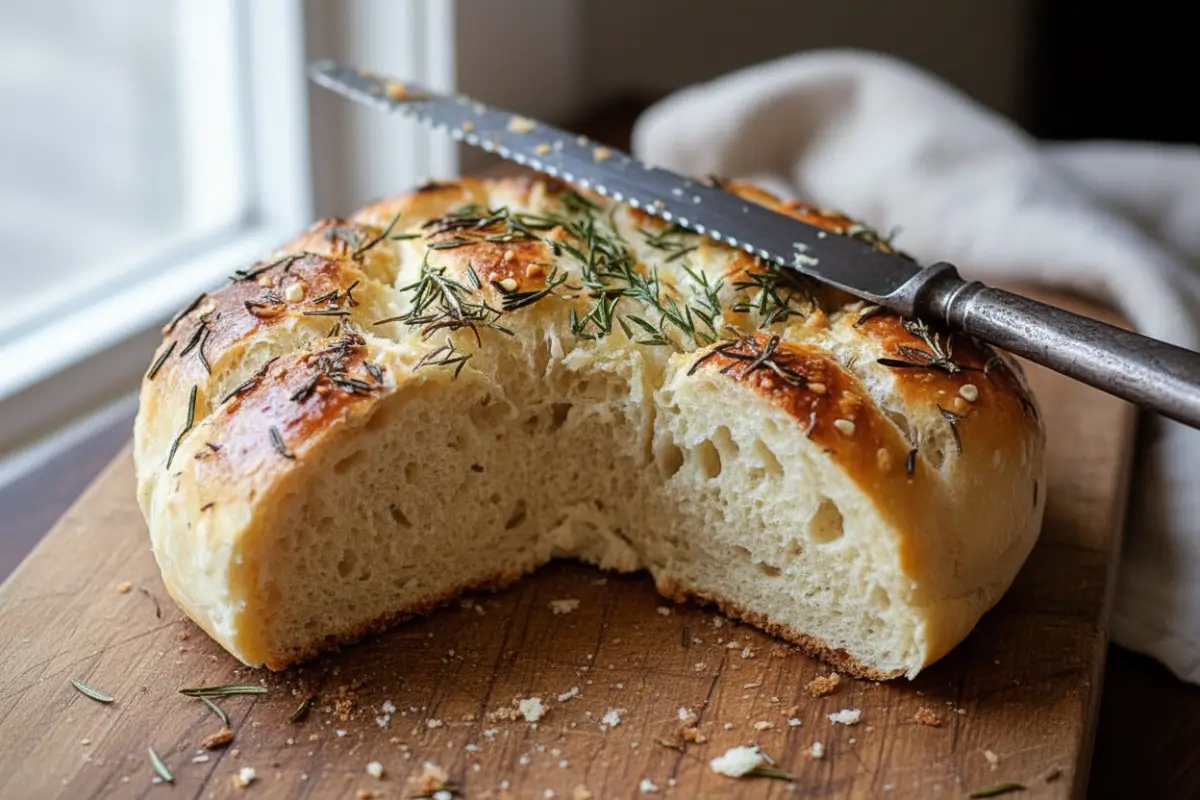
Easy Restaurant-Style Rustic No Knead Rosemary Garlic Bread
Ingredients
Equipment
Method
- Mix the dough. Stir together flour, salt, and yeast. Add warm water, rosemary, and garlic. Mix until shaggy and sticky.
- Let it rise overnight. Cover with plastic wrap and leave for 8-18 hours.
- Preheat everything. Heat oven to 450°F with Dutch oven inside for 30 minutes.
- Shape the dough. Dust with flour, fold, and rotate to create tension.
- Rest on parchment. Let dough rest covered for 30 minutes.
- Transfer and bake covered. Place dough in Dutch oven and bake covered for 45 minutes.
- Finish uncovered. Bake for another 10-15 minutes until golden brown.
