
Prep: 15 mins | Cook: 45 mins | Total: 3 hours 45 mins | Yields: 1 loaf
You don’t need a bakery degree to pull a golden, crackling loaf from your oven. This soft bread in Dutch oven method strips away the fussy parts—no kneading marathons, no babysitting, no special equipment beyond one pot. Mix. Wait. Bake. That’s it.
The dough does the heavy lifting while you fold laundry or answer emails. Your stand mixer handles the kneading in five minutes flat. The Dutch oven traps steam to create that bakery crust without fancy ovens or steam injection systems. I’ve tested this in my Asheville kitchen on chaotic weeknights when I needed bread but had zero bandwidth for complicated recipes.
What you get: A pillowy interior that tears into soft, airy chunks. A mahogany crust that shatters under your knife. The kind of bread that makes butter the main event. This soft bread in Dutch oven recipe uses basic pantry staples—flour, water, yeast, honey, salt—and transforms them through simple rests and one smart baking vessel.
No stand mixer? You can stir by hand. No proofing basket? Use a bowl lined with a floured towel. The recipe bends to fit your kitchen, not the other way around.
Why You’ll Love This
One bowl, minimal cleanup. Your stand mixer bowl does double duty for mixing and first rise. Less washing, more eating.
Hands-off rising. The dough rises while you live your life. No constant checking or temperature anxiety.
Beginner-proof. Clear visual cues tell you when each step is done. Doubled in size? Move on. Caramel brown crust? Pull it out.
Bakery results without the learning curve. The Dutch oven creates professional steam and heat distribution automatically.
Key Ingredients
All-purpose flour (500g) forms the structure. King Arthur works beautifully here—it has enough protein to create good gluten development without being too strong. You want bread that’s soft, not chewy. Measure by weight if possible. Volume measurements get inconsistent with flour.
Room temperature water (375g) hydrates the flour gradually. Cold water slows yeast. Hot water kills it. Room temp is the Goldilocks zone. The recipe starts with just 100g to create a quick autolyse—a fancy word for letting flour absorb water before adding other ingredients. This head start makes the final dough smoother.
Instant yeast (1½ tsp) provides reliable rise without proofing in warm water first. Platinum Yeast by Red Star is my go-to, but any instant yeast works. Not active dry—that needs dissolving. Instant mixes straight into flour.
Honey (1 tbsp) feeds the yeast and adds subtle sweetness that balances the fermented tang. It also helps the crust brown to that deep caramel color. Sugar works too, but honey adds complexity.
Kosher salt (1 tsp) controls yeast activity and builds flavor. Don’t skip it. Unsalted bread tastes flat and rises too fast, creating large irregular holes instead of an even crumb.
Instructions
Start the autolyse. Stir 125g flour and 100g water in your stand mixer bowl with a spoon. It’ll look shaggy and rough. Cover and walk away for 15 minutes. This rest lets flour absorb water and starts gluten formation before you even knead.
Add everything else. Dump in remaining flour (375g), water (275g), salt, yeast, and honey. Attach the dough hook. Run on medium-high for 5 minutes. The dough will transform from a sticky mess to a smooth, elastic ball that clears the bowl sides. It should feel tacky but not soaking wet.
First rest. Cover the bowl with plastic wrap or a damp towel. Set a timer for 20 minutes. The dough relaxes, making the next step easier.
Stretch and fold. Wet your hands or use a plastic bowl scraper. Reach under one side of the dough, stretch it up, fold it over the center. Rotate the bowl. Repeat 5-6 times around the perimeter. You’re building strength without traditional kneading. The dough will tighten into a loose ball. Cover again. Let it rise 1 hour until doubled. It should look puffy and hold a finger indent.
Shape the dough. Flour your counter lightly. Turn dough out—it’ll deflate slightly, that’s normal. Pull it into an oval, short end toward you. Fold the top third down to the middle. Stretch the bottom corners out to create a triangle, then fold those points into the center. Flip smooth-side up. Cup your hands around the dough and scoot it in circles on the counter. This creates surface tension for a tight, tall loaf.
Second rise. Dust your proofing basket (or a bowl lined with a heavily floured towel) with flour. Place dough smooth-side down. Cover with plastic. Rest 1 hour. The dough should feel pillowy and spring back slowly when poked.
Preheat everything. Set oven to 475°F. Put your 6-quart Dutch oven with the lid on inside. Heat for 20 minutes. This step is crucial—the screaming-hot pot creates instant oven spring.
Score and bake. Cut a sheet of parchment paper. Flip the basket over onto the parchment—the dough releases with a gentle shake. Use a sharp knife or lame to slash ½-inch deep cuts across the top. Diagonal slashes look classic. The cuts give expanding dough a place to go. Grab the parchment edges like a sling and lower the dough into the hot pot. Careful—it’s nuclear. Cover with the lid. Bake 35 minutes covered. The lid traps steam for that crackly crust.
Finish uncovered. Remove the lid. Bake 10 more minutes until the crust turns deep caramel brown. Don’t underbake—pale bread tastes doughy.
Cool completely. Use a spatula to lift the loaf out onto a cooling rack. Wait at least 30 minutes before slicing. Hot bread gums up your knife and the interior is still cooking from residual heat.
Tips & Variations
Use the windowpane test. After kneading, pinch off a small piece of dough. Stretch it gently between your fingers. If it forms a thin, translucent membrane without tearing, gluten is developed. If it rips immediately, knead another minute.
Flour your proofing basket generously. Rice flour works even better than all-purpose—it doesn’t absorb moisture and prevents sticking. Dust the basket until you can’t see the surface.
Adjust baking time by color, not clock. Ovens vary wildly. Your bread is done when it’s deep brown and sounds hollow when tapped on the bottom. Pale crust means doughy interior.
Whole wheat variation: Replace 100g all-purpose flour with whole wheat. Add 25g extra water—whole wheat absorbs more liquid. The bread will be denser but nuttier.
Herb loaf: After the stretch-and-fold, sprinkle 2 tbsp chopped fresh rosemary and 1 tsp flaky salt over the dough before shaping. Fold it in as you create the ball.
Storage & Pairings
Store cooled bread cut-side down on a cutting board, covered with a towel. It stays fresh 2-3 days. Don’t use plastic—it softens the crust. Freeze slices in a zip-top bag for up to 3 months. Toast from frozen.
Serve with salted butter and flaky salt. Use for sandwiches, toast, or torn into chunks for soup. The soft crumb soaks up olive oil beautifully for dipping.
FAQ
Can I make this without a stand mixer?
Yes. Mix ingredients in a large bowl with a wooden spoon until combined. The dough will be sticky. After the 20-minute rest, do 4 sets of stretch-and-folds (every 30 minutes) instead of machine kneading. Same results, slightly more hands-on.
Why is my bread dense?
Under-risen dough is the usual culprit. Make sure it truly doubles during the first rise—this can take 90 minutes in a cold kitchen. Also check yeast freshness. Old yeast won’t create enough lift.
💡 Loved this recipe? Follow Us on Pinterest for more!
Conclusion
This soft bread in Dutch oven recipe proves that bakery-quality loaves don’t require professional skills or all-day commitment. Mix, wait, bake. The pot does the hard work. Your kitchen smells incredible. And you get to tear into warm, crackling bread that cost pennies to make.
Now go preheat that Dutch oven.
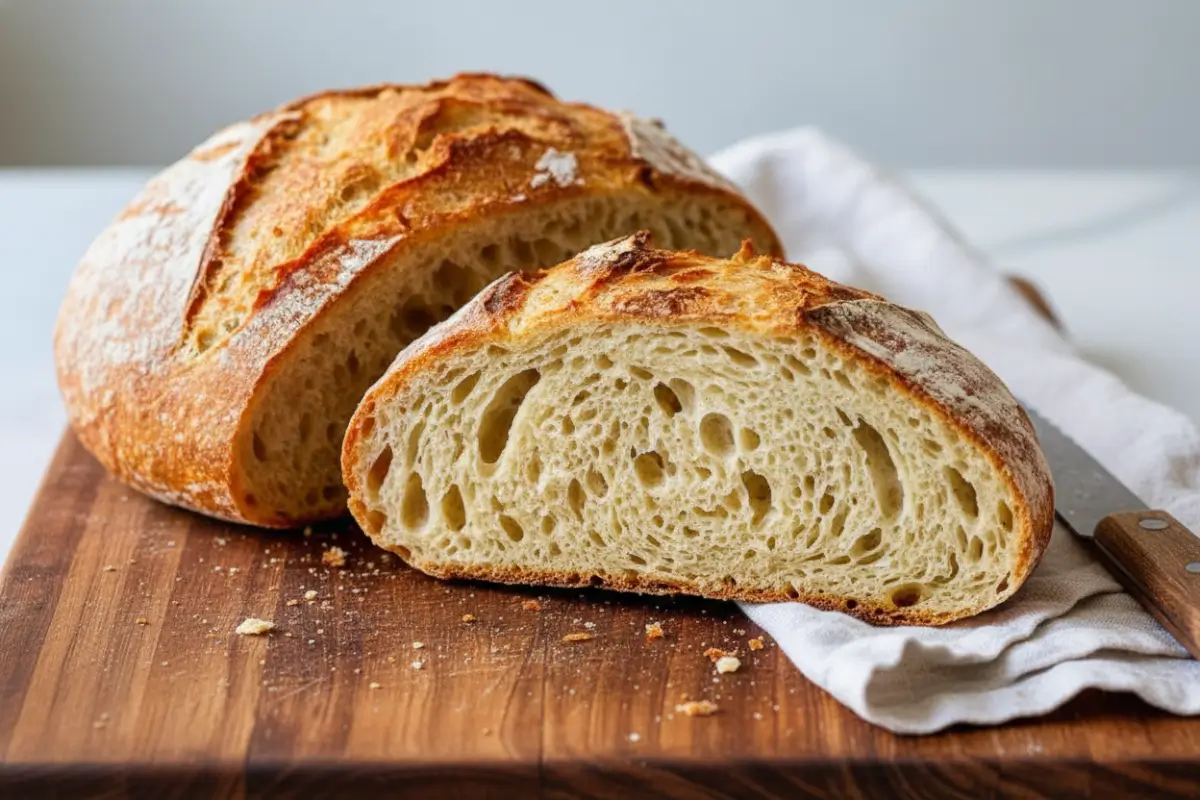
Easy Soft Bread In Dutch Oven
Ingredients
Equipment
Method
- Stir 125g flour and 100g water in your stand mixer bowl. Cover and walk away for 15 minutes.
- Add remaining flour, water, salt, yeast, and honey. Mix on medium-high for 5 minutes.
- Cover and rest the dough for 20 minutes.
- Stretch and fold the dough, covering it again and letting it rise for 1 hour.
- Shape the dough and prepare it for the second rise, resting for another hour.
- Preheat the oven and Dutch oven to 475°F for 20 minutes.
- Score the dough and bake, covered, for 35 minutes, then uncover and bake for another 10 minutes.
- Cool completely before slicing.
