
There’s something deeply satisfying about pulling apart a warm, buttery dinner roll you made yourself. Not the kind that requires bread-baking wizardry or three failed attempts. This no-fail yeast dinner rolls recipe homemade delivers soft, golden rolls every single time—even if you’ve never worked with yeast before. The dough is forgiving. The method is straightforward. And the smell filling your kitchen? That’s the good stuff. I’ve made these rolls in my Asheville kitchen at least forty times, and they’ve never let me down. Not once.
Why You’ll Love This Recipe
Beginner-proof method – The dough tells you exactly what it needs at every step. No guessing.
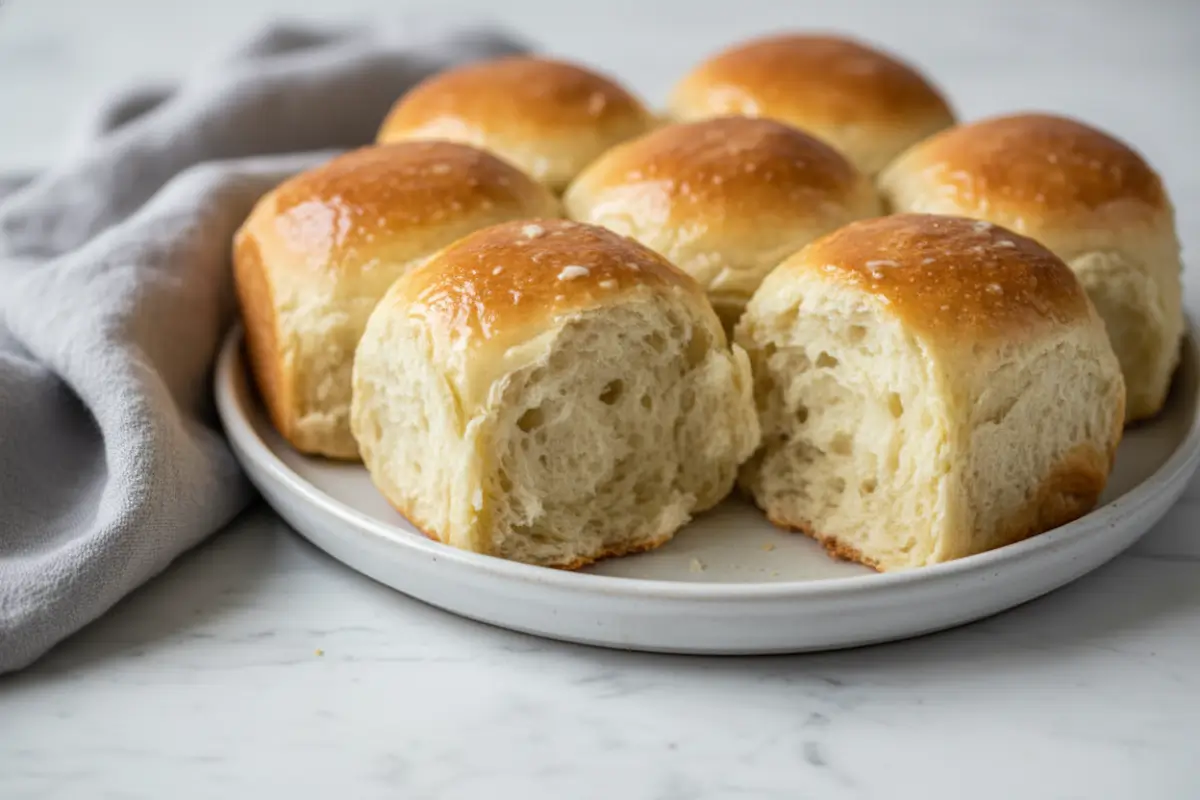
Bakery-soft texture – That pull-apart fluffiness with a golden top that shines under butter.
Makes 24 rolls – Perfect for feeding a crowd or stashing extras in the freezer.
Flexible timing – Start in the morning, bake before dinner. Or prep the night before.
Key Ingredients
Warm water and milk create the ideal environment for yeast to bloom. Aim for 110°F—warm to the touch but not hot. Too hot kills the yeast. Too cold slows it down. I test with my wrist like baby formula.
Active dry yeast is the engine here. Two tablespoons might seem like a lot, but it guarantees a strong rise and that classic yeasty flavor. Don’t substitute instant yeast without adjusting timing.
Bread flour has higher protein than all-purpose, which develops more gluten. That’s what gives these rolls their structure and chew. You’ll use a full 8 cups, added gradually so the dough can absorb it properly.
Melted butter (cooled slightly) adds richness without weighing down the dough. The ⅔ cup measurement makes these rolls tender and keeps them soft for days.
Sugar feeds the yeast and adds a subtle sweetness that balances the salt. It also helps with browning.
Eggs at room temperature blend more easily into the dough and contribute to that tender crumb. Cold eggs can shock the yeast.
Salt controls yeast activity and deepens flavor. Don’t skip it.
This no-fail yeast dinner rolls recipe homemade relies on ratios that work together. Change one thing and you might throw off the balance.
Instructions
Combine the wet base. In your stand mixer bowl, add 1 cup warm water, 1 cup warm milk, 2 eggs, ½ cup sugar, ⅔ cup melted butter (cooled), 3½ cups bread flour, 2 teaspoons salt, and 2 tablespoons active dry yeast. Attach the dough hook. Mix on low until everything starts coming together. This looks wet and shaggy—that’s correct. The dough should cling to the hook but still pool at the bottom.
Let it rest briefly. Scrape down the sides with a spatula. Mix on low for another two minutes. This gives the flour time to hydrate and the yeast time to wake up.
Add remaining flour gradually. With the mixer running on low, add the remaining 4½ cups flour in half-cup increments. Wait until each addition is mostly incorporated before adding more. Stop and scrape the bowl occasionally. The dough will transform from sticky to smooth. You’ll know you’re done when it pulls away from the sides but still feels slightly tacky to the touch.
Knead in the mixer. Continue kneading with the dough hook for 3-4 minutes. The dough should form a ball and slap against the sides of the bowl. It’ll feel elastic and smooth when you poke it.
First rise. Remove the dough and set it on a lightly floured counter. Wash and dry the mixer bowl, then coat it lightly with oil. Return the dough to the bowl, turning once to coat all sides. Cover with a clean kitchen towel. Set in a warm spot—I use the top of my fridge or near a sunny window. Let rise until doubled, about 60-90 minutes depending on your kitchen temperature. Press two fingers into the dough. If the indent stays, it’s ready.
Divide the dough. Punch down the dough gently to release air. Turn it out onto a lightly floured surface. Cut in half. Cut each half in half again. Keep cutting until you have 8 sections. Cut each section into 3 equal pieces. You should have 24 rolls total. Don’t stress about perfection—close enough works.
Shape the rolls. Cup your hand over each piece and roll in a circular motion against the counter. This creates surface tension that helps the roll hold its shape. Place 18 rolls in a greased 9×13 pan (3 across, 6 down) and 6 rolls in a greased 9×5 loaf pan (2 across, 3 down). They should barely touch.
Second rise. Cover both pans with towels. Let rise in a warm spot for 1 hour. The rolls will puff up and press against each other. This creates those soft, pull-apart sides.
Bake. Preheat your oven to 350°F. Bake for 20-25 minutes until the tops are golden brown. The internal temperature should hit 190°F if you want to check with a thermometer. Don’t overbake or they’ll dry out.
Butter the tops immediately. Pull the pans from the oven and brush melted butter across the tops while they’re still hot. The butter soaks in and creates that glossy finish.
This no-fail yeast dinner rolls recipe homemade works because each step builds on the last. Trust the process.
Tips & Variations
Check yeast freshness. If your yeast is old, proof it first. Mix it with the warm water and a pinch of sugar. Wait 5 minutes. It should foam. No foam? Dead yeast. Start over.
Use a kitchen scale. Measuring flour by weight (not volume) gives more consistent results. 8 cups bread flour equals about 960 grams.
Freeze shaped rolls. After shaping, freeze rolls on a baking sheet. Once solid, transfer to a freezer bag. Thaw in greased pans, let rise, then bake. Fresh rolls anytime.
Make them sweeter. Brush with honey butter instead of plain butter. Mix 2 tablespoons honey into ¼ cup melted butter.
Add herbs. Fold in 2 tablespoons fresh rosemary or thyme after the first knead. Works beautifully with roasted chicken.
Storage & Pairings
Store cooled rolls in an airtight bag at room temperature for up to 3 days. Reheat in a 300°F oven for 5 minutes. Freeze for up to 3 months. These rolls pair perfectly with Thanksgiving turkey, Sunday pot roast, or a simple bowl of soup. Slice them for sliders or toast them for breakfast with jam.
FAQ
Can I make this dough by hand?
Yes. Mix ingredients in a large bowl, then turn out onto a floured counter. Knead by hand for 8-10 minutes until smooth and elastic. Your arms will know when it’s done.
Why didn’t my rolls rise?
Three common culprits: dead yeast, liquid too hot (killed the yeast), or too-cold kitchen. Make sure your yeast foams during proofing and find a genuinely warm spot for rising.
💡 Loved this recipe? Follow Us on Pinterest for more!
Conclusion
This no-fail yeast dinner rolls recipe homemade removes the mystery from bread baking. The dough is forgiving. The results are consistently soft and golden. Make them once and you’ll never buy store-bought again. Your table deserves this.
Easy No-Fail Yeast Dinner Rolls Recipe Homemade
Ingredients
Equipment
Method
- Combine the wet base in your stand mixer bowl.
- Let the mixture rest briefly.
- Add the remaining flour gradually while mixing.
- Knead the dough in the mixer until elastic.
- First rise: cover and let double in size.
- Divide the dough into 24 pieces.
- Shape the rolls and place in greased pans.
- Second rise: cover and let rise again.
- Preheat the oven and bake until golden brown.
- Butter the tops immediately after baking.
