
There’s something deeply satisfying about pulling warm pita from your oven, watching it puff into a perfect pocket. This no-fail homemade pita bread easy recipe removes all the guesswork from bread-making. The dough is forgiving. The method is straightforward. You’ll get soft, pillowy pitas that actually puff—every single time. I’ve tested this in my Asheville kitchen through humid summers and dry winters, and it works. No fancy equipment needed. Just your hands, a hot surface, and about two hours from start to finish. The smell alone—yeasty, toasted, slightly charred—makes the whole house feel like a bakery. Once you nail this no-fail homemade pita bread easy technique, store-bought becomes a distant memory.
Why You’ll Love This
Truly foolproof – The sponge method gives yeast a head start, so even beginners get consistent results
Flexible baking – Choose oven or stovetop based on what you have available
Real pocket formation – High heat creates steam that puffs the dough into usable pockets
Minimal ingredients – Six pantry staples you probably already own
Key Ingredients
Lukewarm water sets the stage for yeast activation. Too hot kills the yeast. Too cold slows it down. Aim for bathwater temperature—around 105-110°F. No thermometer? It should feel barely warm on your wrist.
Active dry yeast and sugar work together to create the rise. The sugar feeds the yeast, jumpstarting fermentation. You’ll see bubbles form in that first 15 minutes—proof your yeast is alive and ready. If nothing happens, your yeast is dead. Start over.
All-purpose flour gives structure without toughness. The recipe offers a half-and-half blend with whole wheat flour if you want earthier flavor and extra fiber. Whole wheat makes slightly denser pitas, but they still puff beautifully. Keep that half-cup of flour reserved for dusting—you’ll need it while rolling.
Kosher salt (Diamond Crystal specifically) seasons the dough without overpowering. If using Morton’s or table salt, cut the amount by a third—those salts are denser. Salt also strengthens gluten, giving your pitas better chew.
Extra virgin olive oil adds richness and keeps the interior soft. It coats the dough during rising, preventing a dry skin from forming. A good Greek olive oil brings subtle fruity notes that complement the wheat. Don’t skip oiling the bowl—it makes a difference.
Instructions
Make the sponge. Pour lukewarm water into your large mixing bowl. Sprinkle in yeast and sugar, stirring until dissolved. Add half a cup of flour and whisk smooth. Set the bowl somewhere warm—near a sunny window or on top of your fridge works. Walk away for 15 minutes. When you return, the surface should look bubbly and alive, almost frothy. This sponge gives your dough a flavor boost and ensures strong yeast activity.
Form the dough. Add salt, olive oil, and most of the remaining flour to your bubbly sponge. Hold back that half-cup for later. Stir with a wooden spoon until everything clumps together into a shaggy, sticky mess. It won’t look pretty. That’s correct. Dust lightly with flour and knead right in the bowl for about a minute, just to bring it together. You’re not developing gluten yet—just incorporating stray bits.
First knead. Dust your counter with the smallest amount of flour possible. Turn out the dough and knead gently for two minutes until it smooths out. Cover with a towel and let it rest for 10 minutes. This rest relaxes the gluten. Knead again for two more minutes. The dough should feel slightly tacky but not sticky. If it clings to your hands, dust with a pinch more flour. Don’t overdo it—too much flour makes tough pitas.
First rise. Wash and dry your mixing bowl. Coat it with olive oil. Place the dough back in, turning it to coat all sides. This oil barrier prevents drying. Cover tightly with plastic wrap, then drape a kitchen towel over the top. Find a warm spot and leave it alone for one hour. The dough should double in size. In cooler months, I turn my oven to 200°F for one minute, turn it off, then let the dough rise inside.
Divide and rest. Punch down the puffy dough and turn it onto your work surface. Divide into seven or eight equal pieces—a bench scraper helps. Roll each piece into a smooth ball by cupping your hand over it and moving in circles. Line them up and cover with a towel. Let them rest for 10 minutes. This second rest makes rolling easier.
Roll out. Flour your rolling pin. Take one dough ball and roll it into an 8-9 inch circle, about a quarter-inch thick. Lift and turn the dough frequently as you roll to prevent sticking. If it fights back and shrinks, let it rest another minute. The gluten needs to relax. Repeat with remaining balls. Stack rolled pitas between sheets of parchment if making ahead.
Oven method. Heat your oven to 475°F with a heavy baking sheet or cast iron skillet on the middle rack. Let it preheat for at least 15 minutes—the pan must be screaming hot. Working in batches of two, place rolled pitas directly on the hot pan. Bake two minutes on the first side. The pitas will start to puff. Flip with tongs and bake one minute more. They should balloon into full pockets. Remove and immediately cover with a clean towel to keep them soft.
Stovetop method. Heat a cast iron skillet over medium-high. Test readiness by flicking water drops onto the surface—they should sizzle and dance. Drizzle the tiniest bit of olive oil and wipe it nearly clean. Lay one rolled pita in the skillet. Cook 30 seconds until bubbles appear. Flip and cook 1-2 minutes until large brown spots form underneath. Flip again and cook another 1-2 minutes. Watch for the puff. If it doesn’t fully balloon, gently press the surface with a folded towel—this can encourage pocket formation. Keep finished pitas covered.
Tips & Variations
Check your yeast. If the sponge doesn’t bubble after 15 minutes, your yeast is dead. Toss it and start fresh. Old yeast is the number one reason for flat pitas.
Roll evenly. Uneven thickness means uneven puffing. Aim for consistent quarter-inch thickness across the entire circle. Thicker spots won’t puff; thinner spots may burn.
Don’t skip the towel. Covering hot pitas with a towel traps steam, keeping them soft and pliable. Exposed pitas turn crispy and brittle within minutes.
Whole wheat version: Swap half the all-purpose flour for whole wheat. Add an extra tablespoon of water—whole wheat absorbs more liquid.
Herb pitas: Knead in a tablespoon of za’atar, dried oregano, or minced fresh rosemary after the first rise for flavored pockets.
Storage & Pairings
Store cooled pitas in a zip-top bag at room temperature for two days, or refrigerate for up to a week. Freeze for three months—separate with parchment and stack in a freezer bag. Reheat directly on a gas flame or in a dry skillet for 15 seconds per side. Stuff with falafel, grilled chicken, or hummus. Use as pizza bases. Tear into wedges for dipping.
FAQ
Why didn’t my pitas puff?
Your cooking surface wasn’t hot enough. The rapid steam creation from high heat is what inflates the pocket. Preheat your oven or skillet thoroughly—at least 15 minutes. Also check dough thickness. Too thick prevents puffing.
Can I make the dough ahead?
Yes. After the first rise, punch down the dough, cover tightly, and refrigerate up to 24 hours. Bring to room temperature for 30 minutes before dividing and rolling. Cold dough is actually easier to roll out.
💡 Loved this recipe? Follow Us on Pinterest for more!
Conclusion
This no-fail homemade pita bread easy recipe delivers bakery-quality results without the intimidation factor. The dough forgives mistakes. The method adapts to your kitchen. And those warm, puffy pockets? Worth every minute. Make a double batch—they disappear fast.
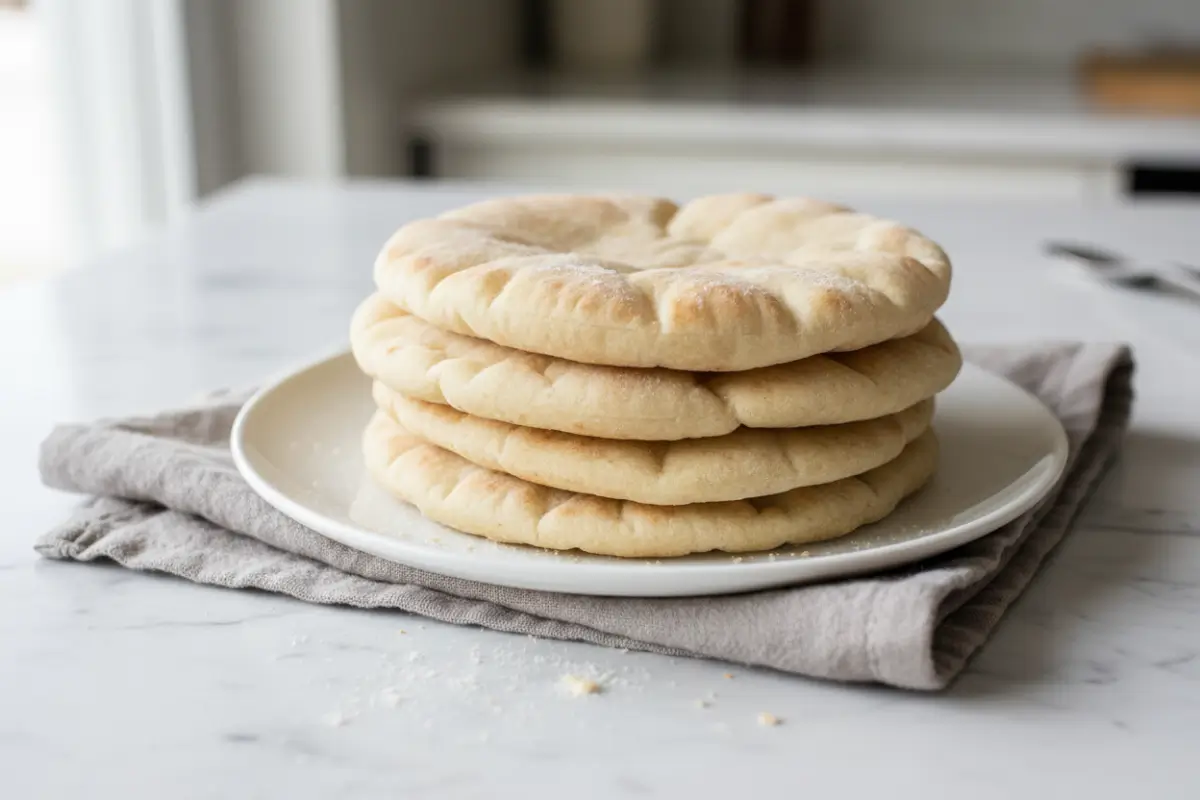
No-Fail Homemade Pita Bread Easy
Ingredients
Equipment
Method
- Pour lukewarm water into a large bowl and sprinkle in yeast and sugar, stirring until dissolved.
- Add half a cup of flour and whisk smooth. Set aside for 15 minutes until bubbly.
- Mix in salt, olive oil, and most of the remaining flour. Stir until clumped together.
- Knead gently in the bowl, then transfer to a floured surface for a smoother finish.
- Cover and let rise in a warm spot for one hour until doubled in size.
- Divide the dough into 7-8 pieces, roll into balls and let rest for 10 minutes.
- Roll out each ball into 8-9 inch circles, dusting with flour as needed.
- Preheat oven to 475°F and place rolled pitas directly on a hot baking sheet.
- Bake for 2 minutes on one side, flip and bake for another minute until puffed.
