
There’s something deeply satisfying about pulling a golden loaf from your oven when you didn’t plan ahead. No waiting for yeast to proof. No wondering if your dough will rise. This no-fail easy homemade bread no yeast delivers that crackling crust and tender crumb without the fuss—just mix, shape, and bake. The smell hits you at minute forty: buttery, slightly tangy from the buttermilk, with whatever savory add-ins you’ve chosen melting into pockets throughout. I started making this on Sunday mornings in my Asheville kitchen when I realized I could have warm bread on the table before my coffee got cold. It works every single time because baking soda does the heavy lifting—no temperature babysitting, no “did I kill it?” panic. You get reliable, delicious results that make you look like you’ve been baking for decades, even if this is your first loaf.
Prep Time: 10 mins
Cook Time: 50 mins
Total Time: 1 hr
Yields: 8 servings
Why You’ll Love This
It’s genuinely foolproof. No yeast means no failed rises or timing stress. Mix and bake.
Endlessly customizable. Sweet or savory, plain or loaded—the base dough welcomes whatever you’re craving.
Minimal cleanup. One bowl, one Dutch oven, parchment paper. Done.
Tastes expensive. That crispy crust and soft interior rival any bakery loaf, but you made it in an hour.
Key Ingredients
All-purpose flour (4 cups) creates the structure. Don’t swap for cake flour—you need that protein for a sturdy crumb that holds up to mix-ins. Bread flour works too if that’s what you have.
Baking soda (2 teaspoons) is your leavening hero here. It reacts with the acidic buttermilk to create lift and those beautiful air pockets. Fresh baking soda matters—if yours has been sitting open for months, replace it.
Sea salt (1 teaspoon) balances sweetness and amplifies every other flavor. Table salt works, but sea salt gives a cleaner taste.
Buttermilk (2 cups) provides tang and tenderness. The acidity activates the baking soda while keeping the crumb soft for days. No buttermilk? Mix regular milk with 2 tablespoons vinegar, wait five minutes. Works perfectly.
Melted butter (1/3 cup) adds richness and helps brown that crust. Don’t skip it—this isn’t the place for oil substitutions.
Mix-ins transform this basic loaf into something special. The recipe offers three combinations: cheddar with Italian seasoning and caramelized onions; Gruyère with black olives and feta; or mozzarella with sun-dried tomatoes. Pick one direction or go rogue. Just keep total add-ins around 2-2.5 cups so the dough doesn’t get too heavy.
The cheddar-onion version smells like a fancy grilled cheese while baking. Gruyère-olive tastes Mediterranean and sophisticated. Mozzarella-tomato gives pizza vibes without the guilt. Or leave everything out for a simple table bread that pairs with soup.
Instructions
Preheat and Prepare
Set your oven to 400°F. Cut a piece of parchment paper large enough to line your Dutch oven with overhang—you’ll use this as handles later. Set it on your counter where you’ll shape the dough.
Mix the Dry Ingredients
Dump flour, baking soda, and salt into a large mixing bowl. Whisk for thirty seconds until you see no streaks of baking soda. This distributes the leavening evenly so you don’t get bitter pockets.
Add the Wet Ingredients
Pour in buttermilk and melted butter. Stir with a wooden spoon—not your hands yet—until you see a shaggy, sticky mess forming. It’ll look rough. That’s right. You want some dry bits still clinging to the bowl. Thirty seconds of stirring, max.
Add Your Favorite Mix-Ins
Choose your flavor direction and fold in those ingredients. If you’re doing cheddar-onion, make sure those onions are truly caramelized—golden and sweet, not just softened. For olives, drain them well or you’ll add too much moisture. Sun-dried tomatoes should be patted dry if they’re oil-packed. Fold gently with your spoon, turning the dough over itself until everything’s distributed. Don’t knead. Don’t overmix. You want to see streaks of cheese and pockets of add-ins, not a uniform mass.
Shape the Dough
Turn this sticky situation onto your parchment paper. Flour your hands lightly—just a dusting—and gently coax the dough into a round ball. It won’t be smooth. It’ll be lumpy and rustic. Perfect. Pat it down slightly so it’s not a tall dome, maybe 6 inches across. The shaping takes twenty seconds.
Score and Bake
Lift the parchment paper with the dough and lower everything into your Dutch oven. Use a sharp knife or bread lame to cut an X across the top, about half an inch deep. This lets steam escape and gives you that artisan look. Put the lid on. Slide it into the oven for 50-55 minutes. Don’t peek. Really. The trapped steam creates that crispy crust.
You’ll know it’s done when the crust is deep golden brown and tapping the bottom sounds hollow. If you have a thermometer, internal temp should hit 200°F.
Cool Before Slicing
Use the parchment to lift the loaf out. Set it on a cooling rack. Wait thirty minutes. I know that’s torture when it smells this good, but cutting too early releases all the steam and you’ll get a gummy center. The crumb needs time to set.
Tips & Variations
Use a preheated Dutch oven for an even crispier crust. Put your empty Dutch oven in while the oven preheats, then carefully lower the parchment with dough into the hot pot. Adds five minutes of drama but incredible results.
Make it sweet instead. Skip the savory add-ins and fold in 1/3 cup sugar, 1 cup dried cranberries, and orange zest. Brush the top with honey after baking.
Try herb butter. Mix softened butter with minced garlic and fresh rosemary, then brush it over the hot loaf right when it comes out. Obscenely good.
Go plain for maximum versatility. Leave out all the mix-ins for a simple table bread that works with everything from chili to roast chicken.
Freeze for later. This no-fail easy homemade bread no yeast freezes beautifully. Slice it first, then freeze in a zip-top bag for up to three months. Toast slices straight from frozen.
Storage & Pairings
Store at room temperature wrapped in a clean kitchen towel for two days, or in an airtight container for up to four days. The crust softens in a container but the bread stays fresh. Reheat slices in a 350°F oven for five minutes to crisp them up.
Serve with soups, stews, or a simple salad. The savory versions make excellent sandwich bread. Toast slices and top with ricotta and honey for breakfast.
FAQ
Can I make this without a Dutch oven?
Yes. Use a regular loaf pan or shape into a round and bake on a baking sheet. You’ll lose some of that crispy crust magic, but the bread will still be delicious. Bake at the same temperature for 45-50 minutes.
Why is my bread dense?
Overmixing develops too much gluten and makes the texture tough. Also check your baking soda—if it’s old, you won’t get proper rise. Mix just until combined and use fresh leavening.
💡 Loved this recipe? Follow Us on Pinterest for more!
Conclusion
This no-fail easy homemade bread no yeast proves you don’t need fancy techniques for bakery-worthy results. Mix, shape, bake—then enjoy that moment when everyone asks how you made something this good. It’s your new reliable favorite, and that’s exactly what home cooking should be.
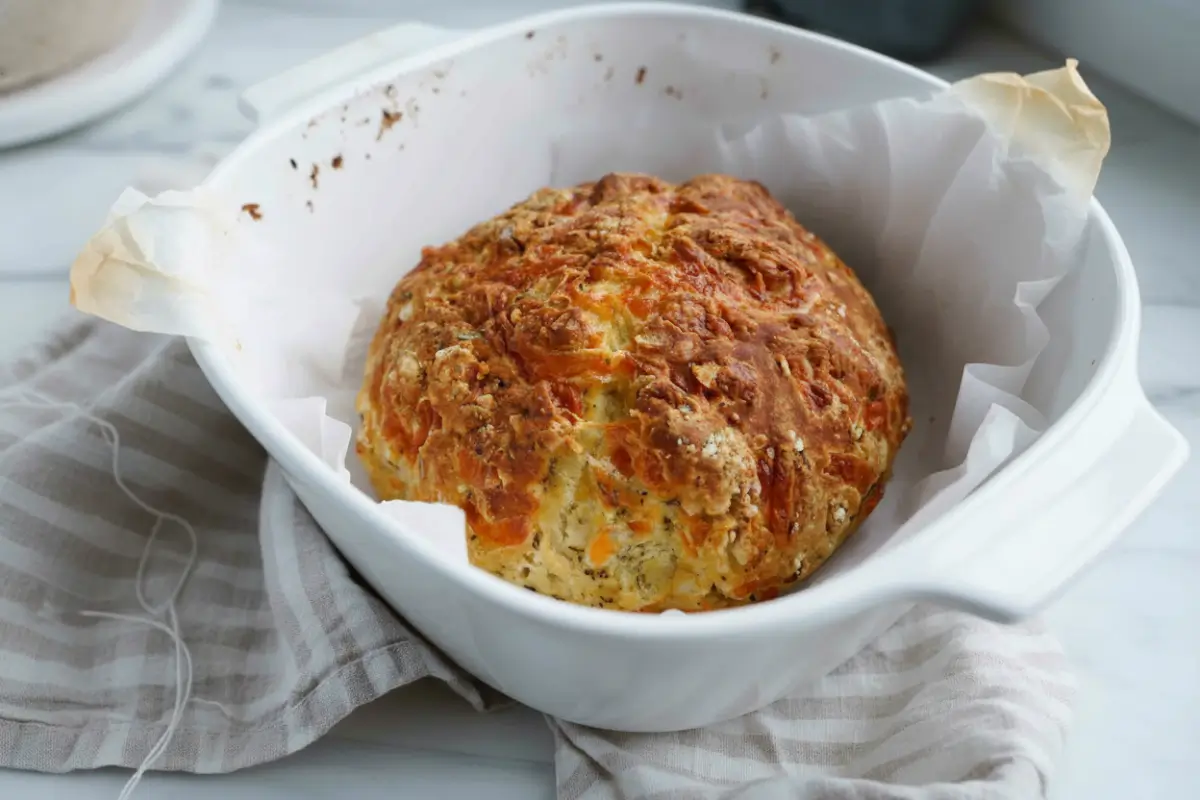
No-Fail Easy Homemade Bread No Yeast
Ingredients
Equipment
Method
- Preheat your oven to 400°F and prepare parchment paper for the Dutch oven.
- Whisk together the flour, baking soda, and sea salt in a large bowl.
- Add the buttermilk and melted butter, stirring until a sticky dough forms.
- Fold in desired mix-ins if using, but do not overmix.
- Shape the dough into a round ball and transfer it to the parchment.
- Score the top of the loaf with an X, then place it in the Dutch oven.
- Cover and bake for 50-55 minutes until golden brown.
- Cool for thirty minutes before slicing.
