
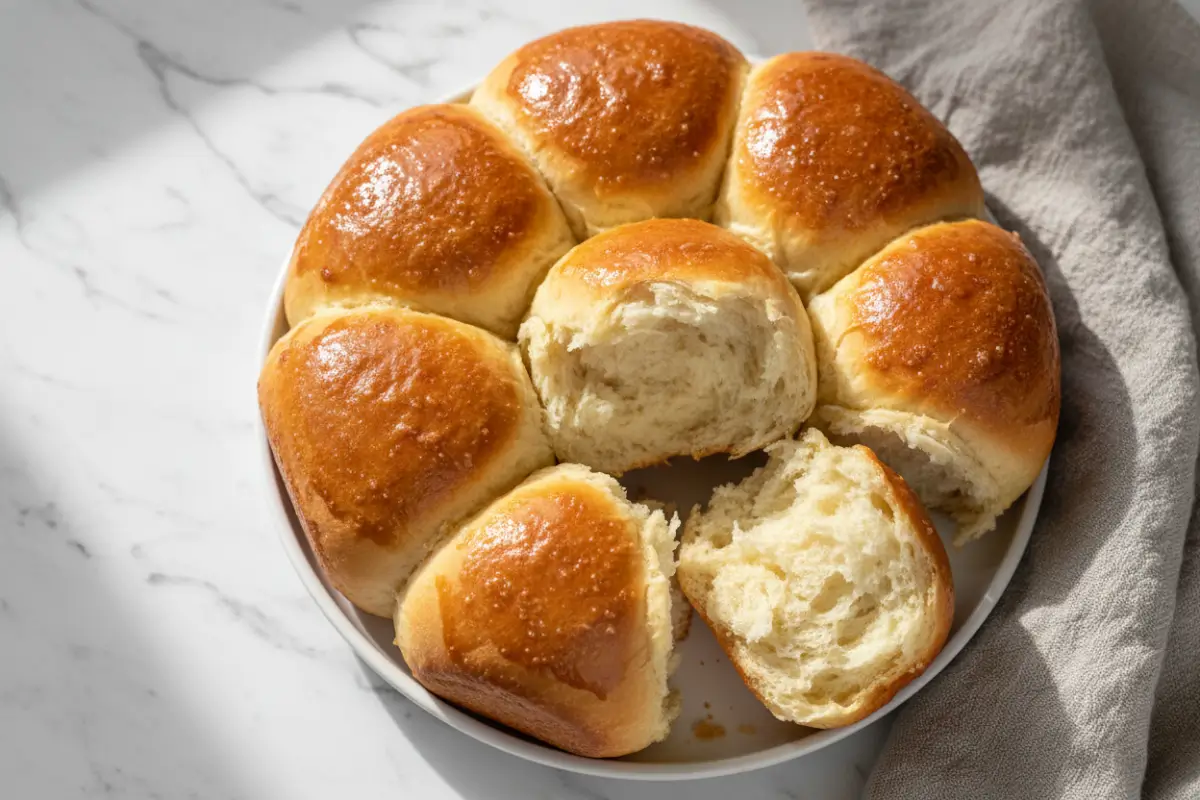
There’s something deeply satisfying about pulling apart a warm dinner roll at your own table, knowing you made it from scratch. These soft easy homemade dinner rolls deliver that pride without the guesswork. The dough is forgiving, the method straightforward, and the result? Golden tops with pillowy insides that tear apart in soft layers. This isn’t finicky baking. It’s reliable comfort you can count on, whether it’s Tuesday or Thanksgiving.
The smell hits first—yeasty sweetness mingling with butter as they bake. Then comes the visual: a pan of bronzed rolls, shoulders touching, ready to be pulled apart. This recipe works because it respects your time while delivering bakery-quality results. No special skills required. Just patience and a warm kitchen.
Why You’ll Love This
Foolproof formula. The dough tells you what it needs. Sticky but manageable means you’re on track.
Flexible timing. Rise on your schedule. Counter works fine. No fancy proofing boxes needed.
Crowd-pleaser guaranteed. Fourteen to sixteen rolls from one batch. Perfect for family dinners or potlucks where you want to arrive with something impressive.
Minimal cleanup. One bowl, one pan. The kind of baking that doesn’t wreck your kitchen.
Key Ingredients
Whole milk, warmed to 110°F. This temperature activates the yeast without killing it. Too hot, you’ll murder the yeast. Too cold, nothing happens. Use a thermometer the first few times. After that, you’ll know the feel—warm as bathwater, comfortable on your wrist.
Platinum Yeast from Red Star. Instant yeast works fast and doesn’t need proofing in a separate step, though we do it here for insurance. One packet equals 2¼ teaspoons. Keep yeast in the fridge after opening. Dead yeast means flat rolls.
Granulated sugar, divided. The first tablespoon feeds the yeast, creating that initial foam that tells you it’s alive. The second tablespoon sweetens the dough just enough—these aren’t dessert rolls, but they’re not bland either.
Unsalted butter, softened and cubed. Room temperature butter incorporates smoothly into dough. Cold butter creates lumps. Cubing helps it distribute evenly. The quarter-cup adds richness without making rolls greasy.
All-purpose or bread flour. Either works. Bread flour gives slightly chewier texture with more structure. All-purpose makes them more tender. I use all-purpose for dinner rolls, bread flour for sandwich buns. Spoon and level your flour—scooping packs it down, adding too much, making dense rolls.
Optional honey butter topping. Two tablespoons melted butter mixed with one tablespoon honey. Brush this on hot rolls straight from the oven. The honey adds shine and a subtle floral sweetness. Skip it if you want classic buttery rolls.
In my Asheville kitchen, I keep instant yeast in a jar in the fridge door. Lasts months that way, always ready when the urge for fresh bread hits.
Instructions
Activate the yeast. Whisk warm milk, yeast, and one tablespoon sugar in your stand mixer bowl. Cover with a towel and wait five minutes. You’ll see foam forming on top—that’s the yeast waking up, eating sugar, producing gas. No foam? Your milk was too hot or your yeast is dead. Start over.
If you don’t have a stand mixer, use a large bowl and a wooden spoon. Your arm will get a workout, but it works. Hand mixers get gummed up with sticky dough. Not worth the frustration.
Build the dough. Add remaining sugar, egg, butter pieces, salt, and one cup flour. Mix on low for thirty seconds with the dough hook. Scrape down the bowl. Add remaining flour. Beat on medium until dough pulls away from the bowl sides, about two minutes. It should look shaggy at first, then come together into a soft mass.
Too wet? Add flour one tablespoon at a time. The dough should be slightly sticky but not gluing itself to your fingers. Think soft playdough texture.
First rise. Grease a large bowl. Place dough inside, turning to coat all surfaces with oil. This prevents a dry skin from forming. Cover with foil, plastic wrap, or a damp towel. Set somewhere draft-free for one to two hours until doubled.
I use my counter. Takes about two hours at normal room temperature. You’ll know it’s ready when you poke it and the indent stays. If it springs back immediately, give it more time.
Shape the rolls. Grease a 9×13 pan. Punch down the risen dough—literally punch it to release gas bubbles. Satisfying. Divide into fourteen to sixteen pieces. Eyeball it. Doesn’t need precision.
To shape: cup your hand over a piece and roll in small circles on the counter. The dough ball tightens and smooths out. Place them in the pan with sides barely touching. They’ll rise into each other, creating those pull-apart edges.
Second rise. Cover shaped rolls. Let them puff for about an hour. They should look noticeably larger, soft and pillowy when gently pressed. This rise is crucial—it’s what makes them light instead of dense.
Bake low and watch. Position your oven rack in the lower third. Preheat to 350°F. This lower position prevents tops from browning too fast while insides stay raw.
Bake twenty to twenty-five minutes, rotating the pan halfway through for even browning. Look for golden brown tops. If they’re darkening too quickly, tent loosely with foil. Internal temperature should hit 190°F if you want to be precise.
Finish with butter. Brush hot rolls with honey butter if using. The heat melts it into a glossy coating. Let them cool just a few minutes. Serve warm.
Really. Warm soft easy homemade dinner rolls are the point.
Tips & Variations
Check your yeast. If the five-minute foam test fails, your yeast is dead. Don’t proceed. You’ll waste ingredients on hockey pucks.
Dough too sticky? Lightly flour your hands when shaping, but resist adding too much flour to the dough itself. Sticky dough makes tender rolls. Over-floured dough makes tough ones.
Make ahead. After shaping, cover and refrigerate overnight. Next day, let them sit at room temperature for thirty minutes, then bake. Fresh rolls without morning chaos.
Garlic butter variation. Mix melted butter with minced garlic and parsley instead of honey. Brush on after baking for savory rolls.
Whole wheat version. Replace one cup all-purpose flour with whole wheat. Adds nutty flavor and texture. Don’t go more than that or they’ll be dense.
Storage & Pairings
Store cooled rolls in an airtight container at room temperature for two to three days. Refrigerate for up to a week. Reheat wrapped in foil at 300°F for ten minutes.
These soft easy homemade dinner rolls pair with anything saucy—pot roast, chili, stew. Use them for sliders or breakfast sandwiches. Split and toast for better-than-store-bought garlic bread.
Freeze baked rolls up to three months. Thaw at room temperature, refresh in a warm oven.
FAQ
Can I use active dry yeast instead of instant?
Yes. Dissolve it in the warm milk with sugar and wait ten minutes for foam before proceeding. Active dry needs that full activation time. Instant yeast is more forgiving, which is why I prefer it for reliable results.
Why didn’t my rolls rise?
Three common culprits: dead yeast, milk too hot (killed the yeast), or too-cold environment. Yeast needs warmth to work. If your kitchen is cold, try rising dough in an oven with just the light on. Creates a gentle warm spot.
💡 Loved this recipe? Follow Us on Pinterest for more!
Conclusion
These rolls prove that reliable baking doesn’t require complexity. Warm milk, patient rising, and a hot oven. That’s it. The reward is a pan of golden rolls that tear apart in soft layers, ready to soak up gravy or butter or whatever your table needs. Make them once, and they’ll become your default.
Perfect Soft Easy Homemade Dinner Rolls
Ingredients
Equipment
Method
- Whisk warm milk, yeast, and one tablespoon sugar in stand mixer bowl. Cover and wait five minutes for foam.
- Add remaining sugar, egg, butter, salt, and one cup flour. Mix on low to combine, then add more flour. Beat until dough pulls away from sides.
- Grease a bowl, place dough inside, cover and let rise for 1-2 hours until doubled.
- Punch down dough, divide into 14-16 pieces, shape into balls and place in greased pan. Let rise for about an hour until larger.
- Preheat oven to 350°F and bake for 20-25 minutes until golden brown. Brush with melted butter if desired.
