
There’s something deeply satisfying about pulling a pan of golden rolls from your oven, knowing exactly what went into them. This minutes sweet dinner rolls recipe homemade delivers that reliable comfort without the all-day commitment. The dough comes together in your stand mixer, rises predictably, and bakes into soft, buttery rolls that actually taste like you meant them to. No guesswork. No crossed fingers. Just honest-to-goodness dinner rolls that work.
I’ve made these every Thanksgiving for six years running. My Asheville kitchen gets cold in November, so I proof the dough near the radiator—works every time. The smell alone makes people wander into the kitchen asking when dinner’s ready.
Why You’ll Love This
Foolproof timing. The dough tells you when it’s ready. No mysterious “until doubled” anxiety.
Stand mixer does the work. Your hands stay clean. The dough hook handles all the kneading.
Freezer-friendly. Bake a double batch, freeze half. Future you will be grateful.
Actually soft. These don’t turn into hockey pucks by morning. They stay tender for days.
Key Ingredients
Bread flour creates structure that keeps rolls fluffy without being dense. All-purpose works in a pinch, but bread flour gives you that pull-apart texture people remember. The higher protein content traps air bubbles better during rising.
Active dry yeast (not instant) needs that initial warm liquid to wake up properly. I proof mine in the warm water-milk mixture. You’ll see it foam after five minutes—that’s your green light.
Warm water and milk should feel like bathwater on your wrist. Too hot kills yeast. Too cold and nothing happens. Aim for 110°F if you’re checking with a thermometer.
Melted butter (cooled slightly) adds richness without weighing down the dough. Don’t skip the cooling step. Hot butter can cook the eggs when you mix everything together.
Sugar feeds the yeast and adds subtle sweetness. These aren’t dessert rolls, but they’re noticeably sweeter than plain dinner rolls. Perfect for soaking up gravy.
Room temperature eggs incorporate smoothly. Cold eggs can shock the dough and slow rising. Set them on the counter while you gather other ingredients.
Salt balances sweetness and strengthens gluten structure. Don’t reduce it. These need the full two teaspoons.
Instructions
Combine warm water, warm milk, eggs, sugar, melted butter, 3½ cups flour, salt, and yeast in your stand mixer bowl. The order doesn’t matter much here—everything’s going in together.
Attach the dough hook. Mix on low until the mixture starts coming together. It’ll look shaggy and wet. That’s correct. This isn’t bread dough yet.
Scrape down the sides with a spatula. Mix another two minutes on low. The dough will still be loose and sticky.
Add remaining flour half a cup at a time, mixing on low between additions. Stop and scrape the bowl occasionally. You’re looking for dough that pulls away from the sides but still feels slightly tacky. This takes about four minutes total.
Knead in the mixer for 3-4 minutes. The dough should clean the sides of the bowl and form a smooth ball around the hook. If it’s still sticking everywhere, add two more tablespoons of flour.
Turn the dough onto a lightly floured counter. It should feel soft and elastic, not stiff. Wash and dry your mixer bowl, then coat it lightly with neutral oil.
Place the dough back in the oiled bowl. Turn it once so the top is greased. Cover with a clean kitchen towel. Set it somewhere warm—near a sunny window, on top of the fridge, or in an oven with just the light on. Let rise until doubled, about 60-75 minutes.
Press two fingers into the dough. If the indentations stay, it’s ready. Punch down the center to deflate it. Turn onto a lightly floured surface.
Cut the dough in half. Cut each half in half. Cut those quarters in half. You now have eight pieces. Cut each piece into three equal portions. You should have 24 rolls total. They don’t need to be perfect.
Shape each piece into a ball by tucking the edges underneath and rolling between your palms. Place 18 rolls in a greased 9×13 pan (three across, six down) and six rolls in a greased 9×5 loaf pan (two across, three down). Space them so they’re just touching.
Cover pans with the towel again. Let rise one hour. They’ll puff up and press against each other. That’s what creates the soft sides.
Preheat your oven to 350°F during the last 15 minutes of rising.
Bake for 20-25 minutes until the tops are golden brown. The internal temperature should hit 190°F if you’re checking. They’ll smell incredible.
Brush the tops immediately with melted butter while they’re still in the pans. Use a pastry brush or spoon. Be generous.
Let cool in the pans for five minutes, then turn out onto a cooling rack. Or serve straight from the pan if you’re eating them now.
Tips & Variations
Test your yeast first. If it doesn’t foam in warm water after five minutes, it’s dead. Start over with fresh yeast before wasting all that flour.
The windowpane test works. Stretch a small piece of dough between your fingers. If it forms a thin, translucent membrane without tearing, gluten development is good.
Cold rise overnight. After the first rise, punch down the dough and refrigerate in a covered bowl. Next day, bring to room temperature for 30 minutes, shape, then do the second rise. Same results, better schedule.
Honey butter variation. Replace half the sugar with honey. Brush tops with honey butter (equal parts honey and melted butter) instead of plain butter.
Herb rolls. Add two tablespoons of chopped fresh rosemary or thyme to the dough during the last minute of kneading. Brush with garlic butter after baking.
Storage & Pairings
Store completely cooled rolls in an airtight bag at room temperature for three days. Freeze in a freezer bag for up to three months. Reheat frozen rolls at 300°F for 10 minutes.
Serve with pot roast, fried chicken, or any meal with gravy. They’re excellent for sopping. Also perfect for leftover turkey sandwiches or breakfast with jam.
FAQ
Can I make these without a stand mixer?
Yes, but it’s a workout. Mix ingredients in a large bowl, then knead by hand on a floured surface for 8-10 minutes until smooth and elastic. Your arms will know when it’s done.
Why didn’t my rolls rise?
Check three things: yeast freshness (does it foam?), liquid temperature (too hot kills yeast), and rising location (needs to be warm, around 75-80°F). Cold kitchens need a warmer spot.
💡 Loved this recipe? Follow Us on Pinterest for more!
Conclusion
This minutes sweet dinner rolls recipe homemade proves that scratch baking doesn’t require all day. Mix, rise, shape, rise again, bake. The rhythm becomes second nature after one batch. Your kitchen will smell like a bakery, and your table will have rolls worth reaching for twice.
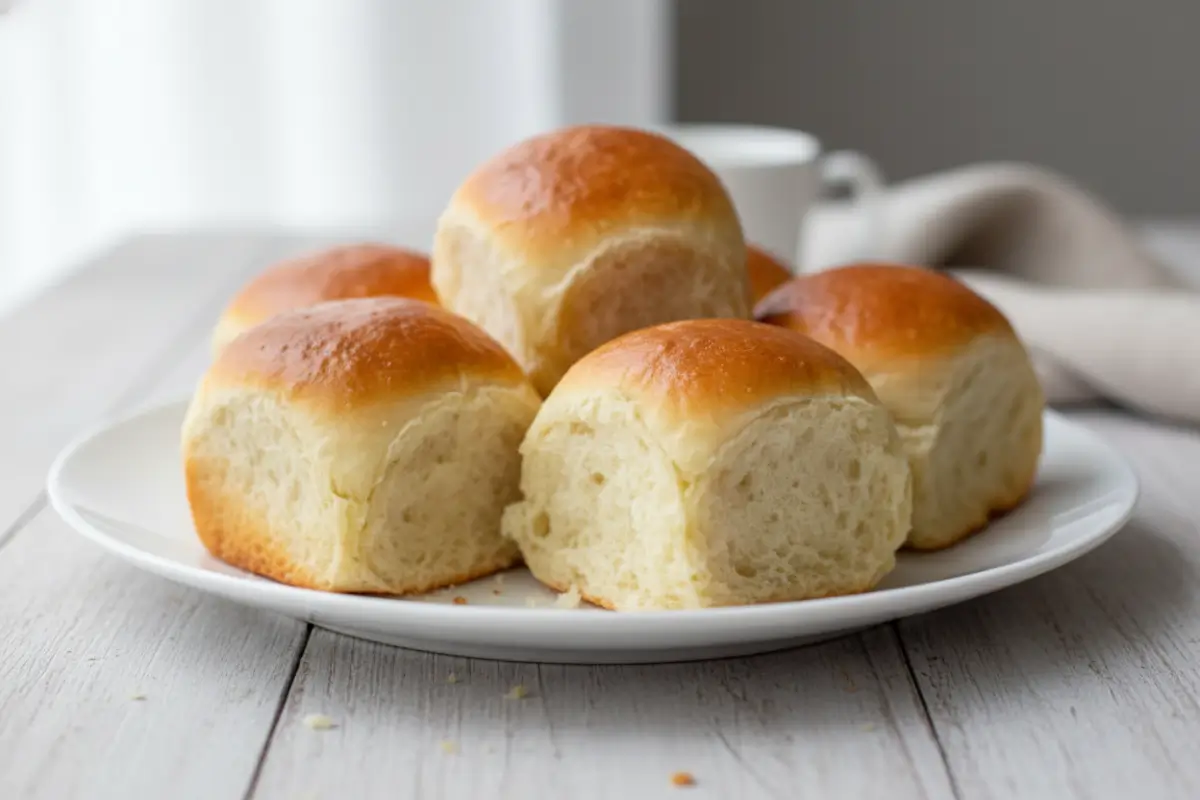
Easy Minutes Sweet Dinner Rolls Recipe Homemade
Ingredients
Equipment
Method
- Combine warm water, warm milk, eggs, sugar, melted butter, flour, salt, and yeast in your stand mixer bowl.
- Attach the dough hook. Mix on low until the mixture starts coming together.
- Scrape down the sides with a spatula. Mix another two minutes on low.
- Add remaining flour half a cup at a time, mixing on low between additions.
- Knead in the mixer for 3-4 minutes until it forms a smooth ball.
- Turn the dough onto a lightly floured counter. It should feel soft and elastic.
- Place the dough back in an oiled bowl, cover with a towel, and let rise until doubled.
- Punch down the dough, cut it into pieces, and shape each into a ball.
- Place rolls in greased pans, cover with towel, and let rise for an hour.
- Preheat your oven to 350°F during the last 15 minutes of rising.
- Bake for 20-25 minutes until the tops are golden brown.
- Brush the tops with melted butter immediately after baking.
