
If you’re looking for a No-Fail Gluten-Free Irish Soda Bread recipe that tastes like it came from a cottage in County Cork but comes together on a weeknight, this is it. It’s tender, lightly sweet, and uses a smart shortcut—gluten-free 1-to-1 flour—so you don’t have to hunt down specialty ingredients or master complicated techniques.
From My Kitchen: The Bread That Saved Dinner
I’ll be honest—I didn’t grow up making Irish soda bread. But when I moved to the mountains and started leaning into cozy, rustic baking, this became my go-to “impress without stress” loaf.
One rainy March afternoon, I needed something warm and comforting to serve with soup, but I was out of yeast and patience. That’s when I remembered soda bread: no kneading, no rising, no fuss. Just mix, score, and bake. The gluten-free version? Even more forgiving. The dough is sticky and imperfect, which means you can’t really mess it up.
When I pulled that golden, crusty loaf from my cast iron skillet, my kitchen smelled like a bakery. My neighbor knocked on the door asking what I was making. That’s the magic of this bread—it *feels* special, even though it’s one of the easiest things you’ll ever bake.
Why This Recipe Works
– Smart Shortcut: Using gluten-free 1-to-1 baking flour means no xanthan gum calculations or blending multiple flours. Just swap and go.
– Texture Win: The buttermilk reacts with the baking soda to create a tender crumb with a golden, slightly crispy crust. You get that classic “rustic loaf” look without any fancy technique.
– Forgiving Dough: Gluten-free dough is naturally sticky, so you don’t have to worry about overworking it. Messy hands = perfect bread.
– Dairy-Free Friendly: Swap in dairy-free butter and buttermilk (or make your own with almond milk + lemon juice), and this becomes a crowd-pleaser for every diet.
The Grocery List (& Shortcuts)
Main Players
– Gluten-Free 1-to-1 Baking Flour (4 cups): This is your hero ingredient. Brands like Bob’s Red Mill or King Arthur work beautifully. No need to add xanthan gum if your blend already includes it.
– Buttermilk (2 ⅓ cups): The tang is essential. If you don’t have buttermilk, make your own: Add 2 Tbsp lemon juice or vinegar to regular milk and let it sit for 5 minutes.
– Currants or Raisins (1 cup): Soak these in apple juice or water for 10 minutes to plump them up. They add little bursts of sweetness.
– Butter (⅓ cup + 2 ½ Tbsp): Cold butter for the dough, melted butter for brushing. Use a dairy-free alternative if needed.
– Egg (1): Binds everything together. Use a flax egg (1 Tbsp flaxseed meal + 3 Tbsp water) for a vegan version.
The “Cooking Save” Shortcut
Gluten-Free 1-to-1 Flour is the MVP here. It eliminates the guesswork of blending rice flour, tapioca starch, and potato starch. Just measure and go.
Substitutions
– Dairy-Free? Use plant-based butter and make dairy-free buttermilk (almond milk + lemon juice).
– Out of Currants? Dried cranberries or chopped dates work beautifully.
– No Buttermilk? Mix 2 ⅓ cups milk with 2 Tbsp white vinegar. Let sit 5 minutes.
Equipment You Actually Need
You don’t need a stand mixer or a bread machine. Here’s what works:
– Large Mixing Bowl
– Pastry Cutter or Fork (for cutting in the butter)
– 10-inch Cast Iron Skillet (or a baking sheet lined with parchment)
– Sharp Knife (for scoring the cross)
– Cooling Rack
Step-by-Step: The Magic Happens
Phase 1: Prep the Dough
Preheat your oven to 400°F. Set a rack in the middle.
Whisk the dry ingredients. In a large bowl, combine 4 cups gluten-free flour, 3 Tbsp sugar, 2 tsp baking powder, 1 ½ tsp baking soda, and 1 tsp salt. This is your flavor base.
Cut in the cold butter. Add ⅓ cup cubed, chilled butter to the flour. Use a pastry cutter or fork to work it in until the butter pieces are the size of small peas. This creates those tender, flaky pockets.
Stir in the currants. Drain your soaked currants or raisins and fold them into the flour mixture with a spatula.
Phase 2: Bring It Together
Mix the wet ingredients. In a small bowl, whisk together 2 ⅓ cups cold buttermilk and 1 egg.
Combine wet and dry. Pour the buttermilk mixture into the flour bowl. Use a spatula to gently fold everything together. The dough will be sticky—that’s perfect. Don’t overmix. Stop when it just comes together.
Phase 3: Shape & Score
Turn out the dough. Dump the sticky dough onto a lightly floured surface (use more gluten-free flour). With floured hands, gently shape it into a 7-inch round. It doesn’t have to be perfect—rustic is the goal.
Transfer to your skillet. Place the dough round in a greased 10-inch cast iron skillet (or on a parchment-lined baking sheet).
Score the cross. Using a sharp knife, cut a deep cross (about 1 inch deep) from edge to edge across the top. This isn’t just tradition—it helps the bread bake evenly.
Brush with butter. Melt 2 ½ Tbsp butter and brush it over the top of the loaf. This gives you that golden, glossy crust.
Phase 4: Bake
Bake for 50-60 minutes. You’ll know it’s done when the loaf is golden brown, dry to the touch, and a knife inserted into the center comes out clean. If the top browns too quickly, tent it with foil halfway through.
Cool on a rack. Let the bread cool for at least 10 minutes before slicing. (I know it’s hard to wait, but it needs to set.)
Riley’s Kitchen Tips
Tip 1 (Texture): Don’t skip the cold butter and cold buttermilk. The temperature contrast creates steam in the oven, which makes the bread tender and light.
Tip 2 (The “Oops” Fix): If your dough feels too dry, add buttermilk 1 Tbsp at a time. If it’s too wet, dust with more flour. Gluten-free dough is forgiving—just go with the flow.
Tip 3 (Make Ahead): You can shape the dough, wrap it tightly, and refrigerate for up to 4 hours before baking. Let it sit at room temp for 10 minutes before scoring and baking.
Tip 4 (The Cross): The traditional cross isn’t just decorative—it’s said to “let the fairies out” and helps the bread bake evenly. Cut deep (1 inch) so the center cooks through.
What to Serve With This
For a Cozy Dinner
Serve warm slices with salted butter and honey alongside a bowl of hearty soup (beef stew or tomato bisque).
For Brunch
Toast leftover slices and top with cream cheese and smoked salmon or jam and clotted cream.
For St. Patrick’s Day
Pair with corned beef and cabbage, roasted root vegetables, and a pint of Guinness (or sparkling cider).
Storage & Leftovers
Fridge: Wrap tightly in plastic wrap or store in an airtight container for up to 4 days.
Reheating: Slice and toast in a skillet with butter, or warm in a 300°F oven for 10 minutes.
Freezer: Wrap the cooled loaf in plastic wrap, then foil. Freeze for up to 3 months. Thaw at room temp and refresh in the oven.
FAQ
Can I make this without a cast iron skillet?
Absolutely. Use a baking sheet lined with parchment paper. The crust won’t be quite as crispy, but the bread will still be delicious.
Can I skip the currants or raisins?
Yes! Traditional Irish soda bread is often plain. You can leave them out or add caraway seeds for a savory twist.
Can I make this dairy-free?
Yes. Use dairy-free butter and make dairy-free buttermilk by mixing 2 ⅓ cups almond milk with 2 Tbsp lemon juice. Let it sit for 5 minutes before using.
Why is my bread dense?
Make sure your baking powder and baking soda are fresh. Also, don’t overmix the dough—gluten-free batters need a gentle hand.
Can I double this recipe for a crowd?
You can, but bake two separate loaves instead of one giant one. They’ll bake more evenly.
—
This No-Fail Gluten-Free Irish Soda Bread recipe is proof that you don’t need fancy techniques or hard-to-find ingredients to bake something that feels like a hug. It’s tender, lightly sweet, and comes together faster than a trip to the bakery.
Did you try this smart shortcut? Snap a photo and tag me on Instagram! Or save this to your Gluten-Free Baking board to find it later.
💡 Loved this recipe? Follow Us on Pinterest for more!
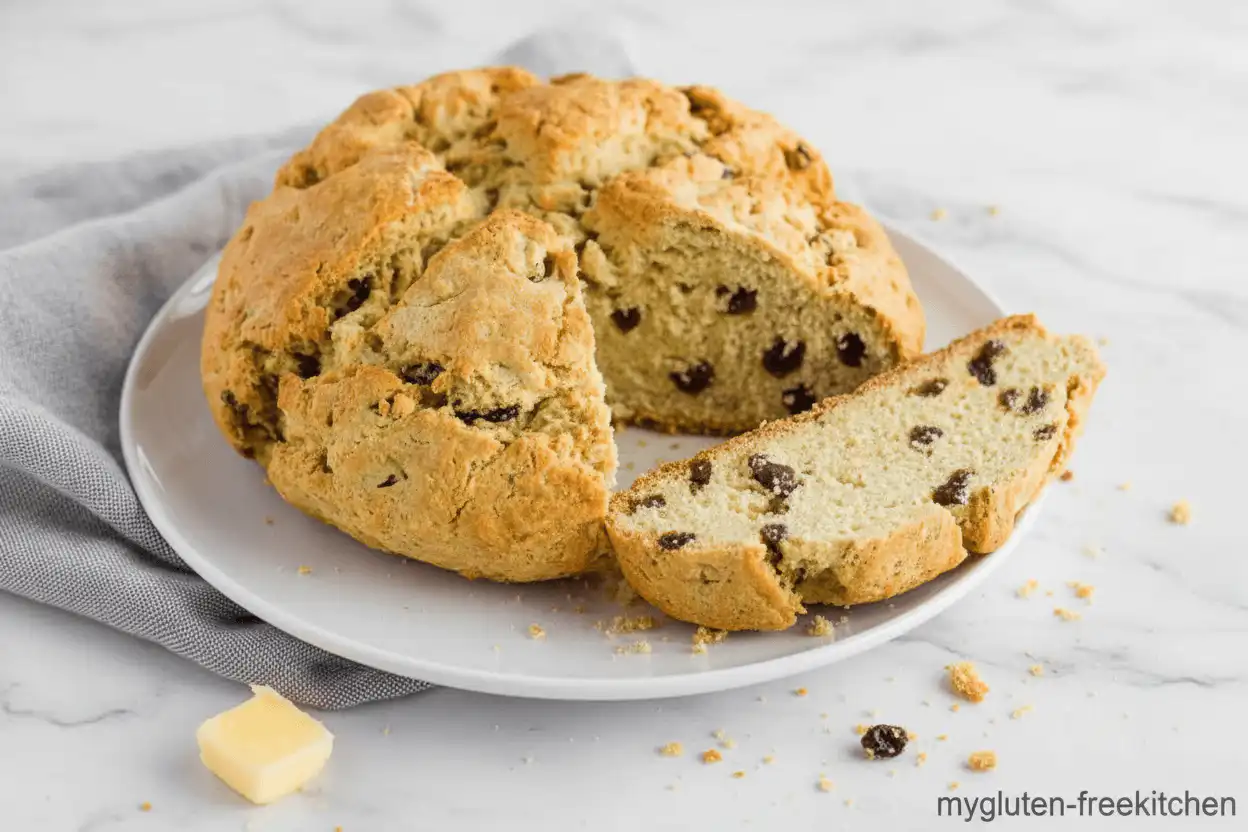
No-Fail Gluten-Free Irish Soda Bread
Ingredients
Equipment
Method
- Preheat your oven to 400°F and set a rack in the middle.
- In a large bowl, whisk together gluten-free flour, sugar, baking powder, baking soda, and salt.
- Cut in the cold butter until the mixture resembles small peas.
- Stir in the drained currants or raisins.
- In a separate bowl, whisk together buttermilk and egg.
- Pour the buttermilk mixture into the flour mixture and fold gently until just combined.
- Dump the dough onto a floured surface and shape it into a 7-inch round. Transfer to a greased skillet.
- Score a deep cross on top with a knife and brush with melted butter.
- Bake for 50-60 minutes or until golden brown and a knife comes out clean.
- Let the bread cool for at least 10 minutes before slicing.
