
If you’re looking for a traditional Irish Soda Bread recipe that tastes like a warm hug from your grandmother but comes together in under an hour, this is it. It’s crusty, tender, and uses the smartest shortcut in baking—no yeast, no rising time, just mix and bake.
From My Kitchen
I’ll be honest—the first time I made Irish Soda Bread, I was skeptical. Could bread really come together this fast? No kneading for ten minutes? No waiting around for dough to double in size while I stress-clean the kitchen?
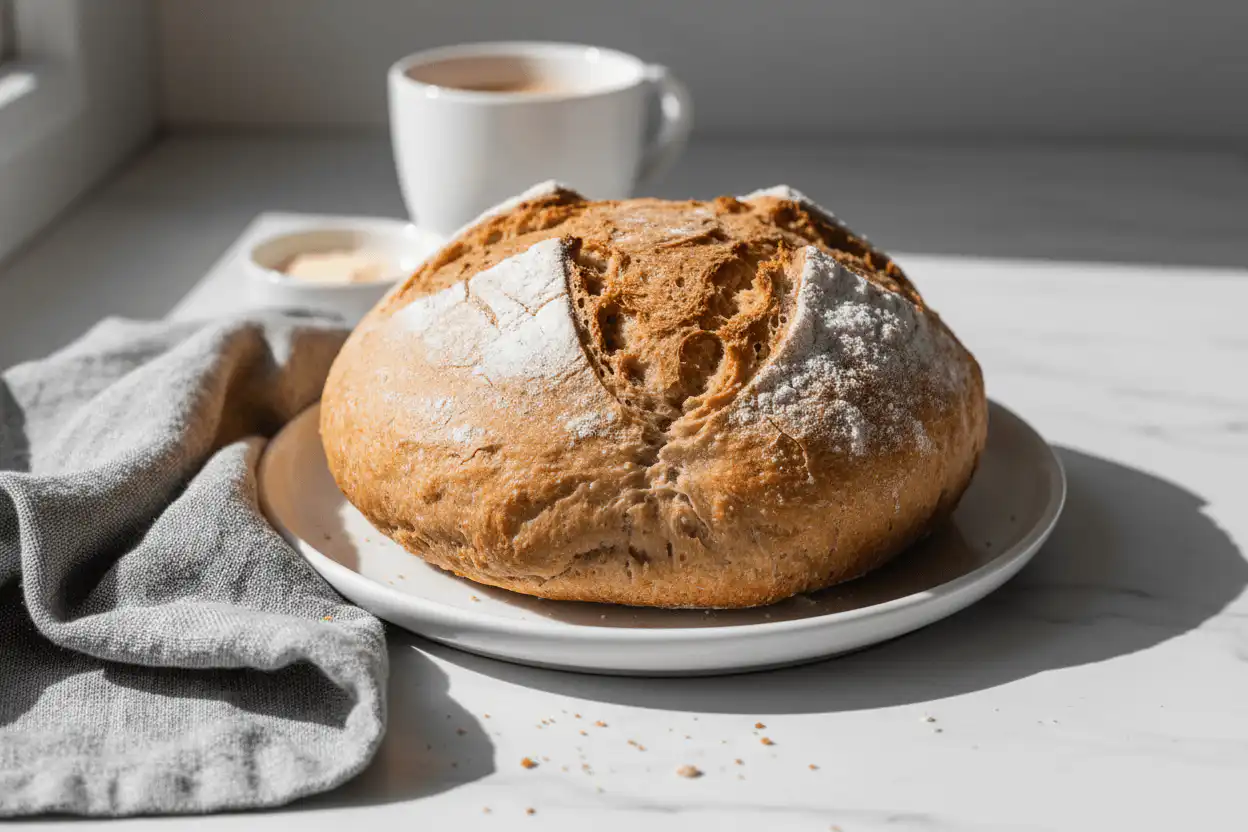
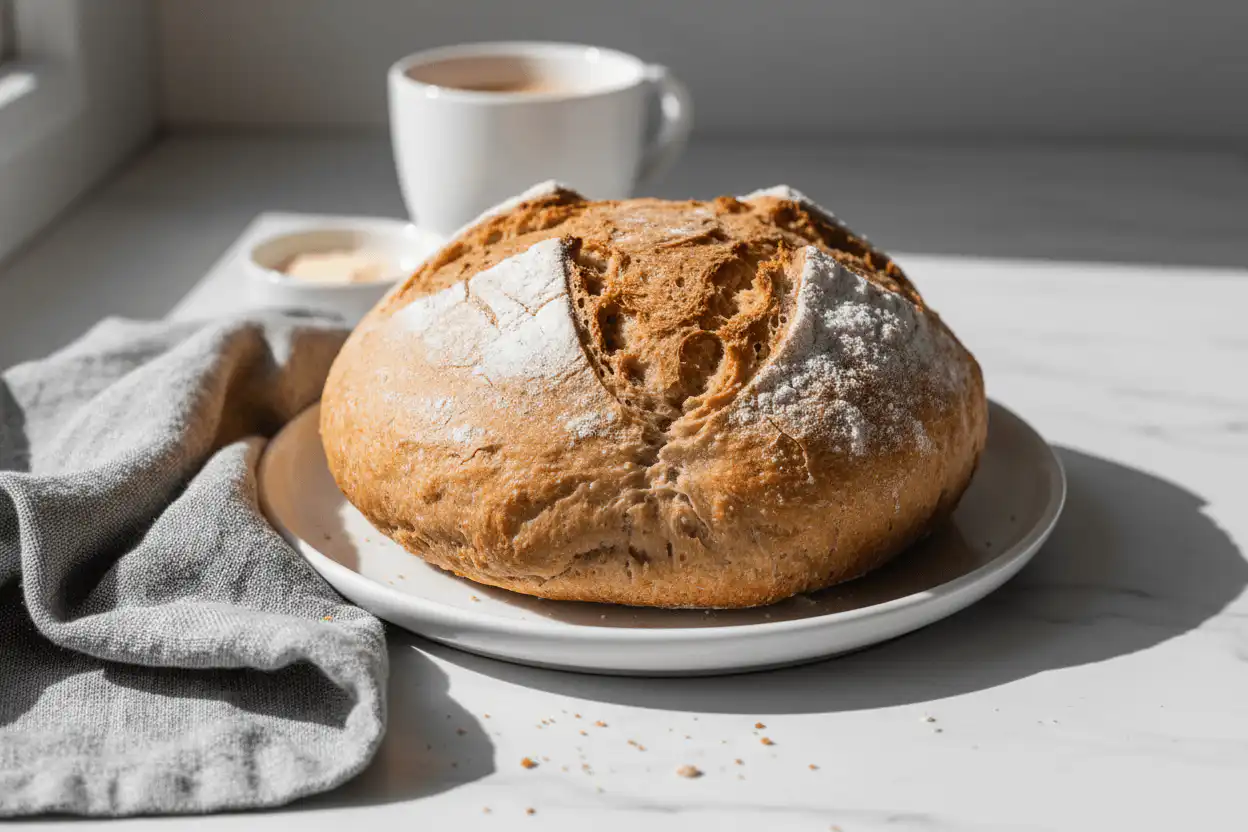
It was a rainy Tuesday here in Asheville, the kind of day where the mountains disappear into mist and all you want is something warm from the oven. I had buttermilk in the fridge (leftover from biscuits) and a serious craving for bread to dip into soup. Forty-five minutes later, I was slicing into a golden loaf with that signature crackly crust and soft, slightly tangy crumb.
This traditional Irish Soda Bread recipe is exactly what Cooking Save is all about—special without being fussy. No fancy equipment, no babysitting dough, just real ingredients doing their magic. The cross cut into the top? That’s not just for looks (though it’s gorgeous). It helps the heat reach the center so your loaf bakes evenly. And yes, mine came out a little lopsided. Messy is more than okay here—it’s authentic.
Why This Recipe Works
- The Smart Shortcut: Baking soda + buttermilk creates the rise instantly. No yeast means no waiting—you can have fresh bread on the table in under an hour.
- Texture Heaven: A thick, golden crust gives way to a tender, slightly dense crumb that’s perfect for soaking up butter, honey, or soup.
- Forgiving & Flexible: This dough is nearly impossible to mess up. Overmix slightly? It’ll still bake beautifully. Too dry? Add a splash more buttermilk. It adapts to you.
- Minimal Ingredients: Flour, buttermilk, baking soda, salt. That’s it for a traditional loaf. Everything else is optional.
The Grocery List (& Shortcuts)
Main Players
- 4 cups all-purpose or pastry flour (480g if weighing)—You can swap 1 cup for whole wheat flour for a heartier, nuttier loaf.
- 1¾ cups buttermilk—This is where the magic happens. The acid reacts with baking soda to create lift and that signature tangy flavor.
- 1½ teaspoons baking soda—Your leavening agent. Make sure it’s fresh (if it doesn’t fizz when mixed with vinegar, replace it).
- 1½ teaspoons salt—Enhances flavor and balances the tanginess.
- 2 tablespoons sugar (optional)—Not traditional, but adds a subtle sweetness if you prefer a less rustic loaf.
The “Cooking Save” Shortcut
No buttermilk? Make your own soured milk in 5 minutes. Add 2 tablespoons of lemon juice or white vinegar to just under 2 cups of regular milk, stir, and let it sit while you prep the dry ingredients. It works exactly the same way and saves a trip to the store.
Substitutions
- Gluten-Free: Use a 1:1 gluten-free flour blend. The texture will be slightly more crumbly but still delicious.
- Dairy-Free: Swap buttermilk for a plant-based milk (oat or almond work well) mixed with 2 tablespoons lemon juice.
- Whole Wheat Lovers: Replace up to half the all-purpose flour with whole wheat for a denser, earthier loaf.
Equipment You Actually Need
You don’t need a stand mixer or bread machine. Here’s what works:
- Large mixing bowl
- Whisk or fork
- Sharp knife (for scoring the cross)
- Baking sheet with parchment paper OR a cast-iron skillet (for that rustic, traditional look)
- Optional but lovely: A baking stone (preheat it with the oven) or a Dutch oven with a lid for an extra-crusty exterior
Step-by-Step (Visual Focus)
Phase 1: Prep (10 Minutes)
Preheat your oven to 400°F. If you’re using a baking stone, place it on the center rack now so it heats with the oven.
Make your soured milk (if needed). Add 2 tablespoons lemon juice or vinegar to just under 2 cups of milk. Stir and set aside for 5 minutes. It’ll thicken and smell tangy—that’s perfect.
Whisk the dry ingredients. In a large bowl, combine 4 cups flour, 1½ teaspoons baking soda, 1½ teaspoons salt, and 2 tablespoons sugar (if using). Make a well in the center—this is where the buttermilk will go.
Phase 2: The Magic (5 Minutes)
Pour in 1¾ cups buttermilk (or your soured milk). Use a fork or wooden spoon to stir it into the flour, working from the center outward. The dough will look shaggy and sticky—that’s exactly right. If it’s too dry and won’t come together, add buttermilk 1 tablespoon at a time until it forms a cohesive ball.
Turn the dough onto a floured surface. Knead it gently—just 3 or 4 times. You’re not trying to develop gluten here; you’re just bringing it together. Overworking it will make the bread tough.
Shape your loaf. Form the dough into a round ball (or divide it in half for two smaller loaves). Slightly flatten the top so it’s not a perfect sphere—think rustic farmhouse, not bakery-perfect.
Cut a deep cross into the top with a sharp knife. Go about ½ inch deep. This isn’t just decorative—it helps the center bake through evenly. (Legend says it also “lets the fairies out,” which I love.)
Phase 3: Baking (45 Minutes)
Place your loaf on a parchment-lined baking sheet, a preheated baking stone, or in an oiled cast-iron skillet. Brush the top with a little buttermilk (or melted butter for extra richness).
For a traditional bake: If you’re using a cast-iron pot or Dutch oven, cover it with a lid for the first 30 minutes. This traps steam and creates that thick, crackly crust. Remove the lid for the final 15 minutes to let the top brown.
For an open bake: If you’re not using a lid, check the loaf after 25-30 minutes. If the top is browning too fast, tent it loosely with aluminum foil.
You’ll know it’s ready when:
- The cross on top looks fully baked (not doughy)
- A toothpick inserted into the center comes out clean
- You tap the bottom of the loaf and it sounds hollow
Cool it properly. Cover the hot loaf with a tea towel lightly sprinkled with water (this keeps the crust from getting too hard). Let it rest for at least 10 minutes before slicing. I know it’s tempting to cut into it immediately, but this resting time lets the interior finish setting.
Riley’s Kitchen Tips
Tip 1: Don’t Overmix
Irish Soda Bread is meant to be tender, not chewy. Mix just until the dough comes together—those few lumps are fine. The more you work it, the tougher it gets.
Tip 2: The “Oops” Fix
If your dough feels too dry and crumbly, don’t panic. Add buttermilk 1 tablespoon at a time until it holds together. If it’s too wet and sticky, dust your hands and the surface with a little extra flour.
Tip 3: Make It Your Own
Traditional Irish Soda Bread is plain, but you can fold in ½ cup raisins or currants for a sweeter loaf. Some folks add caraway seeds for an earthy, slightly licorice-like flavor. I’ve even stirred in shredded cheddar and chopped rosemary for a savory twist.
Tip 4: Size Matters
Making two smaller loaves instead of one large one? Reduce the baking time to about 35 minutes total. Smaller loaves bake faster and are perfect for gifting.
What to Serve with This
For a Cozy Dinner
Slice this bread thick and serve it alongside a bowl of Irish Stew, creamy potato soup, or a simple tomato bisque. The dense crumb is perfect for soaking up every last drop.
For Breakfast or Brunch
Toast a slice and slather it with salted butter and honey. Or go full Irish breakfast with scrambled eggs, sausage, and a strong cup of tea.
For a Party
Cut the loaf into wedges and serve it on a wooden board with softened butter, fruit preserves, and a selection of cheeses. It’s rustic, beautiful, and always disappears fast.
Storage & Leftovers
Room Temperature: Wrap the cooled loaf in a clean tea towel or place it in a bread box. It’ll stay fresh for 2-3 days. The crust will soften slightly, but that’s normal.
Fridge: I don’t recommend refrigerating this bread—it dries out faster in the cold.
Freezer: Wrap the loaf (or individual slices) tightly in plastic wrap, then in aluminum foil. Freeze for up to 3 months. Thaw at room temperature or toast slices straight from frozen.
Reheating: Warm slices in a 350°F oven for 5-7 minutes to revive the crust. Or toast them—they’re incredible with butter melting into every crevice.
FAQ
Can I make this without buttermilk?
Absolutely. The soured milk trick (regular milk + lemon juice or vinegar) works perfectly. Let it sit for 5 minutes before using, and you’ll get the same tangy flavor and rise.
Why does my bread have a dense texture?
Irish Soda Bread is meant to be denser than yeast bread—that’s part of its charm. But if it’s too dense, you may have overmixed the dough or used old baking soda. Make sure your baking soda is fresh and mix just until combined.
Can I double this recipe for a crowd?
Yes! Make two separate loaves rather than one giant one. They’ll bake more evenly. You can bake them side-by-side on the same baking sheet.
Do I have to score the cross on top?
Technically, no—but it helps the center bake through and looks beautiful. Plus, it’s tradition. Go at least ½ inch deep with a sharp knife.
Can I add raisins or other mix-ins?
You can, though purists will tell you that’s not “traditional.” If you want to add ½ cup raisins, currants, or caraway seeds, fold them in gently after mixing the wet and dry ingredients.
What’s the best way to slice this bread?
Use a serrated bread knife and a gentle sawing motion. Let the loaf cool for at least 10 minutes first—cutting it hot will make it gummy inside.
Why This Recipe Belongs in Your Rotation
Here’s the thing about traditional Irish Soda Bread: it doesn’t ask much of you, but it gives everything back. No special skills, no waiting around, no stress. Just flour, buttermilk, and a hot oven. It’s the kind of recipe that makes you feel capable and cozy at the same time.
I keep coming back to this bread because it fits into real life. It’s perfect for a last-minute dinner addition, a weekend baking project with kids (they love cutting the cross), or a thoughtful homemade gift. And when you pull that golden loaf out of the oven and hear the crust crackle as it cools? That’s the magic.
Did you make this traditional Irish Soda Bread recipe? I’d love to see your loaf—snap a photo and tag me on Instagram! Or save this to your Comfort Food Recipes board on Pinterest so you can find it the next time you need warm bread in under an hour.
Pull up a chair,
Riley 🍂
Traditional Irish Soda Bread
Ingredients
Equipment
Method
- Preheat your oven to 400°F.
- Make your soured milk if needed by adding lemon juice or vinegar to regular milk.
- Whisk the dry ingredients together in a large bowl and make a well in the center.
- Pour in the buttermilk and combine with a fork until a shaggy dough forms.
- Turn the dough onto a floured surface and knead gently a few times.
- Shape the dough into a round loaf and cut a deep cross into the top with a knife.
- Place your loaf on a baking sheet and brush the top with buttermilk.
- Bake for 45 minutes, checking for doneness with a toothpick.
- Cool the bread on a wire rack for at least 10 minutes before slicing.
Traditional Irish Soda Bread
Ingredients
Equipment
Method
- Preheat your oven to 400°F.
- Make your soured milk if needed by adding lemon juice or vinegar to regular milk.
- Whisk the dry ingredients together in a large bowl and make a well in the center.
- Pour in the buttermilk and combine with a fork until a shaggy dough forms.
- Turn the dough onto a floured surface and knead gently a few times.
- Shape the dough into a round loaf and cut a deep cross into the top with a knife.
- Place your loaf on a baking sheet and brush the top with buttermilk.
- Bake for 45 minutes, checking for doneness with a toothpick.
- Cool the bread on a wire rack for at least 10 minutes before slicing.
