
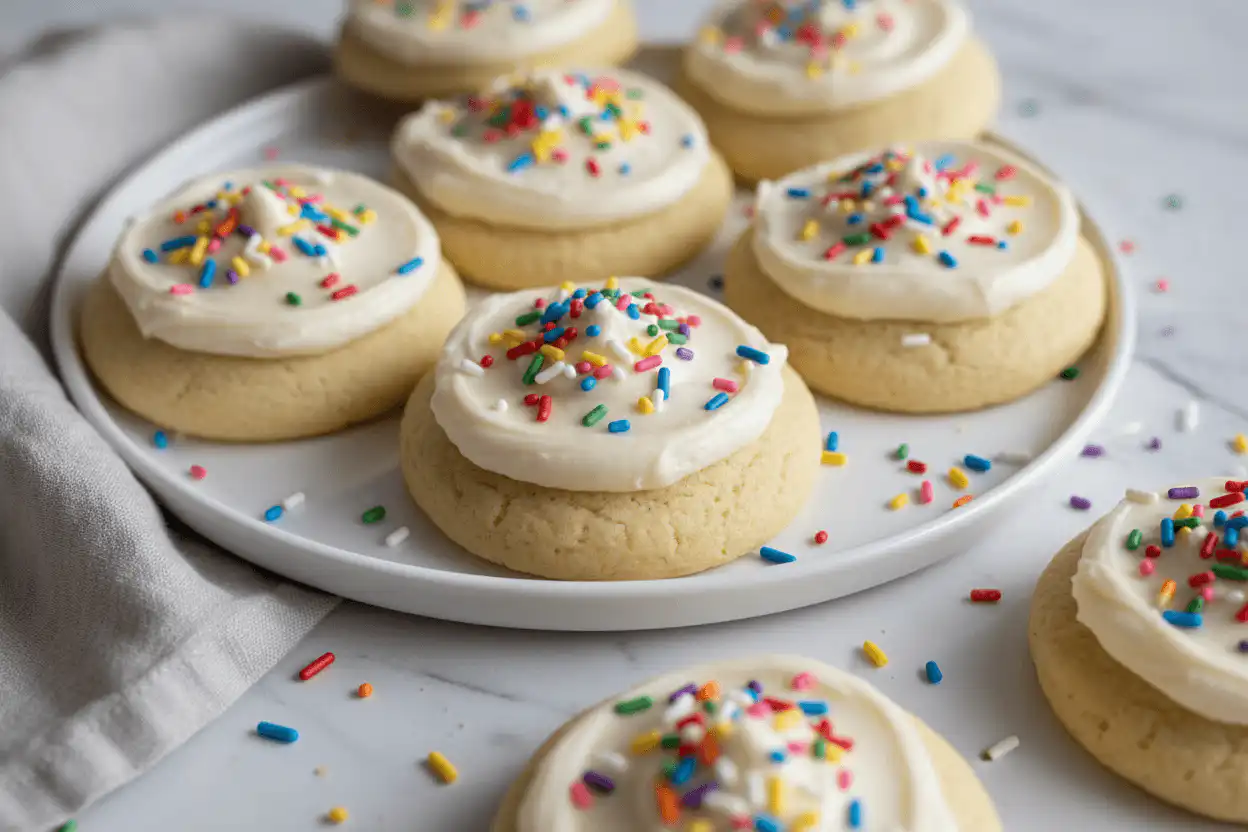
If you’re looking for a soft frosted sugar cookies recipe that tastes like a childhood memory but doesn’t require a culinary degree, this is it. These cookies are pillowy, tender, and hold their shape beautifully—no spreading, no cracking, no disappointment. Plus, the frosting has a secret ingredient that makes it taste like the best bakery version you’ve ever had.
From My Kitchen
I’ll be honest—I used to avoid making roll-out cookies because I thought they’d turn into crispy hockey pucks or spread into unrecognizable blobs. Then I discovered the magic of reverse creaming (a fancy term for coating the flour with butter first), and everything changed. These soft frosted sugar cookies are the result of that revelation.
Last December, I made these with my niece while it was snowing outside our Asheville kitchen window. She insisted on cutting out seventeen different shapes, and I was convinced half would fail. But they didn’t. Every single cookie—stars, trees, wonky snowmen—came out perfect. Soft centers, crisp edges, and that bakery-style frosting that sets just enough to stack them without smudging.
This recipe fits the Cooking Save mission perfectly: it’s special enough for Christmas cookie exchanges but forgiving enough for a Tuesday afternoon with kids. No chilling overnight, no fancy equipment, just a simple dough that actually works.
Why This Recipe Works
- Reverse Creaming Magic: Coating the flour with butter first creates a tender, cake-like texture that stays soft for days—not the usual crispy sugar cookie.
- Holds Its Shape: These cookies don’t spread or puff in the oven, so your stars look like stars and your hearts look like hearts.
- Cream Cheese Frosting: Just a tablespoon gives the glaze a subtle tang that tastes way more interesting than plain powdered sugar frosting.
- Forgiving Dough: You can re-roll scraps multiple times without the cookies getting tough. Perfect for maximizing every bit of dough.
The Grocery List (& Shortcuts)
For the Cookies:
- All-Purpose Flour: King Arthur is my go-to for consistent results, but any brand works.
- Confectioners’ Sugar: This goes in the dough (not granulated sugar), which helps create that soft texture.
- Cold Butter: Cut into cubes. The cold temperature is key for the reverse creaming method.
- 1 Large Egg: You’ll separate it—yolk goes in the dough, white gets mixed with milk.
- Vanilla Extract: Don’t skip this. It’s the flavor backbone.
For the Frosting:
- Cream Cheese: Just 1 tablespoon, softened. This is the secret ingredient that makes the frosting taste bakery-level.
- More Confectioners’ Sugar: For sweetness and structure.
- Milk: To thin the frosting to spreadable consistency.
- Food Coloring & Sprinkles: Optional, but highly encouraged for Christmas cookies.
The “Cooking Save” Shortcut:
Use a food processor to make the dough in 2 minutes flat. Just pulse the dry ingredients, add the butter, then the wet ingredients. Done. If you don’t have one, a pastry cutter or even a fork works—it just takes a bit longer.
Substitutions:
- Dairy-Free: Use plant-based butter and swap the milk for almond or oat milk. Skip the cream cheese or use a dairy-free version (the frosting will be slightly less tangy).
- Gluten-Free: Try a 1:1 gluten-free flour blend. The texture will be slightly more delicate, so handle gently.
Equipment You Actually Need
You don’t need a stand mixer or fancy tools. Here’s what I use:
- Large mixing bowl (or food processor for speed)
- Rolling pin
- Parchment or wax paper (for rolling the dough between—no flour mess)
- Cookie cutters (any shape, any size)
- Baking sheet lined with parchment
- Offset spatula or butter knife for spreading frosting
Step-by-Step: How to Make Soft Frosted Sugar Cookies
Phase 1: Make the Dough
Combine the dry ingredients. In a large bowl (or food processor), whisk together the flour, confectioners’ sugar, salt, baking powder, and baking soda. This ensures everything is evenly distributed.
Cut in the cold butter. Add the cubed butter and work it into the dry ingredients until you have fine, even crumbs. If using a food processor, pulse about 10-12 times. If doing this by hand, use a fork or your fingers to break up the butter. You’ll know it’s ready when the mixture looks like coarse sand.
Add the egg yolk. Separate your egg, putting the white in a small cup and the yolk directly into the bowl. Stir or pulse until blended.
Mix the egg white and milk. Lightly whisk the milk into the egg white, then measure out exactly 1 tablespoon (14g) and add it to the dough. Save the rest for brushing on the cookies later if you want extra shine (optional).
Add vanilla and bring it together. Pour in the vanilla extract and mix briefly until larger clumps start forming. Use your hands to press the dough into one cohesive mass. It should feel soft but not sticky.
Phase 2: Roll and Chill
Roll between parchment. Place the dough between two sheets of parchment or wax paper and roll it out to about 1/2″ thick. This first roll makes the next step easier.
Refrigerate for 30 minutes. Slide the whole parchment-wrapped dough onto a baking sheet and chill. This firms up the butter and makes the dough easier to cut cleanly.
Roll thinner. After chilling, roll the dough (still between the parchment) to 1/4″ thick. If it sticks slightly, dust with a tiny bit of flour. You’ll know it’s ready when it feels smooth and even under the rolling pin.
Phase 3: Cut and Bake
Preheat your oven to 325°F. Line a baking sheet with fresh parchment.
Cut out shapes. Use your favorite cookie cutters and transfer the shapes to the prepared baking sheet. Leave about 1″ between cookies—they won’t spread much, but you want airflow.
Bake for 14-18 minutes. The cookies are done when the bottoms just start to turn golden. The tops will still look pale and soft—that’s exactly what you want. Overbaking = dry cookies.
Cool completely on the parchment. Immediately slide the parchment (with cookies still on it) onto a wire rack. This stops the cooking process and keeps them soft.
Phase 4: Make the Frosting
Stir everything together. In a medium bowl, combine the softened cream cheese, confectioners’ sugar, salt, vanilla, and 1 1/2 tablespoons of milk. Stir until smooth. Add more milk, a teaspoon at a time, until the frosting is spreadable but not runny. It should hold its shape on a spoon.
Color it up. Divide the frosting into bowls and add natural food coloring if desired. I love using red and green for Christmas cookies.
Frost and decorate. Use an offset spatula or butter knife to spread frosting onto each cooled cookie. Immediately top with sprinkles or colored sugar before the frosting sets (about 30 minutes).
Theo’s Kitchen Tips
Tip 1: The “Oops” Fix for Dry Dough
If your dough feels crumbly and won’t come together, add another teaspoon of milk. The dough should be soft and pliable, not dry or cracking.
Tip 2: Re-Rolling Scraps
Unlike pie dough, you can re-roll these scraps multiple times without the cookies getting tough. Just gather the scraps, press them together, roll again, and cut more shapes.
Tip 3: Make-Ahead Magic
You can refrigerate the rolled dough (wrapped in parchment) for up to 2 days before cutting and baking. Or freeze the cut, unbaked cookies on a baking sheet, then transfer to a freezer bag. Bake from frozen, adding 2-3 minutes to the baking time.
Tip 4: Frosting Consistency
If your frosting is too thick, add milk 1/2 teaspoon at a time. Too thin? Add more confectioners’ sugar, 1 tablespoon at a time. You want it to spread smoothly but not drip off the edges.
What to Serve With These Sugar Cookies
For a Cozy Afternoon: Pair these soft frosted sugar cookies with hot cocoa or a chai latte. The cream cheese frosting is sweet but not cloying, so it balances rich drinks perfectly.
For a Cookie Exchange: Stack them in a clear cellophane bag tied with ribbon. They’re sturdy enough to transport without breaking.
For Christmas Morning: Serve alongside cinnamon rolls and fresh fruit. The cookies add a festive touch without being too heavy.
Storage & Leftovers
Room Temperature: Store unfrosted or frosted cookies in an airtight container for up to 1 week. They stay soft thanks to the reverse creaming method.
Freezer: Freeze unfrosted cookies for up to 1 month. Thaw at room temperature, then frost as desired. You can also freeze frosted cookies, but the sprinkles may bleed slightly when thawing.
Pro Tip: Layer cookies between sheets of parchment or wax paper to prevent sticking.
FAQ
Can I use this dough for roll-out cookies year-round?
Absolutely! This isn’t just a Christmas cookie recipe. Use heart shapes for Valentine’s Day, flower shapes for spring, or simple rounds for everyday treats. The dough is incredibly versatile.
Why do I need to separate the egg?
The yolk adds richness to the dough, while the white (mixed with milk) provides just enough moisture without making the dough too wet. It’s a precise balance that keeps the cookies tender but not fragile.
Can I skip the cream cheese in the frosting?
You can, but I don’t recommend it. That 1 tablespoon adds a subtle tang that makes the frosting taste more complex and less one-note sweet. If you must skip it, add a tiny squeeze of lemon juice instead.
My cookies spread in the oven. What happened?
This usually means the dough was too warm when it went into the oven. Make sure you chill the dough for the full 30 minutes, and if your kitchen is very warm, chill the cut shapes for 10 minutes before baking.
Can I double this recipe for a crowd?
Yes! This recipe doubles beautifully. Just make sure you have enough fridge space to chill all the dough, or work in batches.
Final Thoughts
These soft frosted sugar cookies are everything a roll-out cookie should be: tender, flavorful, and easy to decorate. The reverse creaming method might sound fancy, but it’s actually simpler than traditional creaming—and the results are so much better. Whether you’re making Christmas cookies with kids or just want a soft, bakery-style treat, this recipe delivers every time.
Did you try this recipe? Snap a photo and tag me on Instagram! Or save this to your Christmas Cookies board on Pinterest so you can find it when December rolls around.
Stay cozy,
Theo 🍲
💡 Loved this recipe? Follow Us on Pinterest for more!
Soft Frosted Sugar Cookies
Ingredients
Equipment
Method
- Combine the dry ingredients in a large bowl or food processor.
- Cut in the cold butter until mixture resembles coarse sand.
- Add egg yolk and mix until blended.
- Whisk together egg white and milk, add to the dough, and mix.
- Add vanilla extract and mix until the dough holds together.
- Roll the dough out between parchment paper to 1/4 inch thick and chill for 30 minutes.
- Preheat oven to 325°F and cut out cookie shapes.
- Bake cookies for 14-18 minutes and cool completely.
- Prepare frosting by mixing cream cheese, confectioners’ sugar, and milk until smooth.
- Frost cooled cookies and decorate as desired.
