
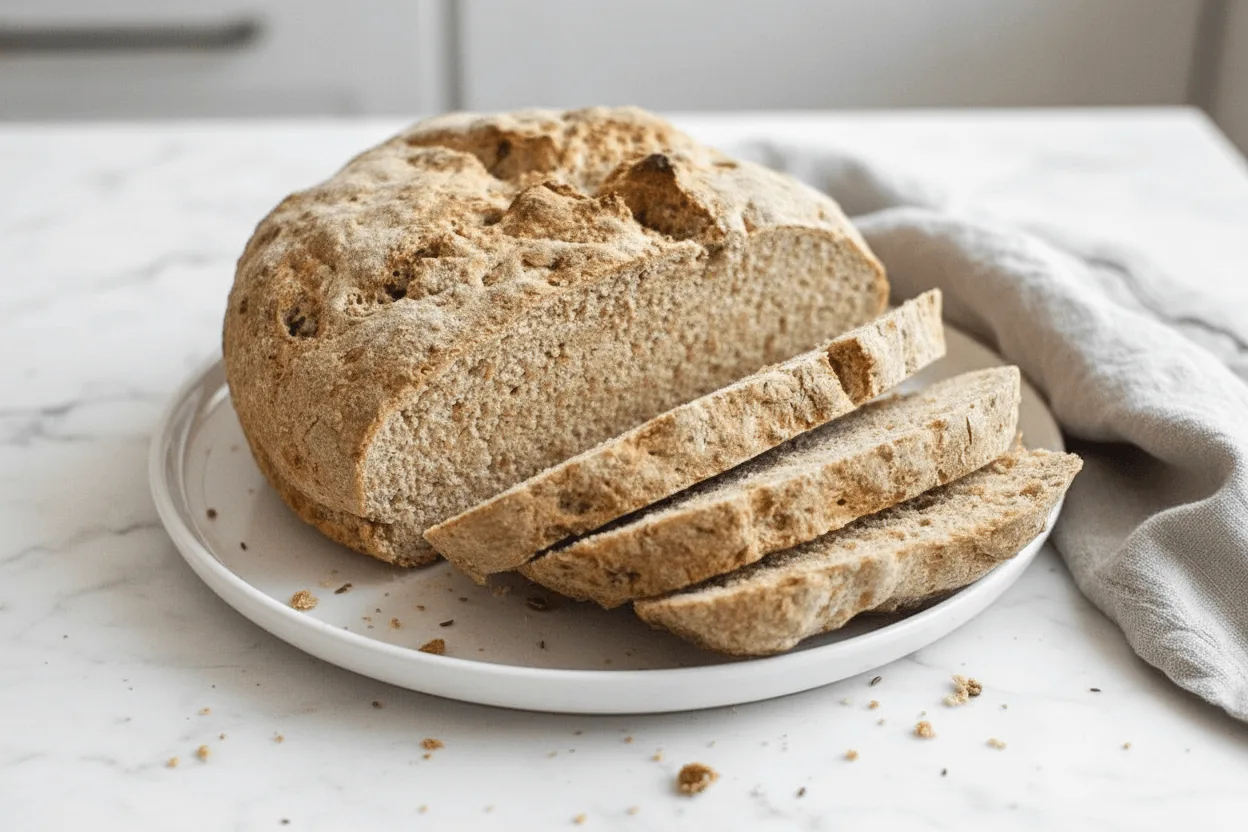
This crusty, golden-bottomed brown soda bread has that hearty, nutty crumb you dream about — and the only thing standing between you and a warm loaf is one bowl and about five minutes of hands-on time.
⚡ Quick Stats: Prep: ~10 mins | Cook: ~40 mins | Total: ~50 mins | Difficulty: Easy | Season: Anytime
From My Kitchen
I’ll be honest with you — I used to be intimidated by bread. Not the fancy sourdough kind (I’d already made peace with never attempting that), but even the “simple” stuff felt like it required some secret skill I didn’t have. Yeast packets stressed me out. Kneading felt like a workout. And waiting for dough to rise while my kids were circling the kitchen asking for snacks? Not exactly relaxing.
Then I found brown soda bread, and everything changed.
There’s no yeast, no kneading, no rise time, and no special equipment. Just a bowl, a handful of pantry staples, and an oven. I first made this on a grey November morning up here in the mountains around Asheville, when the air had that particular cold bite that makes you want something warm and substantial on the table. I mixed it up while my coffee was still brewing, and by the time I’d gotten through half a cup, the whole kitchen smelled like toasted wheat and something deeply cozy.
This brown Irish soda bread recipe is the definition of “special without fussy.” It looks like you worked hard. You didn’t. That’s our little secret.
Why This Recipe Works
- No yeast, no stress: Baking soda does all the heavy lifting here. The moment it meets the buttermilk, it starts working — no waiting, no proofing, no anxiety.
- That signature nutty crust: Whole wheat flour gives this loaf its deep, earthy flavor and that beautifully dense crumb — the kind that holds up to a thick swipe of butter without falling apart.
- Genuinely forgiving: Overmix it a little? It’ll be fine. Your oven runs hot? Pull it a few minutes early. This bread is not precious, and that’s exactly why it belongs in your regular rotation.
- One bowl, five ingredients: This is as super simple as Irish soda bread gets — no stand mixer, no special pans, no fuss.
The Grocery List (& Shortcuts)
Main Players
- 2 cups all-purpose flour — Your everyday pantry flour works perfectly here. This is the base that keeps the loaf from getting too dense.
- Whole wheat flour — This is where the magic lives. It brings that nutty, rustic flavor that makes brown soda bread taste like brown soda bread. Grab it at any grocery store; you don’t need anything fancy.
- 1½ tsp baking soda — Fresh baking soda matters more than you’d think. If yours has been sitting in the back of the cabinet for two years, grab a new box. It’s the only leavener in this loaf.
- ¾ tsp salt — Don’t skip it. Salt makes everything taste like itself.
- 1 Tbsp brown sugar — Just a touch. It balances the earthiness of the whole wheat without making this taste sweet.
- 2 cups buttermilk — This is the ingredient that makes the whole thing work. The acid in buttermilk reacts with the baking soda to give the bread its lift and that slightly tangy flavor.
The Cooking Save Shortcut
Shortcut: No buttermilk in the fridge? Make your own in two minutes flat. Add 2 tablespoons of white vinegar or fresh lemon juice to a 2-cup measuring cup, then fill it to the 2-cup line with regular whole milk. Give it a stir and let it sit for 5 minutes. Done. It works just as well as the real thing.
Substitutions
- Want raisins? This is a great base for a homemade soda bread with raisins. Just fold in ½ to ¾ cup of raisins (golden or regular) right before you shape the dough — no other adjustments needed. Golden raisins are especially lovely here.
- Caraway seeds? If you love that classic Irish soda bread recipe with traditional caraway seeds, stir in 1 to 2 teaspoons right into the dry ingredients. It adds a subtle, slightly herby flavor that pairs beautifully with the whole wheat.
- Dairy-free: Use a plant-based milk (oat milk works well) with the same vinegar trick above to make a dairy-free buttermilk substitute.
- Gluten-free: A 1:1 gluten-free flour blend can be swapped in, though the texture will be a bit more tender and less chewy. Still delicious.
Equipment You Actually Need
You do not need anything special for this. Truly.
- 1 large mixing bowl
- A wooden spoon or spatula
- A baking sheet lined with parchment, or a cast iron skillet (more on that below)
- A sharp knife or bench scraper to score the top
That’s it. No stand mixer, no bread machine, no loaf pan required. If you have a cast iron skillet, this is a great moment to use it — baking your Irish soda bread in a cast iron skillet gives you an extra-crispy bottom crust that is genuinely wonderful. But a regular baking sheet works just as beautifully.
Step-by-Step: Let’s Bake This Bread
Phase 1: Mix It Up
- Preheat your oven to 400°F. If you’re using a cast iron skillet, go ahead and put it in the oven now to get it hot — this helps create that gorgeous crusty bottom.
- Whisk together the all-purpose flour, whole wheat flour, baking soda, salt, and brown sugar in a large bowl. Make sure everything is evenly combined before the wet ingredients go in.
- Pour in the buttermilk all at once and stir with a wooden spoon until a shaggy, sticky dough comes together. Don’t overmix — you want to stir just until no dry flour remains. The dough will look rough and a little messy. That’s exactly right.
Phase 2: Shape & Score
- Turn the dough out onto a lightly floured surface and gently shape it into a round, about 7–8 inches across. Don’t knead it — just coax it into a rough circle. Rustic is the goal here.
- Place the dough on your parchment-lined baking sheet (or carefully into your hot cast iron skillet using oven mitts — it will sizzle a little, and that’s a good sign).
- Score a deep X across the top of the loaf with a sharp knife, cutting about ¾ of the way through. This isn’t just for looks — it helps the bread bake evenly all the way through the center.
Phase 3: Bake & Finish
- Bake at 400°F for 35–45 minutes, until the top is deep golden brown and the loaf sounds hollow when you tap the bottom. You’ll know it’s ready when your kitchen smells like toasted wheat and warm, nutty goodness — that’s your best cue.
- Cool on a wire rack for at least 15–20 minutes before slicing. I know. It’s hard. But cutting into it too soon makes the crumb gummy, and this bread deserves better than that.
Riley’s Tips
Riley’s Tip (Texture): Don’t Overwork the Dough
The number one thing that can make soda bread tough is overmixing. Once the buttermilk goes in, stir just until the dough comes together — lumpy and rough is totally fine. Think of it like pancake batter. A gentle hand gives you a tender crumb.
Riley’s Tip (The “Oops” Fix): Dough Too Sticky?
If your dough feels too wet to shape, just dust your hands and the surface generously with flour. Don’t add a ton of extra flour to the bowl — a sticky dough is actually a sign of a moist, tender loaf. Work with it gently and it’ll come together.
Riley’s Tip (Doneness Check):
If the top is browning fast but you’re not sure if the inside is done, tent it loosely with a piece of foil for the last 10 minutes of baking. Then tap the bottom — a hollow knock means you’re good to go.
Make Ahead:
You can mix the dry ingredients the night before and store them covered on the counter. When you’re ready to bake, just pour in the buttermilk, shape, and go. Morning bread with almost zero morning effort.
What to Serve With This
For a Cozy Breakfast or Brunch
Slice it thick and serve with good salted butter and a drizzle of honey. A strong cup of tea or coffee on the side and you’ve got a morning that feels like a slow Sunday even if it’s a Wednesday.
For a Hearty Dinner
This brown soda bread is incredible alongside a bowl of chunky vegetable soup or a slow-cooked beef stew. The dense crumb is built for soaking up broth, and it holds together beautifully — no crumbling into your bowl.
For a Casual Gathering
Slice it into wedges and set it out with a cheese board — sharp cheddar, a soft brie, some fruit preserves. It looks like you planned it. You barely had to.
Storage & Leftovers
- Fridge: Wrap the loaf tightly in a clean kitchen towel or beeswax wrap and store at room temperature for up to 2 days, or in the fridge for up to 4–5 days. It stays surprisingly good.
- Reheating: Slice and toast individual pieces in a toaster or a dry skillet over medium heat for a minute or two per side. The crust comes back to life beautifully. You can also warm the whole loaf in a 300°F oven for about 10 minutes.
- Freezer: Yes! Slice the cooled loaf, wrap individual slices in plastic wrap, and freeze in a zip-top bag for up to 2 months. Pull out a slice, pop it in the toaster straight from frozen, and breakfast is handled.
Frequently Asked Questions
Can I make this in a cast iron skillet instead of on a baking sheet?
Absolutely — and honestly, I’d encourage it. Preheating your cast iron skillet in the oven before adding the dough creates an incredible crispy bottom crust. It’s one of my favorite ways to bake this loaf. Just be careful handling the hot skillet, and use good oven mitts.
Can I add raisins to this brown soda bread?
Yes! Just fold ½ to ¾ cup of raisins (regular or golden) into the dough right at the end, before shaping. No other changes needed. It turns into a lovely homemade soda bread with raisins — sometimes called “Spotted Dog” in Ireland — and it’s wonderful with butter and tea.
What about caraway seeds?
If you love that traditional flavor, stir 1 to 2 teaspoons of caraway seeds into the dry ingredients before adding the buttermilk. It gives the bread a slightly savory, herby note that’s very classic and very good.
Can I double this recipe for a crowd?
You can! Just make two separate loaves rather than one giant one — soda bread doesn’t scale up well in a single loaf because the center won’t bake through evenly. Two loaves means two chances for that gorgeous golden crust, anyway.
Why do I need to score the top with an X?
It’s not just tradition (though it is very traditional). Scoring the top allows steam to escape and helps the bread bake all the way through the center without the outside getting overdone first. Cut deep — at least halfway through the loaf.
My bread came out dense. What happened?
A few things can cause this: old baking soda that’s lost its punch, overmixing the dough, or not enough buttermilk. Make sure your baking soda is fresh, stir gently, and measure your buttermilk carefully. Even a dense loaf is still delicious toasted with butter, though — don’t throw it out!
💡For more recipes, follow me on Pinterest.
Make This Bread Today
If you try this brown soda bread, I’d love to hear how it went. Drop a comment below and tell me — did you keep it classic, or did you fold in some raisins or caraway seeds? Did you bake it in a cast iron skillet? Did it disappear before it even cooled down? (That happens a lot around here.)
Save this recipe for the next time you need something warm, hearty, and homemade without a whole production. It’s the kind of bread that makes a Tuesday feel like something worth sitting down for.
Pull up a chair,
Riley 🍂
Rustic Brown Soda Bread (No Yeast, No Knead — Ready in One Bowl)
Ingredients
Equipment
Method
- Preheat your oven to 400°F and place the cast iron skillet in the oven to get hot.
- Whisk together all-purpose flour, whole wheat flour, baking soda, salt, and brown sugar in a large bowl until combined.
- Pour in the buttermilk and stir with a wooden spoon until a shaggy dough forms.
- Turn the dough out onto a floured surface and shape it into a round.
- Place the dough onto a baking sheet or carefully into the hot cast iron skillet.
- Score a deep X across the top of the loaf with a sharp knife.
- Bake at 400°F for 35-45 minutes until golden brown and hollow sounding when tapped.
- Cool on a wire rack for 15-20 minutes before slicing.
