
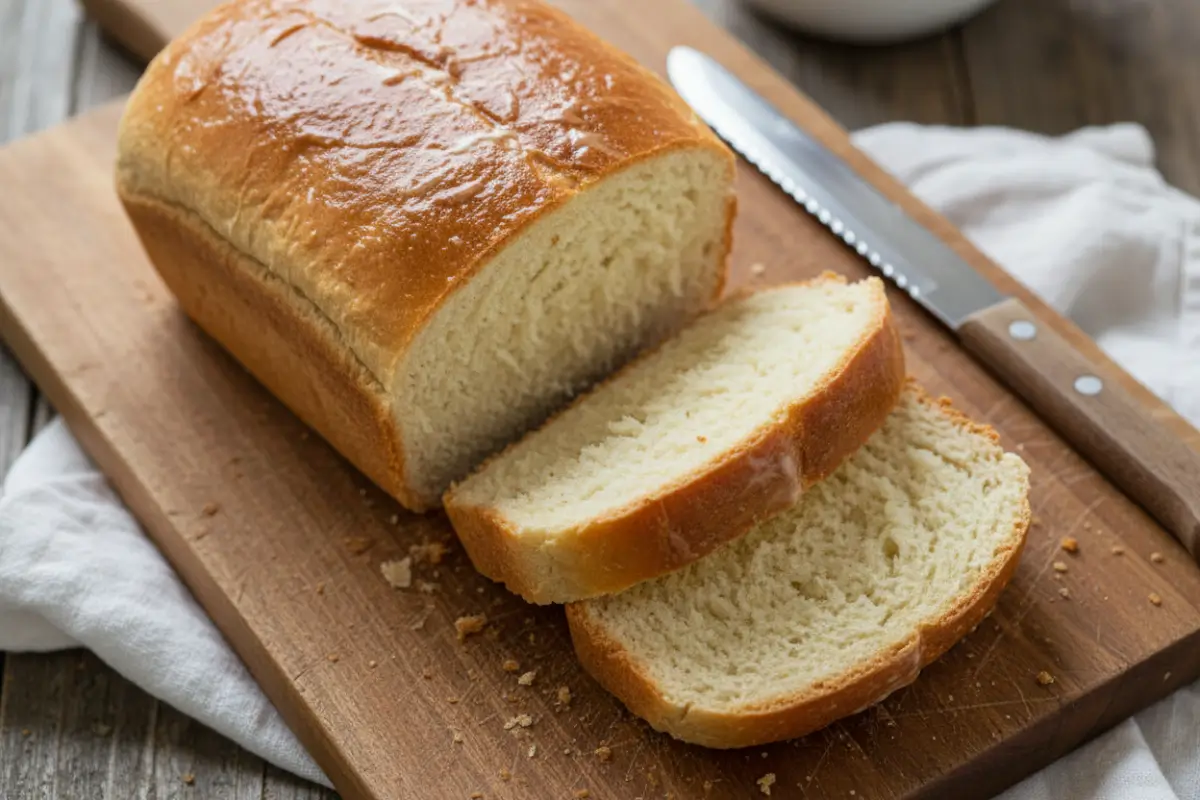
The kitchen fills with that unmistakable yeast-and-butter smell around 3 PM. Two golden loaves cool on the counter, crusts glistening from their butter bath, crumb so soft it barely resists the knife. This Amish White Bread delivers bakery-quality sandwich bread without the fuss—just eight ingredients and your hands.
I’ve made this recipe every week for three years. The dough feels alive under your palms, elastic and warm. That first slice, still steaming, with cold butter melting into the holes? Worth every minute of waiting.
Why You’ll Love This Amish White Bread
- Actually soft: Stays tender for days, not cardboard by Wednesday
- Beginner-proof: Yeast isn’t scary when you see it foam and bubble
- Two loaves: One for now, one for the freezer (or your neighbor)
- Hands-off rising: The dough does its thing while you live your life
Key Ingredients
Warm water at 100-110°F wakes up the yeast without killing it. Too hot, you’ll murder it. Too cold, nothing happens. I test with my wrist—should feel like bathwater, not tea.
Sugar and honey feed the yeast and add subtle sweetness. The honey keeps the crumb moist longer than sugar alone. Don’t skip it.
Instant yeast works faster than active dry, but either performs here. That foamy proof in step one tells you the yeast is alive. No foam after 10 minutes? Start over with fresh yeast.
Vegetable oil makes the texture tender without the dairy heaviness of butter inside the dough. Canola works too. The fat coats flour proteins, creating that pillowy bite.
Salt at 1½ teaspoons seems modest, but it controls yeast growth and builds flavor. Add it after the first flour addition—direct contact with yeast can slow things down.
Bread flour has higher protein than all-purpose, creating stronger gluten structure. That’s what gives you those beautiful sandwich slices that don’t fall apart. You’ll use 5½ to 6 cups depending on humidity. Asheville’s mountain moisture means I usually need the full 6 cups.
Butter for finishing isn’t optional. Rubbing cold butter over hot crust creates that glossy, soft top. It’s the difference between homemade and store-bought.
Instructions
Proof the yeast. Combine warm water, sugar, honey, and yeast in your stand mixer bowl. Stir once, then walk away. In 5-10 minutes, you’ll see a foamy cap forming on top. That’s your green light. If nothing happens, your water was too hot or your yeast is dead.
Build the dough. Add oil, salt, and 2 cups of flour to the foamy mixture. Mix with the dough hook on low until combined. Now add flour one cup at a time. The dough will look shaggy, then start pulling away from the bowl sides. Keep kneading on medium speed for 5-7 minutes. You want smooth and elastic—it should bounce back when you poke it. No stand mixer? Knead by hand on a floured counter for 8-10 minutes. You’ll know it’s ready when the dough feels like your earlobe.
First rise. Grease a large bowl with oil or cooking spray. Drop in your dough ball, then flip it over so all sides get lightly coated. This prevents a dry skin from forming. Cover with plastic wrap—tight, not loose. Set it somewhere draft-free. I use my oven with just the light on. One hour later, the dough should double. Press two fingers into it. If the dents stay, you’re good.
Shape the loaves. Punch down the risen dough with your fist. Feels satisfying. Dump it onto your counter and divide in half with a knife. Shape each half into an oblong log roughly the length of your bread pan. I fold the edges under and pinch the seam closed on the bottom. Place each loaf seam-side down in a greased 9×5-inch pan. Cover loosely with plastic wrap or a kitchen towel. Let them rise 30-45 minutes until the dough crowns about an inch above the pan rim. Don’t rush this. Underproofed bread is dense.
Bake. Preheat your oven to 350°F while the loaves finish rising. Slide both pans onto the center rack. Set a timer for 28 minutes. The tops should turn deep golden brown, not pale blonde. Thump the top of a loaf—it should sound hollow. Or use an instant-read thermometer stuck into the center. You want 190°F.
Butter the tops. Pull the pans from the oven. Immediately rub the top of each loaf with a cold stick of butter, or brush with melted. The heat melts it into the crust, creating that soft, glossy finish. Turn the loaves out onto a cooling rack. Let them cool at least 15 minutes before slicing. I know. It’s hard.
Tips & Variations
Measure flour correctly. Spoon it into your measuring cup, then level with a knife. Scooping directly from the bag packs in 20% more flour, making dry, tough bread.
Check dough texture. After kneading, the dough should be slightly tacky but not sticky. If it’s gluing itself to your fingers, add flour one tablespoon at a time.
Don’t peek during rising. Every time you lift that plastic wrap, you release heat and humidity. Just trust the process.
Try whole wheat. Swap up to 2 cups of bread flour for whole wheat. Add an extra tablespoon of water to compensate for the bran’s thirst.
Make rolls instead. After the first rise, divide dough into 24 pieces. Shape into balls, place in greased muffin tins. Bake 15-18 minutes at 350°F.
Storage & Pairings
Store cooled loaves in plastic bags at room temperature for 4 days. Freeze whole or sliced for 3 months—just thaw on the counter. This Amish White Bread makes perfect French toast, grilled cheese, or turkey sandwiches. I also cube day-old slices for croutons.
FAQ
Can I use all-purpose flour instead of bread flour?
Yes, but the texture won’t be quite as sturdy. Your slices might tear easier with heavy sandwich fillings. If that’s all you have, it still works—just expect slightly less chew.
Why didn’t my bread rise?
Three common culprits: dead yeast (check expiration dates), water too hot (killed the yeast), or too-cold kitchen (below 70°F slows everything down). Make sure your yeast foams in step one before proceeding.
💡 Loved this recipe? Follow Us on Pinterest for more!
Conclusion
Two loaves of warm, butter-topped bread for less than three dollars in ingredients. The smell alone makes it worth the wait. Slice thick, toast golden, and remember why homemade beats store-bought every single time.
Easy Amish White Bread Recipe
Ingredients
Equipment
Method
- Combine warm water, sugar, honey, and yeast in your stand mixer bowl. Stir once and let sit until foamy.
- Add oil, salt, and 2 cups of flour to the mixture. Mix on low and gradually add more flour until well combined.
- Knead the dough until smooth and elastic, about 5-7 minutes. Grease a bowl and let it rise for about an hour.
- Punch down the dough, divide it, shape into logs, and place in greased pans. Let rise for 30-45 minutes.
- Preheat oven to 350°F and bake the loaves until golden brown and hollow sounding when tapped, about 28 minutes.
- Pull the loaves from the oven and rub with butter. Let cool for at least 15 minutes before slicing.