
You don’t need to be a baker to pull a golden, crackling loaf from your oven. This cozy rustic bread Dutch oven recipe uses four ingredients you already have and practically makes itself while you sleep. No kneading marathons. No special equipment beyond that Dutch oven collecting dust in your cabinet. Just stir, wait, and bake. The hardest part? Not slicing into it too soon when your kitchen smells like a European bakery. This is the bread recipe that finally makes sense for real life—the one that fits around your schedule instead of demanding you rearrange your day. If you’ve been intimidated by homemade bread, this cozy rustic bread Dutch oven method changes everything.
Why You’ll Love This
- Hands-off magic: Five minutes of stirring, then time does the work
- Four ingredients: Flour, yeast, salt, water. That’s it
- Bakery crust at home: Crispy outside, cloud-soft inside without any fuss
- Flexible timing: Make the dough tonight, bake tomorrow morning
Key Ingredients
Unbleached All-Purpose Flour (3 cups): The foundation of your loaf. Unbleached gives better flavor than bleached, but honestly? Use what you have. King Arthur and Gold Medal both work beautifully. The flour creates structure as it hydrates overnight, developing gluten without kneading. You’ll notice the dough gets stretchy and alive just from resting. No fancy bread flour required, though you can swap in up to 1 cup whole wheat if you want nuttier flavor.
Active Dry Yeast (1 teaspoon): Such a small amount for a full loaf, but that’s the secret. Low yeast plus long fermentation equals deep flavor and digestible bread. Don’t proof it separately—just whisk it into the flour. Instant yeast works too. I keep mine in the freezer in a jar; it stays potent for months. That tiny teaspoon will create thousands of air bubbles as it slowly feeds on the flour overnight.
Salt (1 teaspoon): Kosher or sea salt both work. This isn’t just for taste—it controls yeast activity and strengthens gluten. Mix it thoroughly into the dry ingredients before adding water. In my Asheville kitchen, I use local sea salt from the coast, but table salt works if you reduce to 3/4 teaspoon.
Warm Water (1½ cups): Temperature matters here. Aim for bathwater warm, around 100°F. Too hot kills yeast. Too cold slows everything down. No thermometer? Stick your finger in—it should feel pleasant, not hot. The high water ratio makes this dough wet and sticky, which is exactly right. That moisture creates steam inside the Dutch oven for that crackling crust.
Instructions
Mix the dough in any large bowl. Whisk together your flour, yeast, and salt until evenly distributed. Pour in the warm water all at once. Use a wooden spoon or spatula to stir everything together. It’ll look shaggy and rough—perfect. Stir until no dry flour remains, maybe 30 seconds of work. The dough will be sticky and loose, more like thick cake batter than traditional bread dough. Don’t add more flour. Resist that urge. This wet texture is what gives you those beautiful open holes inside.
Cover and rest for 12-18 hours at room temperature. I use a kitchen towel or plastic wrap over the bowl. Find a spot away from drafts—your counter works fine. The dough will double or triple in size, getting bubbly and alive. You’ll see it rise and smell slightly tangy and yeasty. This long rest develops flavor you can’t rush. I usually mix mine after dinner and bake the next morning. Timing flexible? Absolutely. Twelve hours minimum, but it can go up to 24 hours in a cool kitchen.
Preheat your Dutch oven 30 minutes before baking. Place your empty Dutch oven with its lid into a cold oven, then heat to 450°F. This step is critical—that screaming-hot pot creates instant oven spring when the cold dough hits it. Use a 4-6 quart Dutch oven, enameled or plain cast iron. Both work. While it heats, your dough waits on the counter.
Shape gently on a floured surface. Turn out your risen dough onto a well-floured counter or cutting board. It’ll be sticky and soft. Don’t punch it down. Gently fold it over itself a few times, maybe four folds total, creating a round shape. Doesn’t need to be perfect. Place it seam-side down on a piece of parchment paper. Let it rest 30 minutes while the oven finishes preheating. It’ll puff slightly.
Bake covered for 30 minutes. Carefully remove your blazing-hot Dutch oven. Use the parchment as a sling to lower the dough into the pot. Put the lid on. Slide it back into the oven. The lid traps steam, which keeps the crust soft initially so the bread can expand fully. You’ll hear it crackling in there.
Finish uncovered for 15 minutes. Remove the lid. The loaf will be pale and puffy. Those final minutes create the deep golden crust and caramelization. Watch it turn from blonde to tan to deep amber. When it’s dark golden brown and sounds hollow when tapped, it’s done. Internal temp should hit 200°F if you want to check.
Cool completely before slicing. This is torture but necessary. Lift the loaf out using the parchment and set it on a wire rack. The bread is still cooking inside as it cools. Cut too early and the interior turns gummy. Wait at least one hour. Really.
Tips & Variations
Timing flexibility: Start your dough anywhere from 12-24 hours before baking. Cooler kitchens can go longer. If your kitchen is warm, check at 10 hours.
No Dutch oven? Use any heavy pot with a lid that’s oven-safe to 450°F. A deep roasting pan covered tightly with foil works in a pinch, though the crust won’t be quite as dramatic.
Flavor boosters: Add 2 tablespoons of herbs, 1/4 cup of grated cheese, or a handful of olives to the dough when mixing. Rosemary and sea salt on top before baking is stunning.
Whole grain version: Replace up to 1 cup of all-purpose flour with whole wheat or rye. Add an extra tablespoon of water since whole grains absorb more moisture.
Smaller loaf: Cut the recipe in half and use a 2-3 quart pot. Reduce covered baking to 25 minutes, uncovered to 10 minutes.
Storage & Pairings
Store your cozy rustic bread Dutch oven loaf cut-side down on a cutting board for 2 days, or slice and freeze in a zip-top bag for 3 months. Toast frozen slices straight from the freezer. This bread shines with salted butter and jam for breakfast, alongside winter soups, or as the base for exceptional grilled cheese. The thick slices hold up to anything.
FAQ
Can I use instant yeast instead of active dry?
Yes, use the same amount. Instant yeast works exactly the same way in this recipe since you’re not proofing it separately. Both types will give you a beautiful rise during that long rest.
Why is my dough so sticky?
That’s correct. This high-hydration dough should be sticky and loose. It creates the open, airy texture and crispy crust. Use plenty of flour when shaping, but don’t add flour to the dough itself.
💡 Loved this recipe? Follow Us on Pinterest for more!
Conclusion
Four ingredients and a little patience give you bakery-worthy bread at home. This cozy rustic bread Dutch oven method proves that impressive doesn’t mean complicated. Mix it tonight, bake it tomorrow, and fill your kitchen with the smell that makes everyone ask what you’re cooking. Your Dutch oven was made for this.
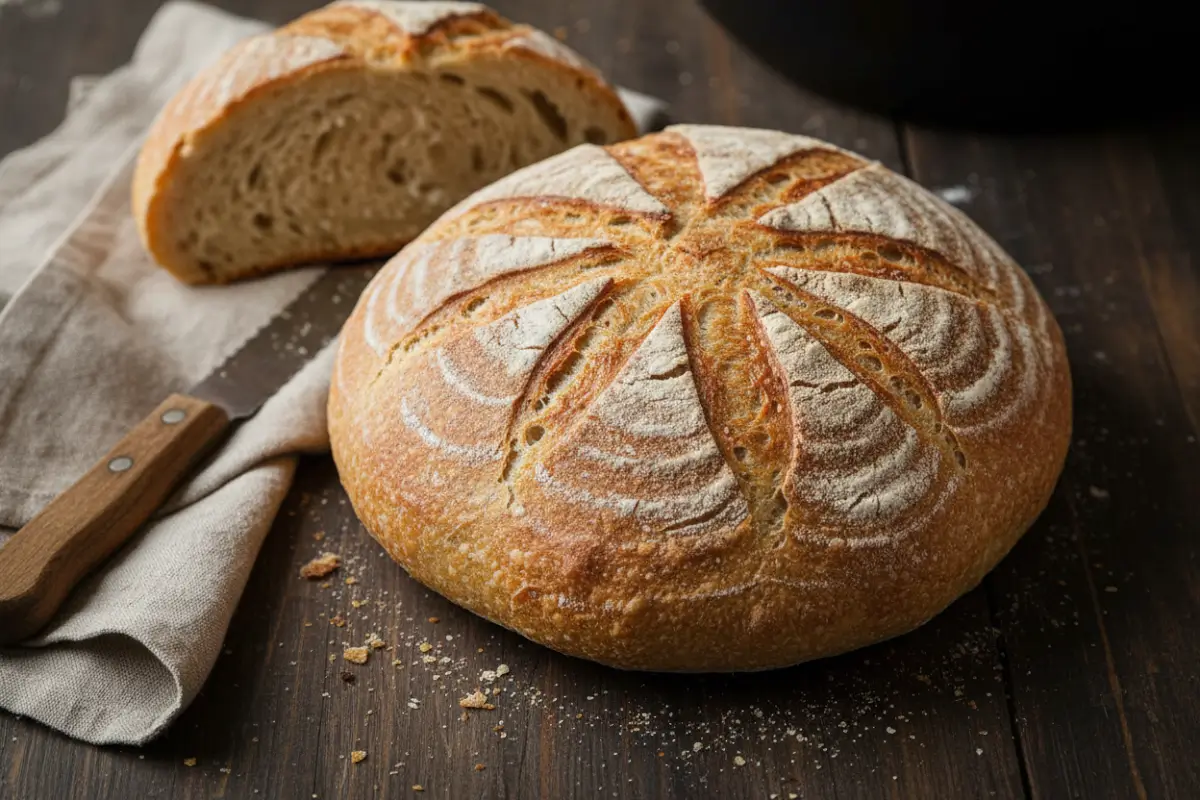
Easy Cozy Rustic Bread Dutch Oven Recipe
Ingredients
Equipment
Method
- Mix the dough in a large bowl by whisking together flour, yeast, and salt. Pour in warm water and stir until no dry flour remains.
- Cover and rest for 12-18 hours at room temperature.
- Preheat your Dutch oven for 30 minutes at 450°F.
- Shape the dough gently on a floured surface and let it rest for 30 minutes.
- Bake covered for 30 minutes, then remove the lid and finish baking for 15 minutes until golden brown.
- Cool completely before slicing to avoid gummy texture.