
If you’re looking for a homemade bread recipe that tastes like a Sunday at Grandma’s but comes together on a Tuesday night, this is it. It’s pillowy, golden-crusted, and uses just six pantry ingredients—no fancy equipment or bread-making degree required.
RECIPE SNAPSHOT
| Prep Time | Rise/Cook Time | Total Time | Serves | Difficulty | Season |
|---|---|---|---|---|---|
| 15 mins | 3 hrs 30 mins | 3 hrs 45 mins | 24 slices (2 loaves) | Easy | Year-Round |
FROM MY KITCHEN
I’ll never forget the first time I made white bread from scratch. I was convinced I’d mess it up—that the yeast wouldn’t bubble, or the dough would turn into a brick. But here’s the truth: homemade bread is forgiving. It wants to work for you.
This recipe has carried me through snowy Asheville mornings when I needed the house to smell like comfort, and through weeknight dinners when store-bought sandwich bread just wouldn’t cut it. It’s the kind of yeast bread recipe that makes you feel like you’ve accomplished something—even if you’re still in your pajamas.
And the best part? You don’t need a stand mixer (though it helps). You don’t need to be perfect. You just need warm water, a little patience, and the willingness to get your hands floury. This is special without being fussy—exactly what Cooking Save is all about.
WHY THIS RECIPE WORKS
- Foolproof Yeast Proofing: The recipe starts with a “proof test” so you know your yeast is alive before you commit to the full batch. No wasted flour, no mystery failures.
- Soft, Pillowy Texture: The combination of honey (or sugar) and oil creates a tender crumb that stays soft for days—perfect for sandwiches or toast.
- Flexible Flour Amounts: The recipe gives you a range (4-5½ cups) because humidity and flour brands vary. You’ll learn to feel when the dough is right, and that’s a superpower.
- Two Loaves = Smart Planning: Bake once, eat one loaf fresh, freeze the other. Future-you will be so grateful.
THE GROCERY LIST (& SHORTCUTS)
Main Players:
- Warm Water (105-115°F): Not too hot (you’ll kill the yeast), not too cold (it won’t activate). Think “baby bath” temperature.
- Active Dry Yeast: The magic ingredient. Make sure it’s fresh—check the expiration date!
- Honey or Sugar: Feeds the yeast and adds a subtle sweetness. Honey makes the crust extra golden.
- Salt: Balances the sweetness and strengthens the dough structure.
- Oil (Canola or Vegetable): Keeps the bread soft and tender. No need for fancy olive oil here.
- All-Purpose or Bread Flour: Bread flour gives a slightly chewier texture, but all-purpose works beautifully.
The “Cooking Save” Shortcut:
Use a stand mixer with a dough hook if you have one—it does the kneading for you while you clean up or sip coffee. But if you don’t? A sturdy wooden spoon and your hands work just as well. This is rustic bread, not a science experiment.
Substitutions:
- Out of honey? Use sugar (white or brown).
- Dairy-Free? This recipe is already dairy-free! Just skip the optional butter brushed on top, or use vegan butter.
- Gluten-Free? This recipe relies on gluten development, so it won’t work with GF flour. Try our GF Quick Bread instead.
EQUIPMENT YOU ACTUALLY NEED
- Large mixing bowl (or stand mixer with dough hook)
- Two 9×5″ loaf pans
- Clean dish towel (for covering the dough)
- Wire cooling rack
- Instant-read thermometer (optional, but helpful for checking water temp)
You don’t need a bread machine, a proofing box, or a kitchen scale (though I’ve included gram measurements if you want precision). Just your hands and a little faith.
STEP-BY-STEP: BAKING BREAD LIKE RILEY
Phase 1: Wake Up the Yeast (5-10 minutes)
Combine warm water, yeast, and a pinch of honey or sugar in a large bowl. Stir gently and walk away for 5-10 minutes.
You’re looking for foam and bubbles—like a tiny science fair volcano. If nothing happens, your yeast is dead. Toss it and start over with fresh yeast. (This has saved me more times than I can count.)
Phase 2: Build the Dough (10 minutes)
Add the remaining honey (or sugar), salt, oil, and 3 cups of flour to the yeast mixture. Mix with a wooden spoon or dough hook until combined—it’ll look shaggy and rough. That’s perfect.
Add another cup of flour and mix again. Now, add flour ½ cup at a time until the dough starts to pull away from the sides of the bowl. You want it to be smooth, elastic, and slightly sticky—like it would stick to your finger but not leave a gloppy mess.
Pro Tip: Humidity affects flour absorption. On a rainy Asheville day, I might use closer to 5½ cups. On a dry winter morning, 4½ cups is enough. Trust your gut (and your hands).
Phase 3: Knead the Magic In (4-8 minutes)
If using a stand mixer, knead on medium speed for 4-5 minutes. The dough should become smooth and elastic, almost glossy.
If kneading by hand, turn the dough onto a lightly floured surface and knead for 5-8 minutes. Push, fold, turn. Push, fold, turn. Put on a podcast. This is meditative.
Phase 4: The First Rise (1½ hours)
Grease a large bowl with oil or cooking spray. Place the dough inside and turn it to coat all sides (this prevents a dry skin from forming). Cover with a dish towel or plastic wrap.
Let it rise in a warm spot until doubled in size—about 1½ hours. I like to set mine near a sunny window or on top of the fridge (where it’s slightly warmer).
The “Oops” Fix: If your kitchen is cold, turn your oven to 200°F for 1 minute, then turn it OFF. Place the covered bowl inside the warm (not hot!) oven to rise.
Phase 5: Shape the Loaves (5 minutes)
Spray two 9×5″ loaf pans generously with cooking spray. (I also line the bottoms with parchment paper—it makes cleanup easier, but it’s optional.)
Punch down the dough to release air bubbles. It’s oddly satisfying. Divide it into two equal portions (use a kitchen scale if you want to be precise, but eyeballing works too).
Shape each portion into a log by flattening it into a rectangle, then rolling it up tightly from the short end. Pinch the seams closed and place seam-side down in the pans.
Phase 6: The Second Rise (45 mins – 1 hour)
Cover the pans with a lightweight dish towel (or greased plastic wrap). Let rise until the dough is about 1 inch above the rim of the pans—45 minutes to 1 hour.
Gently remove the covering. The dough should look puffy and proud.
Phase 7: Bake Until Golden (30-33 minutes)
Preheat your oven to 350°F.
Bake for 30-33 minutes, or until the tops are golden brown. Give the top of a loaf a gentle tap—it should sound hollow, like knocking on a door.
The Sensory Check: Your kitchen will smell like a bakery. The crust will be firm but not hard. If you’re unsure, an instant-read thermometer inserted into the center should read 190-200°F.
Phase 8: Cool & Brush (10 minutes)
Invert the loaves onto a wire cooling rack immediately (this prevents soggy bottoms). Brush the tops with melted butter for extra shine and flavor (optional, but highly recommended).
Let cool for at least 10 minutes before slicing. I know it’s hard to wait, but cutting into hot bread makes it gummy inside.
RILEY’S KITCHEN TIPS
Tip 1 (The Yeast Test): If your yeast doesn’t foam during the proofing step, STOP. Don’t waste your flour. Buy fresh yeast and start over. (I keep mine in the fridge to extend its life.)
Tip 2 (The Texture Check): Trust the feel of the dough over the measuring cup. If it’s too sticky, add flour. If it’s dry and tough, sprinkle water.
WHAT TO SERVE WITH THESE ROLLS
For a Cozy Dinner:
Pair with slow cooker pot roast, creamy tomato soup, or honey-glazed ham. This bread is perfect for soaking up every last bit of gravy.
For a Holiday Spread:
Serve alongside roasted turkey, mashed potatoes, and green bean casserole. It’s the supporting actor that steals the show.
For Breakfast:
Slice it thick and toast with butter and jam. Or use it for French toast or breakfast sandwiches with scrambled eggs.
STORAGE & LEFTOVERS
Room Temperature: Store in an airtight container or bread bag for up to 3 days. The crust will soften slightly, but the inside stays pillowy.
Reheating: Wrap in foil and warm in a 300°F oven for 10 minutes to restore the crust. Or toast individual slices.
Freezer: Cool completely, then wrap tightly in plastic wrap and foil. Freeze for up to 3 months. Thaw at room temperature and refresh in a warm oven.
FAQ
Can I use instant yeast instead?
Yes! Use the same amount and skip the proofing step. Add it directly to the dry ingredients.
Can I make this in a bread machine?
Absolutely. Add ingredients in the order your machine recommends and use the basic white bread cycle.
Why is my bread dense?
Usually from not letting it rise long enough, or using expired yeast. Make sure your dough doubles in size during each rise.
💡 Loved this recipe? Follow Us on Pinterest for more!
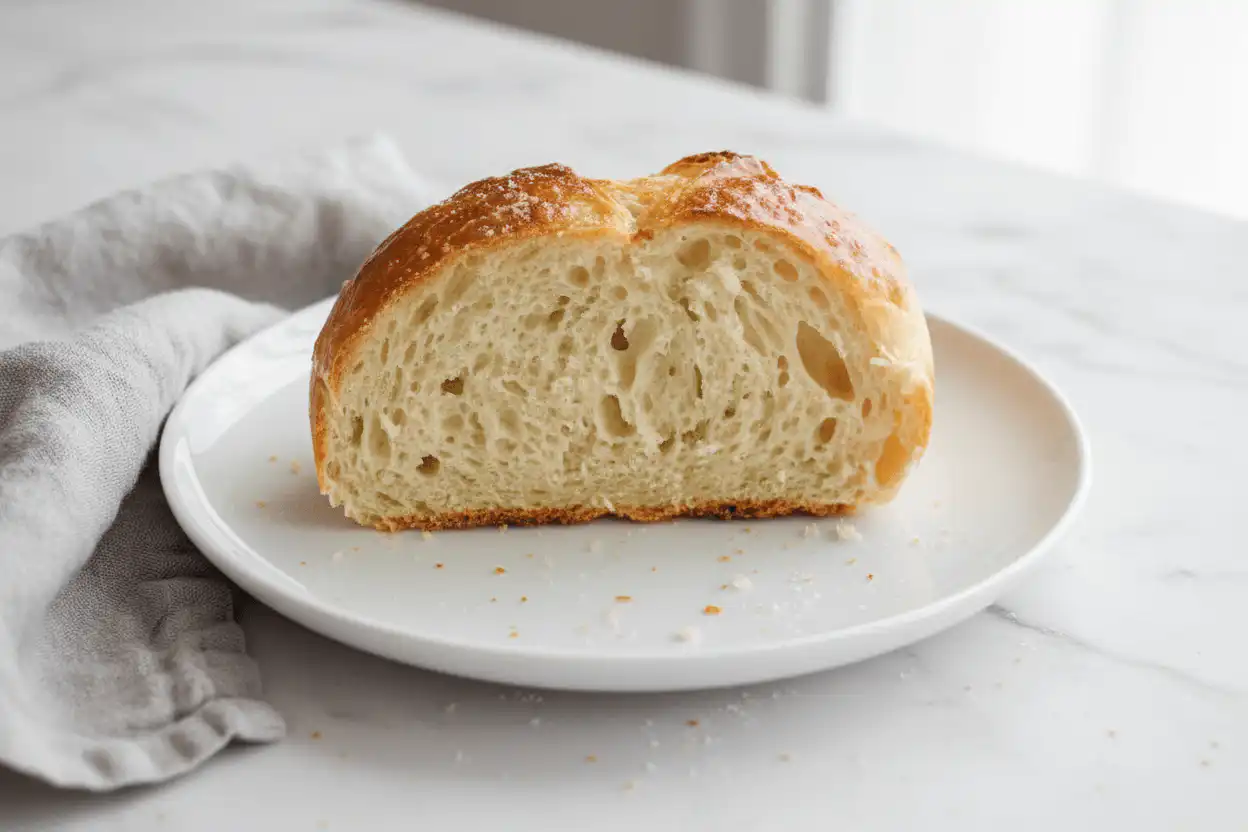
Homemade Bread
Ingredients
Equipment
Method
- Combine warm water, yeast, and a pinch of honey or sugar. Stir and let sit for 5-10 minutes until bubbly.
- Add remaining honey (or sugar), salt, oil, and 3 cups of flour to yeast mixture. Mix until combined.
- Knead dough for 5-8 minutes until smooth and elastic. Let rise in a greased bowl for about 1½ hours.
- Punch down dough, divide it, shape each portion, and place into greased loaf pans. Let rise again until puffy.
- Preheat oven to 350°F and bake loaves for 30-33 minutes until golden brown.
- Cool on a wire rack and brush with melted butter if desired before slicing.