
This homemade white sandwich bread rises tall with a tender, pillowy crumb and buttery-soft crust that makes store-bought loaves taste like cardboard. With just 7 pantry ingredients and straightforward steps, you’ll avoid the three biggest mistakes that lead to dense, gummy, or dry bread—proper yeast activation, adequate kneading for gluten development, and letting the dough rise until truly doubled.
Prep: 2 hours 30 minutes | Cook: 30 minutes | Total: 3 hours | Serves: 12 slices | Difficulty: Moderate
Why You’ll Love This Recipe
- Perfect texture: Soft enough for PB&J, sturdy enough for thick deli sandwiches
- Simple ingredients: Just 7 pantry staples you probably have on hand
- One loaf convenience: Makes exactly one 9×5-inch loaf with no waste
- Budget-friendly: Costs about $2 per loaf versus $4-5 for artisan bakery bread
- Freezer-ready: Slice and freeze for up to a month, toast straight from frozen
Quick Tips for Success
- Warm your liquids to 110°F—too hot kills yeast, too cool slows fermentation dramatically
- Knead until the dough passes the windowpane test for proper gluten structure
- Let the shaped loaf rise until it crowns 1 inch above the pan rim before baking
Ingredient Notes
- 1 cup (240ml) warm water (110°F): Activates the yeast and creates the base liquid for the dough
- ¼ cup (60ml) warm whole milk (110°F): Adds fat for a softer crumb without making the bread too tender
- 2¼ teaspoons (7g) instant yeast: Platinum or Red Star instant yeast works best for reliable rising
- 2 tablespoons (25g) granulated sugar: Feeds the yeast and adds subtle sweetness without tasting sweet
- 4 tablespoons (56g) unsalted butter, softened: Creates rich flavor and tender texture—softened works better than melted
- 1½ teaspoons salt: Essential for flavor and controlling yeast activity
- 3⅓ cups (420-430g) bread flour or all-purpose flour: Bread flour gives a chewier crust, all-purpose works fine for softer texture
Easy Substitutions
- Instead of whole milk: Use low-fat milk or even water, though the crumb will be slightly less tender
- Dairy-free option: Replace butter with softened coconut oil and use plant-based milk
- Budget-friendly swap: Use all-purpose flour if bread flour isn’t available—no other changes needed
Step-by-Step Instructions
Step 1: Activate the Yeast
Whisk the warm water, warm milk, yeast, and sugar together in the bowl of a stand mixer fitted with a dough hook. Cover and let sit for 5 minutes until the mixture looks foamy on top. This tells you the yeast is alive and ready to work.
Step 2: Mix the Dough
Add the softened butter, salt, and 1 cup of flour to the yeast mixture. Beat on low speed for 30 seconds, scrape down the sides, then add another cup of flour. Beat on medium until mostly combined—chunks of butter are fine. Add the remaining flour and beat on medium until the dough pulls away from the bowl sides, about 2 minutes.
Pro Tip: If mixing by hand, use a sturdy wooden spoon or silicone spatula. The dough will be shaggy at first but comes together with persistence.
Step 3: Knead Until Smooth
Keep the dough in the mixer and beat for 5-8 minutes, or knead by hand on a lightly floured surface for the same time. The dough should feel soft and slightly tacky but not sticky. Test it with the windowpane method: stretch a golf-ball-sized piece thin enough for light to pass through without tearing. This gluten development is what prevents dense, gummy bread. Kneading creates the protein network that traps carbon dioxide from the yeast, giving you that airy rise instead of a heavy loaf.
Step 4: First Rise
Lightly grease a large bowl with olive oil or cooking spray. Place the dough in the bowl, turning to coat all sides. Cover with plastic wrap or a damp towel and let rise in a warm spot for 1-2 hours until doubled in size. The dough should leave an indentation when you gently poke it with a finger.
Step 5: Shape the Loaf
Grease a 9×5-inch loaf pan. Punch down the risen dough to release the air, then turn it onto a lightly floured surface. Roll into an 8×15-inch rectangle—it doesn’t need to be perfect. Roll the dough tightly from the short (8-inch) side into a log, pinching the seam closed. Place seam-side down in the prepared pan.
Step 6: Second Rise
Cover the shaped loaf loosely with foil, plastic wrap, or a clean towel. Let it rise for 45-60 minutes until the dough crowns about 1 inch above the pan rim. This second rise is critical—underbaked dough that hasn’t risen enough stays dense and gummy in the center.
Step 7: Bake to Golden Perfection
Preheat your oven to 350°F and position the rack in the lower third. Bake for 32-36 minutes until the top is deep golden brown. If the top browns too quickly, tent loosely with foil around the 20-minute mark. The loaf is done when it sounds hollow when tapped, or when an instant-read thermometer inserted in the center reads 195-200°F. Let cool in the pan for 5 minutes, then turn out onto a wire rack to cool completely before slicing.
Common Mistakes (And How to Fix Them)
- Dense, heavy bread: You didn’t knead long enough to develop gluten, or the dough didn’t rise adequately. Make sure the dough doubles in size during both rises and passes the windowpane test after kneading.
- Dry, crumbly texture: Too much flour was added during kneading, or the bread over-baked. The dough should feel slightly tacky, not dry. Check doneness at 30 minutes to avoid overbaking.
- Gummy, underbaked center: The loaf didn’t rise high enough above the pan before baking, or oven temperature was too high causing the outside to brown before the inside cooked through. Always let the shaped dough rise a full inch above the rim.
Storage & Reheating
- Fridge: Store in an airtight bag or container for up to 6 days at room temperature, or up to 10 days refrigerated
- Freezer: Slice the cooled loaf and freeze in a freezer bag for up to 1 month—toast slices directly from frozen
- Reheating: Warm individual slices in the toaster, or wrap the whole loaf in foil and heat at 300°F for 10-15 minutes
Delicious Variations to Try
- Cinnamon swirl: Spread a mixture of 3 tablespoons sugar and 1 tablespoon cinnamon over the dough rectangle before rolling
- Honey oat: Replace 2 tablespoons sugar with honey and sprinkle rolled oats on the greased pan before placing the dough
- Herb and garlic: Knead in 2 teaspoons Italian seasoning and 2 minced garlic cloves after the first rise
What to Serve With This
- Classic sandwich pairings: BLT, grilled cheese, turkey club, or avocado toast
- Breakfast favorites: French toast, eggs Benedict, or bacon and egg sandwiches
- Soups and stews: Use thick slices as dippers for tomato soup, chili, or beef stew
Serving Suggestions
- Slice warm and spread with salted butter and strawberry jam
- Make croutons by cubing day-old bread, tossing with olive oil and garlic, and baking at 375°F for 15 minutes
For more recipes, follow me on Pinterest.
FAQ
Can I make this ahead of time?
Yes. Shape the loaf, place it in the greased pan, cover tightly, and refrigerate for up to 15 hours. Remove from the fridge 2-3 hours before baking to let it finish rising at room temperature.
How long does this last in the fridge?
Wrapped tightly, this bread stays fresh at room temperature for 6 days or refrigerated for up to 10 days. Refrigeration extends shelf life but can make the texture slightly denser.
Can I freeze this recipe?
Absolutely. Freeze the unbaked shaped loaf for up to 3 months, then thaw and rise for 4-5 hours before baking. Or freeze the baked, cooled loaf and thaw at room temperature when needed.
What can I substitute for bread flour?
All-purpose flour works perfectly with no other changes to the recipe. Bread flour produces a slightly chewier crust, but all-purpose gives a softer, more tender loaf.
Is this recipe dairy-free?
Not as written, but you can substitute the butter with softened coconut oil and use plant-based milk in place of the whole milk without affecting the texture.
Can I double this recipe?
For best results, make two separate batches. If you must double it in one bowl, use 3¼ teaspoons yeast and 6 tablespoons butter instead of doubling those ingredients exactly.
Why did my bread turn out dense and heavy?
This usually means inadequate kneading (gluten didn’t develop) or the dough didn’t rise long enough. Make sure you knead for the full 5-8 minutes and let the dough truly double during both rises.
What’s the best way to reheat this?
Toast individual slices for the best texture. For the whole loaf, wrap in foil and warm in a 300°F oven for 10-15 minutes until heated through.
Conclusion
This easy homemade sandwich bread delivers bakery-quality results with minimal hands-on time and ingredients you already have. Once you taste the difference between this soft, buttery loaf and store-bought bread, you’ll understand why it’s worth making from scratch.
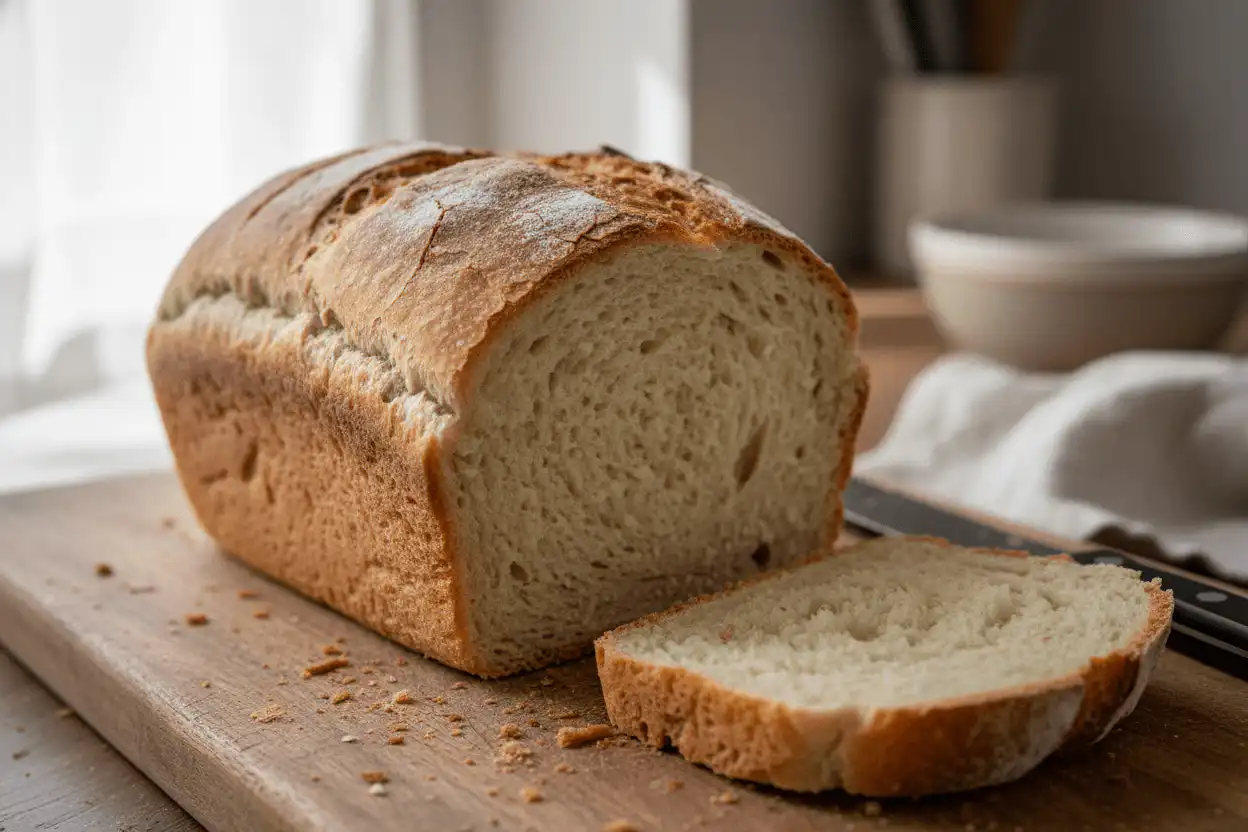

Easy 3-Hour Soft White Sandwich Bread
Ingredients
Equipment
Method
- Whisk the warm water, warm milk, yeast, and sugar together in the bowl of a stand mixer fitted with a dough hook. Cover and let sit for 5 minutes until the mixture looks foamy on top.
- Add the softened butter, salt, and 1 cup of flour to the yeast mixture. Beat on low speed for 30 seconds, scrape down the sides, then add another cup of flour. Beat on medium until mostly combined. Add the remaining flour and beat on medium until the dough pulls away from the bowl sides, about 2 minutes.
- Keep the dough in the mixer and beat for 5-8 minutes, or knead by hand on a lightly floured surface. The dough should feel soft and slightly tacky. Test with the windowpane method: stretch a golf-ball-sized piece thin enough for light to pass through without tearing.
- Lightly grease a large bowl with olive oil. Place the dough in the bowl, turning to coat all sides. Cover with plastic wrap or a damp towel and let rise in a warm spot for 1-2 hours until doubled in size.
- Grease a 9×5-inch loaf pan. Punch down the risen dough, then roll into an 8×15-inch rectangle on a lightly floured surface. Roll the dough tightly from the short side into a log, pinching the seam closed. Place seam-side down in the prepared pan.
- Cover the shaped loaf loosely with foil or a clean towel. Let it rise for 45-60 minutes until the dough crowns about 1 inch above the pan rim.
- Preheat oven to 350°F with rack in lower third position. Bake for 32-36 minutes until deep golden brown on top. Tent with foil around 20 minutes if browning too quickly. Loaf is done when it sounds hollow when tapped or reads 195-200°F internally. Cool in pan 5 minutes, then turn out onto a wire rack.