
You don’t need fancy equipment or a full day to bake bakery-quality bread at home. This easy quick no knead bread dutch ovens recipe delivers a golden, crusty loaf with just 15 minutes of hands-on work. No kneading. No stand mixer. No stress. Mix four ingredients in a bowl tonight, walk away, and tomorrow you’ll pull a crackling-hot loaf from your oven that sounds like it’s singing when it cools. The secret? Time does the work while you sleep. Your Dutch oven creates the perfect steam environment that professional bakeries charge extra for. That crispy, blistered crust with a soft, hole-filled interior isn’t magic—it’s science meeting simplicity.
Prep: 15 mins | Cook: 30 mins | Total: 45 mins (plus overnight rest) | Yields: 4 servings
Why You’ll Love This
- Actually beginner-friendly: If you can stir, you can make this bread
- Minimal cleanup: One bowl, one pot, done
- Flexible timing: Start it when you remember, bake it when you’re ready
- Costs pennies: Four pantry staples create something that tastes expensive
- No special skills: Zero kneading means zero technique required
Key Ingredients
All-Purpose Flour (3 cups): The foundation of your loaf. Don’t overthink the flour aisle—regular all-purpose works beautifully here. The long rest develops gluten naturally, so you don’t need bread flour’s extra protein. I keep King Arthur in my Asheville kitchen, but any brand delivers that chewy, open crumb. Measure by spooning flour into your cup and leveling off, or you’ll pack in too much and get a dense brick.
Active Dry Yeast (2 teaspoons): This is your patience ingredient. Such a small amount seems wrong, but it’s perfect. Over 18-24 hours, these little organisms slowly ferment the dough, creating complex flavor and those gorgeous air pockets. No need for instant yeast—active dry is cheaper and works great with the long rise. Check your expiration date. Dead yeast means flat bread.
Sea Salt (1½ teaspoons): Controls fermentation and adds flavor depth. Table salt works too, but sea salt gives a slightly better taste. Don’t skip it or reduce it—bread without enough salt tastes like cardboard, no matter how pretty it looks.
Warm Water (1½ cups, 105°F): Temperature matters here. Too hot kills yeast. Too cold and nothing happens. 105°F feels like a warm bath on your wrist. No thermometer? That’s fine. Comfortably warm to touch is your target. This hydration level creates that rustic, hole-filled interior bakeries charge $8 a loaf for.
Instructions
Mix the dry ingredients: Dump your flour, yeast, and salt into a large bowl. Stir with a wooden spoon for 10 seconds until everything looks evenly distributed. That’s it. No sifting, no fussing.
Add water and form the dough: Pour in the warm water. Stir with your spoon until a shaggy, sticky mass forms. It’ll look rough and uneven—that’s correct. Stop when you don’t see dry flour pockets anymore. Takes maybe 30 seconds of stirring. The dough should be wet and sticky, not smooth.
Cover and rest: Spray plastic wrap with cooking spray (stops sticking), press it directly onto the dough surface, then drape a damp tea towel over the bowl. This double coverage prevents drying. Shove it on your counter, away from drafts. Now forget about it for 18-24 hours. Seriously. Go live your life.
Start preheating: After your rest period (or at least 1 hour before you want warm bread), crank your oven to 450°F. This is important: Put your empty Dutch oven with its lid inside while it preheats. It needs 30 minutes to get screaming hot. This creates that bakery crust. A 2¾-quart works perfectly, but readers confirm 5-quart Dutch ovens work fine too.
Shape the dough: While your oven heats, flour your counter generously. The dough will have doubled and look bubbly. Scrape it out onto your floured surface. It’ll be loose and floppy—don’t panic. Sprinkle a bit more flour on top, then gently pull the edges toward the center, forming a rough ball. It won’t be tight or pretty. Cover with a floured towel and let it rest while the oven finishes preheating.
Prepare your pot: Carefully pull that blazing-hot Dutch oven from your oven using thick oven mitts. Remove the lid. Either spray the inside with cooking spray or lay down parchment paper. Parchment is easier for lifting the finished loaf out later.
Transfer the dough: Pick up your floppy dough ball and gently lower it into the center of your hot pot. Don’t worry about perfect placement—it’ll spread and fill the space as it bakes. The dough will sizzle slightly when it hits the hot surface. That’s good.
Covered bake: Slam that lid on and slide the whole thing into your oven. Set a timer for 30 minutes. Don’t peek. The trapped steam is creating your crust. Opening the lid releases that steam and ruins the magic.
Uncovered finish: After 30 minutes, remove the lid. Your bread will be pale and puffy. Bake uncovered for another 15 minutes until the top turns deep golden brown. You want color—that’s flavor.
Cool properly: Lift the loaf out using the parchment edges or carefully tip the pot to release it onto a cooling rack. It’ll crackle and sing as it cools. Wait at least 20 minutes before slicing or the interior will be gummy. Cover with a tea towel if you want to keep it warm for serving.
Tips & Variations
Timing flexibility: Can’t bake at exactly 24 hours? No problem. Anywhere from 18-30 hours works. Longer develops more sourdough-like tang. Shorter is milder. I’ve forgotten mine for 36 hours and it was still excellent.
Dutch oven alternatives: No Dutch oven? Use any oven-safe pot with a lid—a 2.4L baking dish, a large Pyrex with foil covering, even a heavy roasting pan. You need something that traps steam.
Flour variations: Swap ½ cup all-purpose for whole wheat flour for nuttier flavor. Or add 2 tablespoons of seeds (sunflower, sesame) to the initial mix for texture.
Herb bread: Fold in 2 tablespoons of chopped fresh rosemary or thyme when you shape the dough. Smells incredible.
Garlic lovers: Mix 3 minced garlic cloves into the dough before the long rest. Your house will smell amazing while it bakes.
Storage & Pairings
Store cooled bread in a paper bag at room temperature for 2 days, or slice and freeze for up to 3 months. Reheat frozen slices straight in the toaster. This bread shines alongside soups, makes killer sandwiches, or just needs good butter. Toast day-old slices for bruschetta or tear into chunks for dipping in olive oil.
FAQ
Can I speed up the rising time?
Not really, not for this easy quick no knead bread dutch ovens method. The long fermentation is what develops flavor and structure without kneading. You need at least 18 hours. Plan ahead—that’s the only “work” required.
Why is my dough so wet and sticky?
That’s exactly right. High hydration creates those beautiful holes and chewy texture. Don’t add extra flour trying to make it firm. Embrace the sticky mess. It bakes into perfection.
💡 Loved this recipe? Follow Us on Pinterest for more!
Conclusion
This easy quick no knead bread dutch ovens recipe proves that impressive bread doesn’t require skill, just patience. Mix it tonight, bake it tomorrow, and enjoy bread that tastes like you spent all day in the kitchen. Your secret? You didn’t.
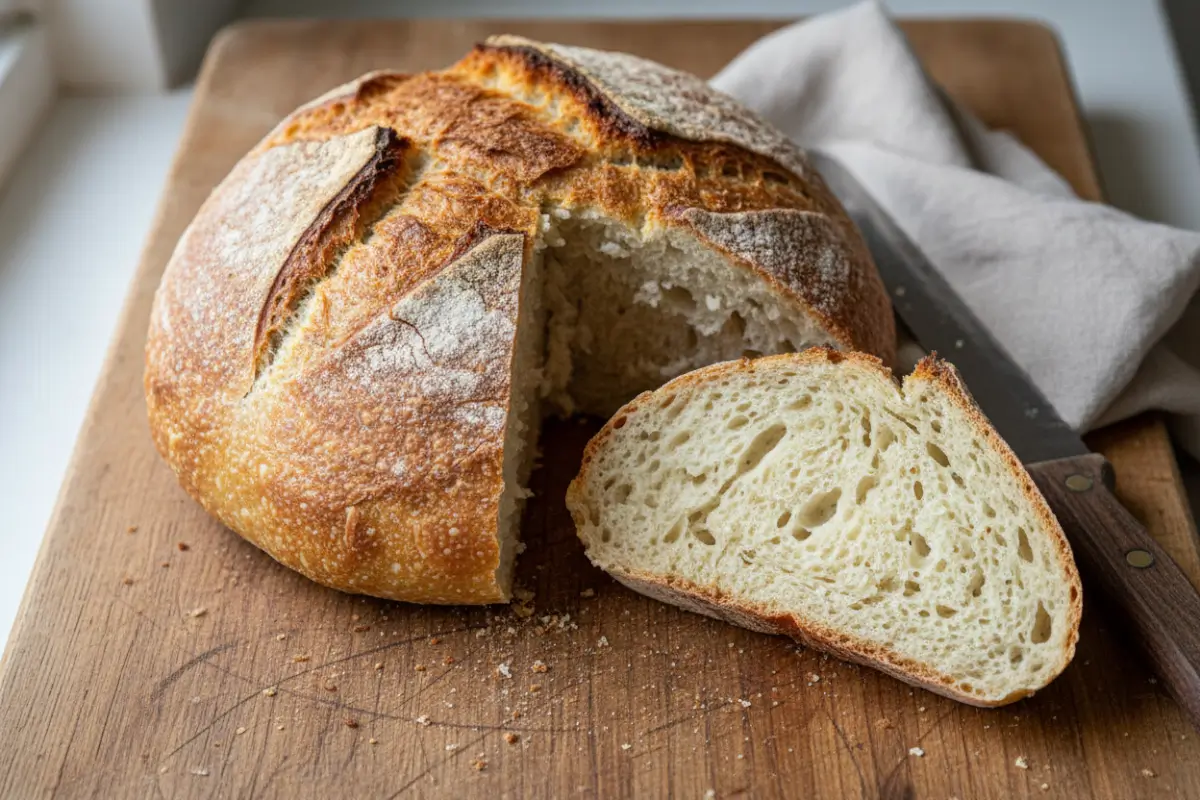
Easy Quick No Knead Bread Dutch Ovens Recipe
Ingredients
Equipment
Method
- Dump flour, yeast, and salt into a large bowl. Stir for 10 seconds until evenly distributed.
- Pour in warm water and stir until a shaggy, sticky mass forms.
- Cover with plastic wrap and a damp towel, then let it rest for 18-24 hours.
- Preheat the oven to 450°F with the Dutch oven inside for 30 minutes.
- Transfer the dough to a floured surface, shape it into a rough ball, and let it rest.
- Carefully place the dough in the Dutch oven, cover, and bake for 30 minutes.
- Remove the lid and bake uncovered for an additional 15 minutes until golden brown.
- Cool the loaf on a rack for at least 20 minutes before slicing.