
The smell hits first—yeasty, warm, slightly tangy. Your kitchen fills with it while this loaf bakes, crust turning golden, interior staying impossibly soft. This isn’t your typical sourdough. No overnight waits. No complex schedules. This Gut Healthy Sourdough Sandwich Bread goes from starter to sliced in about eight hours, perfect for those mornings when you realize you’re out of bread but want something better than store-bought. The crumb stays tender for days. The crust? Buttery and thin, never tough. It makes the best grilled cheese you’ll ever eat.
I developed this recipe during Asheville’s bread-baking boom, when everyone wanted sourdough but nobody had time for traditional timelines. Same-day doesn’t mean shortcuts—it means smart timing.
Why You’ll Love This Recipe
- Ready in one day without compromising that signature sourdough tang
- Soft sandwich texture that doesn’t crumble or tear
- Gut-friendly fermentation benefits in a fraction of the time
- Scales easily for meal prep (freeze the second loaf)
Key Ingredients
Active sourdough starter (100 grams) drives everything. It needs to be bubbly, doubled, and fed within 4-6 hours of mixing. If it floats in water, you’re good. Weak starter means flat bread.
King Arthur bread flour (500 grams) gives structure. The higher protein content—around 12.7%—creates strong gluten networks that trap gas during fermentation. All-purpose works but expect slightly denser texture. Don’t swap for whole wheat without adjusting hydration.
Warm filtered water (325 grams) activates the starter faster. Room temperature means 75-80°F. Too hot kills yeast. Too cold slows everything down. This isn’t the time for ice water.
Honey (40 grams) feeds the yeast and adds subtle sweetness that balances sourdough’s tang. It also helps the crust brown beautifully. Maple syrup works in a pinch.
Olive oil (20 grams) keeps the crumb tender for days. Fat coats flour proteins, preventing them from forming tough gluten. It also adds richness without heaviness.
Salt (10 grams) controls fermentation and develops flavor. Add it with the flour, not before—early salt can slow yeast activity when you need speed.
Instructions
Mix the dough. Set your mixing bowl on a food scale. Add 325 grams warm water, 20 grams olive oil, 40 grams honey, and 100 grams active starter. Use a bread whisk to dissolve everything completely—no honey clumps. Zero the scale. Add 500 grams bread flour and 10 grams salt. Mix with your hand until you get a shaggy, sticky mass. Scrape the bowl sides. Nothing should stick there. Cover with a reusable shower cap or plastic wrap. Let it sit one hour in a warm spot. This autolyse period lets flour hydrate fully, making gluten development easier later.
Stretch and fold. Wet your hands—this dough is sticky. Slide both hands under one side of the dough. Stretch it up gently until you feel resistance, then fold it over the center. Rotate the bowl 90 degrees. Repeat on all four sides. You’re building gluten structure without kneading. Cover and rest 45 minutes. Do this entire process three times total. By the third round, the dough feels noticeably smoother and stronger.
Bulk fermentation. Cover and let rise 3-4 hours in a warm place. Turn your oven to 90°F or use the proof setting. Sourdough thrives in warmth—this step makes same-day timing possible. The dough should nearly double and look bubbly across the surface. Poke it. If the indent springs back slowly, it’s ready. If it collapses, you’ve gone too far.
Shape preparation. Flip the bowl over a clean counter. Let gravity pull the dough out. Cover with a tea towel and rest 10 minutes. This relaxes the gluten. Stretch the dough into a rectangle with your hands—think cinnamon roll dimensions, about 10×14 inches. If it’s sticky, use a bench scraper to help. Don’t add flour unless absolutely necessary.
Final shaping. Fold one long side to the center. Fold the opposite side over it. You’ve got a long, narrow rectangle now. Roll it up tightly from one short end, like a sleeping bag. Place both hands on one side and push toward yourself, creating tension on the surface. Rotate and repeat on the other side. Pinch both ends closed. For toppings, roll the top in oats or seeds now.
Second rise. Oil a 9×5-inch bread pan or line it with parchment. Place the dough seam-side down (topping-side up if you added any). Use your fingers to tuck edges down if the top looks uneven. Cover with a plastic bag and proof in a warm spot for one hour, until the dough crowns just above the pan rim. For overnight fermentation, refrigerate covered instead. Bake it cold the next day.
Bake. Preheat oven to 375°F. Bake uncovered 35-40 minutes until the top turns golden and the internal temperature hits 205°F. Use a thermometer—guessing leads to gummy centers. Remove from oven. Immediately spread butter across the hot top. This softens the crust and tastes incredible. Turn out onto a cooling rack. Wait at least 30 minutes before slicing. I know it’s hard.
Tips & Variations
Temperature matters most. Keep dough between 75-80°F throughout. Too cold and you’ll wait forever. Too hot and fermentation races ahead, creating sour, weak dough.
Check starter strength. Drop a spoonful in water. If it floats, you’re ready. If it sinks, feed it again and wait.
Customize the flour. Swap 100 grams bread flour for whole wheat. Add 10-15 grams extra water to compensate for whole grain absorption.
Try herb variations. Fold in rosemary and garlic during the last stretch-and-fold. Or add everything bagel seasoning on top before the final rise.
Make it sweeter. Increase honey to 60 grams and add cinnamon for a breakfast loaf that toasts beautifully.
Storage & Pairings
Store in a plastic bag at room temperature for 3-4 days. Freeze sliced for up to three months—toast straight from frozen. This Gut Healthy Sourdough Sandwich Bread makes perfect grilled cheese, avocado toast, or French toast. The slight tang cuts through rich fillings beautifully.
FAQ
Can I use all-purpose flour instead of bread flour?
Yes, but expect slightly less rise and a denser crumb. All-purpose has lower protein content, so gluten development won’t be as strong. The bread will still taste great—just won’t have that professional bakery height.
Why didn’t my bread rise properly?
Three common culprits: weak starter, cold environment, or over-fermentation. Make sure your starter doubles within 4-6 hours of feeding. Keep dough consistently warm. During bulk fermentation, watch for doubling—not the clock.
💡 Loved this recipe? Follow Us on Pinterest for more!
Conclusion
Same-day sourdough isn’t a myth. It’s about timing and temperature control. This loaf delivers all the gut-healthy benefits and complex flavor of traditional sourdough without the overnight wait. Mix it after breakfast, bake it before dinner. Your sandwiches just got significantly better.
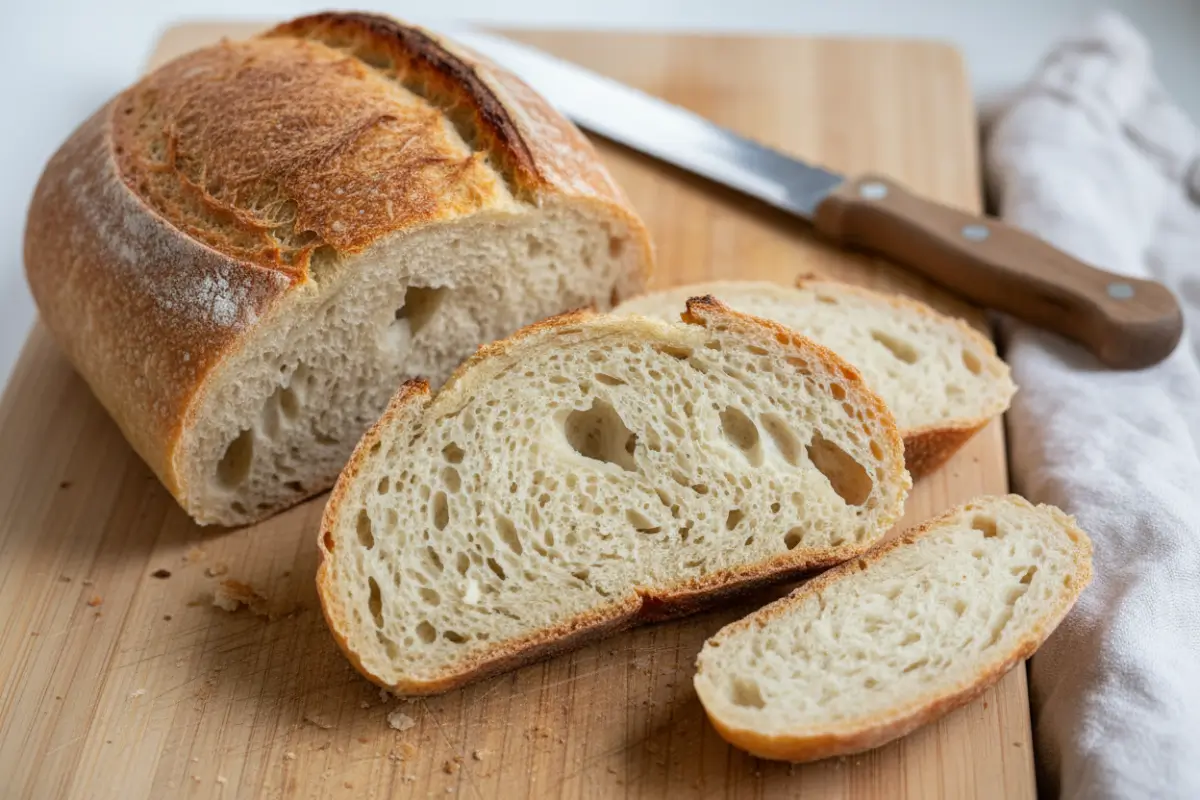
Easy Gut Healthy Sourdough Sandwich Bread
Ingredients
Equipment
Method
- Mix the dough. Add warm water, olive oil, honey, and starter to a bowl, then mix in flour and salt until shaggy. Let sit for one hour.
- Stretch and fold. Wet your hands and fold the dough over itself four times, resting for 45 minutes in between each fold. Do this three times.
- Bulk fermentation. Cover and let rise for 3-4 hours until nearly doubled.
- Shape preparation. Flip the dough onto a counter, shape into a rectangle, and rest for 10 minutes.
- Final shaping. Roll the dough tightly and place into an oiled bread pan, then proof for one hour.
- Bake. Preheat oven to 375°F and bake for 35-40 minutes until golden and internal temperature reaches 205°F.
- Cool. Spread butter on top and let cool for at least 30 minutes before slicing.