
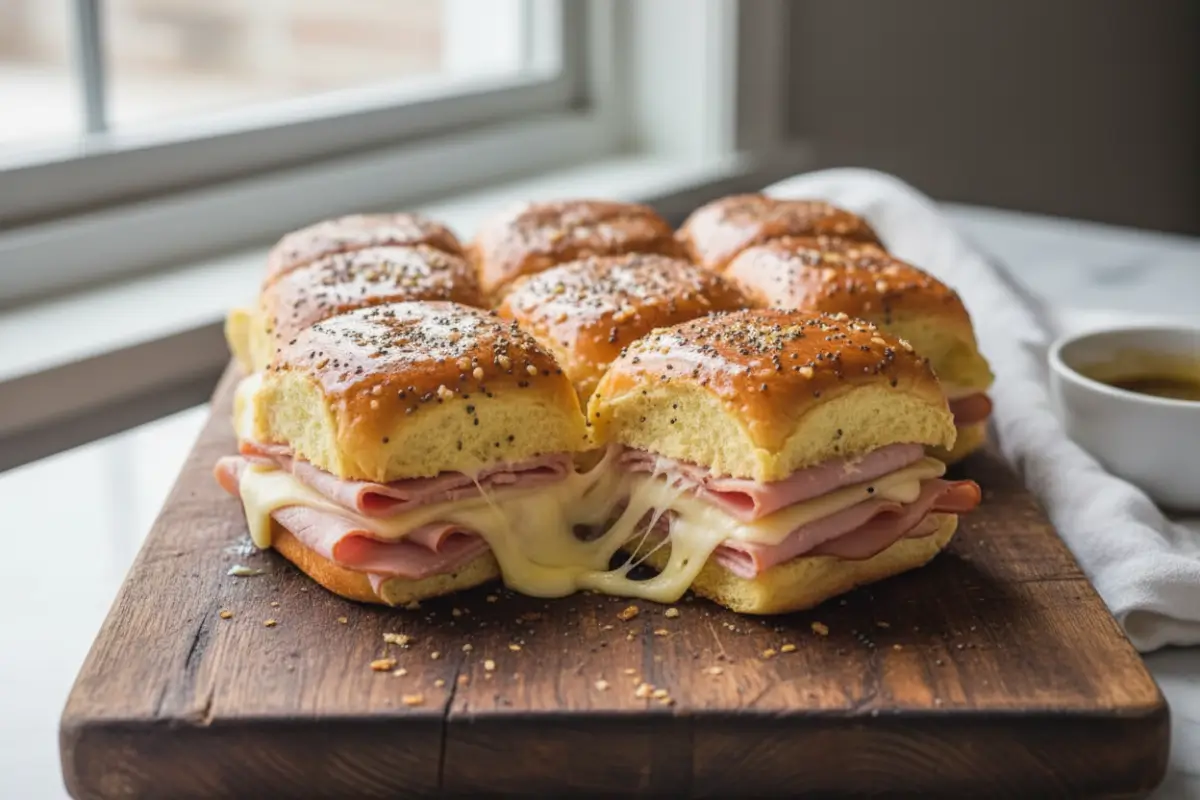
These ham and cheese sliders hit differently when you nail the butter-to-bun ratio. Golden tops with that glossy sheen. Steam rising when you pull back the foil. The poppy seeds catching light like tiny flavor grenades about to detonate across your tongue.
I tested this recipe four times in my Asheville kitchen before the ratio finally clicked. The third batch? Soggy bottoms, greasy fingers, disappointment all around. The fourth? My neighbor knocked on my door asking what smelled so good. That’s when I knew.
Here’s what makes these ham and cheese sliders work: the sauce gets brushed on, not dumped. The foil traps steam without drowning everything. The brown sugar caramelizes just enough to create that sweet-savory contrast that makes people reach for seconds before finishing their firsts.
You’re not making fancy tea sandwiches here. These are party-tray heroes. Game day champions. The thing you bring that gets demolished while the seven-layer dip sits lonely in the corner.
The secret? Understanding that slider buns are basically tiny sponges. Treat them wrong and they’ll soak up butter like it’s their job. Treat them right and you get crispy edges, soft centers, and that pull-apart texture that makes these impossible to eat just one.
Most recipes tell you to pour the sauce over everything and pray. That’s how you end up with butter puddles in your baking dish and rolls that disintegrate when you try to lift them. We’re doing this differently.
Why Most People Fail This Recipe
Problem: Soggy slider buns that fall apart when you pick them up.
You poured too much sauce. I know the recipe says drizzle, but your drizzle became a deluge. The buns can only absorb so much before they surrender completely. Solution: Use a pastry brush or spoon to control exactly where that butter mixture lands. Focus on the tops. The sides will catch enough as it melts down.
Problem: The cheese doesn’t melt evenly, leaving cold spots.
You skipped the foil or your oven runs cool. Swiss cheese needs consistent heat to melt properly, and these sliders are packed tight enough that heat struggles to penetrate without help. Solution: That foil isn’t optional—it creates a steam chamber that melts everything uniformly. If your oven’s temperamental, bump it to 375°F and watch closely after 15 minutes.
Problem: The sauce tastes bitter or overly sweet.
You let it simmer too long or didn’t whisk enough. Brown sugar can scorch fast, and Worcestershire gets aggressive when concentrated. Solution: Kill the heat the second everything melts together. We’re combining, not reducing. Thirty seconds of whisking, then off the burner immediately.
Why You’ll Love This Recipe
• Ready in 35 minutes flat, including the time you’ll spend staring at the oven like it holds the secrets of the universe
• Feeds 15 people with actual filling portions, not those sad appetizer-sized bites that leave everyone hungry
• Make-ahead friendly—assemble in the morning, refrigerate, then bake when guests arrive
• That poppy seed crunch adds textural interest most slider recipes completely ignore
• The Dijon-Worcestershire combo cuts through the richness, preventing that heavy feeling that makes you regret your life choices
Key Ingredients & Why They Matter
Slider buns: These aren’t regular hamburger buns shrunk down. Real slider buns have a different crumb structure—denser, slightly sweet, built to handle moisture without dissolving. Hawaiian rolls work if you want extra sweetness, but I prefer standard potato slider buns. They’ve got more structural integrity. The slight potato starch content helps them stay cohesive even when butter-soaked.
If you’re using dinner rolls, make sure they’re soft-sided, not crusty. A crusty roll will fight the butter instead of absorbing it, and you’ll end up with a greasy exterior and dry interior. Not the move.
Deli ham: Black forest ham is your friend here. It’s got that subtle smoke without the sticky-sweet glaze some hams come with. Honey ham will make these cloying—all that brown sugar in the sauce needs a savory anchor. I buy mine from the deli counter sliced medium-thick. Pre-packaged works fine, but avoid anything labeled “honey” or “maple.”
One pound gives you enough to fold 1-2 slices per slider without overstuffing. You want ham presence, not a ham avalanche that pushes the cheese out the sides.
Swiss cheese: The classic choice for a reason. It melts smooth, doesn’t get greasy, and has that nutty flavor that plays nice with Dijon. Eight slices covers 15 sliders when you cut them in half. Don’t use pre-shredded—it’s coated with anti-caking agents that prevent proper melting. Get block cheese from the deli and slice it yourself, or buy pre-sliced Swiss in the cheese section.
Gruyère works if you’re feeling fancy. Provolone works if you’re not. Just avoid American cheese unless you want that processed texture.
Butter: Half a cup seems like a lot. It is a lot. That’s the point. Butter carries all the other flavors and creates that glossy top that makes these look bakery-professional. Use real butter, not margarine. The milk solids in butter contribute to browning and flavor development that margarine can’t replicate.
Let it melt completely in the sauce—no butter chunks floating around.
Dijon mustard: This is your acid and your bite. One tablespoon cuts through all that butter and cheese without overpowering anything. Regular yellow mustard is too sharp here. Dijon has a smoother heat that integrates instead of announcing itself. If you only have yellow mustard, use two teaspoons instead of a tablespoon.
Worcestershire sauce: Umami bomb. That’s it. That’s the explanation. One tablespoon adds savory depth that makes people ask “what’s in these?” It’s you. You’re the secret ingredient, wielding Worcestershire like a flavor wizard.
Poppy seeds: These add crunch and visual interest. They also have a subtle nutty flavor that most people don’t consciously notice but would miss if you left them out. Find them in the spice aisle near sesame seeds. One tablespoon is enough to coat the tops without making these look like everything bagels.
Brown sugar: One-third cup balances the Worcestershire and Dijon, creating that sweet-savory glaze situation. Light or dark brown sugar both work. Dark has more molasses flavor, light is more subtle. I use light because I don’t want these tasting like barbecue.
Step-by-Step Instructions
Preheat and prep your workspace. Get that oven to 350°F. Grease your 9×13 baking dish—I use butter, but cooking spray works fine. This step matters more than you think. Ungreased dishes mean stuck-on cheese that you’ll be scraping off tomorrow with regret in your heart.
Assemble like you’re building a tiny sandwich army. Slice your slider buns if they’re not pre-sliced. Keep the tops attached to the bottoms for now—makes assembly easier. Fold 1-2 slices of ham onto each bottom bun. Don’t just pile it flat. Fold it so there’s some height, some texture. Place half a slice of Swiss on top of the ham. Close the slider and nestle it into your baking dish.
Pack them tight. Side by side, no gaps. They should be touching, almost squished together. This isn’t about giving them personal space—crowding them helps them steam properly and prevents the edges from drying out. You’ll fit all 15 in a standard 9×13 if you’re strategic about placement.
Make the sauce fast and focused. Medium saucepan, medium-high heat. Add your butter, Dijon, Worcestershire, poppy seeds, and brown sugar all at once. Whisk constantly as the butter melts. You’ll see it go from chunky to smooth in about 45 seconds. The second it’s fully combined and starting to simmer—tiny bubbles around the edges—kill the heat.
Don’t walk away during this step. Don’t check your phone. The difference between perfect sauce and burnt sauce is about 20 seconds of inattention.
Brush the tops with intention. Use a pastry brush if you have one. A spoon works if you don’t. Drizzle—actually drizzle, don’t pour—the sauce over the tops of your assembled sliders. You want coverage, not saturation. Focus on the tops and let gravity do the rest. The sauce will seep down the sides as it bakes. If you dump it all on, you’ll end up with butter soup at the bottom of your pan.
I usually use about two-thirds of the sauce. Save the rest for brushing on halfway through baking if you want extra glossiness.
Bake covered, then decide. Tear off a sheet of aluminum foil and cover the baking dish tightly. Crimp the edges so steam can’t escape. Slide it into your preheated oven and set a timer for 20 minutes.
At 20 minutes, pull back the foil carefully—steam will billow out. The cheese should be melted, the tops should be golden, and your kitchen should smell like a French bistro had a baby with a deli. If the tops aren’t as golden as you want, give them 3-5 more minutes uncovered. Watch them closely. The line between golden and burnt is thin and unforgiving.
Expert Tips & Common Mistakes
Mistake: Making these too far in advance and letting them sit at room temperature.
Fix: Assemble them up to 4 hours ahead, but keep them refrigerated until 30 minutes before baking. Cold sliders going into a hot oven need an extra 5 minutes of bake time.
Mistake: Using a baking dish that’s too large, leaving gaps between sliders.
Fix: If your 9×13 is too big, use a smaller dish or make a double batch. Those gaps let heat circulate where you don’t want it, drying out the edges.
Mistake: Cutting the sliders apart before baking.
Fix: Keep them connected. They pull apart easily after baking, and keeping them together during cooking helps them steam properly.
Mistake: Skipping the brown sugar because you think it’ll be too sweet.
Fix: Don’t. The brown sugar caramelizes and balances the tangy mustard. Without it, these taste flat and one-dimensional.
Storage & Reheating
Refrigerate leftovers in an airtight container for up to 3 days. They won’t be as crispy as fresh, but they’re still good. Reheat in a 300°F oven for 10 minutes covered with foil. Microwave works in a pinch—30 seconds per slider—but the texture suffers.
Freeze assembled but unbaked sliders for up to 2 months. Wrap the entire baking dish in plastic wrap, then foil. Bake from frozen at 350°F for 30-35 minutes covered, then 5 minutes uncovered.
Perfect Pairings
Serve these with potato salad that’s got some tang to it. The creaminess cuts the richness. Dill pickles on the side aren’t optional—you need that acid. A simple green salad with vinaigrette keeps things from getting too heavy. For drinks, iced tea or light beer. Nothing complicated.
Variations & Substitutions
Italian Style: Swap Swiss for provolone, add thin-sliced salami with the ham, replace poppy seeds with Italian seasoning, brush with garlic butter instead of the brown sugar mixture.
Spicy Version: Add sliced jalapeños between the ham and cheese, mix cayenne pepper into the sauce, use pepper jack instead of Swiss.
Breakfast Sliders: Replace ham with cooked bacon, Swiss with cheddar, add scrambled eggs, skip the brown sugar and use maple syrup instead.
Turkey Club: Use turkey instead of ham, add crispy bacon, swap Swiss for cheddar, add a thin tomato slice after baking (don’t bake the tomato or it’ll get soggy).
FAQ
Can I make ham and cheese sliders without poppy seeds?
Yes. Sesame seeds work as a substitute, or skip the seeds entirely and add dried minced onion to the sauce instead. The seeds add texture and visual appeal but aren’t critical to flavor. I’ve made these without seeds when I’ve run out—still delicious, just less interesting to look at.
Why are my slider buns soggy on the bottom?
You used too much sauce or didn’t grease the pan properly. The sauce pools at the bottom when overused, and ungreased pans trap moisture. Next time, use less sauce and make sure you’ve greased every corner of that baking dish. Also check that you’re not overcrowding—15 sliders is the max for a standard 9×13.
Can I use a different type of cheese?
Absolutely. Cheddar, Havarti, Monterey Jack, or Gouda all work. Avoid fresh mozzarella (too watery) or aged hard cheeses like Parmesan (won’t melt smoothly). The key is using a cheese that melts well and doesn’t separate when heated. Swiss is traditional because it melts perfectly and has that nutty flavor, but you’re not locked in.
💡 Loved this recipe? Follow Us on Pinterest for more!
Conclusion
These ham and cheese sliders work because they respect the fundamentals. Good ingredients, proper technique, and understanding that butter is your friend, not your enemy. Make them once following these instructions exactly. Then adjust to your preferences.
The beauty of this recipe is its flexibility once you understand the base. But start here. Start with the ratios that work. The Asheville kitchen test kitchen (my actual kitchen) has proven these measurements foolproof.
Don’t overthink it. Preheat your oven. Make your sauce. Bake your sliders. Watch them disappear.
Easy Ham and Cheese Sliders
Ingredients
Equipment
Method
- Preheat oven to 350°F and grease the baking dish.
- Assemble sliders by placing ham and cheese on each bun, then close them.
- Combine butter, Dijon, Worcestershire, poppy seeds, and brown sugar in a saucepan. Whisk until melted.
- Brush the sauce over the tops of the assembled sliders.
- Cover the baking dish with foil and bake for 20 minutes.
- Remove foil and bake for another 3-5 minutes until tops are golden.