
The smell hits first—sharp cheddar bubbling over tender bread, edges crisping to golden. You pull this from the oven and nobody guesses cottage cheese lives inside. It’s protein-packed, ridiculously simple, and uses pantry staples you probably have right now. No yeast. No rise time. Just mix, roll, bake. My Asheville kitchen stays cool because this bread doesn’t need an hour of oven preheat drama.
This Hidden Cottage Cheese : 2-Ingredient Bread works for rushed weeknight dinners, last-minute guests, or when you need bread now. The cottage cheese melts into the dough, creating pockets of moisture without any tang. You get soft interior, crispy bottom, melted cheese crown. Twenty-eight minutes start to finish.
Why You’ll Love This Recipe
- Stupid simple – Three ingredients, one bowl, zero kneading skill required
- High protein – Cottage cheese sneaks in 14g protein per serving without the health-food texture
- Fast – No proofing, no waiting, just mix and bake
- Customizable – Swap cheeses, add herbs, make it yours
Key Ingredients
Full-fat cottage cheese is non-negotiable here. Low-fat versions have too much moisture and won’t bind properly—you’ll end up with soup instead of dough. The curds break down during mixing, creating a creamy binder that holds everything together while adding structure. One cup gives you enough moisture to activate the flour without making things sticky. Look for brands with larger curds; they distribute better through the dough.
Self-rising flour does the heavy lifting. It already contains baking powder and salt, so your bread rises without yeast or waiting. All-purpose flour won’t work—you need that leavening built in. The baking powder activates when it hits the cottage cheese moisture, creating tiny air pockets that make this bread tender instead of dense. If you only have all-purpose, add 1½ teaspoons baking powder and ¼ teaspoon salt per cup, but honestly? Just grab self-rising. It’s easier.
Sharp cheddar cheese melts into a golden, slightly crispy topping that makes this bread irresistible. Shred it yourself from a block—pre-shredded cheese has anti-caking agents that prevent proper melting. Sharp cheddar brings tang that balances the mild cottage cheese base. You could use mild cheddar, but you’ll lose that flavor punch. The half-cup seems modest, but it’s enough to cover the surface without making things greasy.
Instructions
Preheat your oven to 350°F. Line a baking sheet with parchment paper now—you’ll need it ready when the dough comes together. Don’t skip the parchment. This dough has enough moisture that it’ll stick to bare metal, and you’ll lose your bottom crust trying to pry it off.
Dump the cottage cheese and self-rising flour into a large mixing bowl. Use a wooden spoon to stir them together. It’ll look shaggy and weird at first—cottage cheese curds poking through dry flour patches. Keep stirring. The curds break down as you work, releasing moisture that hydrates the flour. After about thirty seconds, the mixture transforms from lumpy mess to actual dough. When the spoon starts dragging instead of stirring easily, switch to your hands.
Knead the dough briefly in the bowl. Flour your hands lightly first—this dough is tacky but shouldn’t be wet. Press and fold maybe ten times, just until everything comes together in a cohesive ball. You’re not developing gluten like traditional bread; you’re just making sure the cottage cheese distributes evenly. If it’s genuinely sticky (not just tacky), dust with another tablespoon of flour. Too much flour makes dense bread, so add conservatively.
Transfer the dough to your prepared baking sheet. Flour your rolling pin—critical step. Roll the dough into a rectangle roughly 10×8 inches and about half an inch thick. Don’t stress perfect dimensions. Rustic looks better anyway. The dough should roll easily without tearing. If it sticks to the pin, add more flour to the pin, not the dough. You want even thickness so everything bakes at the same rate. Thinner edges will crisp up nicely while the center stays soft.
Sprinkle the shredded cheddar evenly over the entire surface. Press it down gently with your palm so it adheres to the dough. This prevents the cheese from sliding off when you slice later. Get the cheese right to the edges—those corner pieces with crispy cheese are the best bites.
Bake for 20-25 minutes. You’re looking for golden brown across the top, darker brown at the edges, and firm center when you press it gently. The cheese should be melted and bubbling, with some spots turning deeper gold. If the top browns too fast but the center feels soft, tent loosely with foil and give it five more minutes. Every oven runs different. Mine (a cranky electric) needs the full 25 minutes. Gas ovens often finish faster.
Cool for five minutes before slicing. The bread needs this time to set up. Cut too early and it’ll seem gummy inside. After five minutes, the interior firms up and slices clean. Cut into six pieces—rectangles, squares, whatever works.
Tips & Variations
Press out air pockets while rolling. If you see bubbles forming under the dough surface, press them flat. Air pockets expand in the oven and create weird hollow spots that collapse when you slice.
Try different cheeses on top. Gruyere gets nutty and brown. Pepper jack adds heat. Parmesan crisps beautifully. Mix two cheeses for complexity—half cheddar, half mozzarella gives you stretch and flavor.
Add herbs to the dough. Fold in a tablespoon of fresh rosemary, thyme, or chives when you’re mixing. Dried herbs work too—use one teaspoon since they’re concentrated. Garlic powder (half teaspoon) makes this pizza-adjacent.
Make it sweet instead. Skip the cheddar, add two tablespoons sugar to the dough, top with cinnamon sugar before baking. You get something like a scone-bread hybrid.
Brush with butter immediately after baking. Melted butter on hot bread creates a glossy, flavorful crust. Add garlic powder to the butter if you want garlic bread vibes.
Storage & Pairings
Store leftovers wrapped in foil at room temperature for two days, or refrigerate for five. Reheat in a 300°F oven for eight minutes to crisp it back up. Freezing works—wrap individual slices, freeze up to two months, toast from frozen.
Serve this alongside soup, chili, or pasta. It’s sturdy enough for dipping but tender enough to eat plain. Makes excellent breakfast toast with butter and jam.
FAQ
Can I use regular flour instead of self-rising?
Yes, but add 1½ teaspoons baking powder and ¼ teaspoon salt per cup of all-purpose flour. Mix those into the flour before adding cottage cheese. Self-rising is easier and more consistent, but the substitution works in a pinch.
Why is my dough too wet?
You probably used low-fat cottage cheese, which has more liquid. Add flour one tablespoon at a time until the dough is tacky but not sticky. Or drain your cottage cheese through a fine-mesh strainer for two minutes before using.
💡 Loved this recipe? Follow Us on Pinterest for more!
Conclusion
This Hidden Cottage Cheese : 2-Ingredient Bread proves you don’t need complexity for satisfaction. Three ingredients, half an hour, and you’ve got protein-packed bread with crispy cheese on top. Make it tonight. You probably have everything already.
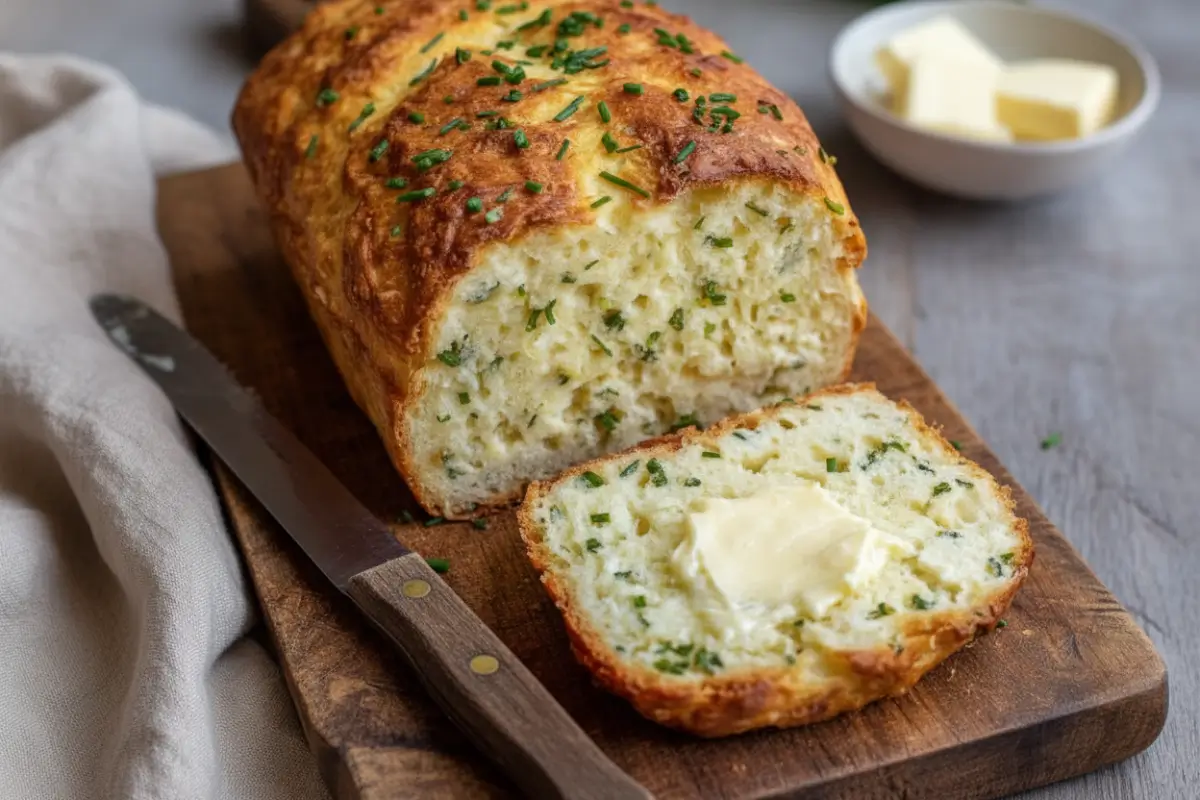
Easy Hidden Cottage Cheese: 2-Ingredient Bread
Ingredients
Equipment
Method
- Preheat your oven to 350°F and line a baking sheet with parchment paper.
- In a large bowl, stir together cottage cheese and self-rising flour until it forms a dough.
- Knead the dough briefly in the bowl until combined, then roll it out on a floured surface.
- Sprinkle shredded cheddar over the rolled dough and press down gently.
- Bake for 20-25 minutes, until golden brown and firm in the center.
- Cool for five minutes before slicing into six pieces.