
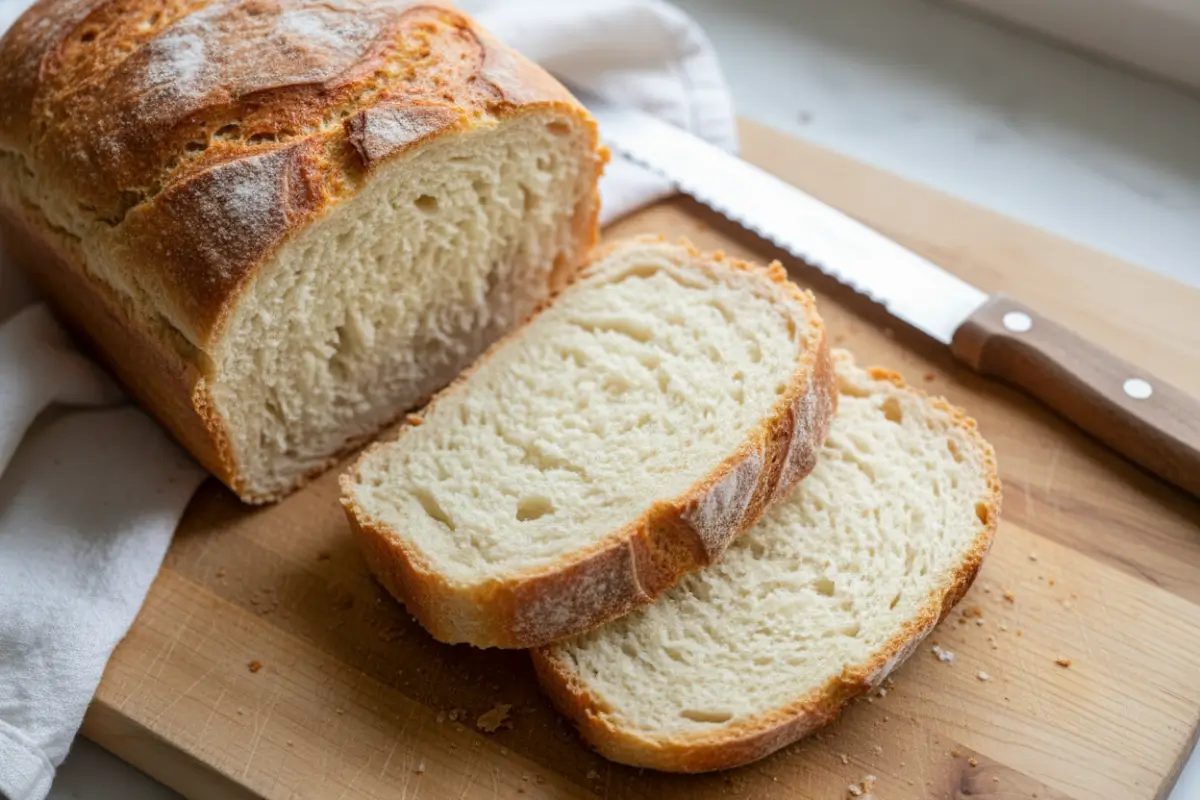
The smell hits first. Yeast waking up in warm water, that faint sweetness mixing with melted butter. Then your hands work the dough—sticky at first, then smooth as river stones. This Homemade Amish White Bread for Gut Health isn’t fancy sourdough or ancient grain. It’s the bread your great-grandmother made on Tuesday mornings, the kind that teaches your hands what “just right” feels like. Six ingredients. Two loaves. The crust crackles when you tear it, steam rising from the soft center. My Asheville kitchen stays cool most mornings, so I proof dough inside my oven with just the light on—works every time.
Why You’ll Love This Recipe
- Beginner-proof – Yeast isn’t scary when you see it foam
- Two loaves – One for now, one for French toast tomorrow
- Actual nutrition – Fermented dough feeds good gut bacteria
- Hands-on therapy – Kneading beats doomscrolling
Key Ingredients
All-purpose flour (4 cups) – Not bread flour. The lower protein content makes this tender, not chewy. You want something that slices clean for sandwiches. King Arthur or your local mill both work. The flour should smell faintly sweet, never musty.
Active dry yeast (2 tsp) – Those little granules contain living organisms that’ll double your dough. Check the expiration date. Dead yeast just sits there, sad and flat. When it foams after five minutes in warm water, you know you’re good. That’s your insurance policy.
Warm water (1½ cups at 110°F) – Too hot kills yeast. Too cold and nothing happens. No thermometer? Test on your wrist like baby formula. Should feel warm but not uncomfortable. Tap water’s fine unless yours tastes like chlorine—then use filtered.
Sugar (2 tbsp) – Feeds the yeast so it can do its job. Also gives the crust that golden-brown finish. You’re not making sweet bread here. This amount just wakes everything up.
Salt (1 tsp) – Controls fermentation and builds flavor. Without it, you’ve got library paste. Don’t skip it.
Unsalted butter (¼ cup, melted) – Adds richness and keeps the crumb soft for days. Salted butter throws off your salt measurement. Let it cool slightly before adding or you’ll cook the yeast.
Instructions
Proof the yeast. Pour warm water into a small bowl. Stir in sugar until it dissolves. Sprinkle yeast over the surface—don’t stir yet. Walk away for five minutes. When you come back, it should look like cappuccino foam, bubbly and alive. If nothing happens, your water was too hot or your yeast was dead. Start over. Really.
Mix the dough. Combine flour and salt in your largest bowl. Use your fingers to make a deep well in the center, like a volcano crater. Pour the foamy yeast mixture and melted butter into that well. Stir with a wooden spoon, pulling flour from the sides. It’ll look shaggy and rough. That’s right. When no dry flour remains, stop stirring.
Knead until smooth. Dump everything onto a floured counter. Flour your hands. Push the dough away with your palms, fold it back, turn it a quarter turn. Push, fold, turn. Again. The rhythm matters more than strength. After three minutes, it stops sticking. After eight minutes, it feels like your earlobe—soft, smooth, springs back when poked. If it’s still tacky, sprinkle more flour. If it tears easily, keep kneading.
First rise. Oil a clean bowl with any neutral oil. Place your dough ball inside, turn it once so the top’s coated. Cover with a damp kitchen towel—not plastic wrap, which traps too much moisture. Set it somewhere warm but not hot. Top of the fridge works. Inside your oven with just the light on works better. Check after an hour. Press two fingers into the dough. If the dimples stay, it’s ready. If they bounce back, give it fifteen more minutes.
Shape the loaves. Punch down the center of the dough with your fist. Feels good, right? Turn it out onto your counter. Cut it in half with a bench scraper or knife. Pat each half into a rectangle roughly the length of your bread pan. Roll it up tightly from the short end, pinching the seam closed. Tuck the ends under. Grease two 9×5-inch loaf pans with butter or oil. Place each loaf seam-side down. Cover again with that damp towel.
Second rise. Another hour in your warm spot. The dough should crown above the pan rim, looking puffy and full of air. Don’t skip this rise. It’s what makes the texture light instead of dense.
Bake. Heat your oven to 350°F while the loaves finish rising. Slide both pans onto the center rack. Set a timer for thirty minutes. Don’t open the oven. At thirty minutes, check the color—deep golden brown, not pale. Tap the top of a loaf. Sounds hollow? It’s done. Needs more color? Give it five more minutes. Turn the loaves out onto a cooling rack immediately. The bottoms should sound hollow when tapped.
Tips & Variations
Let it cool completely before slicing. I know. It’s torture. But hot bread gums up your knife and compresses into dough wads. Wait forty-five minutes minimum.
Use the windowpane test if you’re unsure about kneading. Stretch a small piece of dough between your fingers. If it forms a thin, translucent membrane without tearing, gluten’s developed. If it rips immediately, keep kneading.
Try whole wheat by replacing one cup of all-purpose with whole wheat flour. Add two tablespoons more water since whole grains absorb more liquid. The texture gets heartier, nuttier.
Make cinnamon swirl bread by sprinkling cinnamon sugar over your rectangle before rolling. Use ¼ cup sugar mixed with 1 tablespoon cinnamon per loaf.
Storage & Pairings
Keep at room temperature in a bread box or paper bag for three days. Plastic makes the crust soft. Freeze whole loaves wrapped in foil for three months—thaw at room temperature. Perfect with salted butter and jam, obviously. Also makes superior grilled cheese and the best egg-in-a-hole you’ll ever eat.
FAQ
Why didn’t my bread rise?
Water temperature’s usually the culprit. Too hot (above 120°F) kills yeast instantly. Too cold (below 100°F) and yeast stays dormant. Also check your yeast expiration date. Old yeast is dead yeast. Your rising spot needs to be draft-free and around 75-80°F.
Can I make this without a stand mixer?
Yes. This recipe’s written for hand mixing and kneading. Stand mixers actually make it harder to feel when the dough’s ready. Your hands are better tools here.
💡 Loved this recipe? Follow Us on Pinterest for more!
Conclusion
Homemade Amish White Bread for Gut Health teaches patience. The yeast needs time. Your hands need practice. But that first slice, still warm, butter melting into the crumb—that’s worth every minute of waiting. Make it this weekend.
Easy Homemade Amish White Bread for Gut Health
Ingredients
Equipment
Method
- Proof the yeast by dissolving sugar in warm water and adding yeast. Let sit for five minutes until bubbly.
- Mix flour and salt in a bowl. Add foamy yeast mixture and melted butter, then stir until no dry flour remains.
- Knead dough on a floured surface until smooth, about eight minutes.
- Place the dough in an oiled bowl, cover, and let rise until doubled, about one hour.
- Shape the loaves and place in greased loaf pans. Cover and let rise again for one hour.
- Preheat oven to 350°F. Bake for 30-35 minutes until golden brown and sounds hollow when tapped.