
The smell hits you first. That yeasty, golden warmth spreading through your kitchen around minute 25 of baking. Then the sound—that hollow thump when you tap the top of the loaf, telling you it’s done without guessing. I burned four loaves last winter before figuring out that my oven runs hot and my impatience runs hotter. This recipe changed that. Despite the 3-hour-plus timeline, you’re only actively working for about 30 minutes total. The rest? The dough does its thing while you do yours.
Here’s what nobody tells you about homemade bread: it’s not hard, it’s just particular. Temperature matters. Timing matters. But once you nail those variables, you’ve got two golden loaves with crackling crusts and pillowy insides that make store-bought taste like edible foam. This 30-minute active prep version walks you through every sensory cue—the bubbling yeast, the tacky-not-sticky dough texture, that hollow sound—so you’re not flying blind.
Why Most Homemade Bread Fails (And How This Recipe Fixes It)
Dead yeast kills everything. You proof it first in warm water with a pinch of sugar. Five minutes later, it should look like a beige cappuccino foam. No bubbles? Your yeast is dead or your water was too hot. Start over. This 5-minute insurance policy has saved me countless times.
Too much flour makes hockey pucks. The dough should slightly stick to a clean finger but pull away from the bowl sides. That’s your texture checkpoint. I add flour in half-cup increments after the initial 4 cups, watching carefully. Humidity changes everything—rainy days need less flour than dry ones.
Rushing the rise produces dense bricks. That first 90-minute rise isn’t negotiable. The dough needs to actually double. I set a timer, walk away, and resist peeking. The second 45-minute rise builds the structure that gives you those beautiful air pockets inside.
Why You’ll Love This 30-Minute Active Time Bread
- Mostly hands-off: 30 minutes of actual work spread across 3+ hours
- Two loaves: One for now, one for tomorrow’s toast
- Flexible sweetener: Honey adds subtle floral notes; sugar works perfectly if that’s what you’ve got
- Beginner-proof proofing: The yeast test eliminates guessing
- Freezer-friendly: Wrap cooled loaves tightly, freeze up to 3 months
Key Ingredients That Make the Difference
Warm water (105-115°F) activates yeast without killing it. Too cool and it won’t wake up. Too hot and you’ve murdered it. I test with my wrist—should feel like bathwater, not hot tub water. A thermometer removes doubt entirely.
Active dry yeast needs that proofing step. Don’t skip it. I’ve watched people dump dead yeast into flour and wonder why their dough never rises. Those 5-10 minutes of bubbling foam tell you everything’s working before you’ve committed the other ingredients.
Honey or sugar feeds the yeast and adds a whisper of sweetness that balances the salt. Honey makes a slightly softer crumb and keeps the bread fresher longer. Sugar gives you a more neutral flavor. I swap between them depending on what I’m serving—honey for dinner rolls, sugar for sandwich bread.
Salt isn’t optional. It controls yeast growth (so your dough doesn’t explode) and develops flavor. Two teaspoons seems like a lot, but spread across 24 servings, it’s what makes this taste like bread instead of bland dough.
Oil creates tenderness. Canola or vegetable oil keeps the crumb soft without adding flavor. I’ve used melted butter when I want richer bread, but the neutral oil lets the wheat flavor shine.
All-purpose or bread flour both work. Bread flour has more protein, giving you chewier texture and higher rise. All-purpose makes slightly softer loaves. I keep both around and honestly can’t tell much difference in this recipe. Start with 4 cups, add the fifth gradually.
How to Make Perfect Homemade Bread in 30 Minutes of Work
Proof the yeast. Mix warm water, yeast, and a pinch of your sweetener in your bowl. Walk away. Come back in 5 minutes to a foamy, slightly pungent mixture that looks alive. That’s exactly what you want.
Add the remaining honey or sugar, salt, oil, and 3 cups of flour. Mix until it looks shaggy and rough. Add another cup, mix again. Now switch to the dough hook if you’re using a stand mixer, or flour your counter if you’re going hands-on.
Add flour slowly. Half a cup at a time, mixing between additions. You’re watching for the dough to pull away from the bowl sides but still feel slightly tacky. Press a clean finger into it—should stick a little but not coat your finger. This happens somewhere between 4.5 and 5.5 cups depending on your flour and the weather.
Knead for 5 minutes. The mixer does this easily on medium speed. By hand, push the dough away with your palms, fold it back, turn it a quarter, repeat. You’re developing gluten structure. The dough should transform from rough to smooth and elastic. Really.
First rise: 90 minutes. Oil a large bowl, drop the dough in, turn it to coat all sides. Cover with a damp towel or plastic wrap. Put it somewhere warmish—I use my turned-off oven with the light on. Set a timer and forget about it. It should double in size. You’ll know because it looks puffy and when you poke it, the indent stays.
Shape the loaves. Punch down the dough—literally punch it to deflate all those bubbles. Divide into two equal pieces. Shape each into a log about 9 inches long. I do this by flattening each piece into a rectangle, then rolling it up tightly from the short end, pinching the seam closed.
Place seam-side down in greased 9×5-inch loaf pans. I spray every surface of those pans like my life depends on it. A parchment paper strip on the bottom is insurance against sticking.
Second rise: 45-60 minutes. Cover the pans loosely with a towel or greased plastic wrap. The dough should rise about an inch above the pan rim. This rise builds the final structure. Don’t rush it.
Bake at 350°F for 30-33 minutes. The tops should be deep golden brown. That hollow sound when you tap the top? That’s done. An instant-read thermometer should hit 190°F in the center, but the tap test works perfectly.
Cool on a rack. Turn the loaves out immediately—they’ll steam and get soggy if you leave them in the pans. Brush the tops with butter while they’re hot for that glossy, soft crust. Wait at least 10 minutes before slicing. I know it’s torture.
Common Mistakes and Quick Fixes
Mistake: Dense, heavy bread. Fix: Your yeast was old or your water was too hot. Always proof first and use a thermometer.
Mistake: Dough won’t rise. Fix: Your environment is too cold. Try the oven-with-light-on trick or put the bowl near (not on) a heating vent.
Mistake: Gummy texture inside. Fix: You underbaked it. That hollow sound is your friend. When in doubt, bake 2 more minutes.
Mistake: Loaves spread sideways instead of rising up. Fix: Too much liquid or not enough kneading. Make sure your dough pulls away from the bowl and knead the full 5 minutes.
Storage That Keeps Bread Fresh
Room temperature in a plastic bag or airtight container: 2-3 days. The crust softens but the inside stays good. Refrigerator storage: up to 5 days, though the texture gets slightly firmer. Freezer: wrap cooled loaves in plastic wrap, then foil. Freeze up to 3 months. Thaw on the counter for 2 hours.
What to Serve With Fresh Bread
Salted butter and honey for breakfast toast. Olive oil and balsamic for dinner dipping. Use it for French toast, bread pudding, or the world’s best grilled cheese. Day-old bread makes superior croutons—cube it, toss with olive oil and garlic, bake at 375°F until golden.
Four Ways to Change It Up
Whole wheat version: Replace 2 cups all-purpose flour with whole wheat. Add 2 extra tablespoons water. The texture gets nuttier and denser.
Herb bread: Mix in 2 tablespoons dried Italian herbs and 3 minced garlic cloves with the first flour addition. Incredible with pasta.
Cinnamon swirl: After first rise, roll each portion into a rectangle. Brush with melted butter, sprinkle with cinnamon sugar, roll up tightly. Perfect for toast.
Dinner rolls: After first rise, divide into 24 pieces instead of 2 loaves. Shape into balls, place in greased 9×13 pan. Second rise 30 minutes, bake 18-20 minutes.
Can I use instant yeast instead of active dry?
Yes. Use the same amount but skip the proofing step. Mix it directly with the dry ingredients. You’ll lose that insurance check that your yeast is alive, but it works fine if your yeast is fresh.
Why is my bread pale on top?
Your oven temperature is too low or you pulled it early. Use an oven thermometer to verify 350°F. Brush with an egg wash (1 beaten egg) before baking for deeper color.
Can I make this without a stand mixer?
Absolutely. Mix ingredients in a large bowl with a wooden spoon, then knead by hand on a floured counter for 8 minutes. Your arms will know you did it, but the bread turns out identical.
The Loaves You’ll Actually Finish
You know that moment when you slice into homemade bread and it’s actually better than the fancy bakery version? That’s this recipe. The 30 minutes of hands-on work spreads across an afternoon, leaving you free to do other things while the yeast does the heavy lifting. My Asheville kitchen has seen dozens of these loaves—some perfect, some learning experiences, all of them gone within two days. That hollow thump when you tap the crust? That’s your signal that you’ve nailed it. Make two loaves. You’ll need them both.
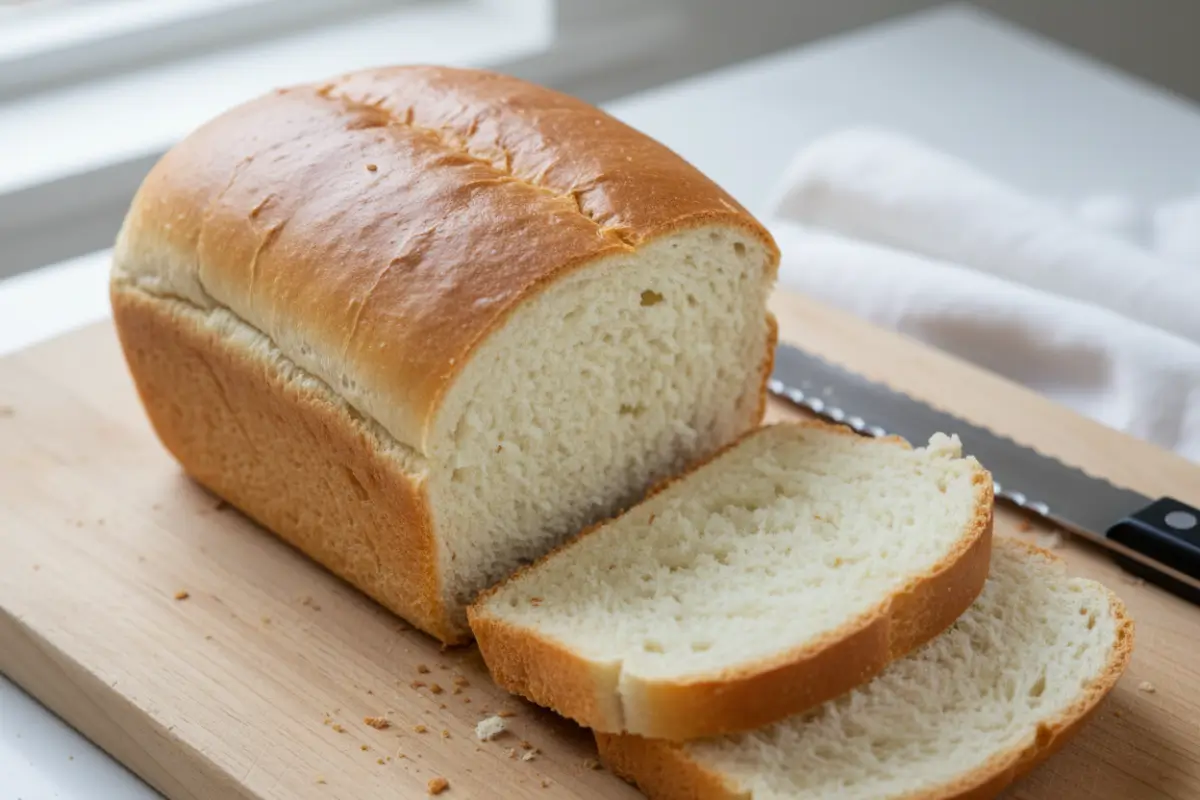
Easy Homemade Bread
Ingredients
Equipment
Method
- Proof the yeast in warm water with honey or sugar for 5 minutes.
- Add remaining ingredients and mix until shaggy.
- Knead the dough for 5 minutes until smooth and elastic.
- Let rise in a warm place for 90 minutes until doubled in size.
- Shape the loaves and place in greased pans.
- Let rise for another 45-60 minutes until puffed up.
- Bake at 350°F for 30-33 minutes until golden brown.
- Cool on a rack before slicing.