
There’s something about pulling a golden loaf from your oven on a cold afternoon that makes the whole house feel right. The Homemade Sandwich Bread for Cozy Winter Meals fills your kitchen with that yeasty, warm smell that no candle can fake. This recipe makes two perfect loaves—one for now, one for toast tomorrow morning. The crust crackles when you press it. The inside pulls apart in soft, pillowy layers. You’ll never look at store-bought the same way.
Why You’ll Love This Bread
- Makes two loaves so you’re set for the week
- Foolproof rise method cuts waiting time in half
- Tender crumb that doesn’t fall apart when you spread peanut butter
- Costs about $2 total versus $6 for two bakery loaves
Key Ingredients That Make It Work
Warm water is your foundation here. Not hot—that kills yeast. Not cold—that makes it sluggish. Think baby bottle temperature, around 110°F. If you don’t have a thermometer, it should feel warm on your wrist but not uncomfortable.
Instant yeast goes straight into the dough without proofing. It’s more reliable than active dry and doesn’t need that extra step. Keep it in your freezer and it’ll last months. The two teaspoons might seem modest, but combined with the warm oven trick, you’ll get a beautiful rise.
Honey does double duty. It feeds the yeast and adds a subtle sweetness that makes this bread perfect for both turkey sandwiches and morning toast with jam. Don’t substitute sugar—honey keeps the crumb softer longer.
Melted butter creates that tender texture. Let it cool slightly before adding so it doesn’t cook the yeast. The fat coats flour proteins, which means softer bread that stays fresh for days.
All-purpose flour is all you need. No bread flour required. Start with five and a half cups, then add more as you knead. Different humidity levels mean different absorption rates. Your dough will tell you what it needs.
Salt might seem like an afterthought, but it controls yeast activity and builds flavor. Mix it with the water first so it dissolves completely.
How to Make Perfect Sandwich Bread
Combine your wet ingredients. Pour warm water into your stand mixer bowl or a large mixing bowl. Add salt, honey, and melted butter. Stir until the salt starts dissolving—you’ll see it become less grainy. This takes about thirty seconds.
Build your dough base. Add four cups of flour and mix until combined. It’ll look shaggy and rough. Now sprinkle the yeast over the top and stir it in. This method protects the yeast from direct contact with salt, which can slow it down.
Add remaining flour gradually. Pour in another cup and a half of flour. Mix until a soft dough forms that pulls away from the bowl sides. It should look loose and slightly sticky but not wet. Keep that last cup of flour nearby—you’ll need it for kneading.
Knead until smooth. Dump the dough onto a floured counter. If you’re using a stand mixer, attach the dough hook and knead on medium for six to eight minutes. By hand, push the dough away with your palms, fold it back, turn it a quarter turn. Repeat. Add flour from your reserved cup whenever it sticks to the counter or your hands. You want smooth and elastic, which takes eight to ten minutes by hand or five to six in the mixer. The dough should bounce back when you poke it.
Create a warm rise environment. Here’s the trick that cuts your rise time: warm your oven to 100°F, then turn it off. This gives you a draft-free spot that’s perfect for yeast. Place your dough in a bowl, cover it loosely, and set it in the warm oven. In my Asheville kitchen, I skip this in July but rely on it November through March.
Watch for the double. Check every twenty minutes. You’re looking for the dough to double in size—it should fill the bowl and feel puffy when you touch it. This usually takes forty-five minutes to an hour in the warm oven versus two hours on the counter.
Shape your loaves. Grease two 9×5-inch loaf pans with cooking spray or butter. Turn the dough onto a floured surface and divide it in half. Pat each piece into a rectangle about eight inches wide. Roll it up tightly from the short end, pinch the seam, and tuck the ends under. Place seam-side down in your pans.
Second rise. Put the pans back in the warm oven. You’re waiting for the dough to rise just over the pan rims—a gentle dome that looks ready to bake. This takes thirty to forty minutes. Don’t let it go too far or it’ll collapse in the oven.
Bake until golden. Remove the pans and preheat your oven to 350°F. Once it’s hot, bake for thirty minutes. The tops should be deep golden brown. If you have an instant-read thermometer, the internal temperature should hit 180°F. Tap the bottom of a loaf—it should sound hollow.
Finish with butter. Rub a pat of butter over the hot tops if you want a soft, glossy crust. Let the loaves cool in the pans for five minutes, then turn them onto a wire rack. Wait at least thirty minutes before slicing. I know it’s hard.
Tips and Variations
Don’t rush the knead. Underkneaded dough makes dense, crumbly bread. Your arms might get tired, but keep going until it’s smooth and springs back. Really.
Check your yeast freshness. If your dough doesn’t rise, your yeast might be dead. Test it by mixing a teaspoon with warm water and a pinch of sugar. It should foam within five minutes.
Add mix-ins after the first knead. Fold in herbs, cheese, or dried fruit once your dough is smooth. Knead just enough to distribute them evenly.
Try whole wheat. Replace up to two cups of all-purpose flour with whole wheat. Add an extra tablespoon of water since whole wheat absorbs more liquid.
Make it sweeter. Increase honey to one-third cup and add a teaspoon of cinnamon for a breakfast bread that’s perfect with butter and coffee.
Storage and Serving
Keep bread wrapped in plastic at room temperature for four days. Slice only what you need—the cut end dries out faster. Freeze the second loaf wrapped tightly in plastic then foil for up to three months. Thaw overnight on the counter.
The Homemade Sandwich Bread for Cozy Winter Meals pairs perfectly with thick vegetable soup, makes incredible grilled cheese, and toasts up beautifully for breakfast. Try it with apple butter or use it for French toast on Sunday morning.
Frequently Asked Questions
Can I make this without a stand mixer?
Absolutely. Mix everything in a large bowl with a wooden spoon, then knead by hand on the counter. It takes a few extra minutes but works perfectly. Your forearms will feel it the next day.
Why did my bread turn out dense?
Usually this means the dough didn’t rise enough or you added too much flour. Make sure your yeast is fresh and your oven warm spot is actually warm. The dough should feel soft and slightly tacky, not stiff.
Your New Go-To Loaf
The Homemade Sandwich Bread for Cozy Winter Meals becomes easier every time you make it. You’ll learn how the dough should feel, when it’s risen enough, what golden brown really looks like. Two loaves mean you’re set for school lunches, weekend toast, and that late-night peanut butter craving. Make it this weekend.
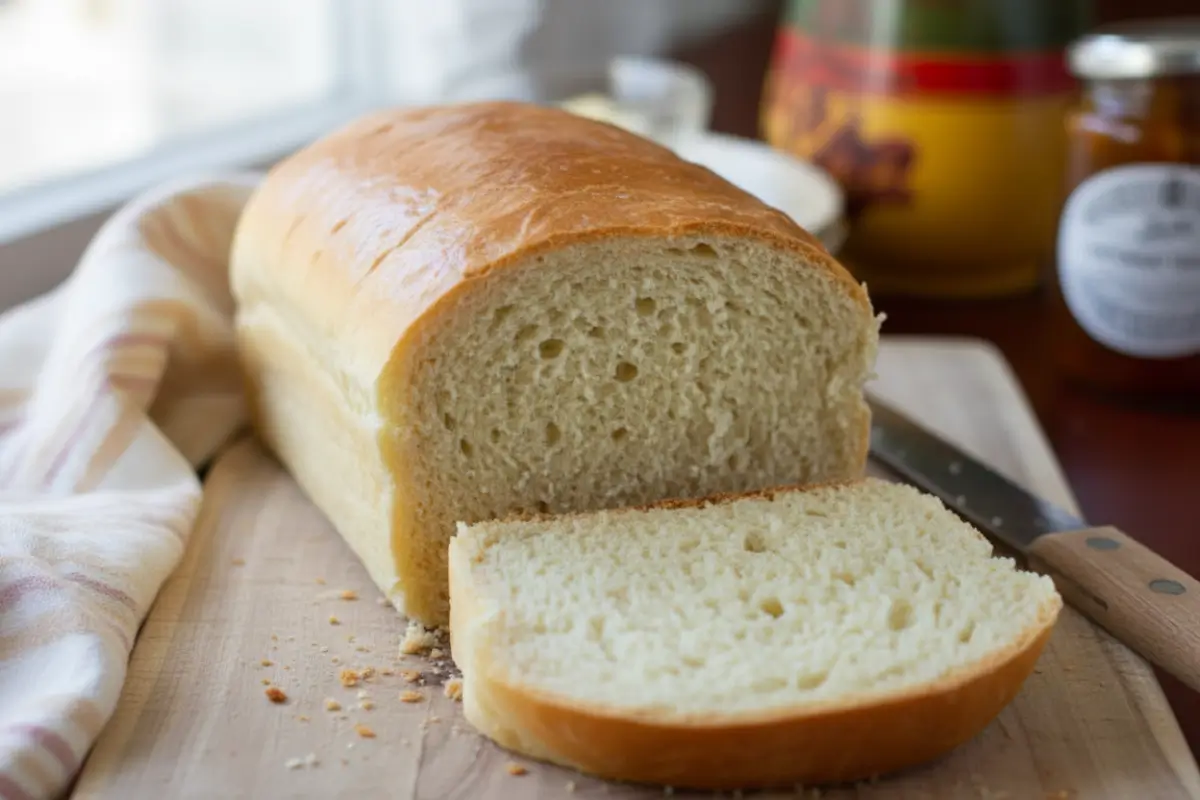
Perfect Homemade Sandwich Bread for Cozy Meals
Ingredients
Equipment
Method
- Combine warm water, salt, honey, and melted butter in a mixing bowl.
- Add four cups of flour and stir until combined.
- Sprinkle yeast over the dough and stir it in gently.
- Gradually add remaining flour until a soft dough forms.
- Knead the dough until smooth and elastic.
- Place the dough in a warm environment to rise until doubled in size.
- Shape the dough into loaves and place in greased pans.
- Allow the loaves to rise again until just over the rim of the pans.
- Preheat oven to 350°F and bake until golden brown.
- Cool the loaves before slicing.