
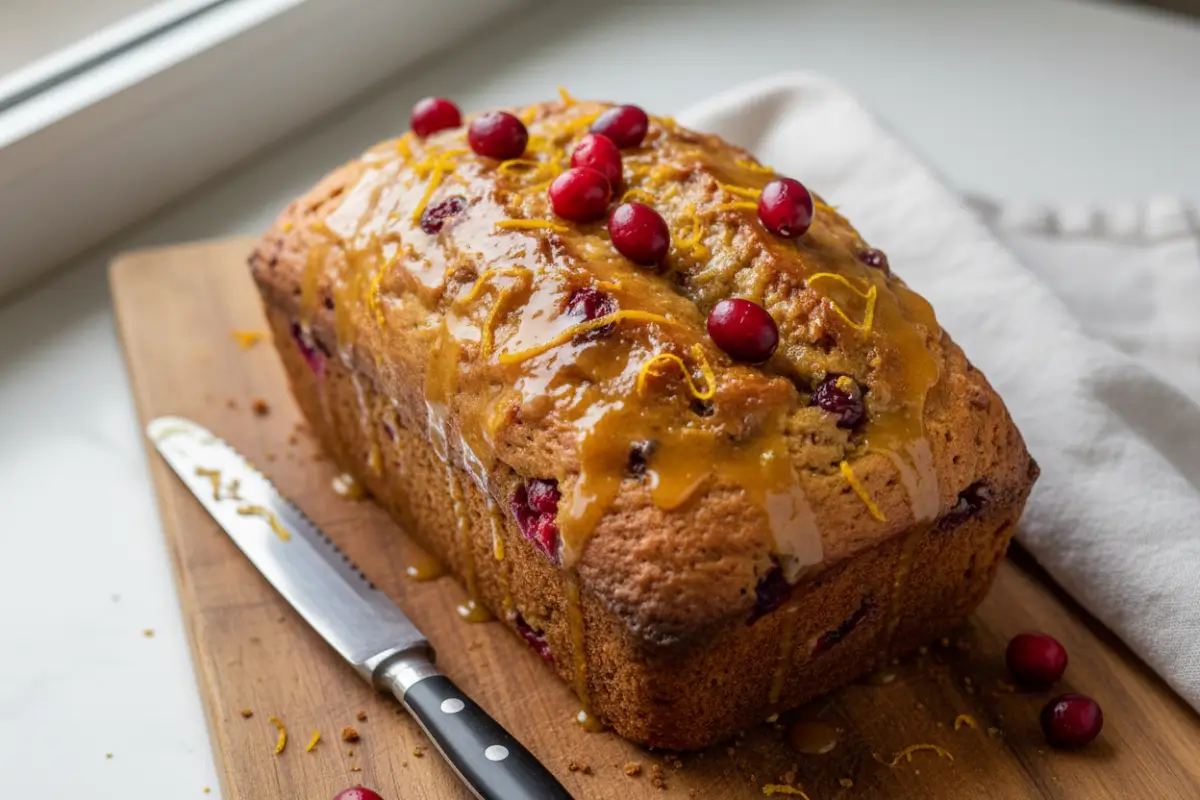
This hour easy cranberry orange bread delivers exactly what you need: a foolproof recipe that actually works. No finicky techniques. No mystery ingredients. Just bright citrus, tart cranberries, and a tender crumb that slices beautifully every single time. I’ve made this dozens of times in my Asheville kitchen, and it’s never let me down—not for holiday brunches, not for last-minute gifts, not even when I’ve used frozen cranberries straight from the bag. The orange zest blooms in your kitchen while it bakes, and that simple glaze? It sets perfectly without getting sticky or running everywhere. This is the kind of recipe you’ll keep coming back to because it just works.
Why You’ll Love This
Genuinely easy. One bowl, basic mixing, no mixer required.
Flexible timing. Bakes while you clean up or prep something else.
Forgiving recipe. Fresh or frozen cranberries, salted or unsalted butter—it all works.
Beautiful results. That glossy glaze looks bakery-level without any fuss.
Key Ingredients
All-purpose flour forms the structure here. Don’t overthink it—regular grocery store flour works perfectly. The rubbed-in butter method keeps the crumb tender without needing cake flour.
Cold butter is essential. You’ll rub it into the flour with your fingertips until it looks like cornmeal. This creates tiny pockets that make the bread tender but sturdy enough to hold all those cranberries. Salted or unsalted both work—I use whatever’s in my fridge.
Fresh orange zest and juice provide the citrus backbone. One large orange gives you both the zest and most of the juice you need. The zest has all those aromatic oils that make your kitchen smell incredible. Don’t skip it. If your orange doesn’t yield quite 3/4 cup juice, just top it off with water.
Cranberries—fresh or frozen—both work beautifully. I actually prefer frozen because they don’t burst as easily during mixing. Whole cranberries give you dramatic pops of tartness. Chopped ones distribute more evenly. Your call. If using frozen, don’t thaw them. Dust with a tiny bit of flour to prevent sinking.
Baking powder and baking soda work together here. The soda reacts with the acidic orange juice for lift. The powder provides extra rise. Both matter.
The glaze is just confectioners’ sugar, orange juice, and optional zest. It sets firm enough to slice through cleanly but stays slightly soft on top. That’s exactly what you want.
Instructions
Preheat your oven to 350°F with the rack in the center position. Grease a 9×5-inch loaf pan thoroughly—I use butter or non-stick spray. Set it aside.
Whisk together the dry ingredients in your largest mixing bowl: flour, sugar, baking powder, baking soda, and salt. Get it evenly mixed.
Cut the cold butter into four pieces and drop them into the flour mixture. Now use your fingertips to rub the butter into the flour. Smash and rub, smash and rub. You’re breaking up the butter while coating it with flour. Keep going until the whole mixture looks like cornmeal—evenly crumbly with no large butter chunks. This takes about two minutes. Your hands warm the butter slightly, which is fine. Just work quickly.
Zest your orange directly into a 2-cup measuring cup, then juice the orange into the same cup. You need 3/4 cup total liquid, so add water to reach that mark if needed. Crack your egg into a small bowl, beat it well with a fork until no streaks remain, then add it to the orange juice mixture. Stir to combine.
Pour the wet ingredients into the dry ingredients all at once. Using a wooden spoon, stir just until all the flour is dampened. The batter will be thick and slightly lumpy. That’s correct. Don’t overmix or you’ll get tough bread.
Fold in the cranberries gently. If using frozen, toss them with about a teaspoon of flour first—this helps prevent sinking. Whole cranberries stay intact better. Chopped ones (halved or quartered) distribute more evenly and are easier to slice through later.
Scrape the batter into your prepared pan and spread it evenly. The batter is thick, so use your spoon to push it into the corners.
Bake for about 60 minutes. Start checking at 55 minutes. A wooden skewer or toothpick inserted in the center should come out clean or with just a few moist crumbs. If using frozen cranberries, you might need 5-10 extra minutes. Dark pans bake faster than light ones, so watch closely after 50 minutes if yours is dark. The top should be golden and spring back lightly when touched.
Cool in the pan for 10 minutes. This lets the structure set. Then run a thin knife around the edges and turn the loaf out onto a wire rack. Let it cool completely before glazing—this takes about an hour. Warm bread makes the glaze melt and run off.
Make the glaze by stirring together confectioners’ sugar, orange juice (or water), and optional zest until smooth. It should be thick but pourable—like heavy cream. Place waxed paper or paper towels under your cooling rack to catch drips. Spoon the glaze over the top of the cooled loaf, letting it drip down the sides naturally. Let it set for 30 minutes before slicing.
Tips & Variations
Don’t overmix the batter. Stir just until the flour disappears. Lumps are fine. Overmixing develops gluten, which makes the bread tough.
Use a light-colored metal pan if possible. Dark pans absorb more heat and can overbake the edges before the center is done. If you only have a dark pan, reduce the oven temperature to 325°F and add 5-10 minutes to the baking time.
Let it cool completely before glazing. Really. I know it’s tempting, but warm bread makes runny glaze. Wait the full hour.
Add 1/2 cup chopped walnuts or pecans for crunch. Fold them in with the cranberries.
Make it a lemon version by swapping lemon zest and juice for the orange. Use the same measurements.
Storage & Pairings
Wrap the glazed, cooled loaf tightly in plastic wrap. It keeps at room temperature for 3 days, refrigerated for a week, or frozen (unglazed) for 3 months. Thaw overnight in the fridge, then glaze.
Serve with softened butter, cream cheese, or plain. It’s perfect with morning coffee or afternoon tea.
FAQ
Can I make this without the glaze?
Yes. The bread is delicious plain or with just a dusting of confectioners’ sugar. The glaze adds sweetness and looks pretty, but it’s optional.
Why is my bread sinking in the middle?
Usually from opening the oven door too early or underbaking. Don’t peek before 50 minutes, and make sure the center tests clean with a skewer. A slight dome that settles is normal.
💡 Loved this recipe? Follow Us on Pinterest for more!
Conclusion
This hour easy cranberry orange bread proves that reliable baking doesn’t need to be complicated. Mix, bake, glaze, done. It works every time, looks beautiful, and tastes like you spent way more effort than you did. Make it once, and it’ll become your go-to.
Easy Hour Cranberry Orange Bread
Ingredients
Equipment
Method
- Preheat the oven to 350°F and grease a loaf pan.
- Whisk together the dry ingredients in a mixing bowl.
- Rub in cold butter until mixture resembles cornmeal.
- Zest and juice the orange, and add to the mixture along with the beaten egg.
- Fold in the cranberries gently.
- Scrape batter into the prepared pan and bake for about 60 minutes, checking at 55 minutes.
- Cool the bread in the pan for 10 minutes before transferring to a wire rack.
- Prepare the glaze by mixing confectioners’ sugar and orange juice, then glaze the bread.