
These Japanese soufflé pancakes are impossibly fluffy, pillowy clouds that practically melt on your tongue with a texture somewhere between a pancake and angel food cake. Each bite is airy and delicate, with just enough structure to hold maple syrup without collapsing into a soggy mess. The three biggest problems home cooks face are deflated pancakes that collapse right after cooking, flat dense pancakes instead of tall fluffy ones, and struggling to get height without ring molds. Beat your egg whites to stiff peaks where the tip stands straight up (loose meringue = flat pancakes), cook low and slow at 300°F with steam to cook the center through (undercooked pancakes collapse immediately), and stack your batter vertically in tall mounds rather than spreading it wide (no molds needed).
Prep: 15 mins | Cook: 15 mins | Total: 30 mins | Serves: 3 pancakes (1-2 people) | Difficulty: Medium
Why You’ll Love This Recipe
- Restaurant-quality at home: Recreate the viral Japanese café experience without the $15 price tag
- No ring molds required: Stack the batter high and it holds its shape perfectly
- Lighter than regular pancakes: Whipped egg whites create an airy texture that won’t weigh you down
- Special occasion worthy: Perfect for birthdays, Mother’s Day, or weekend brunch
- Customizable toppings: Works with everything from maple syrup to matcha cream
Quick Tips for Success
- Freeze egg whites for 15 minutes before whipping—this helps create more stable, voluminous meringue
- Preheat your pan for at least 10 minutes on low heat before adding batter—cold pans cause spreading
- Add water twice during cooking to create steam that cooks the center without burning the outside
Ingredient Notes
- 2 large eggs, separated: Room temperature eggs separate more easily; save yolks in one bowl, whites in another
- ¼ cup (35g) cake flour: Creates lighter, more tender pancakes than all-purpose flour
- ½ teaspoon baking powder: Provides extra lift along with the meringue
- 2 tablespoons granulated sugar: Stabilizes meringue and adds subtle sweetness
- 1½ tablespoons whole milk: Adds moisture without thinning batter too much
- 1 teaspoon lemon juice: Acid stabilizes egg whites for stronger meringue; can substitute cream of tartar
- ½ tablespoon cornstarch: Helps meringue hold its structure and prevents weeping
- ¼ teaspoon vanilla extract: Optional but adds warmth to the flavor
- Pinch of salt: Enhances overall flavor
- Neutral oil for pan: Canola or vegetable oil works; avoid olive oil’s strong flavor
- 2 tablespoons water: For creating steam during cooking
Easy Substitutions
- Instead of cake flour: For every ¼ cup all-purpose flour, remove 2 teaspoons and replace with 2 teaspoons cornstarch; sift 3-5 times
- Dairy-free option: Use almond or oat milk in place of whole milk
- Sugar-free: Replace with monk fruit sweetener (may affect meringue stability slightly)
- Matcha version: Add 1 teaspoon matcha powder to the flour for green tea flavor
Step-by-Step Instructions
Step 1: Freeze Egg Whites and Prep Ingredients
Separate 2 eggs into whites and yolks in two separate bowls. Place the bowl with egg whites in the freezer for exactly 15 minutes—this creates more stable meringue. Meanwhile, sift together cake flour, baking powder, and salt. Apply a thin layer of oil to your nonstick pan and start preheating it on the absolute lowest heat setting. The pan needs 10-15 minutes to preheat evenly to 300°F.
Step 2: Make the Egg Yolk Mixture
In the bowl with egg yolks, add milk and vanilla extract. Whisk vigorously with a hand whisk for about 1 minute until thick, frothy, and pale yellow. Sift the flour mixture over the yolks and gently whisk just until no dry flour remains—don’t overmix or you’ll develop gluten. Set this mixture aside while you make the meringue.
Pro Tip: Preparing the egg yolk mixture first means you can focus entirely on the meringue timing without rushing. The yolk mixture can sit for 10-15 minutes without any issues.
Step 3: Whip the Meringue to Stiff Peaks
Remove egg whites from freezer—they should be partially frozen around the edges. Add lemon juice and beat with a hand mixer on medium speed until frothy and opaque like soap bubbles. Gradually add sugar one tablespoon at a time, increasing to high speed. Continue beating for 2-3 minutes until you reach stiff peaks—when you lift the whisk, the meringue should stand straight up with just the very tip folding over slightly. Add cornstarch and beat for 10 more seconds to incorporate.
Pro Tip: The meringue is the soul of soufflé pancakes. Underbeat it and your pancakes will be flat; overbeat it and they’ll collapse after cooking. Stiff peaks mean the meringue is glossy, holds its shape firmly, and has a slight fold-over at the very tip—not straight like overbeaten peaks, not floppy like soft peaks.
Step 4: Fold Meringue into Batter
Add egg yolks to the bowl with meringue (easier than the reverse). Using a rubber spatula, gently fold together using a slicing motion—cut through the center with the spatula, scrape the bottom, and lift up and over. Rotate bowl 90 degrees and repeat about 15-20 times until yolks are 50% incorporated. Add the sifted flour mixture and continue the same gentle folding motion until you don’t see dry flour. Finally, drizzle in the milk and fold just until evenly blended and no streaks remain. Transfer immediately to a piping bag or use an ice cream scoop—don’t let batter sit or it deflates.
Step 5: Cook the First Side with Steam
Check that your pan is at 300°F on low heat. Pipe or scoop a tall mound of batter for the first pancake, stacking it high vertically rather than spreading wide. Add two more pancakes the same way (you’ll use about half the batter for this first layer). Add 1 tablespoon water to empty spaces in the pan and immediately cover with a lid. Cook undisturbed for 3 minutes, then quickly lift lid and add one more tall scoop of batter on top of each pancake. Add more water if evaporated, cover again, and cook 4 more minutes. The bottoms should be golden brown and the sides should feel dry (not sticky) when gently touched.
Step 6: Flip Gently and Finish Cooking
Use an offset spatula or thin turner to gently pull one edge of a pancake—if it’s stuck, wait another minute. When ready, use a rolling motion (not a quick flip) to turn the pancake over onto its second side. Repeat with remaining pancakes. Add another tablespoon of water to the pan and cover. Cook 4-5 more minutes until the second side is golden and the sides feel dry and slightly bouncy when touched. Transfer immediately to plates and serve while hot—these deflate as they cool, just like soufflés.
Common Mistakes (And How to Fix Them)
- Pancakes collapsed after cooking: Most likely undercook inside or meringue wasn’t stiff enough. The structure needs to be fully set before removing from heat—touch the sides to ensure they’re dry and bouncy, not sticky. Next time, cook an extra 2-3 minutes and verify internal doneness.
- Flat, dense pancakes instead of tall fluffy ones: Your meringue was too loose (not beaten to stiff peaks), you overmixed when folding, or your pan wasn’t preheated enough. Loose batter spreads instead of staying tall. Make sure meringue tips stand straight up and preheat pan for full 10-15 minutes.
- Pancakes deflated during flipping: Flipped too early before the structure set. Wait until the bottom edges feel completely dry when gently touched, not tacky or sticky. Use a rolling motion rather than a harsh flip.
Storage & Reheating
- Best fresh: These pancakes taste best served immediately while warm; they deflate significantly as they cool
- Fridge: Store leftovers in an airtight container up to 2 days; they’ll be denser but still tasty
- Not freezer-friendly: The delicate texture doesn’t survive freezing and thawing
- Reheating: Microwave for 20-30 seconds or warm in a 300°F oven for 5 minutes (they won’t regain original fluffiness)
Delicious Variations to Try
- Matcha soufflé pancakes: Add 1 teaspoon matcha powder to the flour for Japanese green tea flavor
- Chocolate version: Fold 2 tablespoons cocoa powder into the flour and top with chocolate sauce
- Lemon ricotta: Add ½ teaspoon lemon zest and 2 tablespoons ricotta to egg yolk mixture
- Strawberry shortcake style: Layer with whipped cream and fresh strawberries between pancakes
What to Serve With This
- Whipped cream and fresh berries: Classic combination that adds richness without heaviness
- Maple syrup and butter: Traditional pancake toppings work beautifully
- Matcha latte or hojicha: Japanese tea drinks complement the delicate flavor
- Fresh fruit compote: Warm berry or peach compote adds fruity sweetness
Serving Suggestions
- Dust with powdered sugar immediately before serving for a café presentation
- Serve one pancake per person for a light breakfast, or share three pancakes between two people
For more recipes, follow me on Pinterest.
FAQ
Can I make this ahead of time?
Unfortunately no—the batter deflates quickly after mixing and the cooked pancakes deflate as they cool. These are best made fresh and eaten immediately while warm.
How long does this last in the fridge?
Leftover pancakes keep up to 2 days refrigerated but will lose their signature fluffy texture and become denser. They’re still tasty, just not as ethereal as fresh ones.
Can I freeze this recipe?
Not recommended—the delicate meringue structure doesn’t survive freezing and thawing. The pancakes become dense and watery when thawed.
What can I substitute for cake flour?
Make homemade cake flour by removing 2 teaspoons from ¼ cup all-purpose flour and replacing with 2 teaspoons cornstarch. Sift together 3-5 times to aerate.
Do I need ring molds?
No—the batter is thick enough to hold its shape when stacked vertically in tall mounds. Ring molds create slightly chewier texture anyway.
Can I double this recipe?
Mix and cook only one batch at a time, even when doubling. The batter deflates if left sitting while you cook the first batch. Use two pans simultaneously or an electric griddle to cook multiple batches.
Why did my egg whites not whip properly?
Any trace of fat, oil, egg yolk, or water prevents egg whites from whipping. Make sure your bowl and beaters are completely clean and dry, and that no yolk got into the whites during separation.
What’s the best way to reheat these?
Microwave for 20-30 seconds or warm in a 300°F oven for 5 minutes. They won’t regain their original height but will taste good.
Conclusion
These fluffy Japanese soufflé pancakes bring the magic of Japanese cafés into your kitchen with proper technique—stiff meringue, low-and-slow cooking with steam, and immediate serving while hot. The result is a dreamy, cloud-like breakfast that’s worth every careful fold and patient flip.
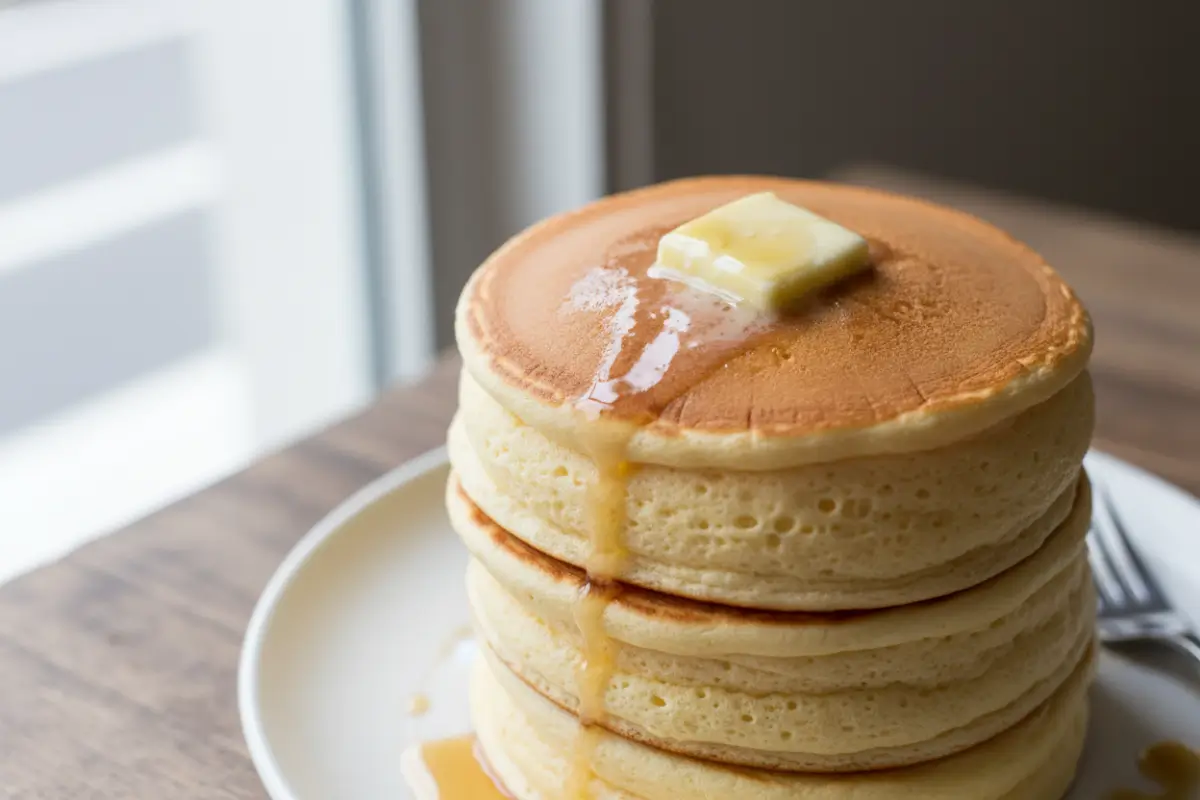

Fluffy Japanese Soufflé Pancakes in 30 Minutes
Ingredients
Equipment
Method
- Separate 2 eggs into whites and yolks in two separate bowls. Place the bowl with egg whites in the freezer for exactly 15 minutes—this creates more stable meringue. Meanwhile, sift together cake flour, baking powder, and salt. Apply a thin layer of oil to your nonstick pan and start preheating it on the absolute lowest heat setting. The pan needs 10-15 minutes to preheat evenly to 300°F.
- In the bowl with egg yolks, add milk and vanilla extract. Whisk vigorously with a hand whisk for about 1 minute until thick, frothy, and pale yellow. Sift the flour mixture over the yolks and gently whisk just until no dry flour remains—don’t overmix or you’ll develop gluten. Set this mixture aside while you make the meringue.
- Remove egg whites from freezer—they should be partially frozen around the edges. Add lemon juice and beat with a hand mixer on medium speed until frothy and opaque like soap bubbles. Gradually add sugar one tablespoon at a time, increasing to high speed. Continue beating for 2-3 minutes until you reach stiff peaks—when you lift the whisk, the meringue should stand straight up with just the very tip folding over slightly. Add cornstarch and beat for 10 more seconds to incorporate.
- Add egg yolks to the bowl with meringue. Using a rubber spatula, gently fold together using a slicing motion—cut through the center with the spatula, scrape the bottom, and lift up and over. Rotate bowl 90 degrees and repeat about 15-20 times until yolks are 50% incorporated. Add the sifted flour mixture and continue the same gentle folding motion until you don’t see dry flour. Finally, drizzle in the milk and fold just until evenly blended and no streaks remain. Transfer immediately to a piping bag or use an ice cream scoop—don’t let batter sit or it deflates.
- Check that your pan is at 300°F on low heat. Pipe or scoop a tall mound of batter for the first pancake, stacking it high vertically rather than spreading wide. Add two more pancakes the same way (you’ll use about half the batter for this first layer). Add 1 tablespoon water to empty spaces in the pan and immediately cover with a lid. Cook undisturbed for 3 minutes, then quickly lift lid and add one more tall scoop of batter on top of each pancake. Add more water if evaporated, cover again, and cook 4 more minutes. The bottoms should be golden brown and the sides should feel dry (not sticky) when gently touched.
- Use an offset spatula or thin turner to gently pull one edge of a pancake—if it’s stuck, wait another minute. When ready, use a rolling motion (not a quick flip) to turn the pancake over onto its second side. Repeat with remaining pancakes. Add another tablespoon of water to the pan and cover. Cook 4-5 more minutes until the second side is golden and the sides feel dry and slightly bouncy when touched. Transfer immediately to plates and serve while hot—these deflate as they cool, just like soufflés.