
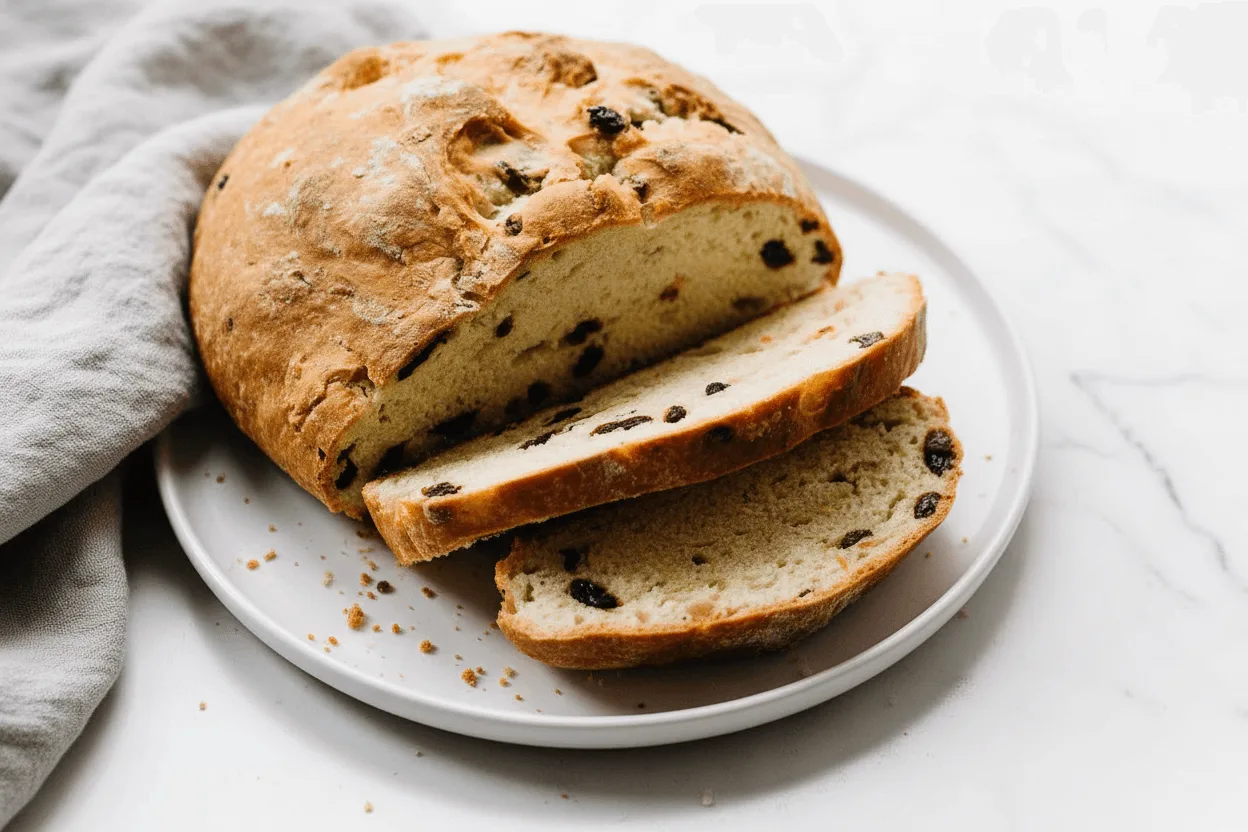
This rustic, moist Irish soda bread has a crackly golden crust, a tender crumb, and it comes together without a single packet of yeast — just a bowl, your hands, and about an hour of your day.
⚡ Quick Stats: Prep: ~10 mins | Cook: 45–55 mins | Total: ~1 hr | Difficulty: Medium | Season: Spring (and honestly, every season)
From My Kitchen
Every March, my kitchen in the mountains of Asheville starts to smell like something good is coming. The mornings are still cool enough to want the oven on, and there’s this particular stretch of days right before spring really settles in where all I want is a thick slice of warm bread with a little too much butter on it.
That’s where this moist Irish soda bread recipe comes in. I first made it during a particularly chaotic afternoon — I had a sink full of dishes, a dog underfoot, and exactly zero desire to wait for dough to rise. No yeast, no proofing, no fuss. Just mix, shape, score, and bake. The loaf came out a little lopsided that first time, and I didn’t care one bit. It was golden and hearty and the inside was soft in that deeply satisfying way that makes you cut a second slice before the first one is even finished.
This is the kind of homemade bread that feels special without being fussy — a real-life quick bread recipe that belongs on your table on a Tuesday just as much as it does on St. Patrick’s Day. Let’s cook something good.
Why This Recipe Works
- No Yeast, No Waiting: Baking soda and buttermilk do all the heavy lifting here. The chemical reaction between the two gives you a beautiful rise without any proofing time — making this one of the most approachable no yeast bread recipes out there.
- Cold Butter = Flaky, Tender Crumb: Cutting cold butter into the flour (just like a scone or pie crust) creates tiny pockets of fat that bake into a lovely, slightly flaky texture. It’s the secret to keeping this loaf moist instead of dense.
- Cast Iron Magic: Baking in a cast iron skillet gives you that deeply golden, crispy bottom crust that a regular baking sheet just can’t quite replicate. It’s a small detail that makes a big difference.
- Forgiving by Nature: The dough is supposed to look a little shaggy and rough. Overmixing is the only real way to go wrong here, and even then, it’s still going to taste great. Imperfect is the point.
The Grocery List (& Shortcuts)
Main Players
- 4¼ cups all-purpose flour — Spoon it into your measuring cup and level it off. Packed flour makes a dry loaf.
- 1¾ cups cold buttermilk — This is the backbone of the recipe. Cold buttermilk reacts with the baking soda to create lift and gives the bread its signature slight tang. Don’t skip it.
- Cold butter — The colder the better. If you have time, cube your butter and pop it in the freezer for 15 minutes before you start. Frozen cubed butter works beautifully here.
- 1 egg — Adds richness and a little density to the crumb.
- Granulated sugar — Just a touch, for balance.
- Baking soda — Your leavener. Fresh baking soda matters — if yours has been open for a year, grab a new box.
- Salt — Don’t skip it. It makes everything taste more like itself.
- 1 cup raisins or currants (optional) — This is the classic homemade soda bread with raisins move, and it’s a good one. Irish soda bread with currants is equally wonderful. Either way, they add little bursts of sweetness in every bite.
The Cooking Save Shortcut
Shortcut: No buttermilk in the fridge? Make your own in five minutes. Add 1 tablespoon of lemon juice or white vinegar to a liquid measuring cup, then fill it up to the 1¾ cup line with cold whole milk or 2% milk. Give it a stir and let it sit for 5 minutes. Done. It works just as well in this recipe, and you probably have everything you need right now.
Substitutions
- Dairy-Free: A non-dairy milk (oat milk works well) with a tablespoon of lemon juice can stand in for buttermilk in a pinch. The texture will be slightly lighter, but it still bakes up nicely.
- Egg-Free: Simply leave the egg out. No other changes needed. The loaf will be a touch lighter and less rich, but still delicious.
- Gluten-Free: A 1:1 gluten-free all-purpose flour blend can be substituted, though the texture will vary by brand. Look for one that contains xanthan gum for the best structure.
- Out of raisins? Dried cranberries, chopped dried apricots, or even a handful of chocolate chips (I won’t tell anyone) all work as fun swaps.
Equipment You Actually Need
You don’t need anything fancy here. This is a rustic bread recipe through and through.
- A large mixing bowl — Big enough to get your hands in there.
- A pastry cutter, fork, or just your fingers — Any of these will cut the butter into the flour just fine.
- A whisk — For combining your wet ingredients.
- A 10–12 inch cast iron skillet — This is my top recommendation for a crispy, golden crust. No need to preheat it. A 9–10 inch cake pan, pie dish, Dutch oven, or a parchment-lined baking sheet all work too.
- A very sharp knife or bread lame — For scoring that signature X on top.
- An instant-read thermometer (optional but helpful) — The bread is done when the center reads 195°F. Takes all the guesswork out of it.
Step-by-Step: How to Make Moist Irish Soda Bread
Phase 1: Prep Your Oven & Bowl
- Preheat your oven to 400°F (204°C). If you’re using a cast iron skillet, go ahead and set it on the counter — no need to preheat it. If you’re using a cake pan or pie dish, lightly grease it. If you’re using a baking sheet, line it with parchment paper.
- Whisk the buttermilk and egg together in a small bowl or measuring cup. Set it aside.
- Combine the flour, sugar, baking soda, and salt in a large bowl and give it a good whisk to distribute everything evenly.
Phase 2: The Magic (Building the Dough)
- Cut the cold butter into the flour mixture using a pastry cutter, a fork, or your fingertips. Work quickly — you want the butter to stay cold. Keep going until the butter looks like pea-sized crumbs scattered through the flour. The mixture will feel very heavy and dry, and that’s exactly right.
- Stir in the raisins or currants now, if you’re using them. Toss them through the flour so they’re coated and won’t all sink to the bottom.
- Pour the buttermilk and egg mixture into the flour. Fold gently with a spatula or wooden spoon until the dough becomes too stiff to stir — it’ll look shaggy and a little rough. That is a good thing. Don’t panic.
- Turn the crumbly dough out onto a lightly floured surface. With floured hands, work it into a rough ball, then knead gently for about 30 seconds — just until all the flour is moistened. If it’s sticking to your hands, add a little more flour, a tablespoon at a time. You’re not going for smooth here. Shaggy is the goal.
Phase 3: Shape, Score & Bake
- Transfer the dough ball into your prepared skillet or pan. It doesn’t need to look perfect — just settle it in there.
- Score the top with a very sharp knife, cutting an X about ½ inch deep across the top of the loaf. This isn’t just for looks — it helps the center bake all the way through. You’ll know you’ve done it right when the cut opens up slightly as it bakes.
- Bake for 45 to 55 minutes, until the top is deep golden brown and the center looks cooked through. If the top is browning too fast, loosely tent a piece of aluminum foil over it and keep baking. The bread is done when an instant-read thermometer reads 195°F in the center — or when it sounds hollow if you tap the bottom.
- Cool in the pan for 10 minutes, then transfer to a wire rack. It smells incredible at this point. Try to wait at least a few minutes before cutting in — the inside is still setting up. Serve warm, at room temperature, or toasted with a generous spread of butter.
Riley’s Tips
Riley’s Tip: Keep It Cold for the Best Texture
Cold butter, cold buttermilk — cold everything. The colder your fat and liquid, the less the butter melts before it hits the oven, and that’s what gives you that tender, slightly flaky crumb instead of a dense brick. If your kitchen is warm, work fast and don’t be afraid to pop the shaped dough in the fridge for 5 minutes before baking.
Tip: The “Oops” Fix
If your loaf looks very dark on top but the center still seems underdone — don’t pull it out. Just tent it loosely with foil and keep baking. The foil shields the crust while the inside catches up. And if it comes out a little denser than you hoped? Toast a slice. Butter fixes everything.
Tip: Don’t Overwork the Dough
This is the one rule worth repeating: the more you knead, the tougher the loaf. Thirty seconds of kneading is genuinely all you need. If it looks a little rough and uneven going into the pan, that’s your rustic bread recipe doing exactly what it’s supposed to do.
Make Ahead
Make Ahead: You can mix the dry ingredients the night before and store them covered on the counter. In the morning, cut in the butter, add the wet ingredients, and bake. The whole process takes about 15 minutes of active work — which makes this a genuinely easy bread recipe even on busy mornings.
What to Serve With This
For a Cozy Dinner
Thick slices of this hearty soda bread are made for soaking up something warm. Serve it alongside a bowl of creamy potato soup, a big pot of beef stew, or a simple bowl of tomato soup. Pour yourself a cup of tea and call it a perfect evening.
For a Spring Brunch Table
Slice it up and serve it with softened butter, good jam, and a little honey on the side. It’s a beautiful addition to any brunch spread — especially around St. Patrick’s Day when everyone’s looking for something homemade and comforting to share.
For a Casual Gathering
Set the whole loaf on a wooden board with a crock of salted butter and let people tear into it. There’s something about a rustic loaf in the middle of the table that just makes people relax and settle in. That’s the whole point.
Storage & Leftovers
- Room Temperature: Wrap the cooled loaf tightly in aluminum foil and store at room temperature for up to 2 days. It’s best on day one, but day two is still very good — especially toasted.
- Fridge: Wrapped tightly, it keeps in the refrigerator for up to 1 week.
- Reheating: A quick toast in the toaster or a few minutes in a 350°F oven brings it right back to life. The crust crisps up again and the inside gets warm and soft. Highly recommend.
- Freezer: Yes! This soda bread freezes beautifully for up to 3 months. Freeze the whole loaf or slice it first for grab-and-go convenience. Thaw overnight in the refrigerator or at room temperature, then reheat as desired.
FAQ
Can I bake Irish soda bread in a Dutch oven?
Absolutely. A 5-quart or larger Dutch oven works great — just grease it or line it with parchment paper, and bake with the lid off. The Dutch oven bread recipe method gives you a nicely contained loaf with a great crust.
Can I use a cast iron skillet instead of a baking sheet?
Yes, and honestly, I’d encourage it. The Irish soda bread cast iron skillet method gives you the crispiest, most golden bottom crust of any baking option. No need to preheat the skillet — just drop the dough in and bake.
Why does my soda bread turn out dense?
Usually it’s one of two things: overworked dough or old baking soda. Knead only until the flour is just moistened (about 30 seconds), and make sure your baking soda is fresh. Also double-check that you’re using real buttermilk or a proper buttermilk substitute — the acid is what activates the rise.
Can I make smaller loaves instead of one big one?
Yes! Divide the dough into two or more smaller rounds, score each one, and reduce the bake time accordingly. Use an instant-read thermometer to check for doneness — you’re looking for 195°F in the center of each loaf.
Can I double this recipe?
You can, though I’d recommend baking two separate loaves rather than one giant one. A very large loaf can be tricky to bake through evenly, and two loaves means more to share (or freeze for later).
Do I have to add raisins or currants?
Not at all — they’re completely optional. Traditional Irish soda bread is often made plain, and it’s just as delicious. That said, homemade soda bread with raisins or Irish soda bread with currants adds a lovely sweetness that a lot of people love. Try it both ways and see which one your table prefers.
💡For more recipes, follow me on Pinterest.
Made This? Tell Me How It Went!
If you try this moist Irish soda bread, I’d love to hear about it. Drop a comment below and let me know how it turned out — did you go classic and plain, or did you stir in the raisins? Did you use the cast iron skillet? (Tell me you used the cast iron skillet.) Save this recipe for the next time you need an easy, reliable homemade bread with no yeast and no fuss. It’ll be right here waiting for you.
Pull up a chair,
Riley 🍂
Moist Irish Soda Bread
Ingredients
Equipment
Method
- Preheat your oven to 400°F (204°C) and prepare your skillet.
- Whisk together the buttermilk and egg in a bowl and set aside.
- Combine flour, sugar, baking soda, and salt in a large bowl.
- Cut the cold butter into the flour mixture until pea-sized crumbs form.
- Stir in the raisins or currants, then fold in the buttermilk mixture gently until shaggy.
- Turn the dough out onto a floured surface and knead gently for 30 seconds.
- Transfer the dough into the skillet and score the top with an ‘X’.
- Bake for 45 to 55 minutes or until golden brown and a thermometer reads 195°F in the center.
- Cool for 10 minutes, then transfer to a wire rack to finish cooling.