
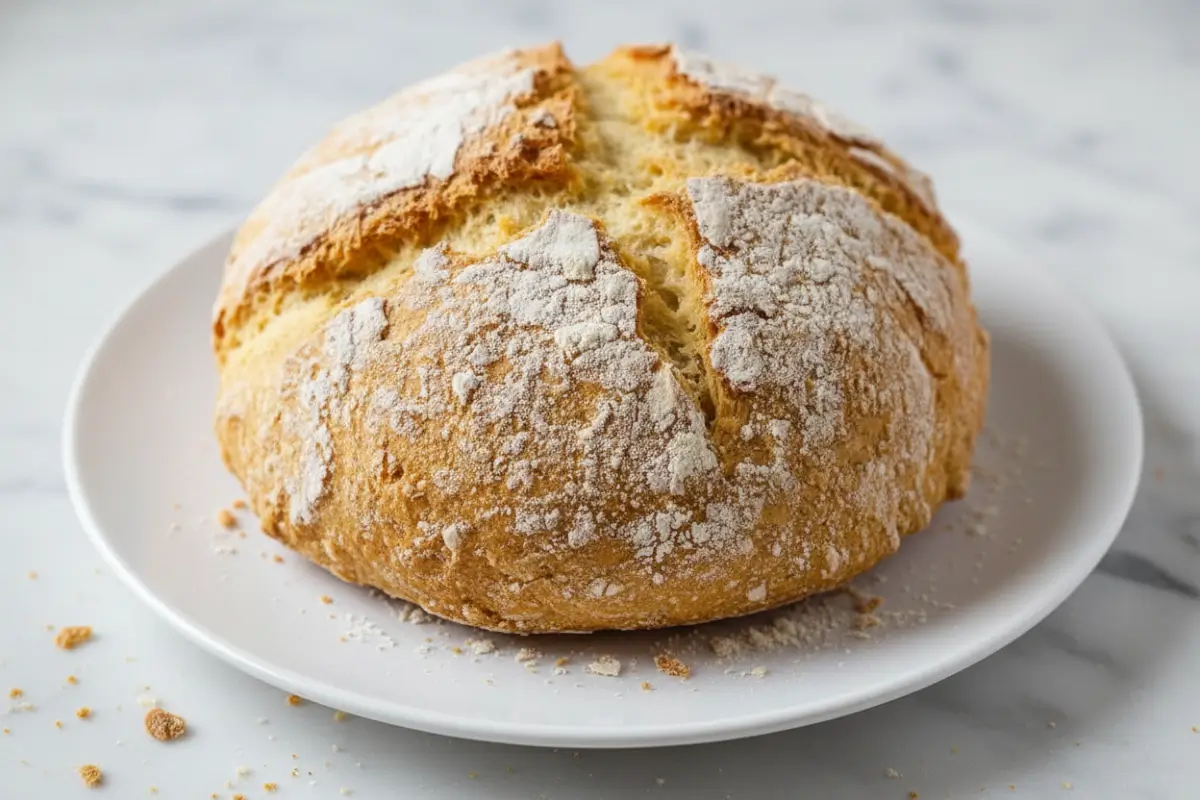
There’s something deeply reassuring about a recipe that just works. Every single time. This no-fail best Irish soda bread recipe delivers exactly that—a golden, crusty loaf with a tender crumb that you can count on, whether you’re baking for Sunday breakfast or need fresh bread with dinner tonight. No yeast proofing. No stand mixer. No wondering if you did it right. Just four ingredients, one bowl, and 45 minutes from start to finish. The crust crackles when you tear into it, revealing that signature dense-yet-tender interior that makes Irish soda bread so satisfying with butter and jam.
I’ve made this bread on rushed weekday mornings and lazy weekend afternoons, and it’s never let me down. That’s the beauty of traditional Irish soda bread—it was designed for home cooks who needed reliable results without fuss.
Prep Time: 15 minutes
Cook Time: 30 minutes
Total Time: 45 minutes
Yield: 1 loaf (serves 4-6)
Why You’ll Love This No-Fail Best Irish Soda Bread Recipe
It’s genuinely foolproof. The chemical reaction between buttermilk and baking soda does the heavy lifting—no kneading skills required.
Minimal ingredients, maximum flavor. Four pantry staples create something far greater than the sum of their parts.
Fast and forgiving. From mixing bowl to table in under an hour, with a texture that stays tender for days.
Versatile enough for any meal. Breakfast toast, soup dipper, sandwich base—this loaf handles it all.
Key Ingredients
All-Purpose Flour (4 cups/580g)
The foundation of your loaf. All-purpose gives you that characteristic dense crumb without being heavy. Don’t reach for bread flour here—the lower protein content in AP flour creates the tender texture you want. Measure by spooning into your cup and leveling off, or weigh for precision. Too much flour makes the bread dry and crumbly.
Baking Soda (1½ teaspoons)
Your leavening agent. When it meets the acidic buttermilk, carbon dioxide bubbles form immediately, creating lift without yeast. This is why you work quickly once liquids hit the bowl. Fresh baking soda matters—if yours has been sitting in the cabinet for two years, replace it. Test it by dropping a pinch in vinegar; it should fizz vigorously.
Salt (1 teaspoon)
Balances the slight tang from buttermilk and enhances the wheat flavor. Don’t skip it. The bread tastes flat without proper seasoning.
Cold Buttermilk (2 cups/470ml)
The magic ingredient. Its acidity activates the baking soda while adding subtle tang and keeping the crumb tender. Cold buttermilk slows the chemical reaction just enough to give you working time. No buttermilk? Make a substitute by adding 2 tablespoons lemon juice or white vinegar to regular milk and letting it sit 5 minutes. It works in a pinch, though real buttermilk gives better flavor.
Here in Asheville, I keep powdered buttermilk in my pantry for spontaneous baking—just reconstitute with cold water and you’re ready to go.
Instructions
Preheat and Prepare
Set your oven to 400°F. Line a baking sheet with parchment paper—this prevents sticking and makes cleanup simple. You can also use an 8-inch cake pan for a taller, rounder loaf, or an oven-safe cast iron skillet for extra-crusty edges. The skillet method gives you that gorgeous golden bottom crust.
Mix Dry Ingredients
Whisk together flour, baking soda, and salt in a large bowl. Really whisk it—30 seconds of vigorous mixing distributes the leavening evenly so you don’t get pockets of soda taste. This step matters more than you’d think.
Add Buttermilk and Form Dough
Pour in all the cold buttermilk at once. Using a wooden spoon or sturdy spatula, stir just until the mixture becomes too stiff to stir easily. You’ll see shaggy, floury bits—that’s perfect. The dough will look rough and barely combined. Overmixing develops gluten, which makes the bread tough and chewy instead of tender. Stop when you still see some dry flour at the bottom of the bowl.
Knead Lightly
Dump everything onto a floured counter. With floured hands, gently bring the dough together with 5-10 light kneads—think of it as persuading rather than forcing. You’re just incorporating the last bits of flour and creating a cohesive mass. The dough should feel slightly sticky but manageable. If it’s soup, add a tablespoon more flour. If it’s cracking apart, don’t panic—just press it together gently.
Shape the Loaf
Pat the dough into an 8-inch round about 2 inches tall. Don’t roll it—use your hands to shape it into a slightly domed circle. Place it on your prepared pan. Now grab your sharpest knife and cut a deep X across the top, about ¼ to ½ inch deep. This isn’t just decorative—it helps heat penetrate the center and allows the bread to expand without cracking randomly. Make confident cuts from edge to edge.
Bake
Slide it into your preheated oven. After 30 minutes, check the color—it should be turning golden. Bake for 45-50 minutes total until deep golden brown. The loaf should sound hollow when you tap the bottom. For certainty, an instant-read thermometer poked into the center should read 195°F. Under-baked soda bread is gummy in the middle. Really.
Cool and Serve
Transfer to a wire rack immediately. Let it cool at least 15 minutes before slicing. I know it’s tempting to tear into it hot, but the crumb needs time to set. Cutting too early gives you gummy slices that compress under the knife.
Tips & Variations
Work quickly once wet meets dry. The leavening starts immediately, so mix, shape, and get it in the oven within 10 minutes of adding buttermilk.
The X cut should be bold. Shallow scoring looks pretty but doesn’t help with even baking. Go at least ¼ inch deep with confidence.
Check doneness by sound and temp. A hollow thump when tapped and 195°F internal temperature mean it’s done. Pale bread needs more time.
Traditional Currant Variation: Fold in 1 cup of currants or raisins and 1 tablespoon sugar with the dry ingredients for classic spotted dog.
Savory Herb Version: Add 2 tablespoons fresh chopped rosemary and ½ cup grated sharp cheddar to the flour mixture. Incredible with soup.
Storage & Pairings
Wrap cooled bread tightly in plastic wrap or store in an airtight container at room temperature for up to 3 days. The texture actually improves on day two. For longer storage, slice and freeze for up to 3 months—toast slices straight from frozen.
Serve with salted Irish butter and strawberry jam for breakfast, alongside beef stew for dinner, or toasted with sharp cheddar for lunch. It’s sturdy enough for sandwiches but tender enough to enjoy plain.
Frequently Asked Questions
Can I make this without buttermilk?
Yes. Mix 2 cups whole milk with 2 tablespoons white vinegar or lemon juice. Let it sit 5 minutes until it curdles slightly, then use as directed. The bread won’t have quite the same tangy depth, but it’ll still work beautifully in this no-fail best Irish soda bread recipe.
Why is my bread dense and heavy?
Overmixing is the usual culprit. Once buttermilk hits flour, stir just until combined—you should still see some floury bits. Also check that your baking soda is fresh and that you didn’t pack the flour when measuring. Dense bread can also mean under-baking, so always check that internal temperature.
💡 Loved this recipe? Follow Us on Pinterest for more!
Conclusion
This is the bread recipe you’ll turn to again and again when you need something reliable, comforting, and quick. No fancy techniques, no special equipment—just honest ingredients and a method that works. Slice it thick, slather it with butter, and enjoy the satisfaction of homemade bread without the stress.
No-Fail Best Irish Soda Bread Recipe
Ingredients
Equipment
Method
- Preheat oven to 400°F and prepare a baking sheet with parchment paper.
- Whisk together the flour, baking soda, and salt in a large bowl.
- Add all the cold buttermilk at once and stir until just combined.
- Dump the dough onto a floured surface and knead lightly.
- Shape the dough into an 8-inch round and cut a deep X across the top.
- Bake in the preheated oven for 45-50 minutes until golden brown.
- Cool on a wire rack for at least 15 minutes before slicing.