
There’s something deeply reassuring about pulling a pan of golden rolls from your oven—knowing they’ll turn out perfect every single time. This no-fail sweet dinner rolls recipe homemade delivers that confidence. The dough looks weird at first (lumpy, yellow, sticky), but that’s exactly how it should be. No kneading. No stand mixer. Just reliable, pillowy rolls that tear apart in soft layers. I’ve made these dozens of times in my Asheville kitchen, and they’ve never let me down. The secret? A wetter dough that stays tender, and a simple roll-and-cut method that doesn’t require fancy shaping skills. You’ll have warm rolls on the table in about three hours, most of it hands-off rising time.
Prep: 10 mins | Cook: 10 mins | Total: 3 hrs | Yields: 12 servings
Why You’ll Love This
- Actually foolproof: The dough is forgiving and doesn’t require kneading experience
- Soft for days: These stay tender, not dry and crumbly like some homemade rolls
- Flexible timing: Make the dough ahead and refrigerate overnight for fresh-baked rolls anytime
- Minimal ingredients: Seven pantry staples you probably have right now
Key Ingredients
Warm water (not hot): Around 110°F activates the yeast without killing it. Too hot and your yeast dies. Too cold and nothing happens. Test with your wrist—should feel like bathwater.
White sugar: Feeds the yeast and adds subtle sweetness. The quarter cup makes these slightly sweet but not dessert-level. They’re perfect alongside savory dishes or slathered with butter.
Rapid rise yeast: Also called instant yeast. It works faster than active dry, cutting down total time. If you only have active dry, it works fine—just add 15 minutes to each rise.
Butter, melted: Adds richness and keeps the crumb soft. Let it cool slightly before adding so it doesn’t scramble the eggs. The fat coats flour proteins, creating that tender texture.
Eggs, beaten: Two whole eggs make the dough rich and give it that golden color. They also add structure. Beat them before adding so they incorporate evenly without overworking the dough.
Salt: Just half a teaspoon balances the sweetness and strengthens gluten structure. Don’t skip it or your rolls taste flat.
Flour: All-purpose works perfectly. You’ll use two cups in the dough, plus extra for rolling. The relatively low flour ratio to liquid is why these stay so soft. The dough looks too wet at first—trust it.
Instructions
Bloom the yeast: Pour warm water into a large mixing bowl. Add sugar and yeast. Stir gently, just enough to dissolve. Walk away for five minutes. When you return, the surface should look foamy and smell yeasty. If nothing happens, your water was too hot or your yeast is dead. Start over.
Add the wet ingredients: Pour in melted butter and stir until combined. The mixture will look slick. Slowly add beaten eggs while stirring constantly. This prevents the eggs from cooking in streaks. The bowl should smell rich and buttery now.
Mix in dry ingredients: Add salt and flour all at once. Use a wooden spoon to stir until no dry flour remains. Stop as soon as everything is incorporated. The dough will look lumpy, sticky, and yellowish—nothing like the smooth white dough you might expect. That’s correct. Overmixing makes tough rolls.
First rise: Press plastic wrap directly onto the dough surface, then cover the bowl tightly. Set it somewhere draft-free. Room temperature works fine. After 90 minutes to two hours, the dough should double in size. It’ll look puffy and soft. If your kitchen is cold, this takes longer.
Prep your pan: Line a baking sheet with parchment or grease it well while the dough rises. Preheat your oven to 375°F about 20 minutes before the dough is ready.
Turn out the dough: Dust your counter lightly with flour. Sprinkle a bit of flour on top of the risen dough. It’s sticky, so use floured hands to lift it onto your counter. Pat and roll the dough in the flour just enough to handle it. Don’t add too much or the rolls get dense.
Roll it out: Using a rolling pin, roll the dough into a large rectangle about a quarter-inch thick. The exact dimensions don’t matter. Aim for roughly 12×16 inches. The dough stretches easily.
Cut the strips: Grab a pizza cutter or sharp knife. Cut eight strips the short way across the rectangle. Then make one long cut down the middle, creating 16 strips total. For larger rolls (12 instead of 16), cut only six strips, then halve them.
Shape the rolls: Take one strip and roll it up from one end, like a little carpet. Don’t roll too tight. Place it seam-side down on your prepared pan. Repeat with remaining strips, spacing them about an inch apart. They’ll puff up and touch while baking, which is fine.
Second rise: Drape a clean kitchen towel over the pan. Let the rolls rise again until doubled, about 30-45 minutes. They should look puffy and hold a fingerprint when gently pressed.
Bake: Slide the pan into your preheated oven. Bake 8-10 minutes until the tops turn golden brown. They bake fast, so check at eight minutes. The bottoms should sound hollow when tapped.
Serve immediately: Pull them apart while warm. The insides steam slightly. Butter melts right in.
Tips & Variations
Make-ahead method: After the first rise, punch down the dough and refrigerate it in a covered bowl overnight. Next day, let it sit at room temperature for 30 minutes, then proceed with rolling and shaping. The cold fermentation adds flavor.
Honey butter finish: Melt two tablespoons butter with one tablespoon honey. Brush over hot rolls right out of the oven. They’ll glisten and taste incredible.
Herb variation: Add a tablespoon of fresh rosemary or thyme to the dough with the flour. Or brush shaped rolls with garlic butter before the second rise.
Check your yeast: If your rolls don’t rise, the yeast was likely expired or the water too hot. Keep instant yeast in the freezer for longer life.
Don’t skip the second rise: Those 30-45 minutes make the difference between dense rolls and pillowy ones. Be patient.
Storage & Pairings
Store cooled rolls in an airtight container at room temperature for two days. Reheat in a 300°F oven for five minutes. Freeze for up to three months in a freezer bag. Thaw at room temperature and warm before serving.
Serve with roast chicken, pot roast, or holiday turkey. They’re perfect for soaking up gravy. Also excellent with soup or chili.
Frequently Asked Questions
Can I use active dry yeast instead of rapid rise?
Yes. Use the same amount but add 15-20 minutes to each rise time. Active dry works slower than rapid rise but produces identical results. Proof it the same way in warm water with sugar.
Why does my dough look so sticky and weird?
That’s exactly right. This no-fail sweet dinner rolls recipe homemade uses a higher liquid ratio than most bread recipes. The sticky, lumpy dough creates incredibly soft rolls. If you add too much flour trying to “fix” it, you’ll end up with dense, dry rolls. Trust the process.
💡 Loved this recipe? Follow Us on Pinterest for more!
Conclusion
This no-fail sweet dinner rolls recipe homemade removes all the guesswork from yeast baking. The dough tells you what it needs, and the simple shaping method works every time. Make a batch this weekend. Your kitchen will smell amazing, and you’ll have the confidence to make them whenever you need reliable, beautiful rolls.
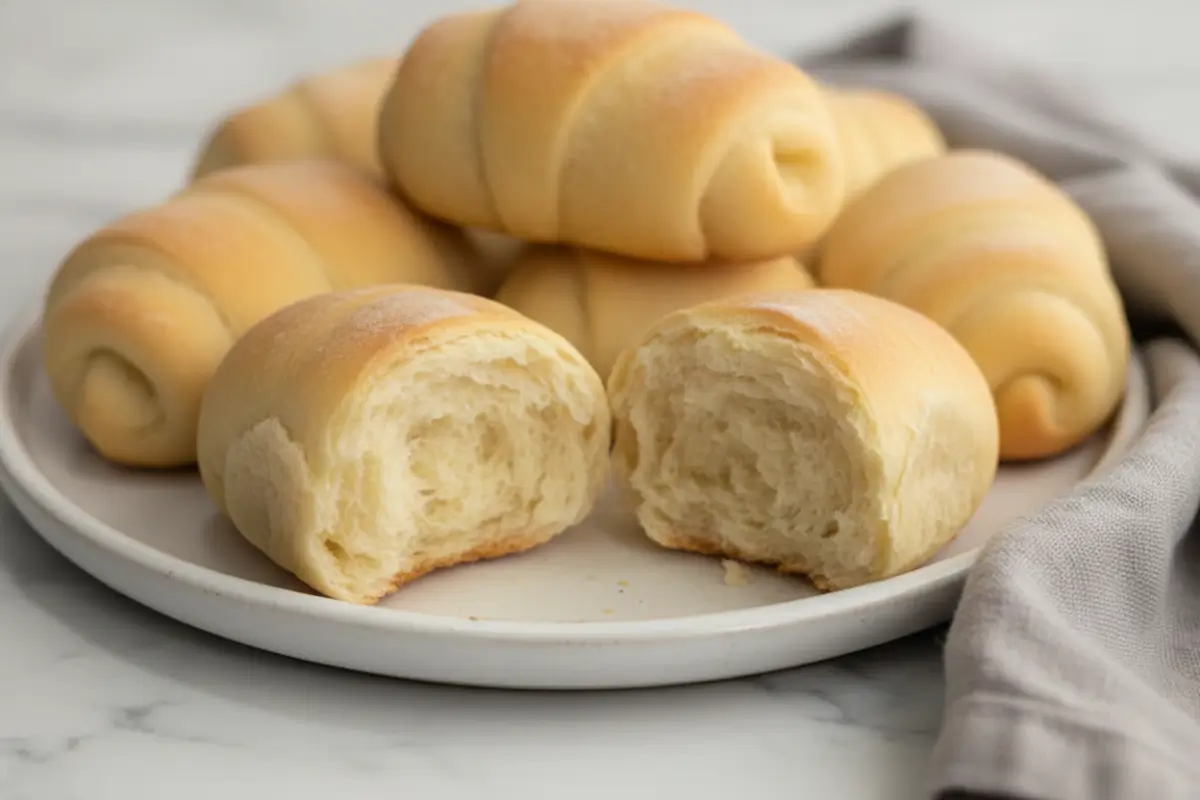
Easy No-Fail Sweet Dinner Rolls Recipe Homemade
Ingredients
Equipment
Method
- Bloom the yeast: Pour warm water into a large mixing bowl. Add sugar and yeast. Stir gently, and let sit for five minutes until foamy.
- Add melted butter and beaten eggs, stirring until combined.
- Mix in salt and flour until no dry flour remains, forming a lumpy, sticky dough.
- Cover with plastic wrap and let rise in a draft-free area until doubled, about 90 minutes to 2 hours.
- Prepare a baking sheet and preheat the oven to 375°F.
- Turn out the dough onto a floured surface and roll into a rectangle about 1/4 inch thick.
- Cut into strips and roll each strip into a roll, placing seam-side down on the prepared baking sheet.
- Cover with a kitchen towel and let rise again until doubled, about 30-45 minutes.
- Bake rolls for 8-10 minutes until golden brown, then serve warm.