
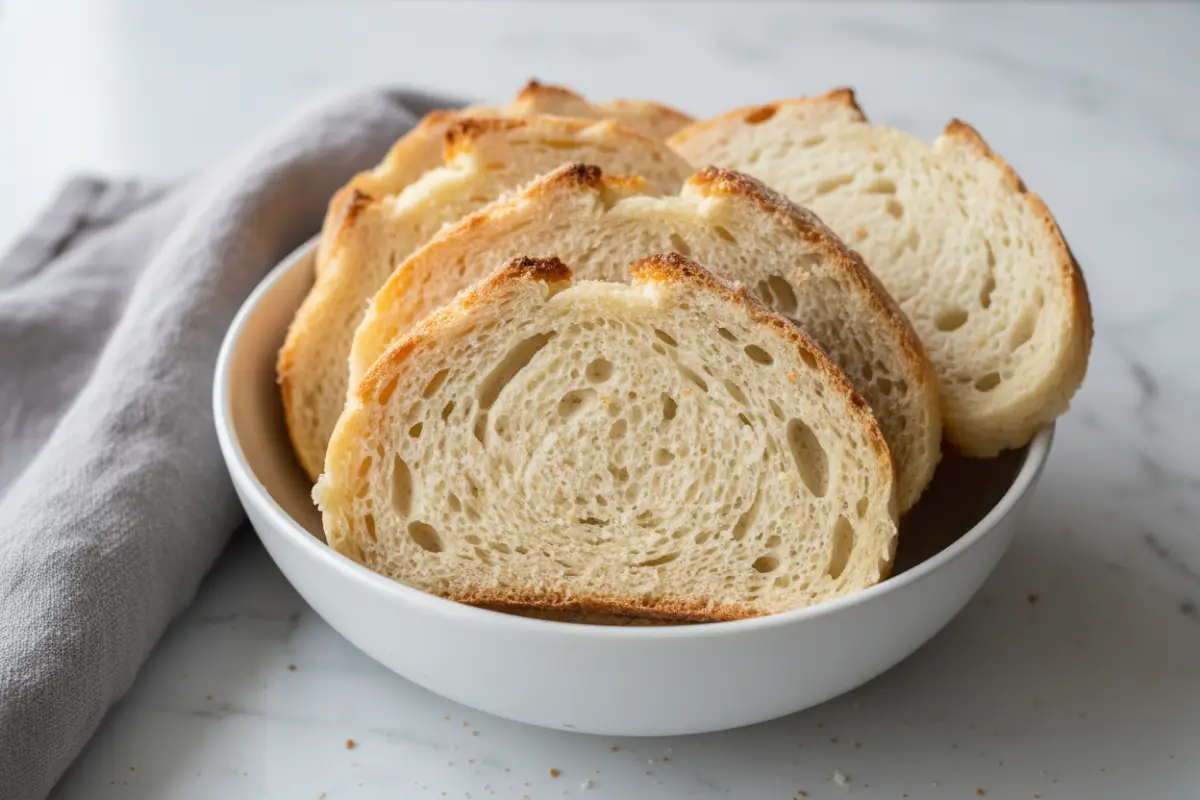
There’s something deeply satisfying about pulling a golden loaf from your oven—crisp crust crackling as it cools, that yeasty smell filling every corner of your kitchen. This noknead easy homemade bread delivers that exact moment without the fuss of traditional bread-making. No stand mixer. No ten-minute kneading session that leaves your arms tired. Just a wooden spoon, a bowl, and about five minutes of actual work. The rest? The dough does it all while you go about your day. I’ve made this bread on rushed weekday mornings and lazy Sunday afternoons in my Asheville kitchen, and it’s never once failed me. The crust shatters when you slice it. The inside stays soft and airy. And honestly, once you realize how simple this noknead easy homemade bread truly is, store-bought loaves will feel like a distant memory.
Why You’ll Love This
Works every time. No guesswork, no fancy techniques—just reliable results that look and taste bakery-quality.
Minimal effort. Five minutes of stirring. That’s it. The dough rises on its own while you do literally anything else.
Beginner-proof. Never made bread before? Start here. This recipe forgives mistakes and still delivers a beautiful loaf.
Costs pennies. Flour, yeast, salt, water. You probably have everything already.
Key Ingredients
All-Purpose Flour (5 cups) forms the foundation. Use basic AP flour—the kind without added sodium that you’d grab for cookies or cakes. It has just enough protein to create structure without the chewiness of bread flour. Older flour absorbs less water, so if your bag’s been sitting in the pantry for months, you might need slightly less liquid. Fresh flour? You’ll use the full two cups of water.
Active Dry Yeast (1 envelope) is your rising agent. That’s 7 grams, roughly 2¼ teaspoons. Don’t stress about instant versus active dry—both work. I proof mine in warm water with sugar because watching those bubbles form tells me the yeast is alive and ready. Skip this step if you’re confident, but I like the visual confirmation.
Lukewarm Water (1½ to 2 cups) hydrates the dough. Test it on your wrist—should feel like bathwater, not hot coffee. Too hot kills yeast. Too cold and it won’t activate. The range exists because flour varies wildly. Humid summer day? Less water. Dry winter air? More. Add slowly. You want sticky and soft, not pancake batter.
Table Salt (2 teaspoons) controls fermentation and builds flavor. Without it, your bread tastes flat and rises too fast.
Baking Powder (2 teaspoons, optional) gives extra lift. Traditional bread doesn’t need it, but this noknead easy homemade bread benefits from the insurance policy. Especially helpful if your yeast is older or you’re baking at high altitude.
Sugar (½ teaspoon) feeds the yeast. That tiny amount kickstarts fermentation without making the bread sweet.
Oil (2 tablespoons plus extra) keeps the crumb tender and prevents sticking. Vegetable, canola, olive—whatever’s open works fine.
Instructions
Combine your dry base. Dump flour, salt, and baking powder into a large bowl. Whisk them together with a fork for thirty seconds. You’re distributing the salt and baking powder evenly so you don’t get salty pockets or uneven rise. Make a small well in the center—this is where your yeast will bloom.
Activate the yeast. In a small cup, combine sugar and yeast. Add about ¼ cup of lukewarm water and stir with a spoon. Walk away for three to four minutes. When you come back, the surface should look foamy and smell slightly beery. That’s live yeast. No foam? Your water was too hot or the yeast is dead. Start over with fresh yeast.
Build the dough. Pour the bubbly yeast mixture into the well you made in the flour. Add one cup of lukewarm water. Stir with a wooden spoon, pulling flour from the sides into the wet center. It’ll look shaggy and rough. Add another half cup of water and keep stirring. The dough should be sticky enough to cling to the spoon but thick enough that the spoon can push through with some resistance. If it’s still too stiff, add water two tablespoons at a time. If it’s soupy, you’ve gone too far—sprinkle in flour until it thickens. This step takes maybe two minutes of actual stirring.
Add oil and rest. Drizzle the two tablespoons of oil over the dough. Give it ten good stirs to incorporate, then cover the bowl with a clean kitchen towel. Set it somewhere draft-free. Room temperature is perfect. After thirty minutes, uncover and give the dough fifteen vigorous stirs with your wooden spoon. You’ll feel it’s already puffier and more elastic. Cover again and let it sit for another thirty minutes. Total rise time: one hour.
Preheat and prep. About ten minutes before your hour is up, crank your oven to 400°F. Grease a standard 9×5-inch loaf pan generously with oil—bottom, sides, corners. Don’t skimp. This prevents sticking and helps the crust crisp up.
Shape and final rise. Scrape the dough into your greased pan. It’ll be sticky and loose—that’s correct. Use oiled hands or a spatula to spread it roughly to the edges, but don’t obsess over perfection. Let it sit in the pan for ten minutes. It should puff up noticeably, climbing toward the rim. Even if it doesn’t quite reach the top, don’t worry. Oven spring will finish the job.
Bake. Slide the pan into your preheated oven. Set a timer for forty minutes. Don’t open the door to peek—you’ll lose heat and deflate the rise. Around minute thirty-five, you’ll smell it. At forty minutes, the top should be deep golden brown. If you tap the crust, it sounds hollow. Internal temperature hits about 190°F if you want to check with a thermometer.
Cool completely. This is the hardest part. Pull the loaf from the oven and let it sit in the pan for five minutes, then turn it out onto a wire rack. Wait at least forty minutes before slicing. I know. The smell is torture. But cutting into hot bread turns the inside gummy. The steam needs time to escape and the crumb needs to set. Pour yourself coffee. Clean up your bowl. By the time you’re done, the bread will be ready.
Tips & Variations
Stir at the thirty-minute mark. That mid-rise mixing redistributes yeast and strengthens gluten without kneading. It’s the secret to this bread’s texture.
Use a thermometer for water. Aim for 105-110°F. Takes the guesswork out completely, especially if you’re new to baking with yeast.
Try whole wheat. Swap one cup of all-purpose for whole wheat flour. Add an extra two tablespoons of water since whole wheat absorbs more liquid. The bread will be denser but nuttier.
Make it herby. Stir in a tablespoon of dried rosemary or Italian seasoning with the flour. Brush the top with melted butter and sprinkle flaky salt before baking.
Go sweet. Add a quarter cup of honey with the water and toss in a handful of raisins or dried cranberries. Perfect for breakfast toast.
Storage & Pairings
Store cooled bread in a paper bag or wrapped in a kitchen towel at room temperature for three days. Plastic makes the crust soft. Freeze slices in a zip-top bag for up to three months—toast straight from frozen. Serve with butter and jam, alongside soup, or as the base for the best grilled cheese you’ll ever make. This bread also makes incredible French toast.
FAQ
Can I make this without baking powder?
Yes. Traditional noknead bread doesn’t use it. Your loaf will be slightly denser but still delicious. The yeast alone provides enough rise—baking powder just adds insurance for beginners.
Why is my dough too sticky or too dry?
Flour absorption varies based on brand, age, and humidity. Add water slowly until the dough is soft and sticky but holds together when stirred. It should look thicker than cake batter but thinner than cookie dough.
💡 Loved this recipe? Follow Us on Pinterest for more!
Conclusion
This noknead easy homemade bread proves that baking doesn’t require expertise or special equipment. Just a bowl, a spoon, and patience while the dough does its thing. The first slice, still warm with butter melting into the crumb, makes every minute worth it. Now go make your kitchen smell incredible.
Easy Noknead Homemade Bread
Ingredients
Equipment
Method
- Combine flour, salt, and baking powder in a large bowl.
- In a cup, mix sugar and yeast with lukewarm water. Let it sit until foamy.
- Pour the yeast mixture into the well in the flour. Add water, stirring with a wooden spoon until shaggy.
- Add oil, stir, cover, and let rise for an hour.
- Preheat oven to 400°F and grease the loaf pan.
- Scrape the dough into the pan, allow it to rise for 10 minutes.
- Bake for 40 minutes until golden brown.
- Let cool and slice after 40 minutes.