
The smell hits first. Yeast waking up, flour turning golden, that crackling crust as it cools on the rack. This one hour homemade bread that everyone loves doesn’t need overnight rises or fancy equipment. Just five ingredients, a stand mixer, and less time than it takes to watch a movie. The crust shatters when you tear it. The inside stays soft for days. I bake this every Sunday morning in my Asheville kitchen, and by noon, half the loaf’s gone.
You don’t need to be a baker. You need warm water, decent flour, and patience for exactly 45 minutes while the dough does its thing. No kneading by hand. No complicated shaping. The stand mixer does the work while you drink your coffee.
Why You’ll Love This Recipe
- Actually takes one hour – No overnight fermentation or three-hour waits
- Beginner-proof – Stand mixer handles all the kneading work
- Flexible shaping – Works in loaf pans, Dutch ovens, or free-form on a sheet
- Stays fresh – Soft interior for 3-4 days without going stale
Key Ingredients
All-purpose flour forms the backbone here. You need exactly 3 cups, measured by spooning into the cup and leveling off. Don’t scoop directly from the bag or you’ll pack in too much, making dense bread. The protein content in AP flour (around 10-12%) gives enough structure without turning tough. Bread flour works too, but AP keeps the crumb tender.
Instant dry yeast means no proofing step. It goes straight into the flour, no waiting in warm water to bubble. I keep mine in the freezer so it stays potent for months. If you only have active dry yeast, it’ll work, but add 5 minutes to the rise time. The 1¾ teaspoons might seem specific, but it’s the sweet spot between “didn’t rise enough” and “tastes too yeasty.”
Lukewarm water should feel like bathwater on your wrist. Too hot kills the yeast. Too cold and it won’t activate properly. The ¾ cup plus 2 tablespoons measurement matters because bread dough is fussy about hydration. This ratio gives you smooth, elastic dough that’s easy to shape but not sticky.
Olive oil adds richness and keeps the crumb soft for days. Two tablespoons isn’t enough to taste, but it coats the gluten strands so they stay pliable. Regular olive oil works fine. Save the fancy stuff for drizzling.
Salt goes in last, after the dough’s almost formed. Add it too early and it can slow down the yeast. One teaspoon seasons the entire loaf without overpowering. I use fine sea salt, but table salt works.
How to Make One Hour Bread
Start with the mixer bowl. Whisk together your 3 cups flour and 1¾ teaspoons yeast directly in the stand mixer bowl. This distributes the yeast evenly so you don’t get pockets of over-risen dough. Attach the dough hook now.
Add liquids gradually. Drizzle in the 2 tablespoons olive oil first, then start the mixer on low. Pour in the lukewarm water slowly, maybe a quarter cup at a time. Watch the dough come together into shaggy clumps. When it’s almost combined but still looks rough, sprinkle in the 1 teaspoon salt. This timing matters. Salt added too early tightens the gluten before it’s ready.
Knead for 5-7 minutes. Increase speed to medium-low. The dough will slap against the bowl sides, then gradually pull away and climb the hook. You’re looking for smooth, elastic dough that springs back when poked. If it’s still sticky after 6 minutes, add flour one tablespoon at a time. If it’s dry and crumbly, add water by the teaspoon. The dough should feel like a soft earlobe.
Shape on a floured surface. Dump the dough onto your counter dusted lightly with flour. Pat it into a rough rectangle, then fold it like a letter. For a loaf pan, roll it tight and tuck the ends under. For a round boule, cup your hands and rotate the dough against the counter to create surface tension. For a rustic oval, just shape it gently and don’t overthink it.
Let it rise covered. Transfer to your parchment-lined baking sheet, loaf pan, or Dutch oven. Drape a clean kitchen towel over it. Find the warmest spot in your kitchen, away from drafts. I set mine on top of the fridge. In 30-45 minutes, it should nearly double. Press a finger gently into the dough. If the indent springs back slowly, it’s ready. If it springs back immediately, give it 10 more minutes.
Create steam in the oven. While the dough rises, preheat your oven to 425°F with an empty metal pan on the bottom rack. This is crucial. When you add hot water to that pan right before baking, it creates steam that keeps the crust from setting too fast. That’s how you get a crispy, crackly exterior and a soft interior.
Score and bake. Right before the bread goes in, use a sharp knife or bread lame to slash the top. One deep cut down the center for a loaf pan. A cross or three parallel lines for a round. Cut confidently, about ½-inch deep. Pour 1 cup hot water into the bottom pan (it’ll steam and hiss), then quickly slide your bread onto the middle rack. Bake 30-35 minutes until deep golden brown. An instant-read thermometer should hit 190°F in the center.
Cool completely. This is the hardest part. Move the bread to a wire rack immediately so the bottom doesn’t get soggy. Wait at least 20 minutes before slicing. The interior is still cooking from residual heat. Cut too early and you’ll get gummy texture.
Tips and Variations
Use the windowpane test. After kneading, pinch off a small piece of dough and stretch it gently. If it forms a thin, translucent membrane without tearing, the gluten’s developed enough. If it rips immediately, knead another minute.
Adjust rise time for temperature. Cold kitchen? Let it rise for the full 45 minutes or even 50. Hot summer day? Check at 30 minutes. The dough doesn’t watch the clock.
Score right before baking. Not 10 minutes before, not after it’s in the oven. Right before. This controls where the bread expands and prevents weird blowouts on the sides.
Herb variation: Knead in 2 tablespoons fresh rosemary and 1 teaspoon garlic powder with the salt. Brush the top with olive oil before baking.
Seeded crust: After shaping, brush with water and roll in sesame seeds, poppy seeds, or everything bagel seasoning.
Storage and Serving
Store at room temperature wrapped in a kitchen towel for 2 days, then transfer to a plastic bag for up to 4 days. The crust softens in plastic, but the bread stays fresh. Freeze slices in a freezer bag for up to 3 months. Toast straight from frozen.
Serve with salted butter and flaky salt. Use day-old bread for the best grilled cheese of your life. Turn stale ends into breadcrumbs.
FAQ
Can I make this without a stand mixer?
Yes, but you’ll knead by hand for 10 minutes. Mix ingredients in a bowl, then turn out onto a floured counter. Push the dough away with the heel of your hand, fold it back, rotate, repeat. It’s a workout.
Why didn’t my bread rise?
Check your yeast expiration date. Make sure the water wasn’t too hot (over 120°F kills yeast). Your kitchen might be too cold. Try rising the dough in an oven with just the light on.
💡 Loved this recipe? Follow Us on Pinterest for more!
The Simplest Loaf You’ll Make
One hour homemade bread that everyone loves doesn’t need complexity. It needs good timing and hot steam. The crust crackles. The inside tears soft. Make it once and you’ll make it every week. Really.
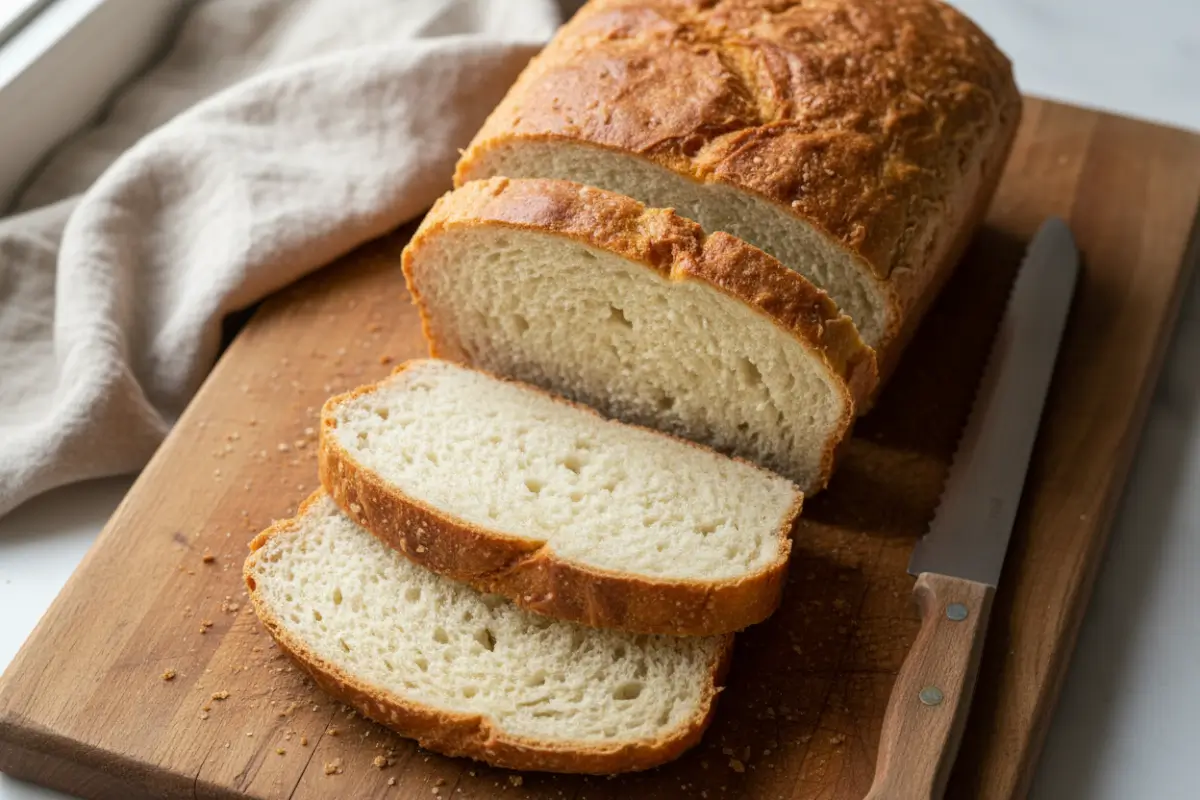
Easy One Hour Homemade Bread That Everyone Loves
Ingredients
Equipment
Method
- Whisk together flour and yeast in the stand mixer bowl.
- Drizzle in olive oil and mix on low while gradually adding lukewarm water.
- Sprinkle in salt once dough is almost combined.
- Knead the dough for 5-7 minutes until smooth and elastic.
- Shape the dough and let it rise covered for 30-45 minutes.
- Preheat oven to 425°F with a metal pan on the bottom rack.
- Score the dough before baking and add hot water to the pan.
- Bake for 30-35 minutes until golden brown and internal temperature reaches 190°F.
- Cool the bread on a wire rack for at least 20 minutes before slicing.