
The smell hits first. Yeast waking up in warm water, then that unmistakable scent of bread baking—golden crust crackling, steam rising from the pan. This Italian sandwich bread doesn’t mess around with complicated techniques or specialty flours. Just seven ingredients and your hands. The dough comes together soft and pillowy, rises twice, then bakes into two perfect loaves with crackling-crisp crusts and tender, airy insides. I’ve made this every week for three years. It’s the only recipe that’s never failed me, never disappointed a single person who’s tasted it warm with butter.
Why You’ll Love This Italian Sandwich Bread
- Beginner-proof formula that forgives minor measuring mistakes
- Two loaves from one batch—freeze one, devour one
- Actual crispy crust thanks to the steam pan trick
- Soft interior that doesn’t crumble when you slice it for sandwiches
Key Ingredients That Make It Work
Warm water is your foundation here. Not hot—that kills yeast. Not cold—that makes it sluggish. Think baby bottle temperature, around 110°F. The water activates everything else. You need three full cups because this recipe makes two substantial loaves.
Active dry yeast blooms beautifully when you give it those first five minutes with sugar. You’ll see it foam and bubble, proof it’s alive and ready to work. Don’t skip this step. Dead yeast means dense bricks, not bread.
Sugar or honey feeds the yeast and adds subtle sweetness that balances the salt. Either works. I use honey in winter, sugar in summer. The yeast doesn’t care which you choose.
Kosher salt develops flavor the dough wouldn’t have otherwise. A tablespoon sounds like a lot across two loaves, but bread without enough salt tastes flat and forgettable.
Olive oil keeps the crumb tender and adds that slight richness Italian breads are known for. Just a tablespoon does it. More makes the dough greasy.
All-purpose flour is the workhorse. You’ll use between 7.5 and 8 cups, but don’t dump it all in at once. The dough tells you when it’s had enough—it stops clinging to the bowl and feels smooth when you touch it. Asheville’s humidity means I usually need closer to 7.5 cups. Drier climates might need the full 8.
One egg whisked with water creates that glossy, golden crust you see on bakery loaves. It’s the final touch that makes homemade look professional.
How to Make Italian Sandwich Bread
Bloom the yeast. Combine warm water, yeast, and sugar in your mixer bowl. Stir once, then walk away for five minutes. When you come back, the surface should look foamy and smell faintly sweet. That’s active yeast doing its job.
Build the dough. Add salt and olive oil to the yeast mixture. Start your mixer on low. Add flour half a cup at a time. The dough will look shaggy, then come together, then start pulling away from the bowl sides. Stop adding flour when the dough clears the bowl but still feels soft and slightly tacky. This takes 6-8 minutes. Too much flour makes tough bread. The wetter you can keep this dough while still being able to handle it, the better your rise will be.
Knead it out. Dump the dough onto a lightly floured counter. Press down with your palms, fold it over, rotate a quarter turn. Repeat for two minutes until you have a smooth ball. The dough should feel alive under your hands—elastic, warm, responsive. Tuck the edges under to create tension on the surface. That tension helps it rise tall instead of spreading wide.
First rise. Put the ball in a greased bowl. I use the same bowl from the mixer—why dirty another dish? Cover with plastic wrap or a damp towel. Set a timer for 30 minutes. The dough should double in size, looking puffy and full of air. In cold weather, I put mine near the oven or on top of the fridge where it’s warmer.
Divide and shape. Punch down the risen dough with your fist. Really. It needs deflating to redistribute the yeast. Turn it out and cut it in half with a bench scraper or sharp knife. Each half becomes one loaf.
Form the loaves. Take one piece and press it flat into a rectangle about 8 by 11 inches—printer paper size. Starting from the short end, roll it up tight like a jelly roll. Press the seam closed with your fingertips, pinching it together so it disappears into the bottom. Tuck the ends under and pinch those too. You want a smooth top surface with all the messy bits hidden underneath. Repeat with the second piece.
Second rise. Place each loaf seam-side down in a greased loaf pan. Cover again. Another 30 minutes. They’ll puff up almost to the pan rim, looking soft and pillowy. Don’t rush this rise. The dough needs time to develop flavor and structure.
Prep for baking. Heat your oven to 375°F. Put a shallow pan of water on the bottom rack. This creates steam that gives you that crispy, golden crust instead of a pale, soft one. It’s the bakery secret nobody tells you.
Egg wash and slash. Whisk the egg with a splash of water until smooth. Use a sharp knife or bread lame to cut three diagonal slashes across the top of each loaf, about half an inch deep. Brush the egg wash all over the tops and sides. The slashes let steam escape and create those beautiful splits in the crust.
Bake. Thirty minutes at 375°F. The loaves will turn deep golden brown. Tap the top with your knuckles—it should sound hollow, not thuddy. That hollow sound means it’s baked through. Let them sit in the pans for 10 minutes, then turn out onto a wire rack.
Cool before slicing. This is the hardest part. Wait at least 30 minutes. The interior is still cooking from residual heat. Cut too soon and you’ll get gummy, compressed slices. Wait, and you’ll get clean cuts that showcase the airy crumb.
Tips and Variations
Check your yeast freshness. If it doesn’t foam after 7 minutes, dump it and start over with fresh yeast. No foam means no rise.
The dough should feel slightly sticky. If you can knead it without any flour on your hands, it’s too dry. Add a tablespoon of water and knead it in.
Use a kitchen scale if you have one. Flour measurements vary wildly by how you scoop. Weight is more reliable. 7.5 cups is roughly 940 grams.
Herb variation: Knead in 2 tablespoons of dried Italian herbs and 3 cloves of minced garlic after the first rise. Makes incredible garlic bread.
Seeded crust: Before baking, brush with egg wash and sprinkle with sesame seeds, poppy seeds, or everything bagel seasoning.
Storage and Serving
Cool completely before storing. Wrap in plastic wrap or slide into a bread bag. Keeps at room temperature for 3 days, refrigerated for a week. Freeze one loaf wrapped tightly in plastic then foil for up to 3 months. Thaw at room temperature for 2 hours.
Perfect for Italian subs, panini, garlic bread, or torn into chunks for soup. Toast slices for bruschetta. Makes the best grilled cheese you’ll ever eat.
Frequently Asked Questions
Can I make this without a stand mixer?
Yes. Mix the dough in a large bowl with a wooden spoon, then knead by hand for 8-10 minutes on the counter. Your arms will get a workout, but the bread turns out identical.
Why didn’t my bread rise?
Three common reasons: water too hot (killed the yeast), yeast expired, or your kitchen is too cold. Try again with fresh yeast and warmer rising spot.
Final Thoughts
The Only Italian Sandwich Bread Recipe You’ll Ever Need isn’t hyperbole. It’s what happens when a recipe works so consistently that you stop looking for others. The crust crackles. The inside stays soft for days. Sandwiches don’t fall apart. That’s all I need from bread, and it’s all you’ll need too.
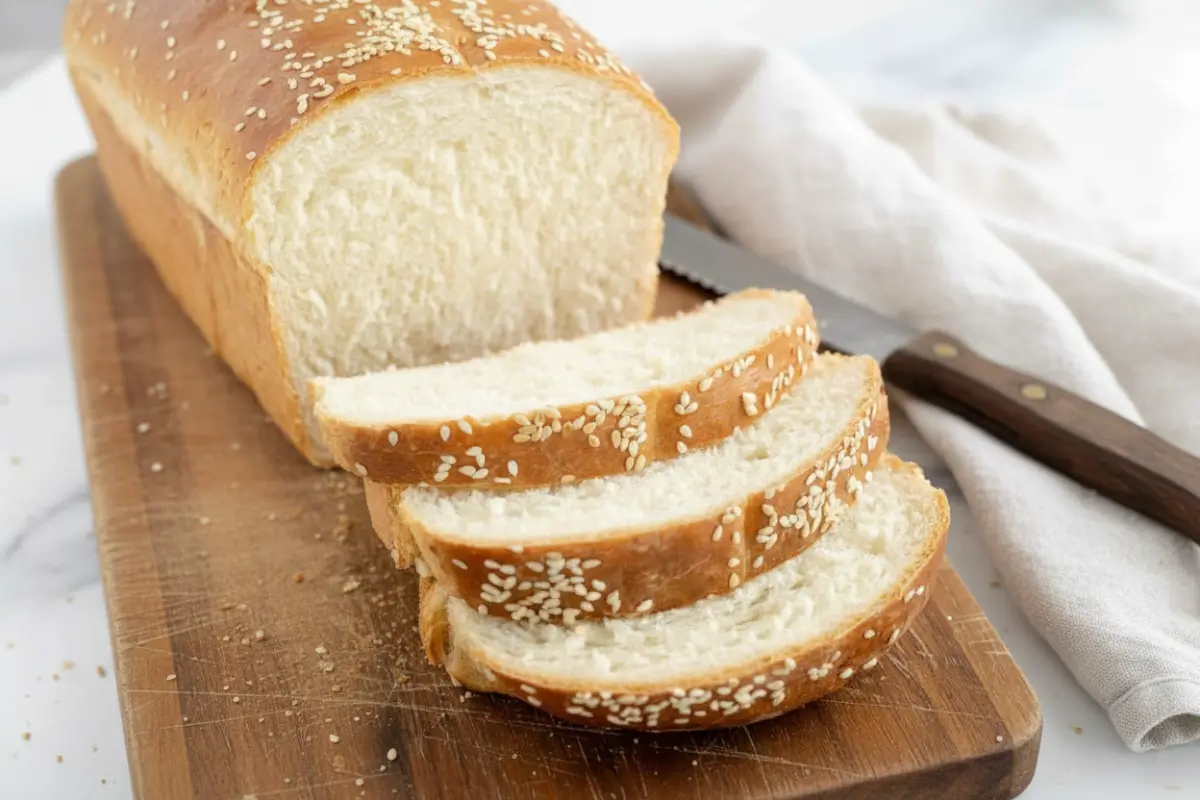
Easy Italian Sandwich Bread Recipe
Ingredients
Equipment
Method
- Combine warm water, yeast, and sugar; let it bloom for five minutes.
- Add salt and olive oil to yeast mixture. Gradually add flour until dough forms.
- Knead the dough on a floured surface until smooth.
- Let the dough rise in a greased bowl covered for 30 minutes.
- Punch down the risen dough, divide, and shape into loaves.
- Let loaves rise in greased pans for another 30 minutes.
- Preheat oven to 375°F and prepare for baking.
- Brush loaves with egg wash, make slashes, and bake for 30 minutes.
- Cool on a wire rack before slicing.