
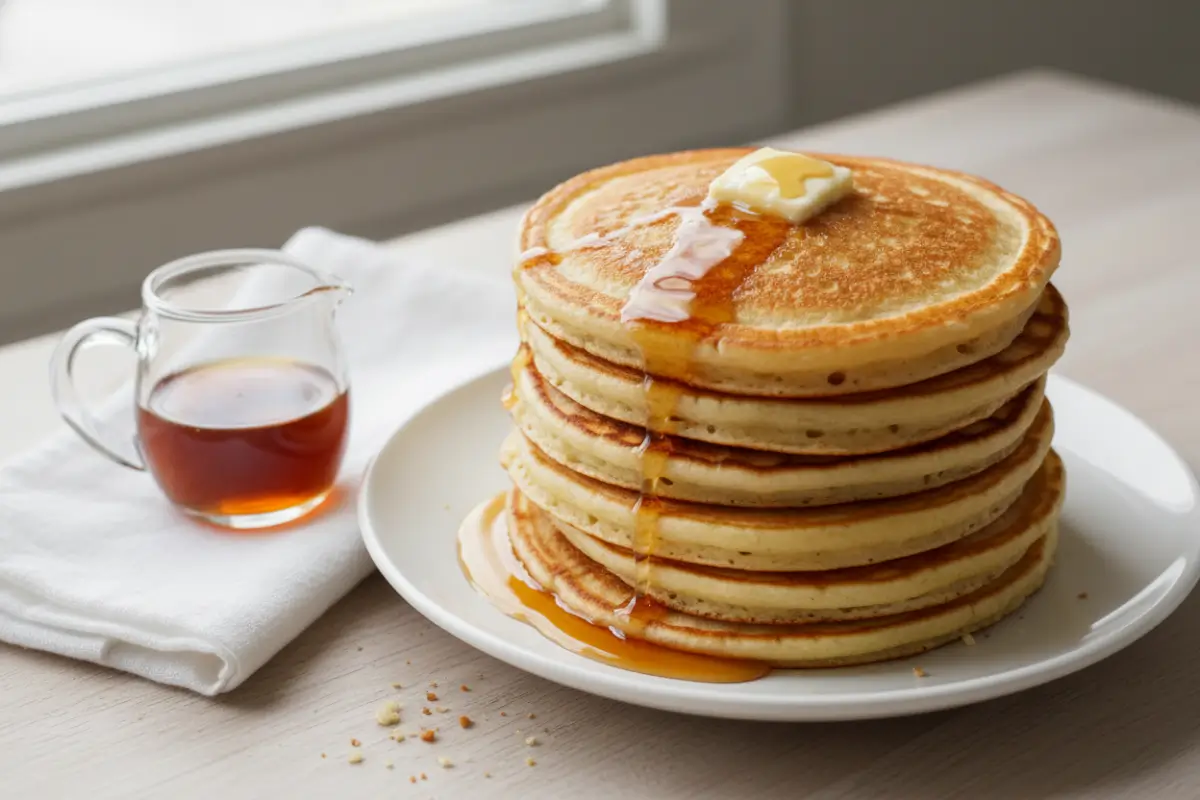
Saturday morning. The griddle’s heating, butter’s melting in pools, and you’re about to make the fluffiest pancakes without measuring a dozen ingredients. These Bisquick pancakes deliver that diner-style golden exterior with a tender, almost cake-like center. No complicated techniques. Just mix, pour, flip. The kind of pancake with Bisquick for weekend mornings that becomes your family’s standing request.
I’ve made these probably two hundred times. The batter comes together in under five minutes, and that’s if you’re moving slowly. The secret? Don’t overmix. Those lumps you’re worried about? They disappear on the griddle and leave you with lighter pancakes. My Asheville kitchen gets cold in winter, so I warm the milk for thirty seconds—helps the batter spread better.
Why You’ll Love This Recipe
- Ready in 30 minutes from mixing bowl to breakfast table
- Pantry-friendly ingredients you probably have right now
- Foolproof texture with crispy edges and fluffy centers
- Scales easily for two people or a crowd
Key Ingredients
Homemade Bisquick mix forms the base. If you’re using store-bought, that works fine, but homemade gives you control over salt levels and freshness. The mix already contains flour, fat, and leavening, so you’re halfway done before you start.
Milk creates the batter consistency. Whole milk makes richer pancakes, but 2% works perfectly. I’ve used oat milk in a pinch—adds a subtle sweetness. Room temperature milk mixes more smoothly than cold.
Eggs provide structure and that tender crumb. Two large eggs for this batch. They bind everything without making the pancakes dense. Beat them lightly before adding if your Bisquick has lumps.
Sugar adds just enough sweetness so the pancakes taste good plain, but not so much that they compete with syrup. Three tablespoons hits that balance. You’ll get slight caramelization on the edges too.
Baking powder boosts the lift beyond what’s in the Bisquick. This extra two teaspoons creates those signature bubbles that tell you when to flip. Fresh baking powder matters—if yours doesn’t fizz in water, replace it.
Vegetable oil keeps pancakes from sticking and adds moisture. Melted butter works but can make them spread thinner. Neutral oil lets the vanilla shine through.
Vanilla extract transforms these from basic to crave-worthy. One teaspoon. Real extract, not imitation. Vanilla bean paste adds visible specks and deeper flavor if you’ve got it.
Instructions
Mix the batter. Grab a large bowl and add your Bisquick mix, milk, eggs, sugar, baking powder, oil, and vanilla. Stir with a wooden spoon or whisk until just combined. You’ll see lumps. That’s correct. Overmixing develops gluten and makes tough, flat pancakes. Twenty to thirty strokes maximum. The batter should pour but hold its shape slightly—thicker than crepe batter, thinner than cookie dough. Let it rest while the griddle heats. Those two minutes let the leavening activate.
Heat your cooking surface. Medium-high heat on a griddle or nonstick pan. Lightly oil it—I use a paper towel dipped in vegetable oil to wipe the surface. Test the temperature by flicking water drops on it. They should sizzle and evaporate within two seconds. Too hot and your pancakes burn before cooking through. Too cool and they turn pale and tough.
Pour and watch for bubbles. Use a 1/4-cup measure or ladle. Pour from a few inches above the griddle so the batter spreads into even circles. Don’t spread it with the cup—let gravity do the work. You’ll see tiny bubbles form almost immediately around the edges. Wait. More bubbles appear across the surface. Some pop, leaving small craters. The edges look dry and set, no longer glossy. This takes one to two minutes. Don’t flip early. Patience here means golden-brown surfaces instead of pale, gummy centers.
Flip once. Slide your spatula under the pancake. It should release easily. Flip with confidence—a quick wrist motion. The cooked side should be deep golden with darker spots where bubbles were. Cook the second side about two minutes. It won’t bubble like the first side did. Press gently with the spatula. If it springs back, it’s done. If batter oozes out, give it thirty more seconds.
Keep warm. Transfer finished pancakes to a baking sheet in a 200°F oven. Don’t stack them directly or they’ll steam and get soggy. Slightly overlapping is fine. This pancake with Bisquick for weekend mornings approach means everyone eats hot food together instead of watching the cook flip batch after batch.
Continue cooking. The griddle gets hotter as you go. Lower the heat slightly after the second batch. Add a tiny bit more oil between batches—just enough to keep things slick. The last pancakes cook faster than the first ones. Watch them closely.
Tips & Variations
Don’t peek after flipping. Lifting the edge releases steam and prevents even browning. Trust the timing.
Add mix-ins after pouring. Drop blueberries, chocolate chips, or chopped nuts onto the wet batter on the griddle. Pressing them into the batter in the bowl makes uneven pancakes.
Make them ahead. Cool completely, layer with parchment, freeze in a zip-top bag for up to two months. Reheat in the toaster—crispier edges than microwaving.
Buttermilk variation: Swap regular milk for buttermilk and reduce baking powder to one teaspoon. Tangier flavor, even fluffier texture.
Whole grain option: Replace half the Bisquick with whole wheat flour. Add one extra tablespoon of milk since whole wheat absorbs more liquid.
Storage & Pairings
Refrigerate leftovers in an airtight container for three days. Reheat in a 350°F oven for five minutes or toast them. They’re excellent for weekday breakfast sandwiches with eggs and cheese.
Serve with real maple syrup, obviously. But also try warm berry compote, whipped honey butter, or Greek yogurt with a drizzle of honey. Crispy bacon on the side cuts the sweetness perfectly.
💡For more recipes, follow me on Pinterest.
FAQ
Can I make the batter the night before?
Mix dry ingredients separately from wet ingredients and combine them in the morning. Prepared batter sits overnight but loses some lift. You’ll get denser pancakes. If you must prep ahead, expect slightly flatter results and give the batter a gentle stir before cooking.
Why are my pancakes tough?
Overmixing develops gluten strands that make pancakes chewy instead of tender. Stir until you barely see dry ingredients. Lumps are your friends here. Also check your Bisquick isn’t expired—old mix produces dense, flat pancakes regardless of technique.
💡 Loved this recipe? Follow Us on Pinterest for more!
Conclusion
This pancake with Bisquick for weekend mornings proves simple doesn’t mean boring. Golden edges, fluffy centers, and that vanilla-scented steam rising from the stack. Make them this Saturday. Your kitchen will smell like the best kind of morning, and you’ll wonder why you ever complicated breakfast.
Easy Pancake With Bisquick for Weekend Mornings
Ingredients
Equipment
Method
- Mix the batter until just combined with lumps, then let it rest.
- Heat a griddle to medium-high and oil lightly before testing temperature.
- Pour batter in even circles and watch for bubbles before flipping.
- Flip the pancakes and cook until golden brown on the other side.
- Keep pancakes warm in a 200°F oven, slightly overlapping them.
- Adjust heat and oil between batches as needed for cooking.