
There’s something about pulling a bakery-quality loaf from your own oven that feels like a small victory. This restaurant-style easy cranberry orange bread delivers that exact feeling—golden-domed tops, jewel-toned cranberries suspended in tender crumb, and a glossy citrus glaze that catches the light just right. The kind of bread that makes guests ask if you bought it from that fancy café downtown.
Here in my Asheville kitchen, I’ve made this dozens of times, and it never fails. The secret? Fresh orange zest rubbed into sugar releases essential oils that perfume the entire loaf. No fancy equipment needed. Just two bowls, a whisk, and about twenty minutes of actual work. The buttermilk keeps everything impossibly moist for days, while the cranberries add tart pops that balance the sweetness perfectly. This is the recipe I turn to when I want something impressive without the stress—reliable, gorgeous, and genuinely delicious.
Why You’ll Love This
Bakery results at home. That professional texture and flavor without culinary school.
Stays fresh for days. Buttermilk and oil create moisture that lasts, not dry crumbles by day two.
Makes two loaves. Keep one, gift one. Or freeze the second for unexpected company.
Minimal cleanup. Two bowls, one whisk. No stand mixer required.
Key Ingredients
All-purpose flour forms the structure. Don’t swap for whole wheat here—you’ll lose that tender, cake-like crumb that makes this restaurant-style easy cranberry orange bread so special. Measure by spooning into your cup and leveling off, never scooping directly from the bag.
Granulated sugar mixed with zest creates an aromatic base. Rubbing the zest into sugar breaks down the oils and distributes citrus flavor throughout every bite. This step takes thirty seconds and makes a massive difference.
Baking powder provides the chemical leavening that creates a light, tender crumb. Use aluminum-free for the cleanest flavor. Make sure it’s fresh—baking powder loses potency after six months. Test it by mixing a teaspoon with hot water; it should bubble vigorously.
Salt balances sweetness and enhances all the other flavors. Even sweet breads need salt to prevent a flat, one-dimensional taste. Table salt or fine sea salt work equally well here.
Fresh orange zest is non-negotiable. Those little strips of peel contain oils that bottled juice can’t replicate. Zest before juicing—it’s nearly impossible to zest a squeezed orange. Use a microplane and stop when you hit the white pith, which tastes bitter.
Buttermilk provides tang and activates the baking powder for a better rise. The acidity also tenderizes gluten, keeping the crumb soft. No buttermilk? Add one tablespoon white vinegar to regular milk and let sit five minutes.
Vegetable or canola oil keeps this bread moist longer than butter would. Oil stays liquid at room temperature, so the texture remains tender even when stored. Don’t use olive oil—the flavor competes with the citrus.
Eggs bind everything together and add richness. Use large eggs at room temperature for better incorporation into the batter. Cold eggs don’t emulsify as smoothly with the oil.
Vanilla extract adds depth and rounds out the citrus notes without competing. Use pure vanilla, not imitation—the difference shows in baked goods. One tablespoon is enough to enhance without overpowering the orange flavor.
Fresh cranberries need to be halved. Whole berries sink and create dense pockets. Halving them distributes the tartness evenly and prevents giant air gaps around each berry. Fresh beats frozen here—less moisture means better texture.
Powdered sugar glaze isn’t just decoration. That thin, crackly coating seals in moisture and adds a final hit of orange brightness. Make it while the bread cools so it’s ready the moment you need it.
Instructions
Prep your pans first. Heat oven to 350°F. Spray two 9×5 loaf pans generously with cooking spray, getting into the corners. This prevents sticking and ensures clean release after baking. Set them aside on your counter.
Build flavor in the sugar. Dump two cups granulated sugar into a large bowl. Add the zest from two large oranges. Use your fingers to rub the zest into the sugar for about thirty seconds. You’ll smell the citrus oils release—that’s what you want. Add flour, salt, and baking powder. Stir with a whisk to combine and break up any lumps. Set this bowl aside.
Mix wet ingredients separately. In a medium bowl, combine buttermilk, oil, slightly beaten eggs, two tablespoons orange juice, and vanilla extract. Whisk until everything looks uniform and slightly frothy. The eggs should be fully incorporated with no streaks.
Combine gently. Pour the wet mixture into the dry ingredients. Stir with a wooden spoon or spatula just until you no longer see dry flour. The batter will look thick and slightly lumpy—that’s correct. Overmixing develops gluten and creates tough, chewy bread. Stop when combined.
Fold in cranberries. Add your halved cranberries to the batter. Fold them in with a spatula using broad strokes, turning the bowl as you go. You want even distribution without deflating the batter. Divide between your two prepared pans, smoothing the tops gently.
Bake low and slow. Slide pans into your preheated oven. Set a timer for sixty minutes, but know it might take up to seventy-five. Every oven runs differently. The tops should turn deep golden brown and spring back when touched lightly. A toothpick inserted in the center should emerge with just a few moist crumbs, not wet batter. If the tops brown too quickly around the fifty-minute mark, tent loosely with aluminum foil.
Cool properly. This step matters. Set the pans on a wire rack for exactly ten minutes. Run a butter knife around the edges to loosen. Turn pans on their sides and gently coax the loaves out. Let them cool completely on the rack before glazing—warm bread makes glaze run right off.
Glaze while cooling. Whisk powdered sugar, two tablespoons fresh orange juice, and one and a half teaspoons zest in a small bowl. It should look like thick cream, not paste. Drizzle over completely cooled loaves using a spoon in a back-and-forth motion. Let the glaze set for ten minutes before slicing.
Tips & Variations
Room temperature ingredients matter. Cold eggs and buttermilk don’t incorporate smoothly and can create a dense crumb. Set them out thirty minutes before baking.
Check doneness early. Start testing at sixty minutes. Overbaked quick breads turn dry and crumbly. You want moist crumbs on that toothpick, not a bone-dry tester.
Freeze before glazing. Wrap cooled, unglazed loaves tightly in plastic wrap, then foil. Freeze up to three months. Thaw at room temperature, then add fresh glaze.
Lemon variation: Swap orange zest and juice for lemon. Use the same amounts. Add half a teaspoon of poppy seeds if you want extra texture.
Add-in options: Fold in half a cup of chopped pecans or white chocolate chips with the cranberries for different flavor profiles.
Storage & Pairings
Wrap cooled, glazed bread tightly in plastic wrap. Store at room temperature for two to three days. The buttermilk keeps it moist, but don’t refrigerate—that dries it out faster. Slice and serve with softened cream cheese or butter. Pairs beautifully with hot coffee or afternoon tea. Toast day-old slices lightly to refresh the texture.
FAQ
Can I use frozen cranberries?
Yes, but don’t thaw them first. Toss frozen halved cranberries directly into the batter. Thawed berries release too much moisture and can create soggy pockets. Frozen works nearly as well as fresh in this recipe.
Why did my bread sink in the middle?
Usually from opening the oven door too early or underbaking. The structure needs time to set. Don’t peek before fifty minutes, and make sure your oven temperature is accurate. An oven thermometer helps verify.
💡 Loved this recipe? Follow Us on Pinterest for more!
Conclusion
This restaurant-style easy cranberry orange bread proves you don’t need professional training to bake something genuinely impressive. Fresh citrus, tart cranberries, and a simple glaze create bakery-quality results every single time. Make it once, and it’ll become your go-to for everything from holiday mornings to casual gifts. Really.
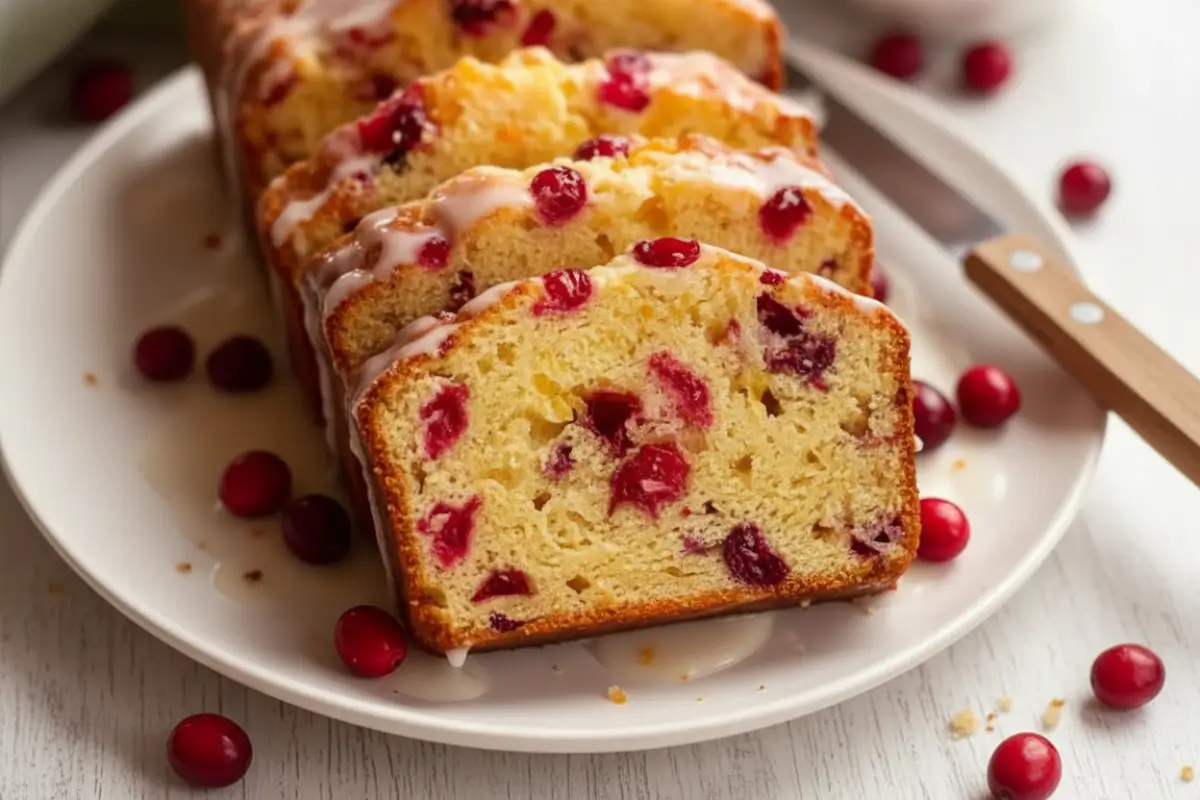
Easy Restaurantstyle Cranberry Orange Bread
Ingredients
Equipment
Method
- Preheat the oven to 350°F and spray two 9×5 loaf pans with cooking spray.
- Rub orange zest into sugar for about thirty seconds to release oils.
- In a bowl, combine buttermilk, oil, eggs, orange juice, and vanilla extract, whisking until uniform.
- Combine wet ingredients with dry and fold in halved cranberries.
- Divide batter between prepared pans and bake until tops are golden.
- Let cool in pans for ten minutes, then remove and let cool completely.
- Prepare glaze while cooling; whisk powdered sugar, orange juice, and zest together.
- Drizzle glaze over cooled loaves and let set before slicing.
Please check your recipe. Some ingredients in the instructions are missing in the list….baking powder and vanilla.
Thank you so much for catching that! You’re absolutely right—baking powder and vanilla extract were mentioned in the instructions but missing from the Key Ingredients section. I’ve just updated the post to include detailed explanations for both ingredients (plus salt and eggs, which were also missing).
I really appreciate you taking the time to point this out. It helps make the recipe clearer for everyone. Happy baking! 🧡