
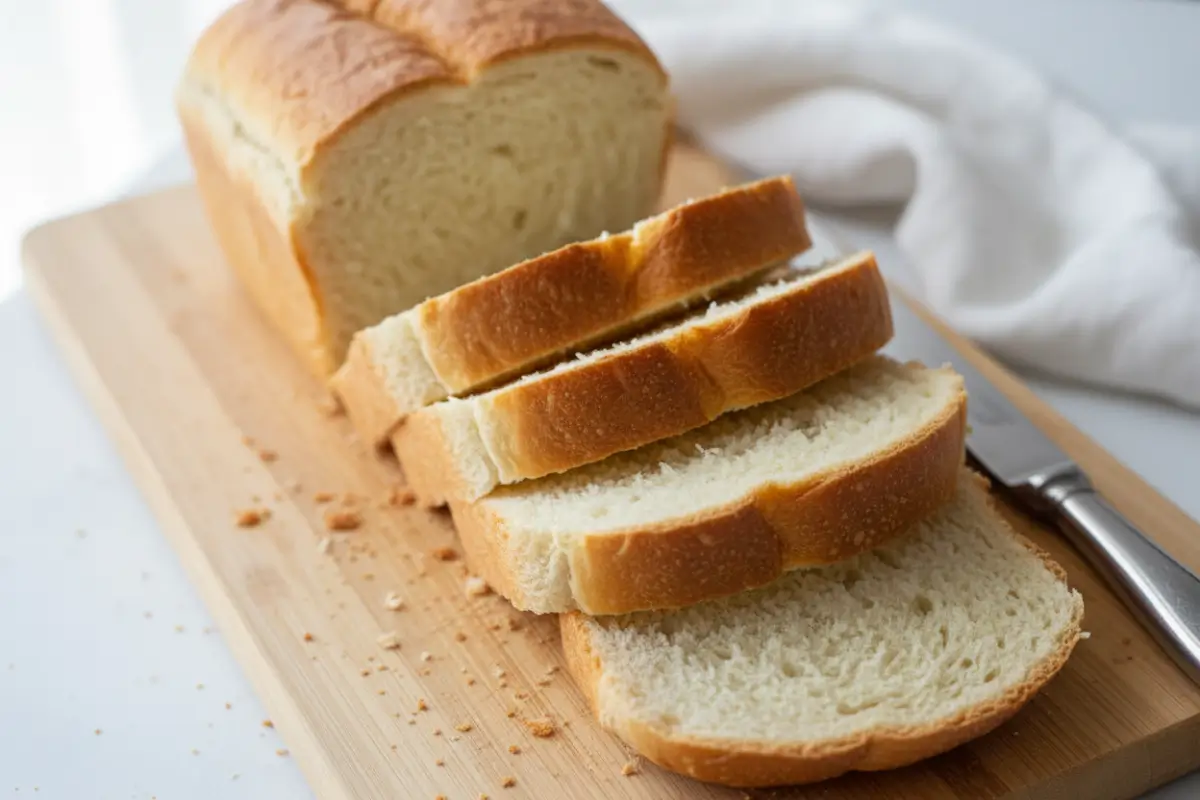
There’s nothing quite like pulling a golden loaf from your oven, the crust crackling as it cools, your kitchen smelling like a bakery. This sandwich bread in 3 steps—mix, rise, bake—delivers pillowy slices that make store-bought taste like cardboard. The crumb is tender enough to cradle peanut butter without tearing, sturdy enough for a loaded BLT. I’ve made this recipe at least fifty times, tweaking until every loaf came out perfect. No fancy equipment needed. Just your hands, a bowl, and patience.
The secret? Warm water activates the yeast fast. Honey feeds it, creating those airy pockets. Butter makes the crumb soft for days. You’ll have two loaves ready in under two hours, most of that hands-off rising time.
Why You’ll Love This Recipe
- Actually simple: Mix everything in one bowl, knead briefly, done
- Forgiving dough: Shaggy and loose means you can’t overwork it
- Two loaves: One for now, one for the freezer or your neighbor
- Stays soft: That butter-honey combo keeps slices tender for five days
Key Ingredients
Warm water should feel like bathwater—around 110°F. Too hot kills yeast. Too cold slows it down. I test with my wrist. If it’s comfortable there, it’s perfect. This temperature jumpstarts fermentation so your first rise takes forty minutes instead of two hours.
Instant yeast goes straight into the dough, no proofing required. I keep mine in the freezer. It stays potent for months. Active dry yeast works too, but add it to the warm water first and wait five minutes until foamy.
Honey does double duty. It sweetens just enough to balance the salt without making the bread taste dessert-like. More importantly, yeast devours honey’s sugars, producing CO2 that creates those soft air pockets. Swap maple syrup or sugar if that’s what you have.
Butter (melted, not hot) coats flour proteins, creating a tender crumb that doesn’t go stale overnight. It also adds richness without heaviness. I use salted butter and reduce the added salt slightly. Vegetable oil works, but you lose that subtle dairy flavor.
All-purpose flour builds just enough gluten for structure without getting chewy. Bread flour makes a chewier loaf—great for toast, less ideal for soft sandwiches. Start with 5½ cups. You’ll add more while kneading, but resist dumping it all in. Asheville’s humidity means I usually need less flour in summer, more in winter when the air is dry.
Salt controls yeast activity and amplifies flavor. Without it, bread tastes flat no matter how perfect your technique.
Instructions
Combine the wet ingredients. Pour warm water into your stand mixer bowl or a large mixing bowl. Add salt, honey, and melted butter. Stir with a wooden spoon until the honey dissolves into golden swirls and the salt mostly disappears. The mixture will look cloudy. That’s fine.
Build the dough. Dump in 4 cups of flour. Mix until you’ve got a thick, shaggy paste—no dry pockets, but lumpy and rough. Sprinkle the yeast over the top and stir it in. This method, adding yeast after some flour, prevents clumping. Add another 1½ cups flour. Mix until a soft dough pulls away from the bowl sides. It should look messy and feel slightly sticky. If it’s soup, add a bit more flour. If it’s stiff, stop.
Knead until smooth. Flour your counter lightly. Turn the dough out. It’ll slump and stick a little. That’s normal. Push the dough away with your palms, fold it back, turn it a quarter turn. Repeat. Add pinches of flour from your reserved cup only when it sticks badly. After eight minutes by hand (five in a stand mixer with the dough hook), the dough transforms. It becomes smooth, elastic, springs back when poked. Really. That spring-back is gluten development—the structure that traps air.
First rise in a warm spot. Heat your oven to 100°F, then turn it off. This creates a draft-free environment that speeds rising dramatically. Place dough in a greased bowl, cover with a damp towel, and set it in the warm oven. Check after thirty minutes. You’re waiting for it to double—the dough should look puffy and hold a fingerprint when poked. Usually takes forty to fifty minutes.
Shape the loaves. Grease two 9×5-inch loaf pans. Turn the risen dough onto a floured counter. It’ll deflate with a satisfying sigh. Divide it in half with a bench scraper or knife. Pat each half into a rough rectangle about 8 inches wide. Roll tightly from the short end, pinching the seam. Tuck the ends under. Drop seam-side down into the pans.
Second rise until proud. Back into the warm oven they go. This rise is faster—twenty to thirty minutes. You want the dough cresting over the pan rim by about an inch, domed and proud. Don’t skip this. Under-risen bread is dense. Over-risen collapses in the oven.
Bake until golden. Remove pans from the oven. Preheat to 350°F. Once heated, bake for thirty minutes. The tops should turn deep golden brown, the kitchen should smell incredible. An instant-read thermometer inserted in the center should hit 190°F (not 180°F—that’s the minimum, but 190°F ensures the crumb is fully set). Tap the bottom of a loaf. It should sound hollow.
Cool before slicing. Rub butter over the hot tops for a soft, glossy crust. Turn loaves out onto a wire rack. Wait at least twenty minutes. I know it’s torture. But hot bread gums up when sliced, turning gummy instead of fluffy.
Tips & Variations
Check your yeast. If your dough doesn’t rise, your yeast is dead. Test it first: dissolve a pinch in warm water with sugar, wait ten minutes. No foam? Toss it.
Knead by feel, not time. Humidity, flour brands, even your kneading speed affect timing. The dough is ready when it’s smooth and bounces back slowly when poked. That’s the sandwich bread in 3 steps working—trust texture over the clock.
Don’t peek during the second rise. Opening the oven door drops the temperature fast. Check through the oven window instead.
Whole wheat variation: Replace 2 cups all-purpose flour with whole wheat. Add an extra tablespoon of water. The loaf will be denser but nuttier.
Herb bread: Knead in 2 tablespoons dried Italian herbs and a minced garlic clove after the first rise. Perfect for dipping in olive oil.
Storage & Pairings
Store cooled loaves in plastic bags at room temperature for five days. Freeze whole or sliced for three months—just toast straight from frozen. This bread makes killer grilled cheese, French toast that doesn’t fall apart, or simple butter-and-jam toast. The neutral flavor pairs with everything from turkey clubs to almond butter and banana.
FAQ
Can I make this without a stand mixer?
Absolutely. Mix in a large bowl with a wooden spoon, then knead by hand on the counter. It takes a few extra minutes, but the sandwich bread in 3 steps works perfectly. Your arms get a workout.
Why is my bread dense?
Three culprits: dead yeast, not enough kneading, or skipping the second rise. Make sure your water isn’t too hot (kills yeast) or too cold (slows it down). Knead until the dough is truly elastic—it should stretch thin without tearing.
💡 Loved this recipe? Follow Us on Pinterest for more!
Conclusion
This recipe proves homemade bread isn’t precious or complicated. Mix, rise, bake. Two loaves that’ll ruin you for store-bought. The first slice, still warm, with salted butter melting into the crumb—that’s why we bake. Make this once and you’ll make it monthly.
Perfect Sandwich Bread in 3 Steps
Ingredients
Equipment
Method
- Combine the wet ingredients by pouring warm water into a mixing bowl. Add salt, honey, and melted butter, stirring until dissolved.
- Dump in 4 cups of flour and mix until thick and shaggy. Sprinkle the yeast over the top and stir it in.
- Add another 1½ cups flour and mix until a soft dough forms.
- Knead the dough on a floured counter until smooth, about 8 minutes by hand.
- Place dough in a greased bowl, cover, and let rise in a warm spot until doubled, about 40-50 minutes.
- Shape the loaves, place in greased pans, and let rise again until cresting over the pan rim, about 20-30 minutes.
- Bake in a preheated 350°F oven for 30 minutes until golden brown.
- Cool before slicing to avoid gummy texture.