
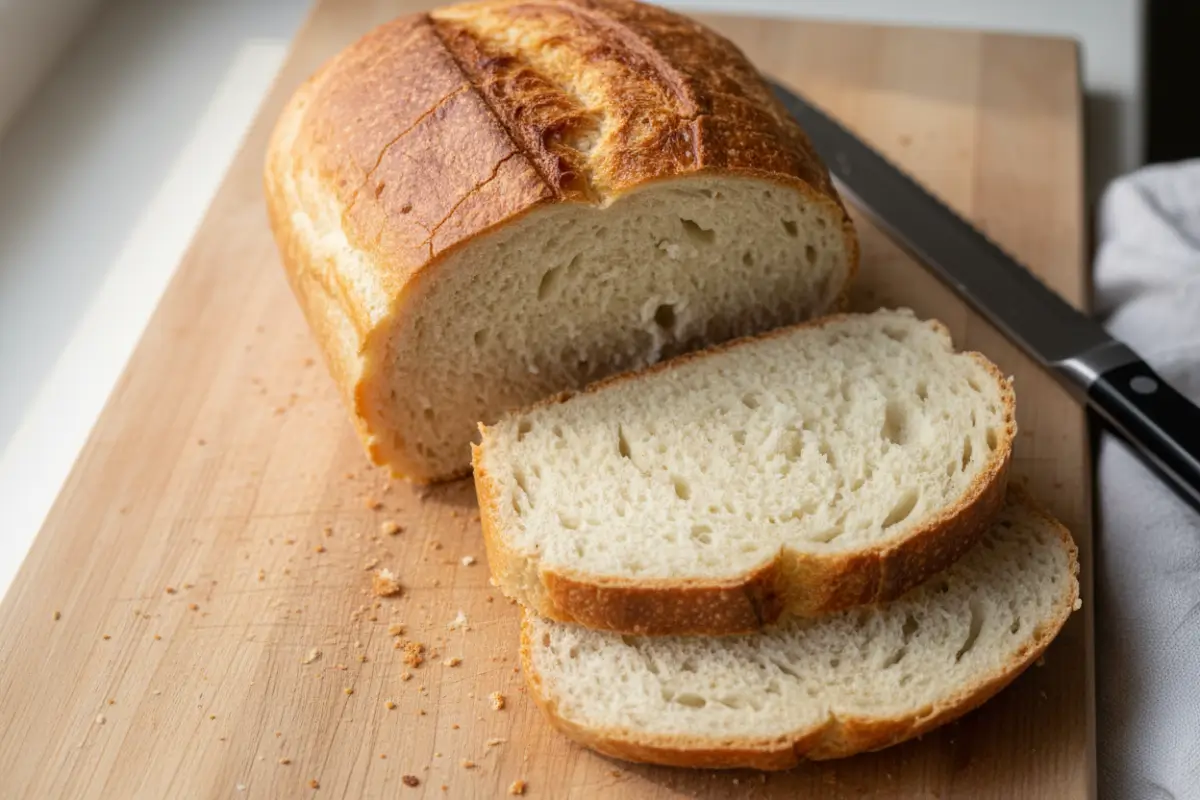
There’s something almost magical about the aroma of freshly baked bread filling your kitchen. This ultimate homemade white bread recipe creates two perfect loaves with golden-brown tops and a tender, pillowy interior that’ll make you question why you ever bought store-bought bread. When you slice into that first warm loaf, you’ll hear the subtle crackle of the crust giving way to reveal a soft, ivory crumb that’s perfect for everything from sandwiches to morning toast.
I spent three weeks testing this recipe in my Asheville kitchen during our rainy season, and the humid mountain air taught me exactly how to adjust the flour for that perfect texture. One particularly damp Tuesday, I discovered that just a tablespoon less water made the difference between good bread and great bread. Now I’ve got it down to a science, and I’m sharing every detail you need to create bakery-worthy loaves in your own kitchen.
This isn’t just another bread recipe – it’s your new go-to for foolproof homemade white bread that’ll have your kitchen smelling like a European bakery. The best part? You don’t need any fancy equipment beyond a stand mixer and two loaf pans.
Why Most People Fail This Recipe
Let’s be honest about what usually goes wrong with homemade bread:
-
Water temperature chaos: Too hot kills the yeast, too cold makes it sluggish. Your water should feel like warm bath water – around 105-110°F. No thermometer? Drop some on your wrist. If it feels neutral, it’s perfect.
-
Rush the rise: That first rise isn’t a suggestion – it’s science. When people cut the rising time short, they end up with dense, heavy loaves. The dough should double in size and bounce back slowly when poked.
-
Over-flouring the work surface: Adding too much flour during shaping makes dry bread. You need just enough to prevent sticking – think dust, not snow.
Why You’ll Love This Recipe
• Perfect sandwich-worthy texture that holds up to spreading without crumbling
• Just 6 basic ingredients you probably already have
• No complicated techniques or equipment needed
• Makes two loaves – one for now, one for later (or sharing)
• That incredible fresh-bread smell that fills your whole house
Key Ingredients & Why They Matter
Active Dry Yeast:
Think of yeast as tiny bread champions. Two packets ensure reliable rising without that overwhelming yeasty taste some recipes have. The foam test at the beginning tells you immediately if your yeast is alive and ready to work.
All-Purpose Flour:
You don’t need fancy bread flour here. Regular all-purpose flour (I use King Arthur) has the perfect protein content for soft, tender bread. The 6 cups called for creates a dough that’s sturdy enough to hold its shape but not so heavy it becomes dense.
Warm Water:
Temperature matters more than you think. The water activates the yeast and creates the perfect environment for gluten development. Too hot (over 110°F) kills the yeast, too cold makes everything slow down to a crawl.
Sugar:
Beyond sweetness, these 2 tablespoons feed the yeast and help create that beautiful golden-brown crust. It’s not enough to make the bread taste sweet – just enough to make it perfectly balanced.
Butter:
Melted butter adds richness and helps create that tender crumb we’re after. It also makes the crust more flavorful and helps it brown beautifully in the oven.
Salt:
Don’t skip it. Salt doesn’t just add flavor – it controls yeast growth and strengthens gluten. Without it, your bread would taste flat and have a weird texture.
Step-by-Step Instructions
-
Start Your Yeast (5 minutes):
Mix warm water, sugar, and yeast in your stand mixer bowl. Wait 5 minutes. The mixture should look foamy and smell like bread rising. No foam? Start over with fresh yeast. -
Make the Dough (10 minutes):
Add flour, butter, and salt to your foamy yeast mixture. Mix on low speed until you see a shaggy dough forming. Don’t rush this step. Watch for the dough to pull away from the bowl sides. -
Knead to Perfection (5-7 minutes):
Increase to medium-low speed. The dough will transform from rough to smooth. It should feel like a soft earlobe when poked. Really. That’s the perfect texture. -
First Rise (40-50 minutes):
Place in a greased bowl, flip once, cover. Put it somewhere warm – I use the top of my fridge. Look for the dough to double and slowly spring back when poked. -
Shape and Second Rise (25-35 minutes):
Divide, shape into logs, place in pans. Let rise again until just peeking over the pan edges. Don’t let it rise too high, or it’ll collapse in the oven. -
Bake to Golden Perfection (30-35 minutes):
Brush with melted butter if desired. Bake at 350°F until golden brown. The loaves should sound hollow when tapped on the bottom.
Expert Tips & Common Mistakes
• Don’t add extra flour too quickly – the dough will absorb moisture as it kneads
• Room temperature butter melts more evenly than microwaved
• If your kitchen is cold, turn your oven light on for the rise
• Resist opening the oven door while baking – heat loss causes uneven rising
Storage & Reheating
Store cooled bread in a plastic bag at room temperature for up to 4 days. For longer storage, freeze for up to 3 months. To refresh, sprinkle with water and warm in a 350°F oven for 5-10 minutes.
Perfect Pairings
Serve warm slices with salted butter and honey for breakfast. Makes incredible grilled cheese sandwiches. Perfect with homemade soup or stew. Try it toasted with avocado and a soft-boiled egg.
Variations & Substitutions
-
Whole Wheat Version: Replace up to 2 cups of all-purpose flour with whole wheat flour. Add 2 tablespoons extra water.
-
Herb-Enriched: Add 2 tablespoons of fresh herbs (rosemary, thyme, or sage) to the dough during mixing.
-
Milk Bread: Replace water with warm whole milk for an even softer texture.
-
No-Stand-Mixer Method: Mix with a wooden spoon, then hand-knead for 10-12 minutes until smooth.
FAQ
Can I use instant yeast instead of active dry?
Yes, use the same amount but skip the initial proofing step. Add the yeast directly with the flour.
Why didn’t my bread rise?
Check your yeast expiration date and water temperature. Also ensure your rising spot isn’t too cold – ideal temperature is 75-80°F.
Can I make this into dinner rolls?
Absolutely. After the first rise, divide into 24 pieces, shape into balls, and place in greased 9×13 pans. Reduce baking time to 20-25 minutes.
💡 Loved this recipe? Follow Us on Pinterest for more!
Conclusion
Making your own bread isn’t just about the end result – it’s about the process. The kneading, the waiting, the heavenly aroma, and finally, that first warm slice. This ultimate homemade white bread recipe gives you all that, plus the satisfaction of knowing exactly what’s in your food. Give it a try. Your kitchen will thank you.
Ultimate Homemade White Bread Recipe – Perfect
Ingredients
Equipment
Method
- Mix warm water, sugar, and yeast in the stand mixer bowl and wait for 5 minutes.
- Add flour, butter, and salt to the yeast mixture, mixing on low speed until a shaggy dough forms.
- Increase the speed to medium-low and knead until the dough is smooth, 5-7 minutes.
- Transfer the dough to a greased bowl, cover, and let rise in a warm place until doubled, about 40-50 minutes.
- Shape the dough into logs and place in greased loaf pans; let rise again for 25-35 minutes.
- Preheat the oven to 350°F and bake the loaves for 30-35 minutes until golden brown.