
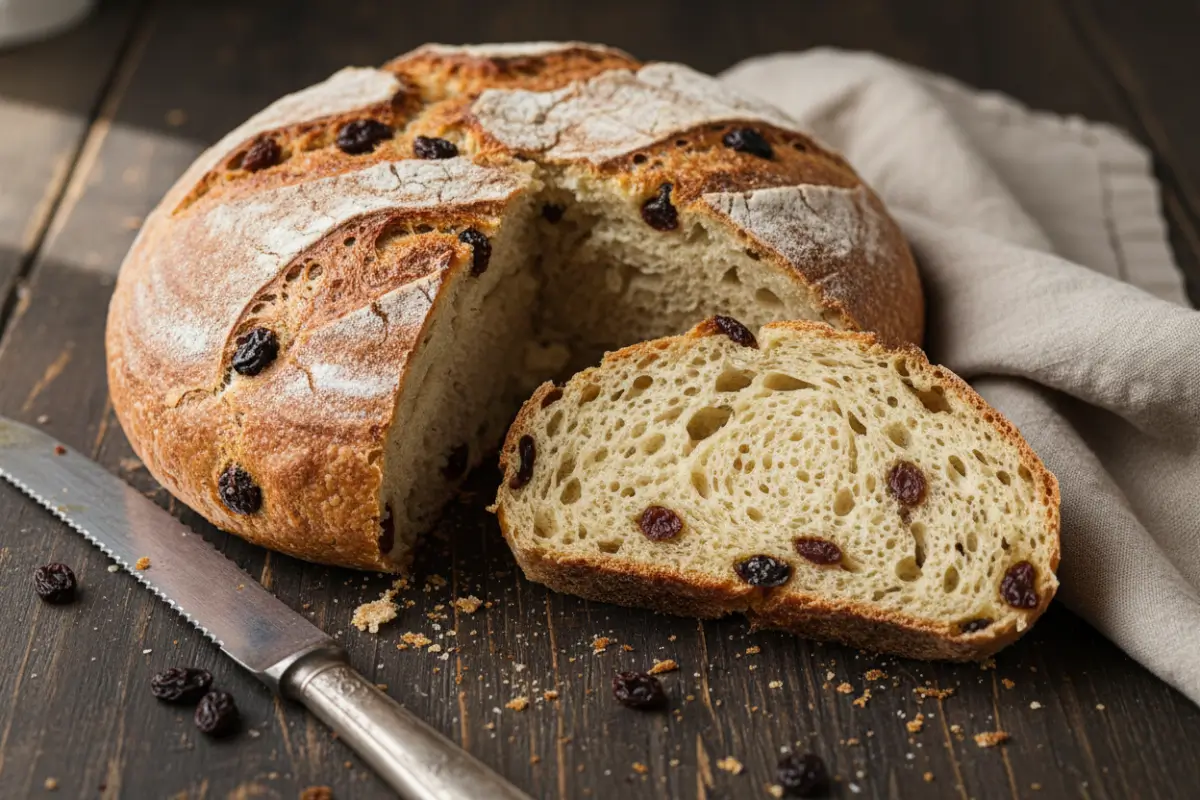
If you’ve been scrolling Pinterest or TikTok lately, you’ve seen it: that gorgeous, golden-domed loaf with cinnamon-speckled swirls and plump raisins peeking through the crust. This Viral Dutch Oven Cinnamon Bread is everywhere right now, and for good reason. It tastes like a bakery splurge but uses just seven pantry ingredients and one bowl. No kneading machine required. No fancy techniques. Just mix, wait, and bake in your Dutch oven. The result? A bread so fragrant your neighbors will text asking what you’re making. I tested this in my Asheville kitchen on a rainy Tuesday, and by Wednesday morning, half the loaf was gone. The secret is the hands-off rise and the Dutch oven’s steam-trap magic, which creates that crackling crust and pillowy inside. You don’t need experience. You need 45 minutes of actual work and a little patience while the dough does its thing.
Why You’ll Love This Viral Dutch Oven Cinnamon Bread
One bowl, zero stress. Mix everything in a single bowl. No stand mixer needed, though you can use one if you want.
Beginner-proof. The dough is forgiving. Even if your shaping looks wonky, it’ll puff up beautifully in the oven.
Make-ahead friendly. Refrigerate the dough for up to a week. Cold dough is easier to handle and tastes even better.
Tastes like you tried. Warm cinnamon, sweet raisins, and that crackly crust make people think you spent all day baking.
Key Ingredients for Viral Dutch Oven Cinnamon Bread
Water (1 ½ cups): Temperature matters here. You want 100-110°F—warm enough to wake up the yeast but not so hot it kills it. One minute in the microwave usually does it. Test with your finger; it should feel like bathwater.
Active dry yeast (2 ¼ teaspoons): That’s one standard packet. This is what makes the dough rise and gives the bread its airy texture. When you mix it with warm water and sugar, it should foam and double in about 10 minutes. If it doesn’t, your water was too hot or your yeast is old. Start over.
Sugar (2 tablespoons): Feeds the yeast and adds a subtle sweetness. Want it sweeter? Add another tablespoon. The bread won’t be dessert-level sweet, just lightly kissed with sugar.
Raisins (¾ cup): Soaking them in warm water plumps them up so they don’t steal moisture from the dough. You’ll get soft, jammy bursts of sweetness in every slice instead of hard little pebbles.
Cinnamon (1 tablespoon): This is what makes the bread smell like a hug. It swirls through the dough, creating those gorgeous streaks you see when you slice into it. Don’t skimp.
Salt (½ tablespoon fine grain): Balances the sweetness and strengthens the gluten structure. Without it, the bread tastes flat.
All-purpose flour (3 ½ cups, plus extra): The backbone of your loaf. Measure by spooning it into your cup and leveling off—don’t pack it down or you’ll end up with dense bread. You’ll need extra for dusting your counter and hands when shaping.
Instructions
Activate the yeast. Microwave 1 ½ cups water for one minute until it reaches 100-110°F. Pour 1 cup of that warm water into a large bowl. Add the yeast and sugar, stir until dissolved, and let it sit for 10 minutes. You’ll see it bubble and foam—that’s the yeast waking up and multiplying. If nothing happens, your water was too hot or the yeast is dead.
Plump the raisins. While the yeast does its thing, pour the remaining ½ cup warm water over the raisins in a small bowl. Let them soak for 10 minutes. They’ll soften and swell, which means they won’t dry out your bread later.
Mix the dough. Add the raisin mixture (water and all), cinnamon, salt, and flour to the yeast bowl. Stir with a sturdy wooden spoon or use a dough hook on your stand mixer. Mix for at least one minute until everything comes together into a shaggy, sticky dough. It won’t look smooth yet. That’s fine. If you’re using a mixer, let it run for 3-4 minutes to develop more gluten, which makes the bread chewier.
First rise. Scrape down the sides of the bowl so all the dough is gathered at the bottom. Cover with plastic wrap or a damp kitchen towel. Set it somewhere warm—on top of your fridge, near a sunny window, or in an oven with just the light on. Let it rise for 2 hours until it’s doubled in size. The dough should look puffy and full of air bubbles. At this point, you can bake it right away or refrigerate it for up to a week. Cold dough is easier to shape and develops deeper flavor.
Preheat your Dutch oven (optional but recommended). About 30 minutes before you’re ready to bake, put your Dutch oven with its lid on into the oven and preheat to 450°F. This extra heat gives the dough a boost and creates a better oven spring—that dramatic rise you see in bakery loaves.
Shape the loaf. Dust a piece of parchment paper with flour. Turn the dough out onto it. Don’t punch it down aggressively; you want to keep some of those air bubbles. Gently shape it into a round or oval. Tuck the edges under to create surface tension. It doesn’t have to be perfect. Score the top with a sharp knife or razor blade—one deep slash down the middle or a crisscross pattern. This lets steam escape and gives you that rustic bakery look.
Transfer to Dutch oven. Lift the parchment paper with the dough on it and carefully lower it into the hot Dutch oven. If you preheated it, use oven mitts for everything—the pot and the lid are scorching. If you want extra steam for a crispier crust, toss 2-3 ice cubes into the pot between the parchment and the side. They’ll melt and create steam as the bread bakes.
Bake covered. Put the lid on and bake at 450°F for 35 minutes. Don’t peek. The trapped steam is what creates that golden, crackling crust and keeps the inside soft.
Finish uncovered. After 35 minutes, remove the lid and bake for another 5-10 minutes until the top is deep golden brown. The crust should look glossy and sound hollow when you tap it.
Cool completely. This is the hardest part. Carefully lift the loaf out of the Dutch oven using the parchment paper and set it on a cooling rack. Wait at least one hour before slicing. I know it’s torture, but if you cut into it too soon, the inside will be gummy and underbaked. The bread is still cooking as it cools.
Tips & Variations
Use bread flour for chewier texture. Swap all-purpose for bread flour if you want a more artisan-style crumb with bigger air pockets.
Try dried cranberries or chopped dates. Not a raisin fan? Use any dried fruit. Cranberries add tartness, dates add caramel sweetness.
Add a cinnamon-sugar crust. Before baking, brush the top with melted butter and sprinkle with cinnamon sugar for a sweet, crunchy topping.
Make it savory. Skip the cinnamon, sugar, and raisins. Add rosemary, garlic powder, and a handful of shredded cheese for a totally different loaf.
Double the cinnamon for extra swirl. If you want more of those Instagram-worthy cinnamon ribbons, increase cinnamon to 1 ½ tablespoons.
Storage & Pairings
Store at room temperature wrapped in a clean kitchen towel for up to 3 days. Don’t use plastic—it makes the crust soggy. Freeze slices wrapped in foil for up to 3 months. Toast straight from frozen.
Serve warm with salted butter, cream cheese, or apple butter. It’s perfect alongside scrambled eggs for breakfast or with a bowl of soup for dinner. My favorite? Toasted with a thick smear of honey ricotta.
FAQ
Can I make this without a Dutch oven?
Yes, but the results won’t be quite as dramatic. Bake the loaf on a baking sheet at 375°F for 35-40 minutes. Place a shallow pan of water on the bottom oven rack to create steam. You’ll still get good bread, just not that signature crackling crust.
Why didn’t my dough rise?
Your water was too hot and killed the yeast, or your yeast was expired. Always check the expiration date and test your water temperature. It should feel warm but not hot to the touch.
💡 Loved this recipe? Follow Us on Pinterest for more!
Conclusion
This Viral Dutch Oven Cinnamon Bread proves you don’t need a bakery or fancy skills to make something stunning. Just mix, wait, and let your Dutch oven work its magic. The smell alone is worth it.
Easy Viral Dutch Oven Cinnamon Bread
Ingredients
Equipment
Method
- Microwave water until it reaches 100-110°F. Pour 1 cup into a bowl, add yeast and sugar, stir, and let it sit for 10 minutes.
- Soak the raisins in the remaining warm water for 10 minutes to plump them.
- Mix the raisin mixture, cinnamon, salt, and flour into the yeast bowl until a shaggy dough forms.
- Cover the bowl and let the dough rise for 2 hours until doubled in size.
- Preheat your Dutch oven and shape the loaf, placing it on parchment paper.
- Transfer the dough to the heated Dutch oven, cover, and bake at 450°F for 35 minutes.
- Remove the lid and bake uncovered for an additional 5-10 minutes until golden.
- Let the bread cool for at least one hour before slicing.