
You’ve seen it all over your feed. That crusty, golden loaf with the crackly exterior and impossibly soft interior. The one that looks like it came from a French bakery but somehow people are making it at home with zero experience. Here’s the truth: this viral no knead bread is absurdly simple. Four ingredients. Zero kneading. Minimal hands-on time. The secret? Time does the work while you sleep, binge Netflix, or live your actual life. I’m talking 18 hours of rising that transforms basic pantry staples into bakery-quality bread without breaking a sweat. If you can stir, you can make this. The dough looks rough and scraggly at first—trust me anyway. By morning, you’ll have puffy, bubbly dough that bakes into the crustiest loaf you’ve ever pulled from your own oven.
Why You’ll Love This
Beginner-proof. No stand mixer, no kneading technique, no fancy skills required.
Hands-off magic. Five minutes of stirring, then time does everything else while you sleep.
Four ingredients. Flour, salt, yeast, water. That’s the entire shopping list.
Bakery crust at home. The Dutch oven creates steam for that signature crackle and chew.
Key Ingredients
All-purpose flour forms the foundation. You don’t need bread flour or specialty options—regular AP flour creates the perfect texture. The long fermentation develops gluten naturally, so the flour has time to create structure without any kneading. I keep King Arthur in my Asheville kitchen because it’s consistent, but any brand works. Three cups makes one generous loaf.
Instant yeast is the tiny powerhouse here. Just half a teaspoon seems impossibly small, but that’s the point. The minimal amount works slowly over 12-18 hours, developing complex flavor instead of that aggressive yeasty taste you get from quick breads. Instant yeast (also called rapid-rise) can be mixed directly into flour without proofing. If you only have active dry yeast, it works too—just dissolve it in the water first for five minutes before adding.
Salt does more than season. It controls yeast activity and strengthens gluten structure. One and a half teaspoons is the sweet spot for flavor without overpowering the subtle fermentation notes. Don’t skip it or reduce it—bread without enough salt tastes flat and the texture suffers.
Room temperature water hydrates the flour and activates the yeast. Not warm, not cold—just room temp around 70-75°F. Too hot kills yeast. Too cold slows it down even more than intended. The high hydration ratio (1.5 cups water to 3 cups flour) creates those gorgeous open holes in the crumb and makes the dough wet enough to develop gluten without kneading.
Instructions
Mix the dough. Grab a large mixing bowl—glass or ceramic works great. Whisk together 3 cups all-purpose flour, 1 1/2 teaspoons salt, and 1/2 teaspoon instant yeast until evenly distributed. Pour in 1 1/2 cups room temperature water. Use a wooden spoon or spatula to stir everything together until you have a shaggy, sticky mass. It’ll look rough. Lumpy. Kind of ugly, honestly. Bits of dry flour might cling to the sides. If it’s genuinely dry with flour pockets that won’t incorporate, add another tablespoon or two of water. The dough should be sticky and wet, barely holding together. This is correct. Don’t second-guess the mess. Cover the bowl tightly with plastic wrap and walk away.
Let time work. Set the covered bowl on your counter—not in the fridge, not in a warm spot, just room temperature. Now wait 12-18 hours. I usually mix mine around 8 PM and bake the next afternoon. During this long rest, the minimal yeast slowly multiplies and creates carbon dioxide bubbles. The dough will double or triple in size, becoming puffy and webbed with tiny bubbles across the surface. It’ll smell slightly tangy and fermented. The texture transforms from tight and rough to loose and jiggly. This is gluten developing without any effort from you.
Preheat everything. When you’re ready to bake (anywhere in that 12-18 hour window works), crank your oven to 450°F. Place your Dutch oven—a 6-quart enamel-coated cast iron pot with a lid—inside the cold oven. Let it heat for 30 full minutes. This step is critical. The screaming-hot pot creates an instant steam environment when the wet dough hits it, giving you that bakery crust. Don’t skip the preheat time.
Shape gently. While the pot heats, generously flour your counter or a large cutting board. I mean really flour it—use a quarter cup. The dough is sticky and you’re not kneading, just coaxing it into shape. Scrape the puffy dough out of the bowl onto the floured surface using a spatula. It’ll deflate slightly—that’s fine. Sprinkle more flour on top. With floured hands, gently tuck the edges under to form a rough ball. Don’t knead. Don’t punch. Just shape. The outside should be coated in flour. Set the dough ball on a piece of parchment paper and drape plastic wrap loosely over it while the pot finishes heating.
Bake covered. Carefully remove the blazing-hot Dutch oven from your oven using oven mitts. Take off the lid. Remove the plastic wrap from your dough. Grab the parchment paper edges and lift the entire dough ball into the hot pot—the parchment goes in too, lining the bottom. Don’t touch the pot. Put the lid back on. Slide it into the oven. Bake covered for 30 minutes. The lid traps steam, which keeps the crust soft initially so the bread can expand fully before the exterior sets.
Finish uncovered. After 30 minutes, remove the lid. The bread will be pale and puffy. Bake uncovered for another 10-15 minutes, watching for a deep golden-brown color. The crust should look crackled and sound hollow when tapped. The internal temperature should hit 210°F if you want to check. Lift the bread out using the parchment paper and set it on a cooling rack. Really. Let it cool for at least 30 minutes before slicing or the interior will be gummy.
Tips & Variations
Timing flexibility matters. The 12-18 hour window gives you options. Twelve hours is the minimum for proper rise and flavor. Eighteen hours develops more complex, slightly sour notes. I’ve pushed it to 20 hours in cooler weather with great results.
Flour the surface heavily. This dough is sticky by design. Don’t be shy with flour when shaping. You want enough to prevent sticking without incorporating too much into the dough itself.
No Dutch oven? Improvise. Any heavy oven-safe pot with a lid works—enameled cast iron, regular cast iron, or even a heavy stainless pot. You need something that holds heat and traps steam.
Add herbs or cheese. After the first rise, fold in rosemary, garlic, shredded cheddar, or olives when you shape the dough. Don’t overmix—just fold additions in gently.
Try whole wheat. Swap up to 1 cup of the all-purpose flour for whole wheat. Add an extra tablespoon of water since whole wheat absorbs more liquid.
Storage & Pairings
Store completely cooled bread in a paper bag at room temperature for 2-3 days. The crust softens slightly but toasting revives it. Freeze slices in a freezer bag for up to 3 months—toast directly from frozen. Serve with salted butter, use for sandwiches, or toast for avocado toast. Makes incredible bread bowls for soup or torn chunks for olive oil dipping.
FAQ
Can I use active dry yeast instead of instant?
Yes. Dissolve the active dry yeast in the room temperature water for 5 minutes before mixing with the flour and salt. The rest of the process stays identical.
Why is my dough not rising?
Check your yeast expiration date—old yeast won’t activate. Make sure your room temperature is at least 68°F. Colder homes slow the rise significantly. Give it the full 18 hours if your kitchen runs cool.
💡 Loved this recipe? Follow Us on Pinterest for more!
Conclusion
This viral no knead bread delivers bakery results with almost zero effort. The long rise does the heavy lifting while you go about your day. Mix it tonight, bake it tomorrow, and prepare for the crustiest, most impressive loaf you’ve made with your own two hands. Four ingredients, minimal work, maximum payoff.
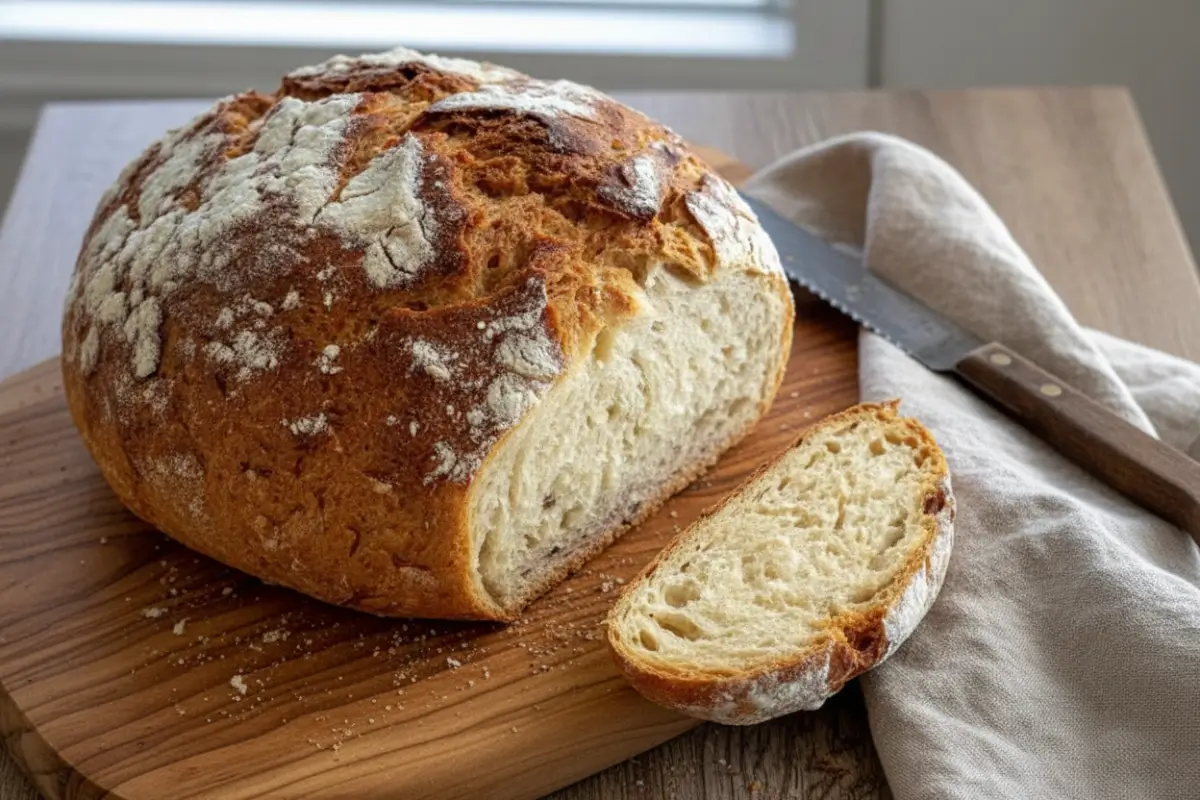
Easy Viral No Knead Bread
Ingredients
Equipment
Method
- Mix the dough by whisking together flour, salt, and yeast in a large bowl. Add in the water and stir until a shaggy mass forms.
- Cover the bowl tightly with plastic wrap and let it rest at room temperature for 12-18 hours until bubbly and doubled in size.
- Preheat the oven to 450°F and place the Dutch oven inside to heat for 30 minutes.
- Flour a surface and gently shape the dough into a ball. Place it on parchment paper and cover loosely with plastic wrap.
- Carefully remove the hot Dutch oven, place the dough (with parchment) inside, cover, and bake for 30 minutes.
- Remove the lid and bake for an additional 10-15 minutes until golden brown. Let it cool before slicing.