
You’ve seen it flooding your feed. That golden, craggly loaf with the impossibly airy crumb. The one everyone swears changed their life. Here’s the truth: this viral no knead ciabatta bread recipe takes ten minutes of actual work. No kneading. No stand mixer. No bread-making degree required. Just five pantry staples, a wooden spoon, and a willingness to let time do the heavy lifting. The dough is so wet and loose you’ll think you messed up—you didn’t. That’s exactly what creates those signature irregular holes and crispy crust. In my Asheville kitchen, I’ve watched complete beginners pull this off on their first try. The secret? Stop overthinking it. This bread wants to be easy.
Why You’ll Love This
Truly hands-off – Ten minutes of stirring, then the dough does its thing while you live your life.
Beginner-proof – No kneading means no technique to master. If you can stir, you can make this.
Bakery crust at home – That ice cube trick creates steam for a shatteringly crisp exterior.
Five ingredients – Flour, water, yeast, salt, honey. Nothing fancy hiding in the fine print.
Key Ingredients
All purpose flour forms the structure here. You can swap bread flour for slightly chewier texture, but AP works beautifully. The recipe divides it strategically—most goes into the dough, but those extra tablespoons dusted on top and the baking sheet aren’t optional. They prevent sticking and create that rustic floury finish you see on artisan loaves. Measure by weight if you can (273 grams total), but spooned-and-leveled cups work fine.
Active dry yeast needs that five-minute bloom in warm water to wake up. Lukewarm means body temperature—too hot kills yeast, too cold leaves it dormant. The honey feeds the yeast for a faster rise. Don’t skip the bloom step. Those bubbles tell you the yeast is alive and ready to work.
Water temperature matters more than you’d think. Aim for 100-110°F if you’re checking, or just warm to the touch. The dough should feel sticky and almost too wet. That’s not a mistake—high hydration creates the open crumb ciabatta is famous for. You might need that extra tablespoon or two depending on your flour’s absorbency and humidity.
Salt goes in after the flour and water start combining. Adding it too early can inhibit yeast activity. One teaspoon seasons the entire loaf perfectly without overpowering the subtle sweetness from the honey.
Honey or sugar is interchangeable here. Either feeds the yeast and adds a whisper of sweetness that balances the tangy fermented notes. Half a teaspoon disappears into the bread—you won’t taste sugar, just better flavor.
Instructions
Bloom the yeast. Pour a quarter cup of lukewarm water into a small bowl. Stir in the honey until dissolved, then sprinkle the yeast on top. Walk away for five minutes. When you come back, the surface should look foamy and smell faintly beer-like. That’s active yeast. Give it a quick stir.
Mix the dough. Dump two cups of flour into a large bowl. Make a well in the center like a flour volcano. Pour in your yeast mixture and half a cup of water. Use a wooden spoon to stir from the center outward, gradually pulling flour into the liquid. The dough will look shaggy and way too sticky. Good. If it’s actually dry and won’t come together, add that extra water one tablespoon at a time. If it’s soupy, add flour the same way. When it’s almost combined—still rough but no dry flour pockets—sprinkle the salt over the top and stir it through. Don’t overmix. Thirty seconds of stirring is plenty. Dust the top with one and a half tablespoons of flour. This creates a skin that helps trap gases during rising.
Let it rise. Drape a large tea towel over the bowl. Find a warm spot away from drafts—on top of the fridge, near a sunny window, inside a turned-off oven with the light on. Set a timer for ninety minutes. The dough should roughly double, looking puffy and full of bubbles when you peek under the towel. If your kitchen is cold, it might take two hours. Be patient.
Prep for baking. About fifteen minutes before rise time ends, crank your oven to 425°F. Line a baking sheet with parchment paper and sprinkle it with the remaining one and a half tablespoons of flour. This is your landing pad. Place an empty cake pan or metal baking dish on the bottom oven rack. You’ll use this for the steam trick.
Shape the loaf. Here’s where people panic. Don’t. The dough is supposed to be floppy and loose. Scrape it out of the bowl onto your floured baking sheet in one gentle motion, trying to keep the floured top facing up. Use a spatula to nudge it into a rough oblong shape—about ten inches long, four inches wide. It won’t look perfect. Ciabatta is rustic. Those irregular edges and flour streaks are the point.
Create steam and bake. Right before the bread goes in, toss four to five ice cubes (or pour a cup of very hot water) into that empty pan on the bottom rack. Quickly slide your baking sheet onto the middle rack and shut the door. The steam keeps the crust soft initially so the bread can expand, then evaporates for that crispy finish. Bake twenty to twenty-five minutes until deeply golden. The bottom should sound hollow when tapped.
Cool completely. Slide the loaf onto a wire rack immediately. I know it smells insane. Wait anyway. Cutting hot bread releases steam that makes the interior gummy. Thirty minutes minimum. Really.
Tips & Variations
Flour the top generously before rising. That dusting isn’t decorative—it prevents sticking and creates the signature look.
Don’t skip the steam. Ice cubes are easier than boiling water and work just as well. No steam means dense bread with pale crust.
Overnight rise option: After mixing, cover and refrigerate eight to twelve hours. Bring to room temp for thirty minutes before baking. Longer fermentation = better flavor.
Rosemary version: Fold in two tablespoons fresh chopped rosemary and a tablespoon of olive oil after adding salt.
Whole wheat swap: Replace half a cup of AP flour with whole wheat for nuttier flavor. Add an extra tablespoon of water.
Storage & Pairings
Store in a paper bag at room temperature up to two days. The crust softens but toasting revives it. Freeze sliced for up to three months. This viral no knead ciabatta bread recipe shines with olive oil and balsamic, becomes perfect garlic bread, or holds up to any soup or stew. The open crumb soaks up sauces beautifully.
FAQ
Can I use instant yeast instead of active dry?
Yes. Use the same amount but skip the blooming step—mix it directly with the flour. Instant yeast doesn’t need activation, though blooming active dry is a built-in freshness test.
Why is my dough so sticky compared to regular bread?
That’s correct for ciabatta. High hydration (wet dough) creates those big irregular holes. If you can shape it into a smooth ball, it’s actually too dry. Embrace the mess.
💡 Loved this recipe? Follow Us on Pinterest for more!
Conclusion
This viral no knead ciabatta bread recipe delivers bakery results with beginner effort. Ten minutes of mixing, ninety minutes of patience, twenty-five minutes of baking. No special skills. No expensive equipment. Just honest bread that tastes like you know what you’re doing. Make it this weekend.
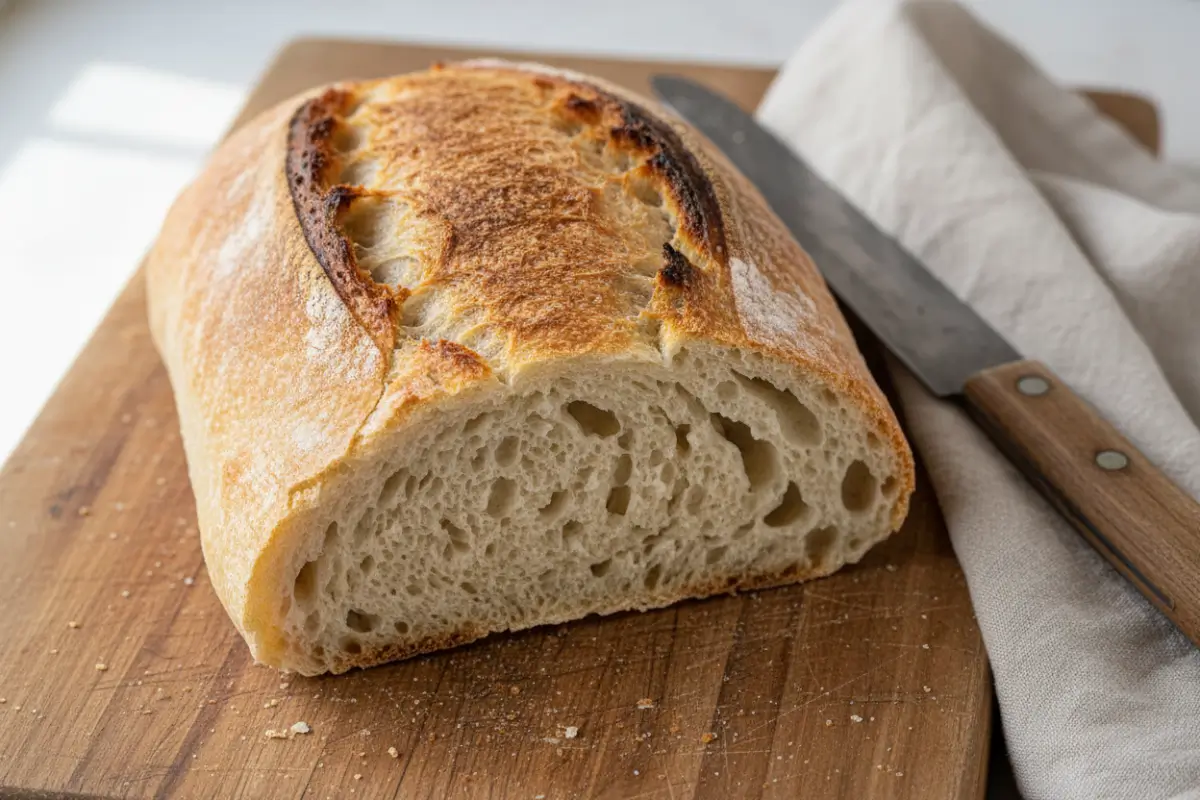
Easy Viral No Knead Ciabatta Bread Recipe
Ingredients
Equipment
Method
- Pour lukewarm water into a small bowl, stir in honey, sprinkle yeast on top, and let it bloom for five minutes.
- Dump flour into a large bowl, make a well in the center, pour in yeast mixture and additional water, and stir until combined.
- Drape a towel over the bowl and let the dough rise in a warm spot for 90 minutes until it doubles in size.
- Preheat oven to 425°F and prepare a baking sheet with parchment paper.
- Scrape the dough onto the floured baking sheet, shaping it roughly into an oblong without overhandling.
- Add steam by placing ice cubes in a pan in the oven before baking the bread for 20-25 minutes.
- Remove the bread once golden, let it cool on a wire rack for at least 30 minutes before slicing.