
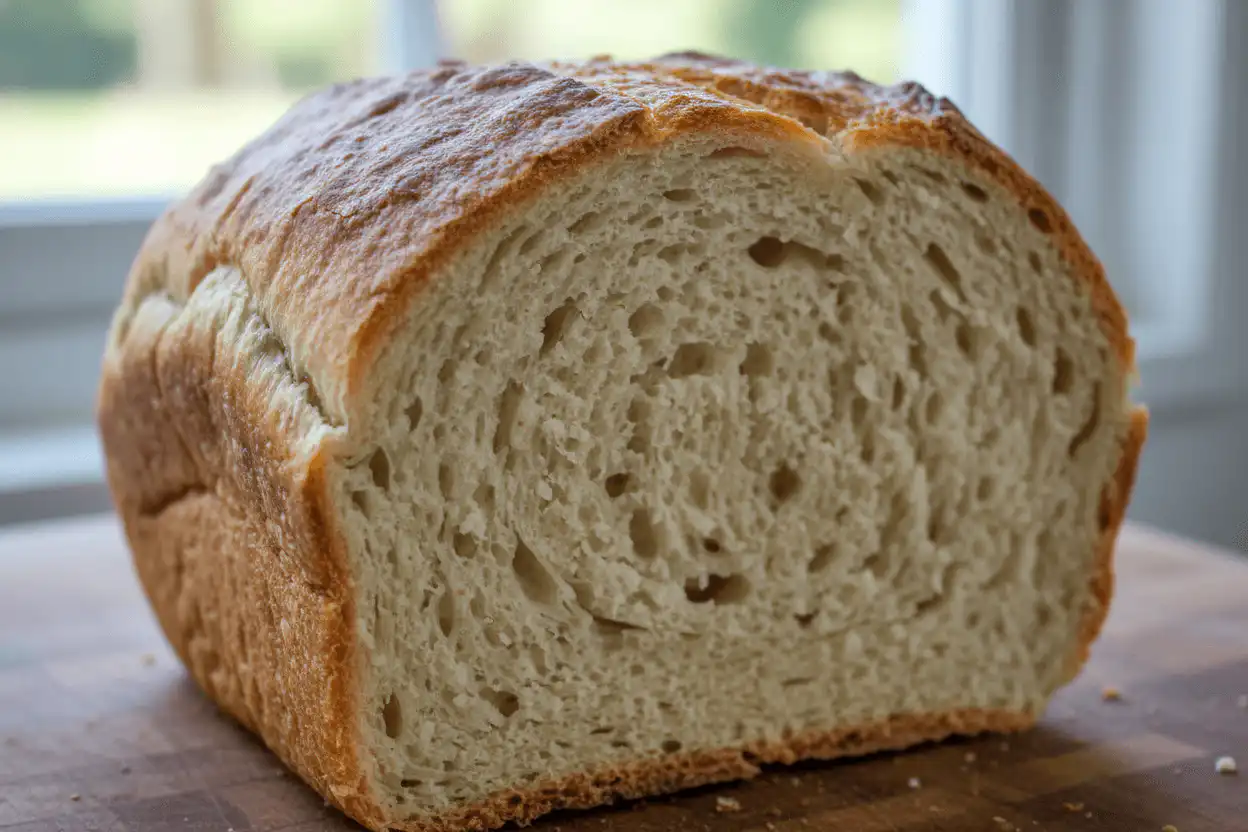
This homemade white sandwich bread delivers a soft, pillowy crumb with a golden-brown crust that’s just barely chewy—the kind that makes store-bought bread taste like cardboard. One slice straight from the oven with butter is all it takes to understand why bakers keep coming back to this recipe. The three biggest problems home bakers face are dense, heavy loaves from underproofing, collapsed tops from overproofing, and gummy, compressed bottoms from underbaking. Watch for the dough to truly double in size during the first rise (this takes 1-2 hours depending on your kitchen temperature), stop the second rise when the dough sits just ½-inch above the pan rim, and bake until the internal temperature hits 195-200°F to ensure the bottom bakes through completely.
Prep: 15 mins | Cook: 32 mins | Total: 3 hours (includes rising time) | Serves: 12 slices | Difficulty: Easy
Why You’ll Love This Recipe
- Beginner-friendly: Simple ingredients and clear visual cues make this foolproof
- Just one loaf: No need for multiple pans or dealing with leftover loaves
- Soft and buttery: Fat from butter and milk creates an incredibly tender crumb
- Budget-friendly: Costs about $2 to make compared to $4-6 for artisan bakery bread
- Freezer-friendly: Slice and freeze for up to 3 months; toast straight from frozen
Quick Tips for Success
- Use warm liquids (85-90°F) to activate yeast properly—too hot kills it, too cold slows it down
- Let dough fully double during first rise; underproofed dough results in dense, heavy bread
- Stop second rise at ½-inch above pan rim to prevent collapse during baking
Ingredient Notes
- 2 cups warm water (85-90°F): Activates yeast and keeps dough temperature optimal for rising
- ¼ cup whole milk (warmed): Adds fat for softness while maintaining structure
- 1½ tablespoons active dry yeast: Use fresh yeast (test it by proofing in warm water with sugar—it should foam)
- ½ cup granulated sugar: Feeds yeast and adds subtle sweetness without making bread taste sweet
- ¼ cup unsalted butter (softened or melted): Creates soft texture; European butter with higher fat content works beautifully
- 1 tablespoon kosher salt: Essential for flavor; avoid iodized salt which can taste metallic
- 6 cups all-purpose flour or bread flour: Bread flour (12-14% protein) yields chewier crust; all-purpose works perfectly too
Easy Substitutions
- Instead of butter: Use avocado oil or olive oil for a vegan version
- Honey swap: Replace sugar with equal amount of honey; may need 1-2 tablespoons extra flour
- Dairy-free option: Use warm water in place of milk (bread will be slightly less tender)
- Different pan size: This recipe works for two 9×4 pans or one 13-inch loaf pan
Step-by-Step Instructions
Step 1: Bloom the Yeast
In a stand mixer bowl fitted with dough hook, combine warm water, warm milk, yeast, and sugar. Whisk gently and let sit 3-5 minutes until mixture looks foamy and creamy on top—this confirms your yeast is alive. If nothing happens after 5 minutes, your yeast is dead; start over with fresh yeast.
Step 2: Mix and Knead the Dough
Add softened butter and salt to the yeast mixture. With mixer on low, add flour 1 cup at a time, letting each incorporate before adding the next. Once dough comes together (it’ll look shaggy), increase to medium speed and knead for 3-4 minutes. Turn dough onto clean counter and knead by hand for 1-2 minutes until smooth and elastic. The dough should feel soft and slightly tacky but not sticky—if it sticks to your hands, add 1 teaspoon flour at a time.
Pro Tip: Proper kneading develops gluten structure that traps gas bubbles, creating light, airy bread instead of dense, chewy texture. When dough is ready, you can stretch a small piece thin enough to see light through it without tearing—this is called the “windowpane test”.
Step 3: First Rise
Place dough in a lightly oiled bowl, turning to coat all sides. Cover with plastic wrap, shower cap, or damp towel and let rise at room temperature 1-2 hours until doubled in size. In a cold kitchen (below 68°F), this takes longer; in a warm kitchen it goes faster. The dough is ready when you poke it and the indent slowly bounces back.
Pro Tip: Underproofing is the number one cause of dense bread because the yeast hasn’t produced enough gas to create air pockets. Don’t rush this step—wait for a true doubling in volume, even if it takes the full 2 hours.
Step 4: Shape the Loaf
Grease a 9×5-inch loaf pan. Punch down dough to release air, then turn onto lightly floured surface. Roll into an 8×15-inch rectangle (doesn’t need to be perfect). Starting with the 8-inch side, roll tightly into a log, pinching seam to seal. Place seam-side down in prepared pan.
Step 5: Second Rise and Bake
Cover loaf loosely with a towel and let rise 45-60 minutes until dough is ½-inch above the pan rim. Meanwhile, preheat oven to 375°F with rack in lower third position. Bake 25-30 minutes, rotating pan halfway through, until top is deep golden brown. Tent with foil after 20 minutes if top browns too quickly. Bread is done when it sounds hollow when tapped and internal temperature reads 195-200°F. Let cool in pan 5 minutes, then turn out onto wire rack to cool completely before slicing.
Common Mistakes (And How to Fix Them)
- Dense, heavy bread: Usually caused by underproofing—dough didn’t rise long enough to develop air pockets. Let it rise until truly doubled next time, even if it takes 2+ hours in a cool kitchen.
- Collapsed or sunken top: Sign of overproofing—too much yeast activity or second rise went too long. Next time, bake when dough is just ½-inch above pan rim, not a full inch.
- Gummy, dense bottom: Bread was underbaked or had too much liquid. Always check internal temperature (should hit 195-200°F) and let bread cool completely before slicing to finish setting the crumb.
Storage & Reheating
- Counter: Store in airtight container or bag at room temperature up to 6 days
- Freezer: Slice bread and freeze in airtight bag up to 3 months; toast slices straight from frozen
- Reheating: Wrap whole loaf in foil and warm at 300°F for 10-15 minutes to refresh crust
Delicious Variations to Try
- Cinnamon raisin: After rolling dough into rectangle, brush with melted butter, sprinkle with cinnamon-sugar and raisins, then roll up
- Honey oat: Replace ½ cup flour with rolled oats and use honey instead of sugar
- Garlic herb: Knead in 2 teaspoons garlic powder and 1 tablespoon Italian seasoning
- Whole wheat: Replace up to 2 cups all-purpose flour with whole wheat for heartier texture
What to Serve With This
- Classic sandwiches: Turkey, BLT, grilled cheese, or peanut butter and jelly
- Breakfast: French toast, avocado toast, or bacon and egg sandwiches
- Soup dipper: Perfect alongside tomato soup, chili, or creamy potato soup
- Simple toast: Warm slices with butter and jam showcase the bread’s flavor
Serving Suggestions
- Slice when completely cool for cleanest cuts and best texture
- Toast slices for sandwiches to add textural contrast and prevent sogginess
For more recipes, follow me on Pinterest.
FAQ
Can I make this ahead of time?
Yes. After shaping the loaf in step 4, cover tightly and refrigerate up to 15 hours. Remove 3 hours before baking and let rise at room temperature until ½-inch above pan rim, then bake as directed.
How long does this last in the fridge?
This bread keeps up to 10 days refrigerated in an airtight container or bag. Room temperature storage (up to 6 days) maintains better texture.
Can I freeze this recipe?
Absolutely. Freeze the unbaked shaped loaf for up to 3 months, or freeze baked bread. For unbaked: thaw and rise 4-5 hours before baking. For baked: thaw at room temperature and reheat as desired.
What can I substitute for bread flour?
All-purpose flour works perfectly with no recipe changes. Bread flour creates a slightly chewier crust due to higher protein content, but both yield soft, delicious bread.
Is this recipe good for rolls?
Yes, this dough makes excellent rolls. After first rise, divide into 12-16 portions, shape into balls, and let rise 30-45 minutes before baking at 375°F for 15-18 minutes.
Can I double this recipe?
Make two separate batches for best results, but you can double in one bowl. Double everything except yeast (use 3¼ teaspoons) and butter (use 6 tablespoons).
Why did my bread turn out chewy instead of soft?
Too much kneading, high-protein flour without enough fat, or underbaking can cause chewiness. Make sure to use butter or oil in the recipe, don’t over-knead, and bake to proper internal temperature.
What’s the best way to test if my yeast is still good?
Mix ½ teaspoon yeast with 1 cup warm water and a pinch of sugar. Let sit 5-7 minutes—it should bubble and foam on top. If nothing happens, the yeast is dead and needs to be replaced.
Conclusion
This soft white sandwich bread recipe proves that homemade doesn’t have to be complicated. With proper proofing times, the right baking temperature, and a few visual cues, you’ll pull a tall, golden loaf from the oven that makes every sandwich taste better.

Easy Soft White Sandwich Bread with Perfect Rise
Ingredients
Equipment
Method
- In a stand mixer bowl fitted with dough hook, combine warm water, warm milk, yeast, and sugar. Whisk gently and let sit 3-5 minutes until mixture looks foamy and creamy on top—this confirms your yeast is alive. If nothing happens after 5 minutes, your yeast is dead; start over with fresh yeast.
- Add softened butter and salt to the yeast mixture. With mixer on low, add flour 1 cup at a time, letting each incorporate before adding the next. Once dough comes together (it’ll look shaggy), increase to medium speed and knead for 3-4 minutes. Turn dough onto clean counter and knead by hand for 1-2 minutes until smooth and elastic. The dough should feel soft and slightly tacky but not sticky—if it sticks to your hands, add 1 teaspoon flour at a time.
- Place dough in a lightly oiled bowl, turning to coat all sides. Cover with plastic wrap, shower cap, or damp towel and let rise at room temperature 1-2 hours until doubled in size. In a cold kitchen (below 68°F), this takes longer; in a warm kitchen it goes faster. The dough is ready when you poke it and the indent slowly bounces back.
- Grease a 9×5-inch loaf pan. Punch down dough to release air, then turn onto lightly floured surface. Roll into an 8×15-inch rectangle (doesn’t need to be perfect). Starting with the 8-inch side, roll tightly into a log, pinching seam to seal. Place seam-side down in prepared pan.
- Cover loaf loosely with a towel and let rise 45-60 minutes until dough is ½-inch above the pan rim. Meanwhile, preheat oven to 375°F with rack in lower third position. Bake 25-30 minutes, rotating pan halfway through, until top is deep golden brown. Tent with foil after 20 minutes if top browns too quickly. Bread is done when it sounds hollow when tapped and internal temperature reads 195-200°F. Let cool in pan 5 minutes, then turn out onto wire rack to cool completely before slicing.