
Two ingredients, one pan, eighteen minutes — and you’ve got warm, pillowy flatbreads that taste like you actually know what you’re doing. No yeast, no waiting, no fuss.
⚡ Quick Recipe Snapshot
Prep: 15 min | Cook: 3 min | Total: 18 min | Difficulty: Medium | Cuisine: Middle Eastern | Calories: ~185 per flatbread | Yield: 6 flatbreads | Season: Anytime
Why This Recipe Works
- No yeast, no rise time. Greek yogurt does the heavy lifting here — it adds tenderness and a subtle tang while the self-raising flour handles the lift. You mix, roll, and cook. Done.
- Soft and golden every time. A dry cast iron skillet over medium heat gives each flatbread those beautiful brown spots and a lightly crisp edge with a pillowy, chewy center.
- Endlessly flexible. Serve them as wraps, use them as a base for quick pizzas, or just tear into them warm with butter. They work any night of the week.
Grocery List (& Shortcuts)
Main Players:
- 2 cups self-raising flour
- ½ tsp salt
- 1⅔ cups Greek yogurt (full-fat works best for softness)
Smart Shortcut: No self-raising flour on hand? No problem. Use 2 cups of all-purpose flour plus 3 teaspoons of baking powder and ½ teaspoon of salt. Same result, nothing fancy required.
Substitutions:
- Dairy-free: A thick, unsweetened coconut yogurt or dairy-free Greek-style yogurt works well — just make sure it’s not watery or the dough will be too sticky to handle.
- Lower fat: Low-fat Greek yogurt is fine, though the flatbreads may be slightly less tender.
- Gluten-free: A 1:1 GF self-raising flour blend can work, though texture may vary. The dough will likely be stickier — use extra flour on your rolling surface.
Step-by-Step
Mix the Dough
- Combine the self-raising flour, salt, and Greek yogurt in a large bowl. Stir until a sticky dough comes together. Don’t overwork it — this dough doesn’t need kneading, and doing so will make your flatbreads tough instead of tender.
- Divide the dough into 6 equal balls. They’ll be a little sticky, and that’s totally fine.
Roll & Prep
- Flour your surface generously — don’t be shy here. Roll each dough ball out into a thin circle, roughly 10 inches across. They don’t need to be perfectly round. Rustic is the whole vibe.
Cook
- Heat a large cast iron skillet over medium heat for about 10 minutes before you start cooking. You want it properly hot — this is what gives you those gorgeous golden spots. No oil, no butter — cook them completely dry.
- Lay one flatbread circle into the dry skillet. Cook for about 1 minute until the bottom develops brown patches and bubbles start forming on the surface.
- Flip and cook for another minute or so on the second side until it’s equally golden and cooked through.
- Repeat with the remaining dough circles. Stack the finished flatbreads and cover loosely with a clean kitchen towel to keep them soft and warm while you finish the batch.
Riley’s Tips
- Don’t skip the preheat. A properly hot cast iron pan is the secret to those golden, slightly blistered spots. If the pan isn’t hot enough, the flatbreads steam instead of sear and you lose that beautiful texture. Give it a full 10 minutes over medium heat before the first one goes in.
- Dough too sticky to roll? Just add a little more flour to your hands and your surface — not to the dough itself. A sticky dough is actually a sign of a tender flatbread. Work with it, not against it.
- Make-ahead shortcut: Mix and divide the dough balls ahead of time, cover them with plastic wrap, and refrigerate for up to a day. When you’re ready to eat, just roll and cook. Fresh flatbreads in minutes, even on a busy weeknight.
Storage & Leftovers
Fridge: Store cooled flatbreads in an airtight container or zip-top bag. They’ll keep well in the refrigerator for up to 3 days.
Reheating: The best way to bring them back to life is a quick reheat in a dry cast iron or skillet — just a few seconds per side and they’re warm and soft again. A microwave works in a pinch (about 20–30 seconds wrapped in a damp paper towel), though the skillet method wins every time.
Freezer: Yes, these freeze beautifully. Stack them with a small piece of parchment between each one, seal in a freezer bag, and freeze for up to 2 months. Thaw at room temperature or reheat straight from frozen in a warm skillet.
Can I use regular yogurt instead of Greek yogurt?
Greek yogurt is the better choice here because it’s thick and gives the dough the right consistency. Regular yogurt tends to be too thin and will make the dough overly wet and hard to roll. If it’s all you have, strain it through a cheesecloth for 30 minutes first to remove excess liquid.
Why is my dough too sticky to work with?
Sticky dough is normal with this recipe — it’s part of what makes the flatbreads soft. The fix is simple: flour your hands and your rolling surface generously. Resist the urge to add more flour directly to the dough, which can make the flatbreads dense.
Do I really need a cast iron skillet?
A cast iron skillet gives the best results because it holds heat evenly and gets beautifully hot. That said, a heavy-bottomed stainless or non-stick skillet will work too — just make sure it’s fully preheated before you start cooking.
Can I add flavors to the dough?
Absolutely. A pinch of garlic powder, dried herbs, or even a little cumin stirred into the dough before rolling adds a cozy, savory note. Brush the cooked flatbreads with garlic butter right off the pan and you’ll never look back.
💡 Love this recipe? Follow Cooking Save on Pinterest.
Save This Recipe & Tell Me How It Went!
This yogurt flat bread recipe is one of those back-pocket wins that earns a permanent spot in your kitchen rotation — and I’d love to hear how yours turned out. Did you go classic and simple, or did you load them up with garlic butter and herbs? Drop a comment below and let me know!
And if you found this helpful, save it for later — your future hungry self will thank you.
Pull up a chair,
Riley 🍂
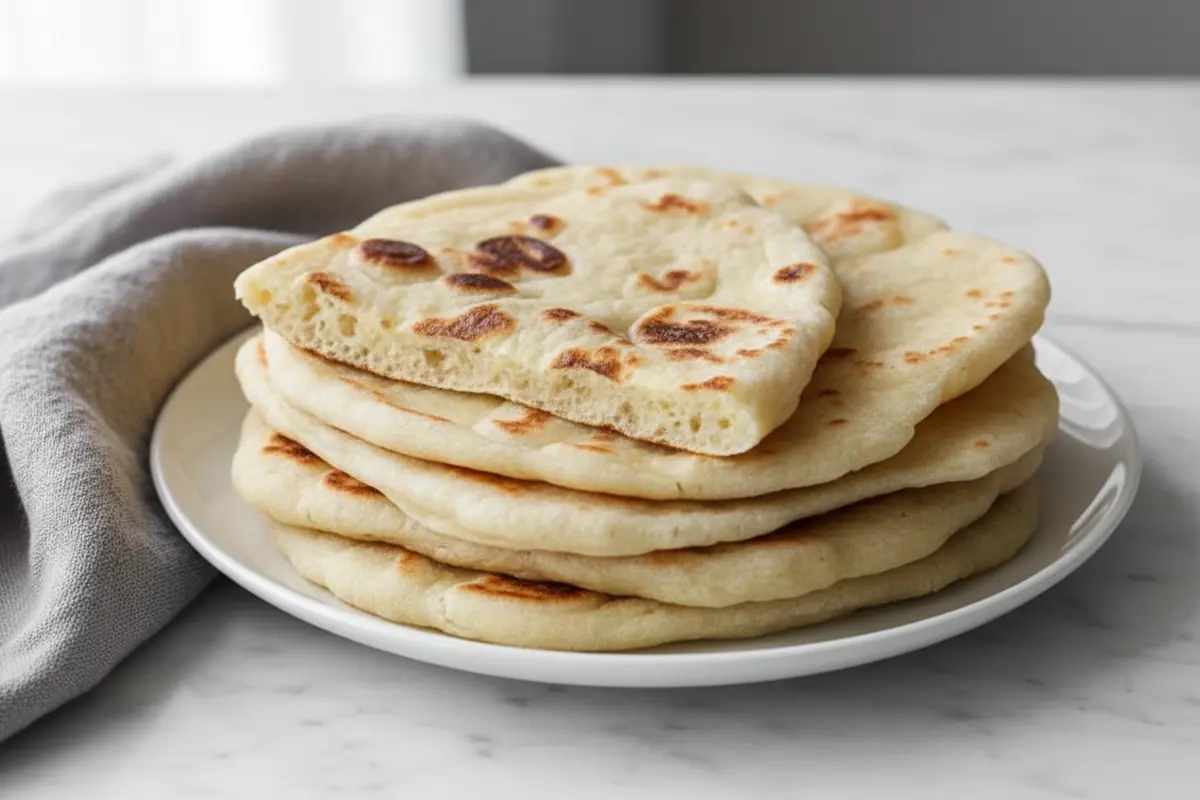
Soft Fluffy Yogurt Flatbreads Ready In Under 20 Minutes
Ingredients
Equipment
Method
- Combine the self-raising flour, salt, and Greek yogurt in a large bowl. Stir until a sticky dough comes together.
- Divide the dough into 6 equal balls. They’ll be a little sticky, and that’s totally fine.
- Flour your surface generously. Roll each dough ball out into a thin circle, roughly 10 inches across.
- Heat a large cast iron skillet over medium heat for about 10 minutes before you start cooking.
- Lay one flatbread circle into the dry skillet. Cook for about 1 minute until the bottom develops brown patches.
- Flip and cook for another minute until it’s equally golden and cooked through.
- Repeat with the remaining dough circles. Stack the finished flatbreads and cover loosely with a towel.