
This is the kind of bread that makes your whole kitchen smell like a hug — a golden, rustic loaf with a crackling crust and a soft, tender crumb that comes together in under an hour, no yeast, no waiting, no fuss.
⚡ Quick Stats: Prep: ~10 mins | Cook: 50–55 mins | Total: ~65 mins | Serves: 12 | Difficulty: Easy | Season: Spring (or honestly, any cozy day)
From My Kitchen
I’ll be honest with you — I used to be a little intimidated by bread. Not the fancy sourdough-starter kind (that’s a whole other story), but just any bread. The idea of yeast and proofing and waiting around for dough to rise felt like too many variables for a Tuesday afternoon in Asheville when I just wanted something warm to eat with a bowl of soup.
Then I discovered this irish soda bread recipe, and everything changed.
No yeast. No rise time. No stand mixer. Just four humble pantry staples, cold butter worked in with your fingertips, and a cast-iron skillet that does most of the heavy lifting. I first made this on a rainy spring afternoon while simultaneously hunting for my youngest’s missing rain boot — and it still turned out beautifully. Shaggy and rustic and golden, with that signature “X” scored across the top.
That’s the thing about this bread: it wants to be imperfect. The shaggier the dough, the more authentic it feels. This is real cooking — the kind that fills your home with warmth and puts something genuinely special on the table without asking anything complicated of you.
Why This Recipe Works
- No yeast, no waiting: Baking soda and buttermilk do all the leavening work together, which means you go from mixing bowl to oven in about 10 minutes flat. This is the ultimate smart shortcut in bread baking.
- Golden crust, tender crumb: Cold butter worked into the flour creates little pockets of richness, giving you that satisfying crusty exterior with a soft, hearty inside — the best of both worlds.
- Wonderfully forgiving: This is genuinely one of the most forgiving bread recipes out there. A little over-mixed? Still delicious. Dough looks shaggy and rough? That’s exactly right. Imperfection is baked right into the tradition.
- Endlessly adaptable: Keep it traditional with just the four basics, or stir in raisins, dried cranberries, or caraway seeds to make it your own. Every version is the best irish soda bread recipe for someone.
The Grocery List (& Shortcuts)
Main Players
- 4 cups all-purpose flour (plus about ¼ cup more for dusting your hands and surface) — standard all-purpose is perfect here, no need for bread flour.
- ¼ cup granulated sugar — just enough to take the edge off without making this sweet.
- 1 tsp sea salt — kosher salt works just as well if that’s what you have on hand.
- 1 tsp baking soda — check that yours isn’t expired! Fresh baking soda is key to a good rise.
- 6 Tbsp cold unsalted butter (plus ½ Tbsp to grease the pan) — cold butter matters here. Pull it straight from the fridge right before you use it.
- 1¾ cups cold lowfat buttermilk or kefir — the acid in buttermilk activates the baking soda and gives this bread its signature tang. Cold is best.
- 1 large egg (cold) — adds richness and helps bind the dough.
- 1 cup raisins or dried cranberries (optional) — this is your soda bread with raisins moment! Dried cranberries add a lovely tartness if you want to mix things up.
The Cooking Save Shortcut
Shortcut: No buttermilk in the fridge? Make your own in two minutes: measure 1¾ cups of regular milk, add 1½ tablespoons of white vinegar or lemon juice, stir, and let it sit for 5 minutes. Done. It works beautifully and you’ll never need to make a special grocery run again.
Substitutions
- Dairy-Free: Use a plant-based milk (oat milk works well) with the same vinegar trick above to mimic buttermilk, and swap in cold vegan butter.
- Gluten-Free: A 1:1 gluten-free all-purpose flour blend (like Bob’s Red Mill) can be substituted, though the texture will be slightly denser. Still cozy and delicious.
- Out of raisins? Caraway seeds are the traditional Irish addition — use about 1–2 teaspoons for a classic soda bread recipe with caraway seeds flavor. Chopped dried apricots or currants are also lovely.
- No cast-iron skillet? A 9-inch round cake pan or a parchment-lined baking sheet works just fine.
Equipment You Actually Need
- A large mixing bowl
- A 10-inch cast-iron skillet (or a 9-inch round cake pan)
- A wooden spoon
- A large measuring cup or medium bowl (for the wet ingredients)
- A whisk
- A sharp knife (for scoring the top)
That’s genuinely it. No stand mixer, no dough hook, no bread machine. Your hands and a wooden spoon are the best tools for this job — and that’s part of what makes this super simple Irish soda bread so satisfying to make.
Step-by-Step: Let’s Bake This Bread
Phase 1: Prep Your Pan & Dry Ingredients
- Preheat your oven to 375°F. While it heats up, grease your 10-inch cast-iron skillet generously with ½ tablespoon of butter — get the sides too.
- Whisk together the flour, sugar, salt, and baking soda in a large mixing bowl until evenly combined.
- Cut your cold butter into small pieces (about ½-inch cubes), then work it into the flour mixture with your fingertips, rubbing and pressing until the mixture looks like rough, sandy crumbs. You want pea-sized bits of butter throughout — don’t overdo it. If you have raisins or dried cranberries, stir them in now, breaking up any clumps.
Phase 2: The Magic (Mixing & Shaping)
- Whisk together the cold buttermilk and egg in a large measuring cup until combined. Make a well in the center of your flour mixture, then pour in the buttermilk mixture.
- Stir with a wooden spoon just until the dough barely comes together and looks lightly moistened. It will look shaggy and rough — that’s exactly what you want. Do not overmix. The moment it holds together, stop.
- Turn the dough out onto a lightly floured surface. With floured hands, gently shape it into a round loaf — just enough to bring it together. It should still look rustic and a little rough around the edges. If it’s sticking to your hands, dust lightly with flour.
Phase 3: Score & Bake
- Transfer the round loaf into your buttered skillet. Score a large, deep “X” across the top with a sharp knife — go about ½ inch deep. This isn’t just for looks; it helps the center bake through evenly.
- Bake in the center of your oven at 375°F for 50–55 minutes. You’ll know it’s ready when the top is deep golden brown and when you tap the bottom of the loaf, it sounds hollow — like a little drum. That hollow knock is your signal.
- Transfer to a wire rack and let it cool for at least 15–20 minutes before slicing. (I know. It’s hard. But worth it.)
Riley’s Tips
Riley’s Tip: Keep Everything Cold
Cold butter, cold buttermilk, cold egg — this is the one thing worth paying attention to. Cold fat creates steam pockets as it bakes, which is what gives you that gorgeous, crusty Irish soda bread texture. If your kitchen is warm, pop your butter back in the fridge after cutting it and work quickly.
Riley’s Tip: The “Oops” Fix
If your dough feels way too sticky to shape, don’t panic — just dust your hands and the surface with a little more flour and gently coax it into a round. If the baked loaf comes out a little dense, it’s almost always from overmixing. Next time, stop stirring the moment the dough comes together. Either way, it’ll still taste wonderful slathered with butter.
Riley’s Tip: The Caraway Seeds Version
For a more traditional irish soda bread recipe, skip the raisins and stir in 1–2 teaspoons of caraway seeds with the dry ingredients. It gives the bread a subtly earthy, slightly anise-like flavor that pairs beautifully with sharp cheddar and a bowl of stew.
Make Ahead
Make Ahead: You can whisk together all your dry ingredients the night before and store them covered on the counter. In the morning, all you need to do is work in the butter and add the wet ingredients — fresh bread in under an hour with almost no morning effort.
What to Serve With This
For a Cozy Dinner
Thick slices of this crusty Irish soda bread are made for dunking. Serve alongside a hearty bowl of beef stew, a bubbling pot of tomato soup, or a simple bowl of chili. Add a smear of good salted butter and a drizzle of honey if you’re feeling fancy — no judgment here.
For a Spring Brunch
Slice it up and serve with soft scrambled eggs, smoked salmon, and a little cream cheese. The slight tang of the bread plays so well with creamy, rich toppings. It’s a beautiful, low-effort centerpiece for a weekend table.
For a Casual Gathering
Set the whole loaf out on a wooden board with a variety of cheeses, some good jam, and a crock of butter. Let people tear into it themselves — that’s the kind of “pull up a chair” moment this bread was made for.
Storage & Leftovers
- Counter: Irish soda bread is best enjoyed within 2 days of baking. Keep it wrapped in a clean kitchen towel or in an airtight bag at room temperature.
- Fridge: Refrigerate leftovers and they’ll keep well for up to a week. The texture firms up a bit, but a quick warm in the oven brings it right back to life.
- Reheating: Wrap individual slices in foil and warm in a 325°F oven for about 8–10 minutes, or toast slices directly in your toaster for a crisp edge. The toaster method is honestly my favorite — golden and warm in minutes.
- Freezer: Yes! Slice the cooled loaf, wrap individual slices tightly in plastic wrap, and freeze in a zip-top bag for up to 2 months. Thaw at room temperature or pop directly in the toaster from frozen.
Frequently Asked Questions
Can I make this Irish soda bread recipe without a cast-iron skillet?
Absolutely. A greased 9-inch round cake pan works great, or you can shape the loaf and bake it directly on a parchment-lined baking sheet. The cast iron gives you a slightly crispier bottom crust, but any of these options will give you a beautiful loaf.
Why do you score an “X” on top of soda bread?
It’s a traditional step that serves a real purpose — it helps the heat penetrate the center of the loaf so it bakes evenly all the way through. There’s also an old Irish saying that it “lets the fairies out,” which I love and choose to believe entirely.
Can I double this recipe for a crowd?
You can, but I’d recommend making two separate loaves rather than one giant one. Doubling the size makes it harder to bake through evenly. Two loaves also means more of that gorgeous golden crust to go around — and honestly, who’s going to complain about that?
What’s the difference between traditional Irish soda bread and the American version?
The most traditional irish soda bread recipe uses just four ingredients: flour, baking soda, salt, and buttermilk. The American version (like this one) often adds sugar, butter, and raisins for a slightly richer, sweeter loaf. Both are delicious — this version just happens to be a little more crowd-pleasing for everyday baking.
My bread came out dense. What went wrong?
Nine times out of ten, it’s overmixing. Soda bread dough needs to be handled gently and minimally — the more you work it, the tougher and denser the crumb gets. Mix just until the dough comes together, shape it quickly, and get it in the oven. Also double-check that your baking soda is fresh!
Can I add caraway seeds to this recipe?
Yes! For a classic soda bread recipe with caraway seeds, simply stir 1–2 teaspoons of caraway seeds into the dry ingredients before adding the butter. It’s a simple addition that gives the bread a wonderfully traditional, slightly savory flavor.
💡For more recipes, follow me on Pinterest.
Try This Irish Soda Bread Recipe & Tell Me How It Goes!
If you try this irish soda bread recipe, I’d love to hear about it — drop a comment below and let me know how it turned out. Did you go the classic route, or did you stir in some raisins or caraway seeds? Save this recipe for the next time you need fresh, homemade bread without the fuss, and come back any time you’re looking for something real, cozy, and made with care.
Pull up a chair,
Riley 🍂
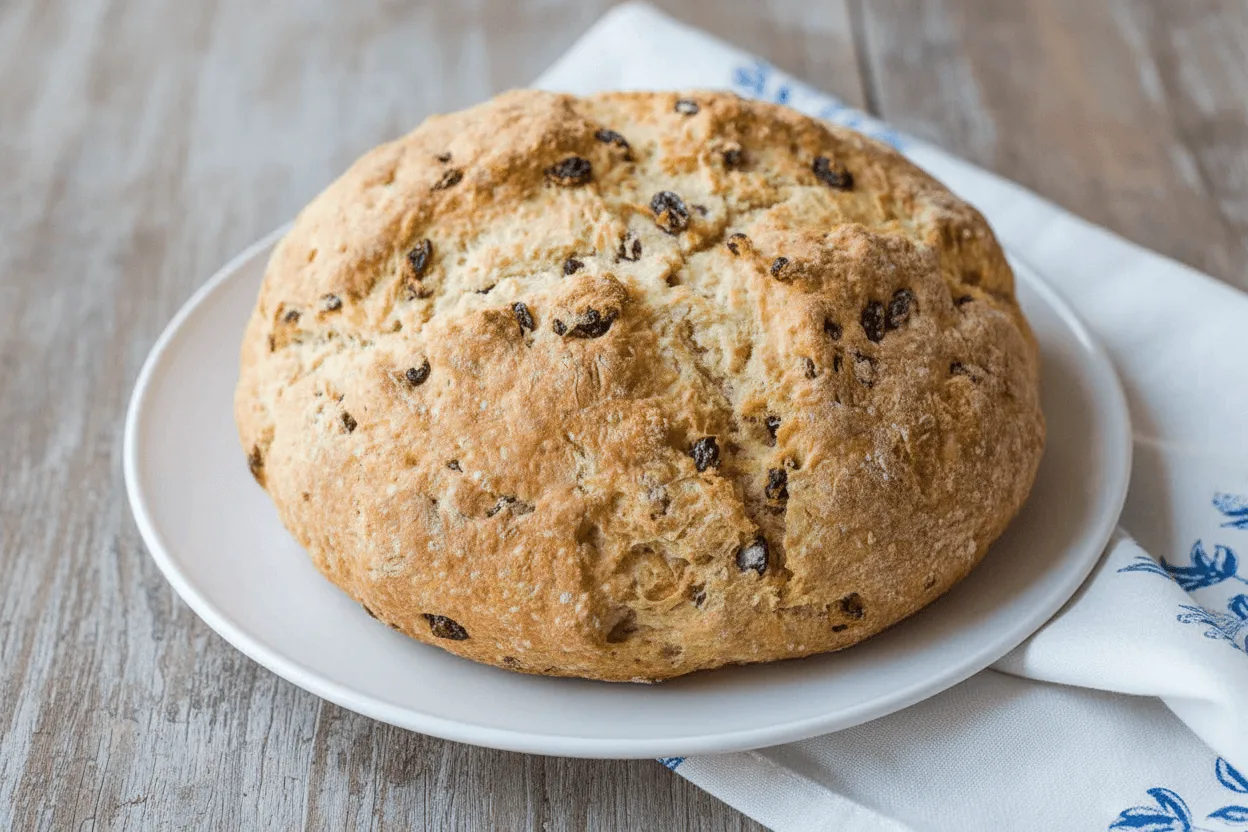
Crusty Irish Soda Bread Recipe
Ingredients
Equipment
Method
- Preheat your oven to 375°F and grease your cast-iron skillet with butter.
- Whisk together flour, sugar, salt, and baking soda in a large mixing bowl until combined.
- Cut cold butter into small pieces and work it into the flour mixture until it resembles sandy crumbs.
- Mix in any optional raisins or cranberries.
- In a measuring cup, whisk together the cold buttermilk and egg.
- Make a well in the flour mixture and pour in the buttermilk mixture. Stir until just combined.
- Gently shape the dough into a round loaf and place it in the skillet. Score the top with an ‘X.’
- Bake in the oven for 50–55 minutes until golden brown. Let cool for 15–20 minutes before slicing.
